Axios What's Next

July 18, 2023

No part of the country is immune to the effects of climate change, Alex and Andrew Freedman write today.
Today's newsletter is 996 words ... 4 minutes.
1 big thing: No safe port in a climate storm

Illustration: Natalie Peeples/Axios
Fatal flooding in the Northeast. Blistering heat waves in the South and Southwest. Wildfire smoke pouring in across the Canadian border.
- This summer's extreme weather across the United States has been a vivid reminder that no corner of the country is immune to the effects of a rapidly warming planet, Alex and Axios Generate's Andrew Freedman write.
Why it matters: Americans who move from one region to another are increasingly citing climate change as at least one driving factor, as they seek perceived safety from larger, more frequent wildfires, stronger hurricanes and so on.
- Yet nowhere is truly safe from extreme weather, some of which is fueled by climate change.
Case in point: The recent catastrophic flooding in Vermont, a state that often ranks high on lists of so-called "climate havens."
- At least 9 inches of rain fell in parts of the Green Mountain State in just a couple days, leading to at least one death and damaging buildings, roads and bridges.
- Montpelier, the state's capital, saw its heaviest 24-hour rainfall on July 10, totaling 5.28 inches.
- For many Vermonters, the storm evoked painful memories of 2011's Tropical Storm Irene, another hugely destructive event.
Between the lines: The Northeast, among other regions, has seen a sharp uptick in heavy precipitation events, since as the climate warms, the air can hold more moisture.
- Recent analyses have shown that federal flood maps as well as extreme rainfall frequency estimates dramatically underestimate flood risks there and in other parts of the country.
What they're saying: "There's nowhere that's safe — there's just places that are safer in regards to certain aspects" of climate change, says Ray Herrera, a 35-year-old living in Brookfield, Vermont. "And we thought Vermont was the place for us in that regard," adds Herrera, who moved from Texas, in part to escape the Southern heat.
- Herrera has no regrets though — especially after seeing how his community stepped up to help those hit hardest by the recent flooding. (Plus, Texas-level heat waves aren't coming to Vermont any time soon.)
Meanwhile, complicating the idea of "climate migration": Past weather history, including the notion of an area's "normal" climate, may no longer reflect present and future conditions.
Reality check: Climate-conscious migration is far from the norm — quite the opposite, in fact.
- Huge numbers of Americans are flocking to the country's fastest-warming cities.
- Phoenix, Arizona — where the daily high temperature has sat stubbornly in the triple-digits for two weeks now, and reached 118° F on July 15 — recently topped 5 million residents for the first time, despite the increasing risk of extreme heat (and the related threat of water shortages), for example.
The bottom line: If you're thinking of moving with the climate in mind, you might have to choose the kind of extreme weather you can handle.
- And you may still need to expect the unexpected.
- Don't want intense heat? Consider the Northeast — but come prepared for potentially devastating hurricanes and extreme precipitation.
2. Lightning price slashed
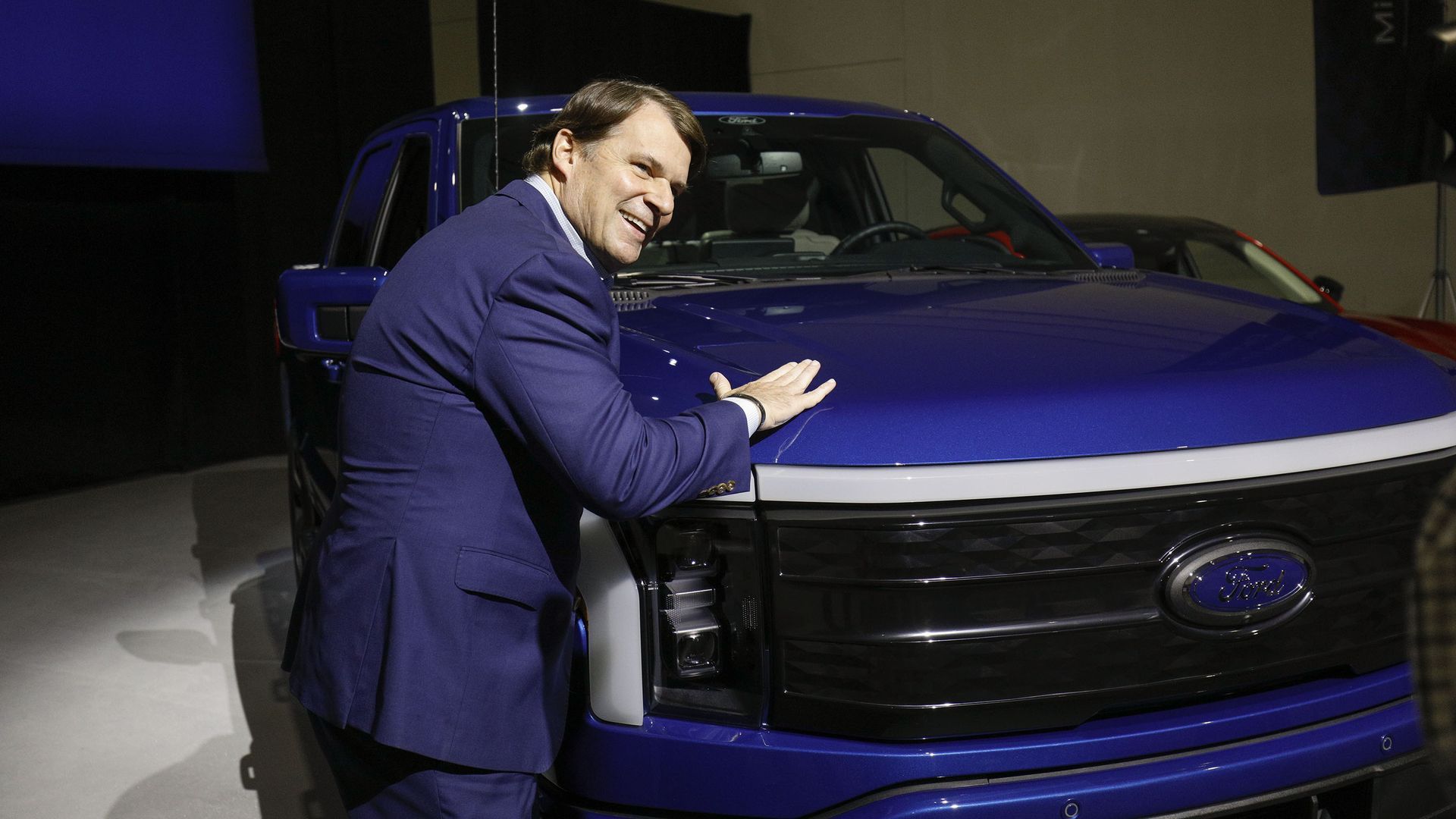
Ford CEO Jim Farley pats a Ford F-150 Lightning pickup at a press conference on Feb. 13 in Romulus, Mich. Photo: Bill Pugliano/Getty Images
Ford is cutting the price of its F-150 Lightning electric pickup by thousands of dollars — another sign of an intensifying EV price war, Axios' Nathan Bomey reports.
Why it matters: The F-series is the best-selling vehicle in the country — and the F-150 Lightning version is among the first EV pickups on the market.
What's happening: Ford is slashing all versions of the F-150 Lightning by a range of $6,079 to $9,979.
- The starting price of the base version is going from $59,974 to $49,995. The most expensive version, the Platinum Extended Range, is going from $98,074 to $91,995.
Zoom out: The move follows a series of price cuts this year by EV sales leader Tesla and comes after a decline in the price of lithium, which had been fueling EV price increases.
What they're saying: Ford attributed the price cuts to increased production capacity, better manufacturing efficiency and "improving" battery raw material costs.
3. Now trending: Location sharing

Illustration: Shoshana Gordon/Axios
Young people are increasingly sharing their locations digitally to track or be tracked by loved ones (and sometimes looser acquaintances), Axios' April Rubin writes.
- Nearly 80% of people have location sharing activated on their phones some of the time, and 16% have it activated all of the time, according to 2022 Harris Poll data.
Location sharing can serve different purposes for different groups.
- Between friends, it can forge a bond and create a sense of accountability with one another. For parents and children, it can add a sense of security.
- One unspoken expectation: When someone shares their location, the recipient will share theirs back.
What they're saying: "It's a safety measure, and I wish I had taken it sooner," says Kelsey King, 30, who recently started sharing her location with about a dozen friends.
Between the lines: Location sharing itself should be secure, experts say.
- Apple in particular tends to have strong privacy-protected location settings, says Jennifer King, privacy and data policy fellow at the Stanford Institute for Human-Centered Artificial Intelligence.
Yes, but: What people choose to do with their access to someone's location can become precarious, she noted.
4. Rental boats descend on D.C.
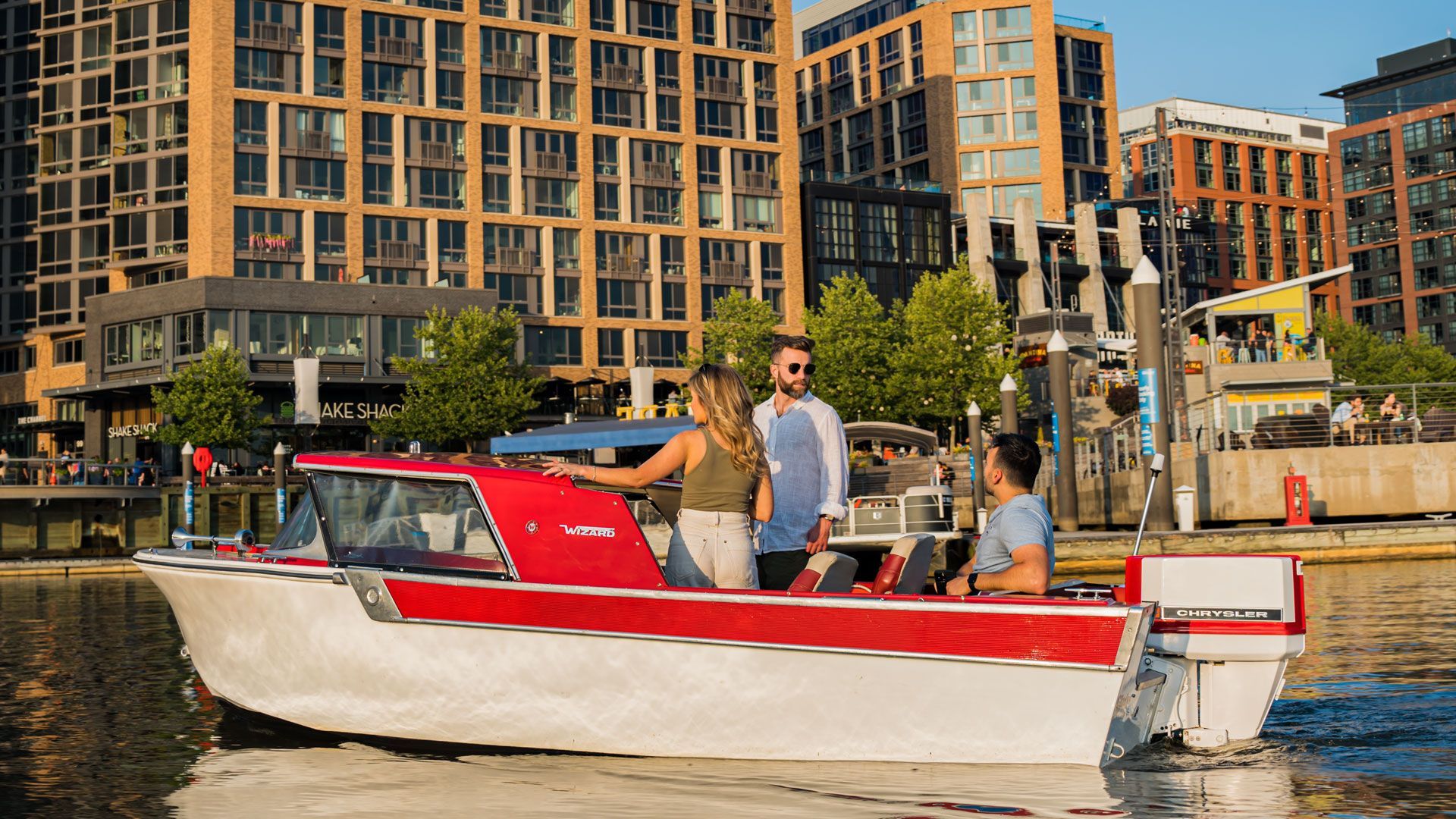
Retro electric boats for rent at The Wharf. Photo courtesy of Sea Suite Cruises
Two new self-captained boating fleets have docked in Washington, D.C., Axios D.C.'s Anna Spiegel reports.
Why it matters: Washington has always been a river town, but recent waterfront development has led to a boating business boom.
Driving the news: Boat rentals are now available from...
Sea Suite Cruises: "Mad Men" styled, mid-century motorboats can be rented at The Wharf for 1½-hour jaunts.
GoBoat: These cozy, Danish-style "picnic boats" that launched at The Wharf have expanded to National Harbor in Maryland, with eight electric vessels for up to eight passengers each.
Meanwhile, aspiring boat owners can also check out Carefree Boat Club, which boasts a "country club model."
- Members pay dues (around $440 a month at The Wharf) and get unlimited access to 70-odd powerboats around D.C. and Annapolis — no maintenance or docking fees involved.
The big picture: Expect similar boat-on-demand platforms to pop up in other water-centric cities.
Big thanks to What's Next copy editor Amy Stern.
Was this email forwarded to you? Get your daily dose of What's Next by signing up here for our free newsletter.
Sign up for Axios What's Next

The next decade of big, sweeping changes will unfold in cities and communities where new technologies like 5G, AI and drones are transforming how we work, live and play together. What’s Next will guide you through the revolution.