Axios What's Next

June 23, 2023

A portrait of Tesla's potential EV industry dominance is coming into sharp focus, Joann reports today.
Today's newsletter is 1,173 words ... 4½ minutes.
1 big thing: Tesla's "Trojan horse"
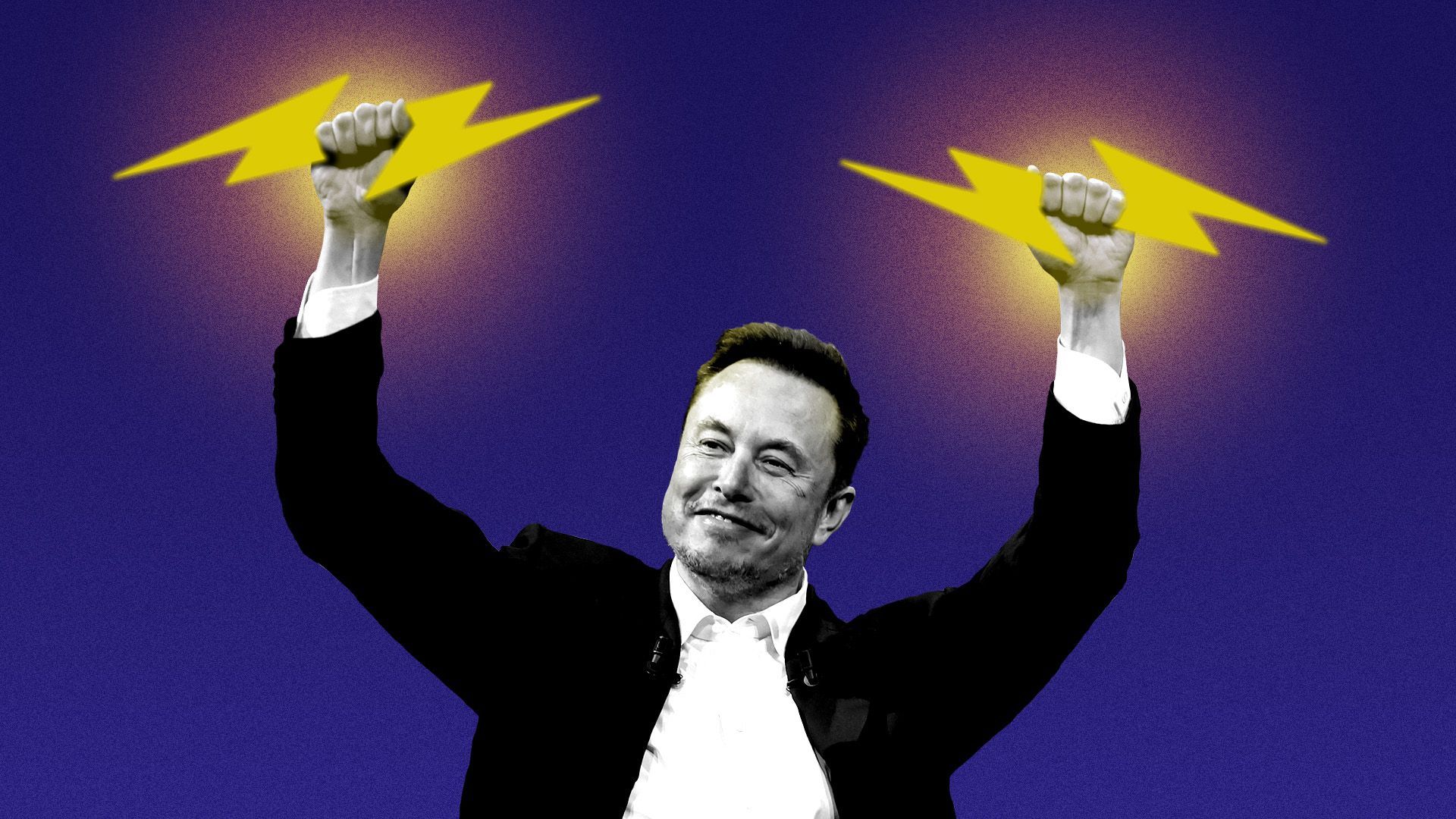
Photo illustration: Sarah Grillo/Axios. Photo: Chesnot/Getty Images
The auto industry's quick adoption of Tesla's electric vehicle (EV) charging standard has triggered speculation that Tesla could one day control other parts of the EV ecosystem too, such as batteries and even self-driving technology, Joann reports.
What's happening: As EV adoption grows, products and platforms like batteries and computer operating systems are likely to become commodities.
- What will set automotive brands apart are their body designs and add-on software features that define their unique passenger experience.
The intrigue: Some carmakers could decide to forgo the substantial capital investment needed to develop electric or autonomous vehicle technology and instead buy the necessary components off-the-shelf.
- Tesla, with its shrinking-yet-still-commanding EV sales lead and increasingly efficient and low-cost manufacturing prowess, could potentially become the industry's go-to EV technology supplier.
- Its Autopilot and FSD ("full self-driving") technology could also be licensed to carmakers that can't afford to develop their own autonomous vehicle systems.
- Think "Tesla Inside" — perhaps a small badge on a car's rear end to signal its provenance, not unlike the "Intel Inside" label the computer chipmaker once used.
Driving the news: Investors and analysts have been positing such theories after watching the cascade of automakers and EV charging networks switch to Tesla's superior charging system.
- "At what point will the legacy car companies realize that they also don't need to build their own batteries and chassis and drivetrains?" asks Will McDonough, CEO of EMG Advisors, an asset manager that invests in raw materials for EVs.
- "Tesla's are better, more efficient, cheaper to build, and the entire industry might as well adopt their battery tech and focus on servicing customers and differentiating on body styles and brand."
- He argues that Tesla's effort to drive adoption of its charging technology is like "a Trojan horse" in the auto industry. "This capitulation was just the first step and is all a part of Elon's master plan."
Tesla has made no secret of its desire to license its driver-assistance technology, too.
- Earlier this month, Musk tweeted that Tesla wants to be as "helpful as possible" to other car companies and is "happy to license Autopilot/FSD or other Tesla technology."
Why it matters: Some investors see autonomous vehicles as the ultimate AI application and believe Tesla could be worth far more as a robotaxi operator than as a carmaker.
Details: "We believe the car business might only contribute 10% of [Tesla's] total value," RBC Capital Markets analyst Tom Narayan wrote in a recent report.
- Meanwhile, autonomy — both self-driving private cars and robotaxi fleets — could be worth 20% and 70%, respectively.
- Narayan assumes Tesla would license FSD to 20% of all non-Tesla robotaxis globally, and would operate 25% of U.S. robotaxis (plus 8% in Europe and 7% in China).
- Importantly, his scenario begins in 2035 — more than a decade from now.
Yes, but: Despite their misleading names, Tesla's Autopilot and "full self-driving" technology aren't capable of driving the vehicles themselves.
- The U.S. National Highway Traffic Safety Administration is investigating Tesla's autonomous technologies after a series of fatal crashes.
- Autopilot has been involved in more deaths and injuries than previously known: a total of 17 fatalities and 736 crashes since 2019, according to NHTSA data analyzed by the Washington Post.
Reality check: It's unlikely any carmaker would consider licensing Tesla's technology until it is deemed safe.
- And some carmakers, such as General Motors, Ford and Mercedes-Benz, already have assisted-driving systems that outperform Tesla's.
The bottom line: Tesla could one day make most of its money through licensing its tech rather than selling its cars — similar to how Google licenses the Android mobile operating system to Samsung and other phone makers.
2. Airbnb's spread
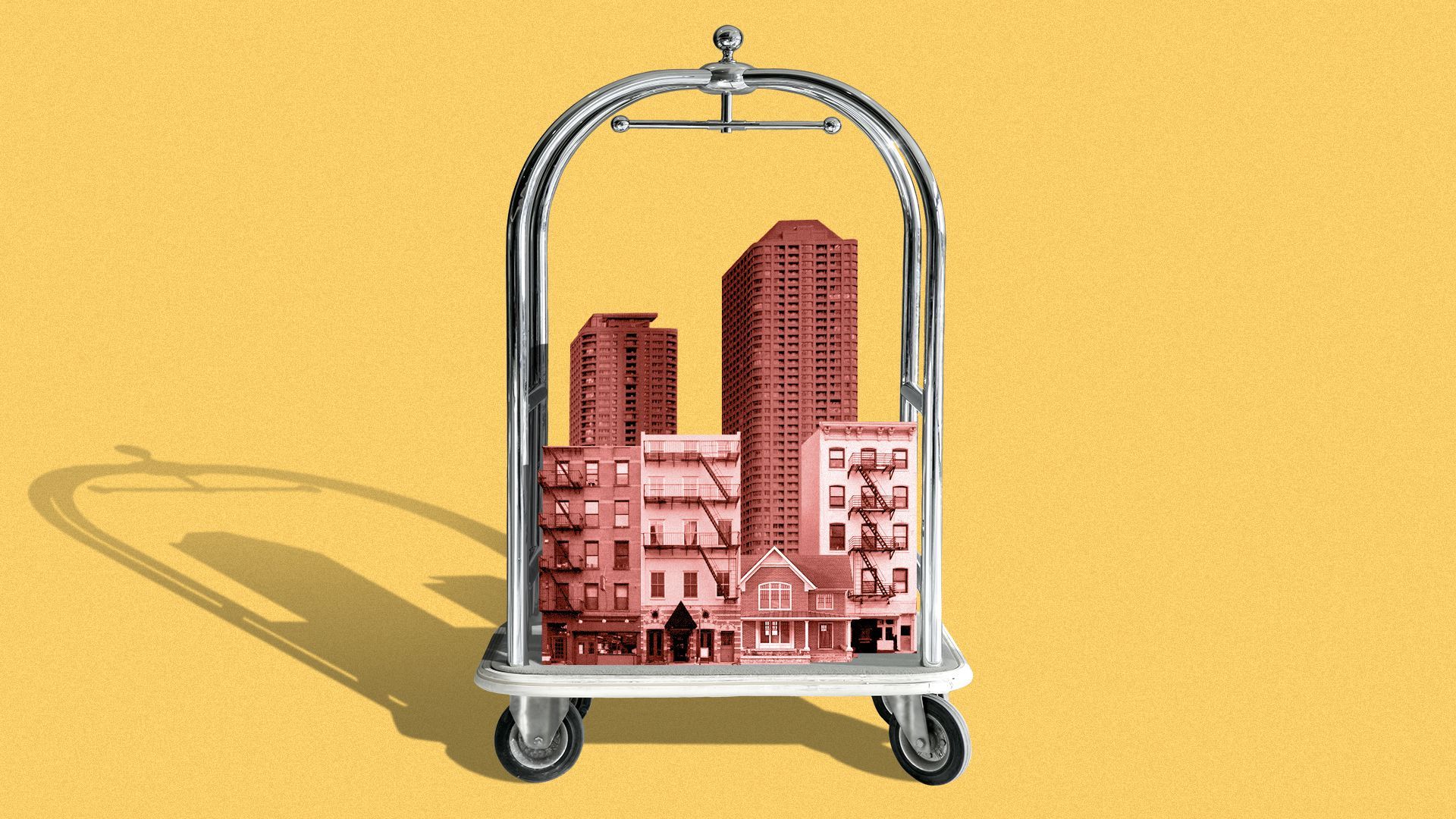
Illustration: Lindsey Bailey/Axios
Many communities nationwide are home to Airbnb listings but no hotels, the company says in a new blog post framing that data point as evidence that it helps boost what it calls "dispersed travel," Alex reports.
Why it matters: Airbnb's presence in smaller communities outside traditional tourism zones is controversial.
- Airbnb hosts are sometimes accused of effectively reducing the supply of local housing and thus driving up prices — but the company argues that its presence brings tourism dollars to areas that wouldn't normally see them.
By the numbers: As of 2022, about 65% of U.S. census tracts had at least one Airbnb listing but zero hotels, per an Airbnb analysis based on internal and OpenStreetMap data.
- More than 44 million users stayed in such communities last year, "generating more than $10.5 billion in host earnings," the company says.
Zoom in: Some popular domestic destinations reporting their first Airbnb bookings in the first quarter of 2023 include Bailey, North Carolina; Independence, Wisconsin; and Fort Branch, Indiana.
The bottom line: Even as some communities seek to better regulate Airbnb and other short-term rental platforms, the hotel alternative clearly continues to spread.
3. New protections for pregnant workers
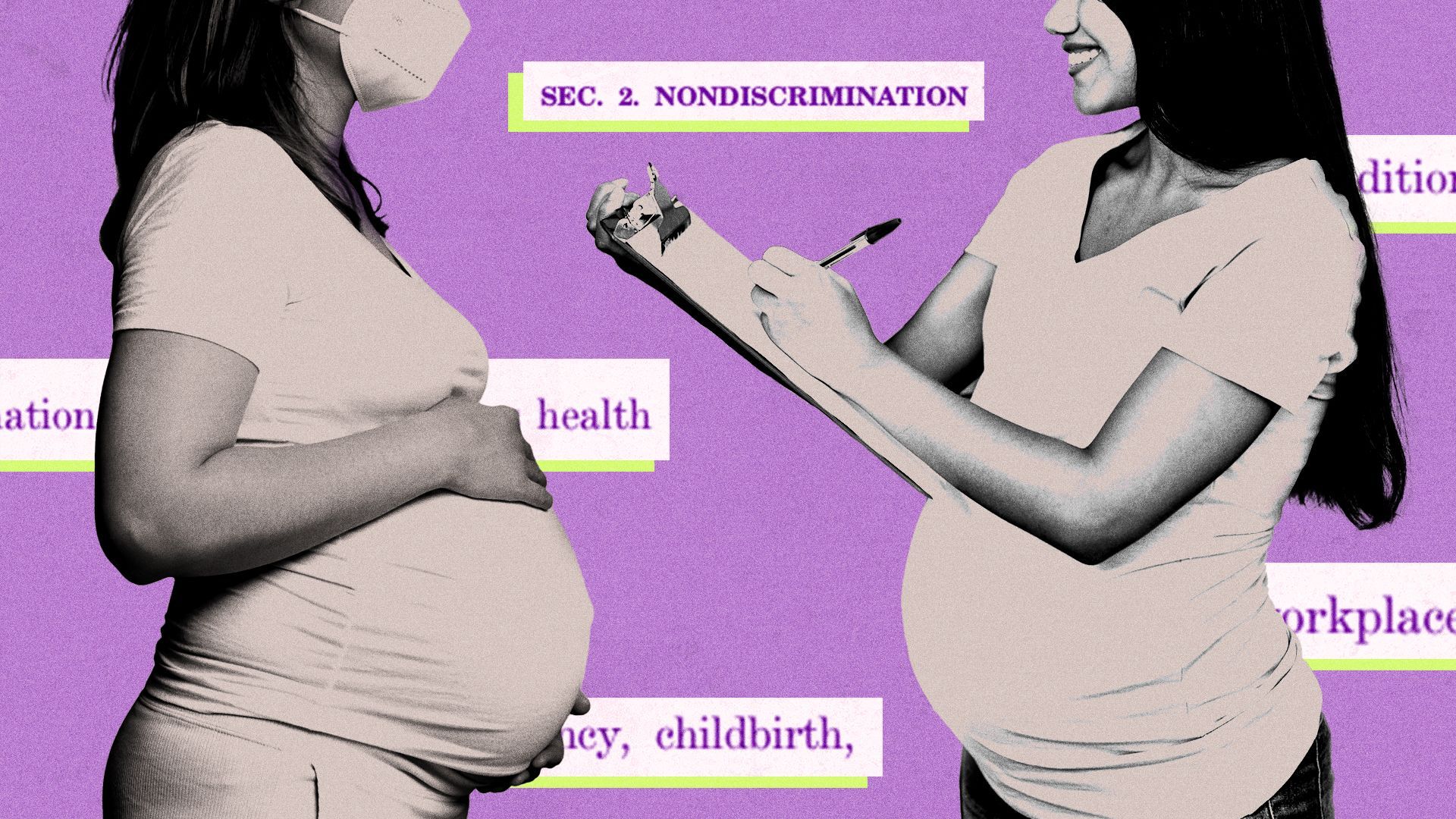
Illustration: Shoshana Gordon/Axios
A new federal law protecting the rights of pregnant workers takes effect next week, Axios' Emily Peck reports.
Why it matters: The Pregnant Workers Fairness Act is a major advancement for the rights of pregnant workers, and has the potential to increase women's labor force participation over the long term.
Details: The law requires employers with more than 15 employees to provide reasonable accommodations to pregnant workers, as well as those recovering from childbirth and those who need to pump breast milk at work.
- For example, a retail worker may need extra bathroom breaks or to carry a bottle of water on the store floor; a cashier might ask to sit on a stool while working.
Yes, but: Employers can claim a "hardship" exemption if they truly can't make anything work.
The big picture: 2.8 million women a year are pregnant on the job — that's 70% of all pregnant women in the U.S., per one analysis of census data.
- In other words, the new law has the potential to keep millions of women attached to the workforce, and comes as the U.S. lags behind other countries in women's labor force participation.
4. Overheating pigs? There's an app for that
Image courtesy of USDA
Livestock producers are turning to a new app to help keep their pigs from overheating, Axios' Ayurella Horn-Muller reports.
Why it matters: Heat stress threatens animals' welfare, with consequences ranging from deteriorating health to reduced reproductive abilities.
How it works: The app, called HotHog, predicts pigs' potential thermal stress based on their location.
- It uses open-sourced weather data coupled with behavioral and physiological swine research — effectively forecasting the temperature and humidity conditions that can cause a pig to become overheated.
What they're saying: "By the time you can actually see a pig suffering from heat stress ... oftentimes it's too late to start implementing cooling technologies," says Jay Johnson, a USDA Agricultural Research Service scientist who led the HotHog development team.
- The idea emerged from a lack of tools available to help livestock producers adapt to climate change, Johnson says.
- "Our bigger concern is the increase in both the severity and the frequency of some of these high heat events that we see occurring in the Midwest, United States and everywhere globally."
Big thanks to What's Next copy editor Amy Stern.
Was this email forwarded to you? Get your daily dose of What's Next by signing up here for our free newsletter.
Sign up for Axios What's Next

The next decade of big, sweeping changes will unfold in cities and communities where new technologies like 5G, AI and drones are transforming how we work, live and play together. What’s Next will guide you through the revolution.