Axios What's Next

January 18, 2023
Wait, don't throw out that apple core! There's a new, more environmentally friendly option, Alex reports today.
Today's newsletter is 1,082 words ... 4 minutes.
1 big thing: Rethinking food waste
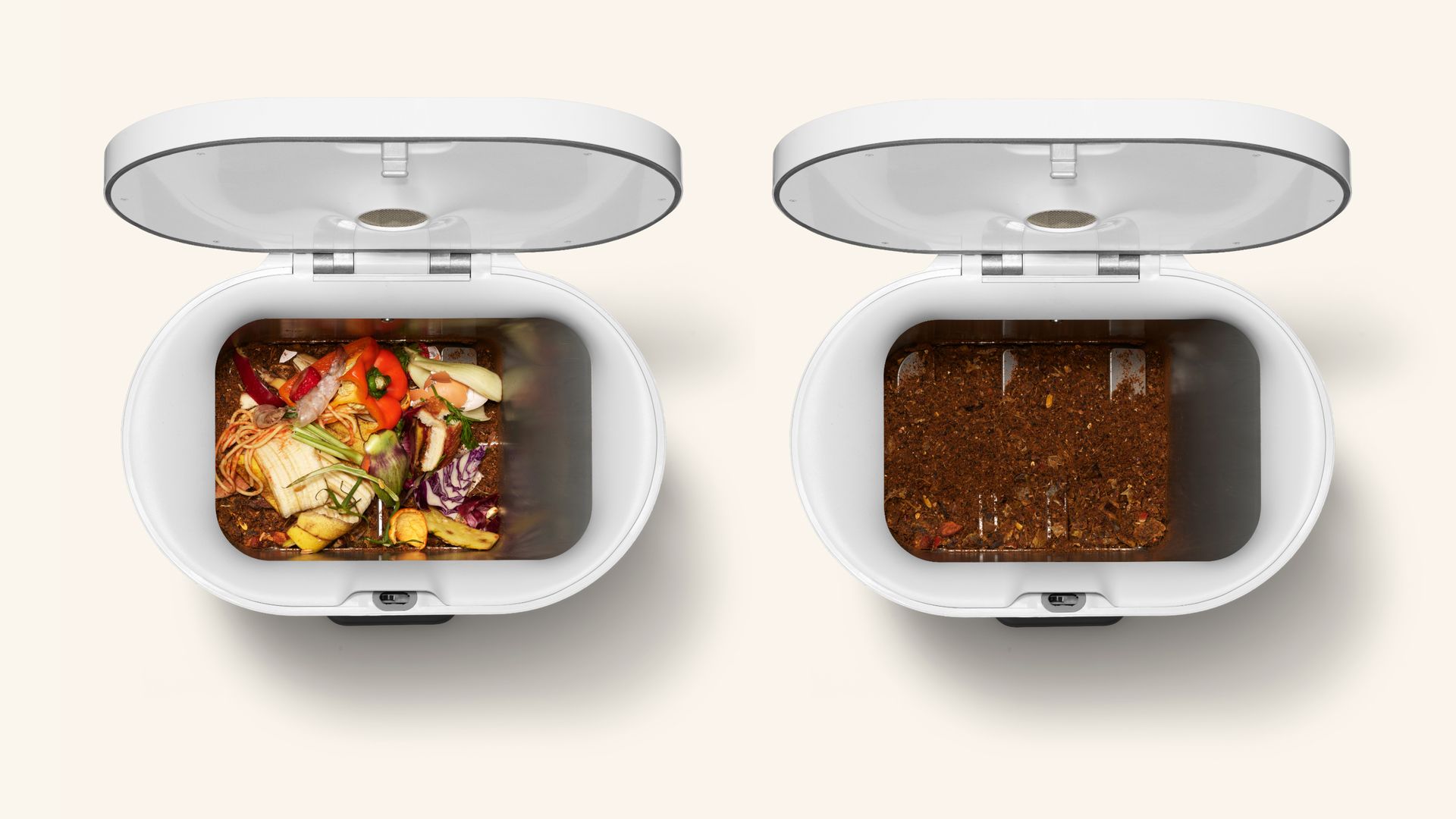
Mill's food scrap bin, before and after. Photo courtesy Mill
A new green tech startup wants us to rethink what we do with our banana peels, pepper tops and other kitchen scraps, Alex Fitzpatrick reports.
Why it matters: Scraps thrown away in the regular trash often wind up in landfills, where they generate methane, a greenhouse gas.
- Landfills account for nearly 15% of human-related methane emissions, per the U.S. Department of Agriculture.
How it works: The new company, called Mill and launched Tuesday, is part hardware startup, part subscription service.
- Customers are sent a bin for their kitchen scraps. The bin — which needs to be plugged in to an outlet — dehydrates and mashes scraps into a substance not unlike ground coffee.
- When the bin is full, subscribers can empty the contents into a prepaid mailing box to be sent back to Mill.
- Mill is working with regulators on plans to turn the resulting material into an ingredient for chicken feed — meaning it would be kept in the food cycle, rather than ending up in a landfill.
Of note: Mill's bin syncs with a smartphone app that shows users how much food they've kept out of the landfill and other interesting data.
- Subscriptions start at $33 a month, bin included.
Yes, but: Plenty of people compost their kitchen scraps, often through free town or city programs.
- However, Mill's process differs from composting in that the bin's contents don't decompose — meaning there's no composty smell.
What they're saying: "You're probably thinking, 'How could it make sense to mail this stuff and heat this material, and have that pencil out?'" says founder and CEO Matt Rogers, referring to the company's emissions footprint.
- "And it does, actually, even including manufacturing and all the things that go into making the bin, processing and mailing."
- "All the upcycling we do, it saves about a half-ton of emissions per household per year," says Rogers, who co-founded smart home company Nest.
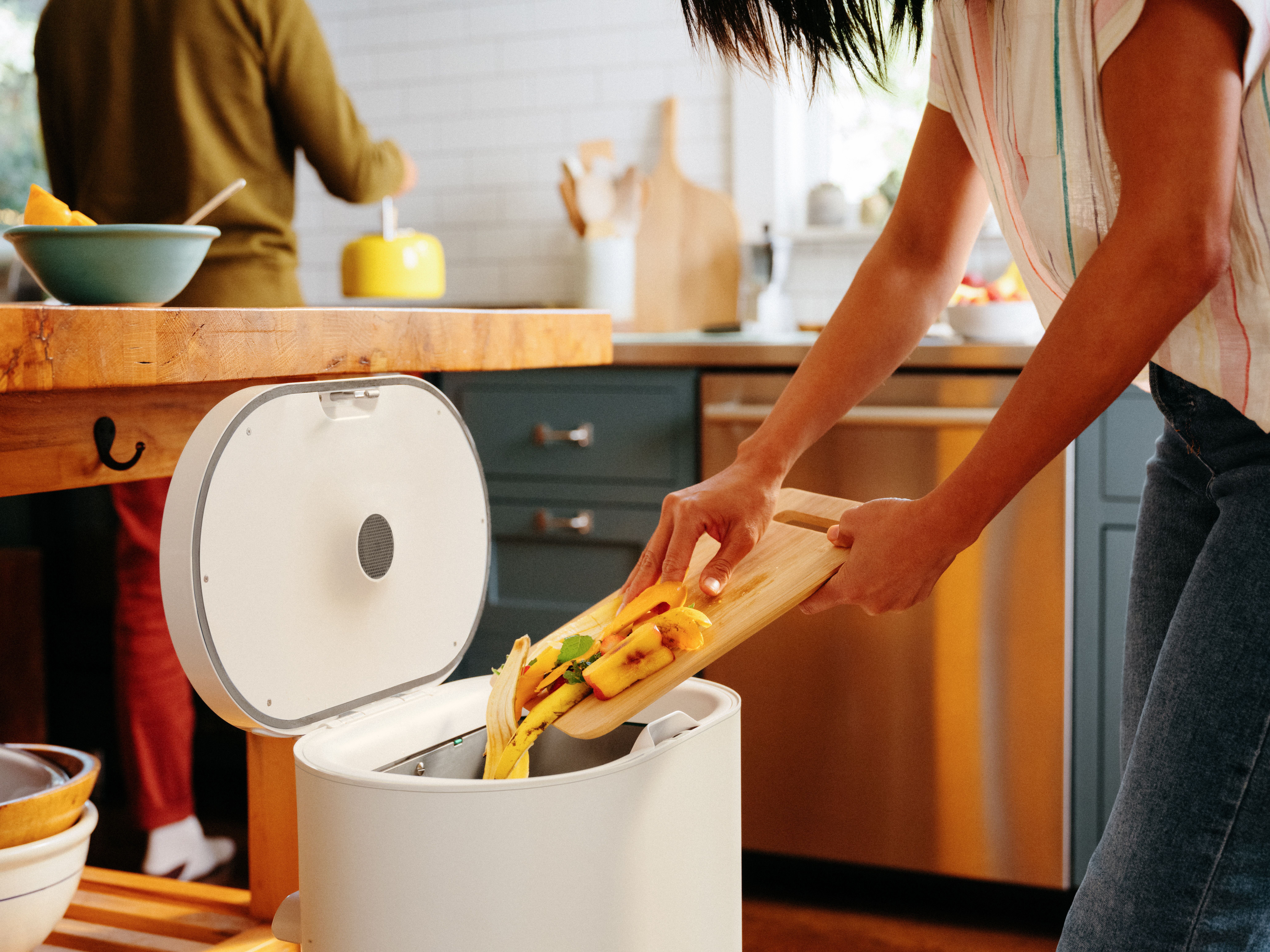
Mill's consumer pitch, adds Rogers, is both altruistic — subscribers feel like they're doing something to fight climate change — and financial.
- "In a lot of cities around the country, you pay for your trash service, and you pay based on the size of the bin — the bigger the bin, the more you pay. So when you can take the food waste out of the trash, you could downsize your bin and save money."
- "The average American household makes between 500 and 600 pounds of food waste a year. But when you take the water out, it gets about 80% smaller. So we're talking about a shoebox or two a month per household."
What's next: Commercial service is a possibility — but homes were the better initial target because they account for the most landfill-bound food waste, Rogers says.
- "Even in the most well-meaning, most progressive cities that are doing everything right, they are still having trouble getting folks to put the food waste in the green bin."
2. Behind Tesla's price cuts

Illustration: Maura Losch/Axios
Tesla's recent price cuts were driven by rising competition and less favorable economic conditions, Axios' Hope King writes.
Driving the news: Tesla has one of the highest brand loyalty rates among luxury car names in the U.S., and continues to dominate new electric vehicle (EV) registrations.
- But its EV market share has declined from 79% in 2020 to 65% as of September, according to S&P Global Mobility.
Worth noting: Tesla had been raising prices over the past two years amid higher inflation.
- CEO Elon Musk said last year the company's prices had gotten "embarrassing," and he hoped to bring them down.
What to watch: Customer loyalty.
- People who bought their vehicles before the cuts have been lamenting the tens of thousands of dollars in savings they missed out on.
đź’¬ Joann's thought bubble: Tesla has just two major arrows in its quiver: the Model 3 and Model Y.
- But they may not be enough to entice shoppers whose heads may be turned by a far greater number of options from other manufacturers.
3. FAA fight reignites
Senate Majority Leader Chuck Schumer speaking in the Capitol in December 2022. Photo: Anna Moneymaker/Getty Images
Senate Majority Leader Chuck Schumer (D-N.Y.) will push to confirm President Biden's pick to lead the Federal Aviation Administration, he said Sunday, after the agency suffered a major system outage last week.
Why it matters: The FAA has been without a confirmed administrator since March.
- Biden's pick, Phillip Washington, has yet to have a confirmation hearing, despite being selected in July.
What they're saying: "With recent events, including airline troubles and last week's tech problem, this agency needs a leader confirmed by the Senate immediately," Schumer said in a statement.
The other side: Republicans say Washington should not be approved because he lacks aviation experience, and because he was named in a criminal search related to his time as CEO of Los Angeles' Metropolitan Transportation Authority.
- A warrant, carried out by the Los Angeles County Sheriff’s Department, indicated that investigators are seeking information about possible contract favoritism.
- Washington, currently the CEO of Denver International Airport, has denied wrongdoing.
4. 📸 Smoothies, anyone?
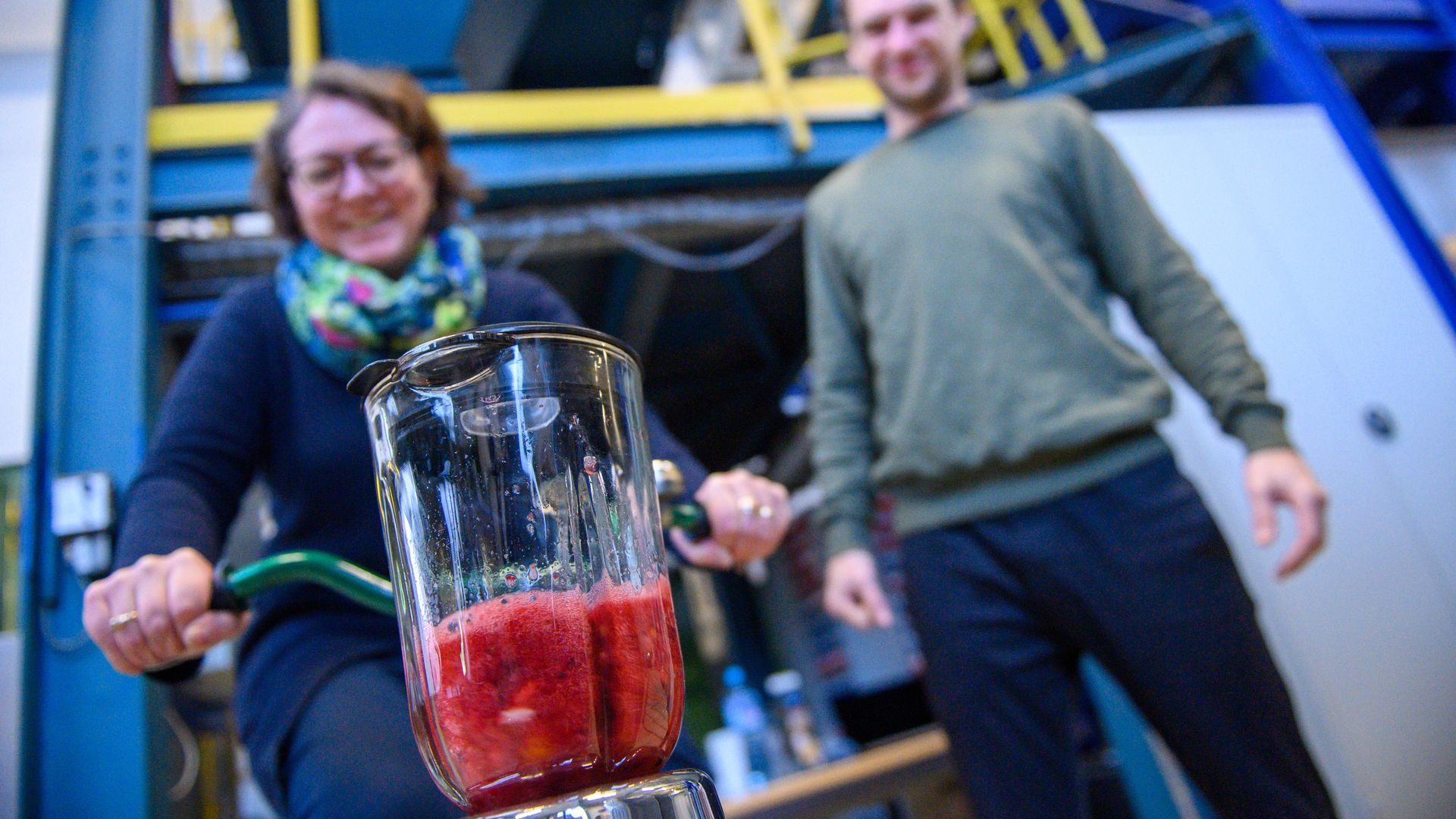
Photo: Klaus-Dietmar Gabbert/Picture Alliance via Getty Images
A German technology teacher tests a bicycle-powered blender designed to get students interested in tech and engineering.
- The zero-electricity blender — built by student teachers at Otto von Guericke University Magdeburg — will be mixing up environmentally friendly smoothies at International Green Week in Berlin.
- The annual event, which begins Jan. 20, bills itself as the "leading international trade fair for food, agriculture and horticulture."
5. One fun thing: Carbon-neutral beer
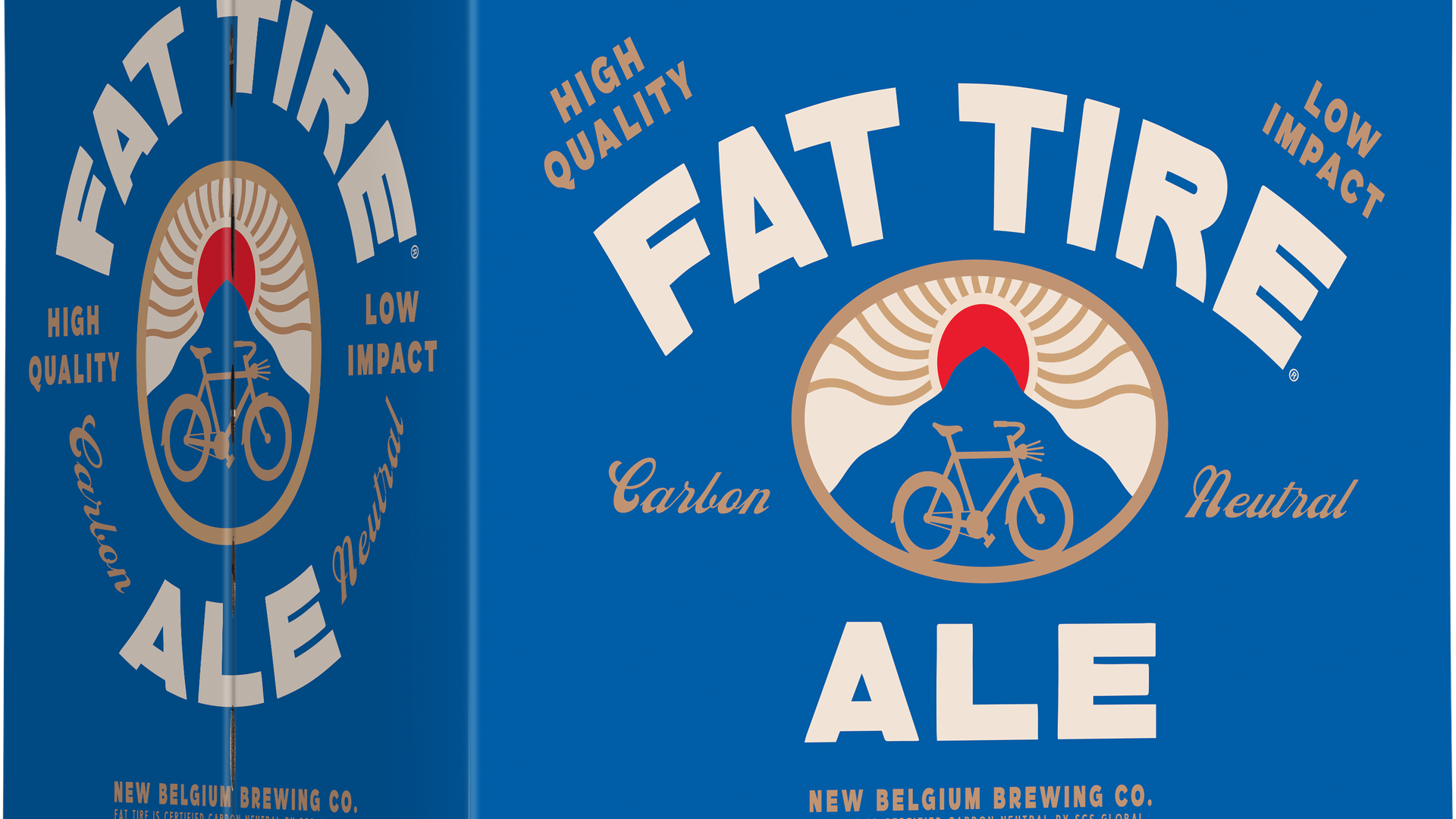
Image courtesy of New Belgium Brewing Co.
Fat Tire Ale, the iconic craft brew that inspired a generation of independent beer fans, is getting a new recipe and a new look meant to attract climate-conscious consumers, Axios' John Frank reports.
Driving the news: Fat Tire maker New Belgium Brewing Co. introduced a new tagline and packaging Tuesday, reading "high quality, low impact" — a reference to the beer's zero-emissions production process.
- The prior easy-drinking amber is now a crisper golden ale meant to appeal to the tailgate crowd — but the brewer says longtime fans will notice original flavor threads.
- The move is aimed at "the current generation of new craft drinkers," New Belgium CEO Steve Fechheimer tells Axios. The younger generation "is a group that really cares about the brands they purchase."
Between the lines: To make the production of Fat Tire carbon-neutral, the brewery revamped its supply chain and production process, but needed to buy carbon offsets to close the remaining gap.
- Those offsets are financing decarbonization projects, regenerative agriculture and more.
- Fat Tire has been carbon neutral for years, but New Belgium is just now making that fact the face of the beer's story.
Big thanks to What's Next copy editor Amy Stern.
Was this email forwarded to you? Get your daily dose of What's Next by signing up here for our free newsletter.
Sign up for Axios What's Next

The next decade of big, sweeping changes will unfold in cities and communities where new technologies like 5G, AI and drones are transforming how we work, live and play together. What’s Next will guide you through the revolution.