Axios What's Next

April 01, 2024

Korean brands Hyundai and Kia are quietly becoming automotive superpowers in the U.S., Joann reports today.
Today's newsletter is 1,252 words ... 5 minutes.
1 big thing: Hyundai, Kia seek EV dominance
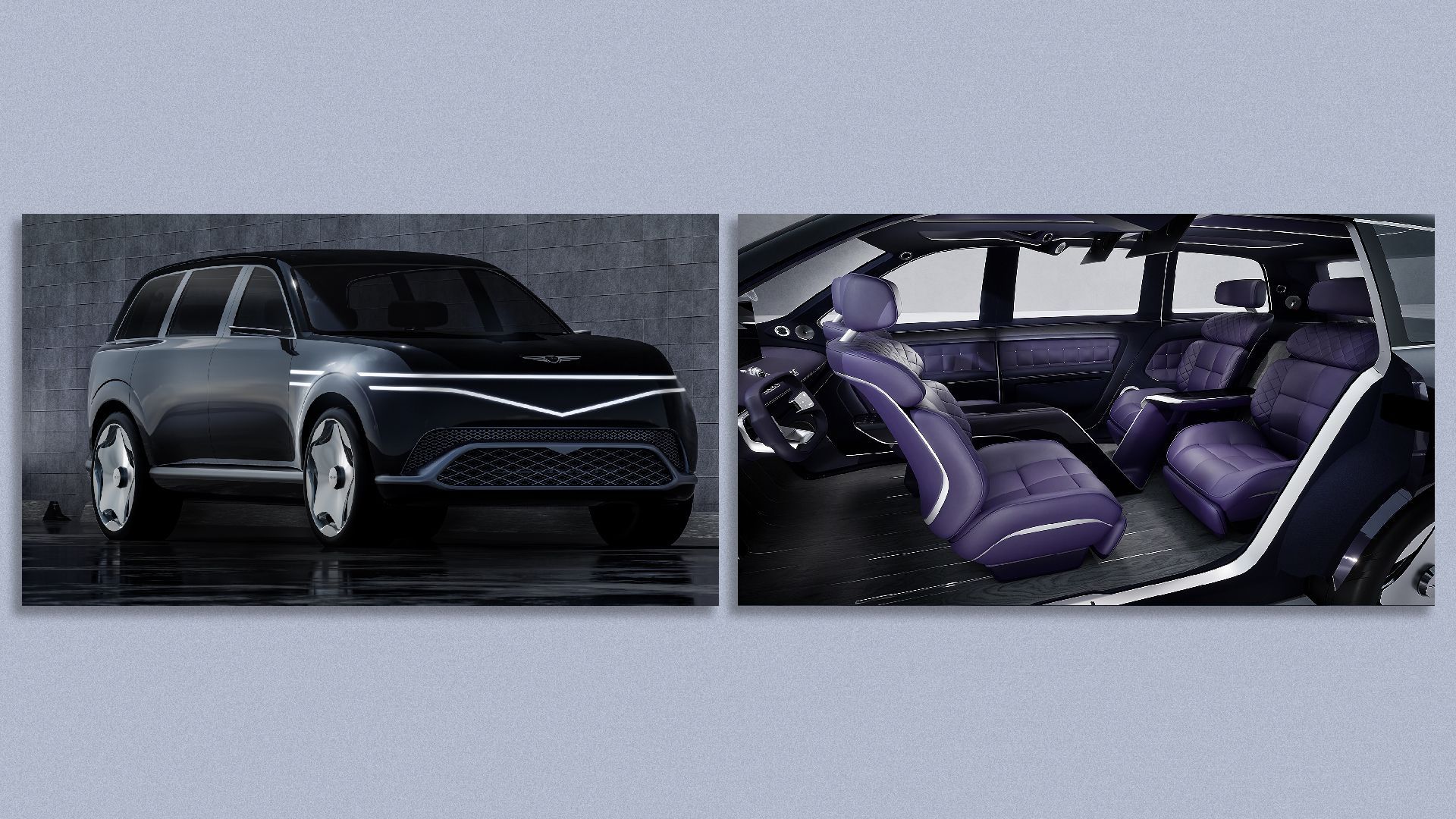
The Genesis Neolun concept, which envisions a full-size luxury SUV from Hyundai Motor Group. Photo courtesy of Genesis
Auto shows don't have as many glitzy debuts as they used to — except when it comes to the relentless Korean brands Hyundai, Kia and Genesis, which keep rolling out new models at a blistering pace, Joann reports.
Why it matters: Hyundai Motor Group — the parent of all three brands — is arguably the hottest carmaker in America, stoking consumer interest with fresh, sometimes risky designs, high-tech features and a hard-won reputation for reliability — at a price that typically beats the competition.
- The group is now the fourth-largest automaker in the U.S., behind General Motors, Toyota and Ford, having overtaken Stellantis, maker of Jeeps and Ram trucks, last year.
Driving the news: The Korean trio dominated last week's new model introductions at the 2024 New York International Auto Show.
- Hyundai debuted a new version of its bestselling Tucson SUV, with a dramatic interior upgrade and new infotainment technology, along with a refreshed Santa Cruz "sport adventure vehicle."
- Kia unveiled its new K4 compact sedan, sharply designed with an array of tech and safety features rarely found in small cars.
- Genesis, the group's luxury nameplate, launched a new high-performance line called Magma and unveiled a dazzling concept, the Neolun, that suggests what a future full-size electric SUV could look like.
Between the lines: Hyundai Group's scrappy, risk-taking culture is a big reason for its success, industry experts tell Axios.
- In 2009 during the Great Recession, for example, Hyundai made an unusual offer: Anyone who bought a Hyundai and later lost their job could return it without hurting their credit.
- The company reprised the program during the COVID-19 pandemic.
- "They gave people confidence during an uncertain environment," says Stephanie Brinley, principal automotive analyst at S&P Global Mobility. "The message to consumers was, 'We've got your back.'"
Friction point: Kia and Hyundai recently tried to make good with customers whose cars were susceptible to theft in a TikTok-fueled craze.
- They gave away free steering wheel locks and offered software and hardware upgrades to owners whose cars lacked common anti-theft engine immobilizers.
- The fiasco proved costly, however. This summer a judge is expected to finalize a $145 million class-action settlement.
What they're saying: Hyundai and Kia are now seeking to become EV leaders.
- "For EVs, everyone has a blank slate and is starting over. So what you want to do strategically is to run out ahead of everybody else as fast as you can and gain that share," Steven Center, Kia America's chief operating officer, tells Axios.
- "There's too much to lose."
Zoom in: When the imported Hyundai Ioniq 5 and Kia EV6 lost their eligibility for federal tax credits under 2022's Inflation Reduction Act, the resulting price disadvantage caused their market share to skid.
- The brands pivoted to leasing, which didn't face the same restrictions.
- Now, roughly half of Hyundai and Kia EVs are financed through attractive lease deals, like this "crazy cheap" $239-per-month offer on the Ioniq 6 spotted recently by automotive search engine CarsDirect.
By the numbers: After a brief dip, Hyundai Group's EV sales are once again surging, accounting for a healthy 7.8% of the EV market.
What's next: "America is our most important market, and so we are betting really big time here," says Jose Munoz, president and global chief operating officer of Hyundai Motor Co.
- That means doubling down on EVs, including through a $12.6 billion assembly plant near Savannah, Georgia, and two joint venture battery factories with Korean partners (reopening access to U.S. tax credits).
What we're hearing: There are industry whispers that Hyundai and Kia are scoping out the electric pickup market.
- With lots of new entries in the segment, it sounds like an uphill battle — but that hasn't stopped them before.
2. Two weeks with Apple's Vision Pro

A customer tries a Vision Pro in Los Angeles on Feb. 2, 2024. Photo: David Swanson/AFP via Getty Images.
Axios AI+'s Ina Fried spent two weeks wearing Apple's Vision Pro headset while sitting in airplanes, watching movies in bed and writing articles from her living room couch.
- "The experience confirms and strengthens my initial impressions of Apple's buzzy device," Ina writes in her review.
Zoom in: I've been waiting for the right opportunity to put the Vision Pro through its paces, and a recent trip to Washington, D.C., seemed like a good chance.
- I packed the headset in its $200 case in my backpack, and threw in a keyboard and trackpad.
On the way to D.C., I started watching "Inside Out" in one virtual window, while doing a little work in another.
- The tray table comfortably held the keyboard and mouse. The in-seat power outlet meant I also didn't have to deal with another of the Vision Pro's limitations — its short battery life.
I'm sure I looked ridiculous. But I managed to drink tomato juice and eat breakfast, with no spills. I also purchased in-flight Wi-Fi and started this article.
- It was easy to multitask, with "Inside Out" still playing as I opened various tabs and windows.
Reality check: Living in the future is fun for a while, but then it starts to weigh on you — physically and literally.
- The Vision Pro quickly feels heavy on your face, and using it is cognitively more complex than just watching TV while doing some work on a phone or laptop.
3. 📸 Xiaomi's budget Tesla rival
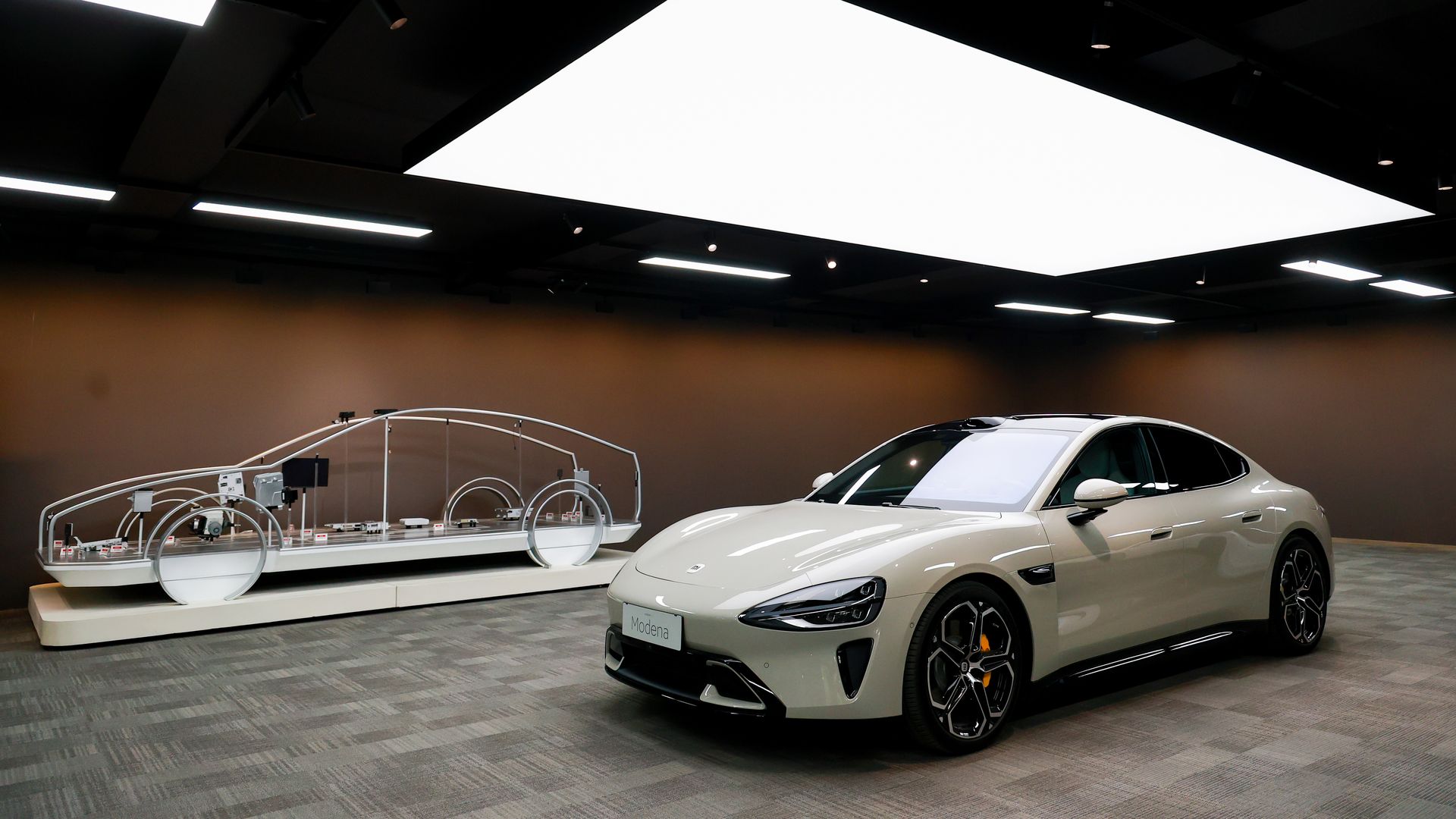
Photo: VCG via Getty Images
Chinese smartphone maker Xiaomi last week revealed the SU7, an electric car meant to battle Tesla's Model 3 on the company's home turf, Alex reports.
Why it matters: China is a hugely important market for Tesla, but the automaker has been losing market share there to Chinese rivals like BYD.
Driving the news: The SU7 will start at about $30,400 — less than the Model 3's price in China, per CNBC.
- Xiaomi is selling those budget models at a loss, CEO Lei Jun said during a reveal event last week.
Reality check: The jury's out on whether a smartphone maker can build a decent car — an effort Apple recently abandoned.
What's next: Chinese automakers have made big inroads in foreign markets like Europe. Now they're eyeing the U.S. — but the White House is pushing back.
4. Taste test: Fish-free seafood
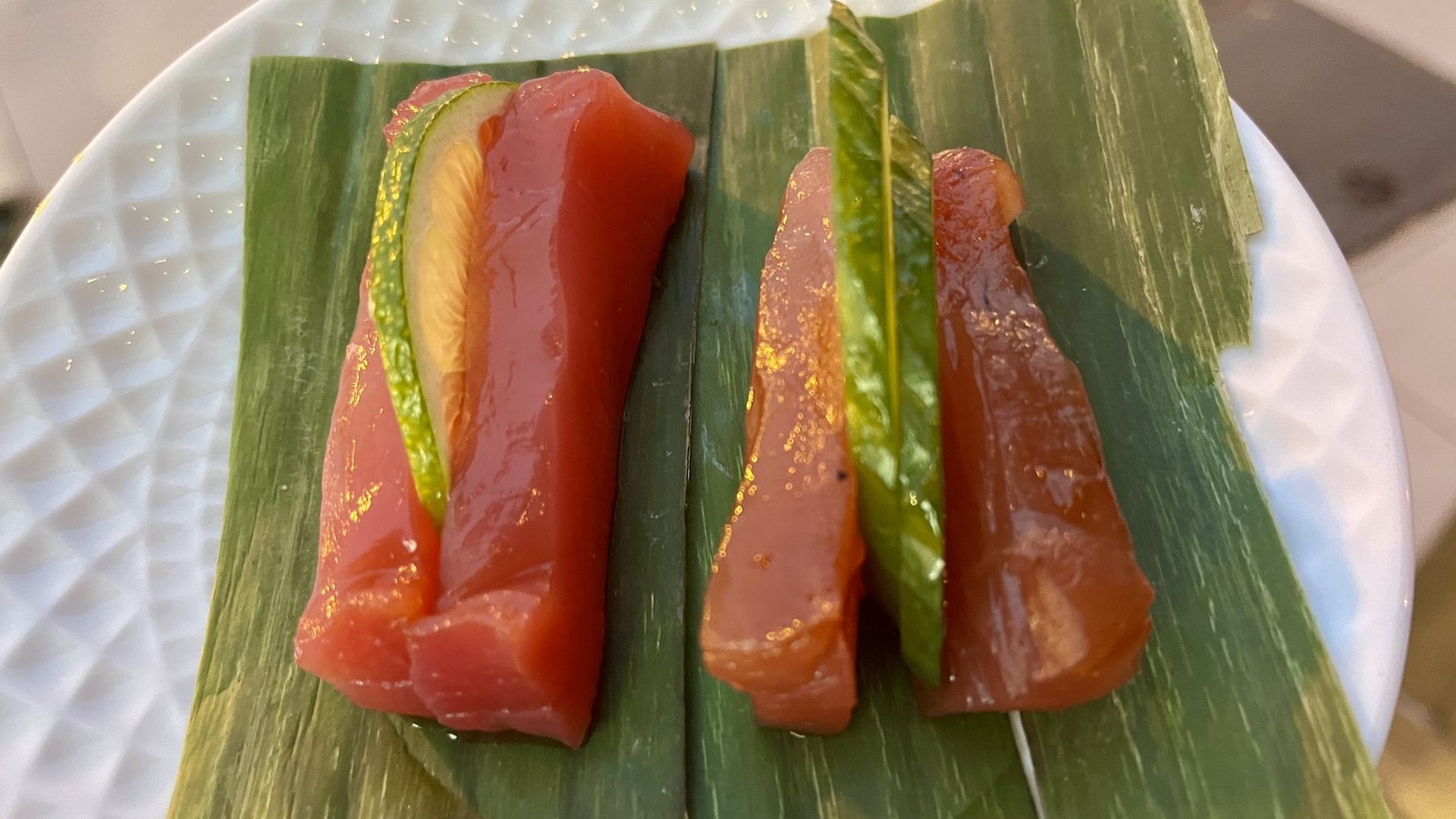
Aqua Cultured Foods' fish-free tuna (left) next to real tuna as a test. Photo: Monica Eng/Axios
Fish-free seafood from a Chicago startup could be about to land on your plate, Axios Chicago's Monica Eng reports.
Driving the news: Aqua Cultured Foods has worked for three years to create fish-like products via a patent-pending process using cellulose, an insoluble fiber found in fruits, vegetables and other plants.
How it works: Anyone who has ever home-brewed kombucha will be familiar with the layer of cellulose, called a SCOBY (symbiotic colony of bacteria and yeast), that grows on top. Aqua uses a similar method.
- "We basically take sugar, water and nutrients, add our microorganism to that broth and let it sit in a temperature-controlled room for a couple of weeks," Aqua co-founder Brittany Chibe tells Axios, noting that a layer of cellulose grows in that solution.
- "We put that cellulose through a pasteurization step and add a flavor system and a color system, so when you see our tuna, it essentially looks just like a tuna filet."
Caveat: Aqua's products have not yet passed FDA muster, but Chibe says they hope to secure approval this year.
Dig in: Monica recently tried a few dishes with Aqua products at a private dinner. She reports:
- The nearly unadorned "tuna sashimi" struck me as too firm and bland, especially compared with the real thing served next to it.
- And the buttery texture and oceany flavor in the "tuna tiradito" still haunts me.
Yes, but: The "scallops" crudo with crispy rice and dill oil delivered delightful texture and taste.
Big thanks to What's Next copy editor Amy Stern.
Was this email forwarded to you? Get your daily dose of What's Next by signing up here for our free newsletter.
Sign up for Axios What's Next

The next decade of big, sweeping changes will unfold in cities and communities where new technologies like 5G, AI and drones are transforming how we work, live and play together. What’s Next will guide you through the revolution.