Axios Vitals

June 10, 2024


Welcome back, Vitals gang. Today's newsletter is 1,050 words or a 4-minute read.
1 big thing: Dobbs ignites physician activism

The wave of state abortion restrictions that began after the Supreme Court's reversal of Roe v. Wade in 2022 has led Democratic-leaning doctors to become an organizing and political force against such laws.
Why it matters: Doctors driving the backlash say many of the new state laws jeopardize patients' health and restrict their ability to practice medicine.
- Their push coincides with the erosion of the historical alliance between Republicans and the American Medical Association, which has staked out progressive stances on topics including trans care and gun violence.
- It's also reminiscent of how the ACA sparked a wave of political activism among Republican-leaning doctors who were eager to push back on what they saw as an intrusive government.
The big picture: In Ohio, doctors have worked to pass a ballot measure that enshrined reproductive rights into the state's constitution. In Texas, they've battled in court over a narrow exception to the state's abortion ban.
- "We really felt strongly that doctors needed to be at the front of this movement for reproductive rights, because it's our responsibility to make sure our patients can get the care that they need," said Ohio pediatrician Lauren Beene, who worked on the Ohio ballot measure.
State of play: At least six Democratic doctors are running for competitive House seats this year, seizing on voters' concerns about reproductive health and high health care costs.
- In Congress, it's often Republican doctors, who have their own caucus, driving conversations about how medicine is practiced.
- Kristin Lyerly, a Wisconsin OB-GYN running as a Democrat for an open House seat, says that having more physicians in Congress who support abortion rights would "completely redefine the conversation that we're having" about access to care.
Reality check: Having an M.D. doesn't assure political success. Of the four Democratic doctors who ran for House seats two years ago, only Rep. Yadira Caraveo of Colorado won.
2. Long-awaited Alzheimer's drug review


The outlook for the latest experimental drug shown to delay Alzheimer's disease will come into focus today, when FDA advisers review an application from Eli Lilly that's been held up by questions about the design of clinical trials and safety risks.
Why it matters: Their conclusions could influence how the FDA treats future drugs that target proteins in the brain known as amyloid plaques that are believed to contribute to Alzheimer's.
State of play: Lilly's antibody donanemab was shown to be effective in slowing Alzheimer's progression by about a third, and it could become the second drug of its kind to receive FDA approval.
- Lilly had expected FDA approval to come early this year, but the agency in March unexpectedly called for an outside review after some patients enrolled in a clinical trial experienced brain swelling, bleeding and other adverse events.
- An FDA staff briefing document cites disagreements between the agency and Lilly over the company's decision to change the measures of cognitive function used as the primary endpoint of the clinical trial.
- It also questions whether levels of another protein called tau that builds up in the brain of Alzheimer's patients should be used to limit which patients get the drug, which would shrink the potential market for the treatment.
The other side: Lilly in briefing documents defended the trial design and said tau levels shouldn't determine potential candidates for the treatment.
3. Wildfires linked to early deaths
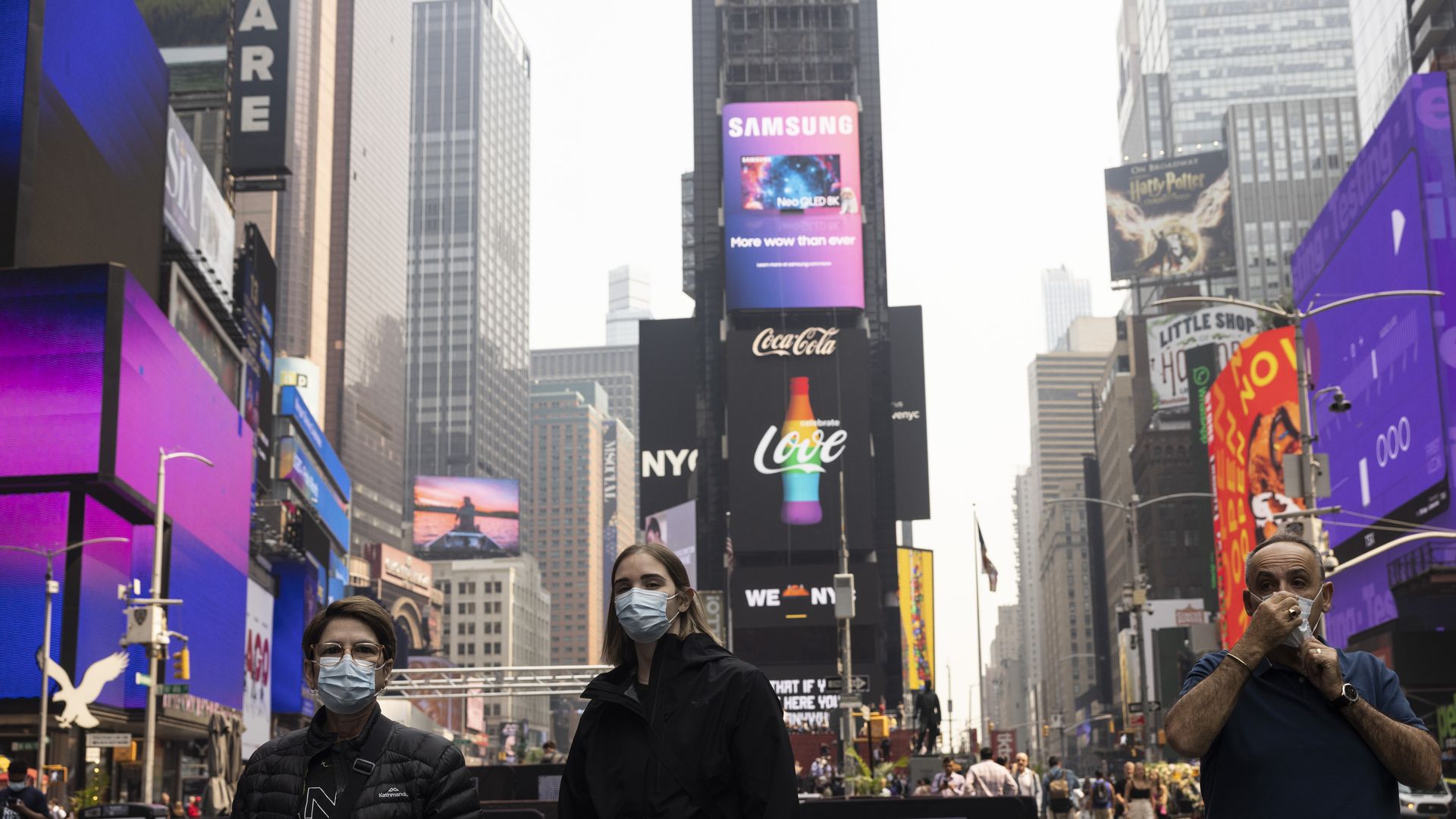
Dangerous particles in wildfire smoke led to tens of thousands of premature deaths in California in just over a decade, according to a new study.
Why it matters: The researchers said it's the first study examining the impacts of chronic, long-term exposure to wildfire smoke, which contains dangerous particulate matter that can travel into the lungs and bloodstream.
What they found: Tiny particles known as PM2.5 led to an estimated 52,500 to 55,700 early deaths across an 11-year period between 2008 and 2018, according to an analysis from UCLA researchers in Science Advances.
Those premature deaths also had an economic impact of at least $432 billion and during this time accounted for about 20% of deaths in California caused by PM2.5, which are also emitted by cars, stoves, power plants and other sources.
- Though the study looked at an especially wildfire-prone state, extreme heat is making dangerous fire weather conditions more common across the country, including in places not usually exposed to wildfire smoke.
What they're saying: While the state and federal governments have committed about $6.7 billion for wildfire mitigation, the researchers argue more investment could save money in the long run by preventing the health impacts of wildfires and other consequences.
4. New drug fears

There are growing warnings about a potent animal tranquilizer that's showing up in more of the illegal drug supply.
The big picture: Medetomidine has been linked to recent overdose deaths in the Midwest and Northeast, and is the latest example of how street drugs are becoming deadlier as more substances are mixed into illicit fentanyl and other opioids.
The latest: The federal government last year warned about the spread of another animal tranquilizer — xylazine, or "tranq" — that can lower blood pressure to dangerous levels, cause blackouts and damage skin severely enough to require amputations.
- Medetomidine is thought to be even more potent. It first appeared in Maryland as early as two years ago and — similar to the path of other drugs — is starting to move west, per NPR.
- Michigan officials on Thursday said it was found in three people who died of overdoses in unrelated cases, each in different counties.
- Philadelphia and Pittsburgh officials last month reported it showed up in their cities, and Chicago health officials also linked it to an increase in overdoses, according to NBC News.
"It's like a drip, drip, drip until it kind of explodes," Linda Cottler, director of the National Drug Early Warning System, told NBC. "This is the way drugs travel."
5. While you were weekending

🦠 A longer course of Paxlovid didn't improve long COVID symptoms in the first randomized clinical trial testing that question. (Bloomberg)
💊 Today is the deadline for drugmakers to affirm or remove patents appearing in FDA's Orange Book after the FTC flagged over 300 "junk patent listings." (Washington Post)
💉How former President Trump, if elected, could use the levers of the federal government to further the anti-vax agenda. (Politico)
🌈 The long odyssey of ecstasy as a potential mental health treatment. (New York Review of Books)
Thanks for reading Axios Vitals, and to health care editor Jason Millman and copy editor Matt Piper. Please ask your friends and colleagues to sign up.