Axios Vitals

May 08, 2023

Good morning, Vitals readers. Today's newsletter is 946 words or a 3½-minute read.
🍻 On tap this week: On Tuesday and Wednesday, an FDA advisory committee will weigh allowing the first over-the-counter birth control. But FDA staff last week raised concerns about drugmaker Perrigo's application for its Opill contraceptive.
- The Senate HELP Committee will hold a hearing Wednesday on insulin costs.
1 big thing: Pulling the plug on the public health emergency

Illustration: Shoshana Gordon/Axios
A number of health care changes that both providers and patients have grown used to during the pandemic will disappear on Thursday as the COVID public health emergency ends.
Why it matters: Congress has stepped in already and extended a number of COVID-era flexibilities. But the end of others could hurt access to health care, make it more costly, and stymie some of the positive innovations that emerged from the pandemic, providers say.
- "There's not a lot of great stuff that happened during the [public health emergency], but what it did do is it actually truly was an impetus for us to develop programs for access for patients," Edmund Fernandez, medical director of telehealth for Advocate Aurora Health, told Axios.
After May 11, the requirement for private insurance to cover over-the-counter and laboratory COVID tests without cost-sharing will end and Medicare beneficiaries won't be able to get free over-the-counter tests any more (although they'll still be covered without cost-sharing on lab tests that have been ordered by a provider.)
- People on Medicaid have a reprieve. HHS says they'll still have coverage without cost-sharing until Sept. 30, 2024. After that, it will be up to the states.
- COVID-19 vaccines will continue to be covered without cost-sharing for those on Medicare and Medicaid, and most of those with private insurance although there maybe be some exceptions on private plans.
Zoom in: Many telehealth flexibilities allowed during the emergency were extended through the end of the year, and in some cases through 2024.
Yes, but: Some flexibilities are going to disappear.
- For instance, a change that allowed Medicare-covered providers to use applications like Apple FaceTime, Facebook Messenger video chat and WhatsApp — through a temporary relaxation of the federal privacy law known as the Health Insurance Portability and Accountability Act (HIPAA) — will end.
- In addition, health care providers will no longer be able to prescribe controlled substances via telemedicine without an in-person interaction. However, the Drug Enforcement Administration is expected to initiate rulemaking that would extend these flexibilities under certain circumstances, per HHS.
2. Providers to feel impact of emergency's end
Among the most obvious financial hits for health systems that are coming is the loss of an emergency 20% pay bump for all inpatient COVID-19 patients, per accounting firm Ernst & Young.
- But there are other changes hidden with the end of regulatory waivers — like making it harder for hospitals to use telehealth to treat patients at different hospitals.
What they're saying: "When there were COVID surges, we'd have such a decreased staffing problem and it was very difficult to manage this," said Fernandez of Advocate Aurora Health.
- During the emergency, Advocate Aurora created a telehealth program pilot program — using telehealth carts that could be wheeled into patient rooms — that allowed hospitalists and specialists like neurologists or endocrinologists to remotely do daily rounds with patients across multiple hospitals.
- With the return of frequency limitations, telehealth for inpatients will now be limited to use once every three days rather than on a daily basis, which will raise costs for the health system, he said.
- "It's decreasing our ability to provide access we developed through the program for hospitals that don't have great coverage for specialty care," he said.
3. The impact of Medicaid work requirements

Illustration: Sarah Grillo/Axios
An estimated 1.7 million people would drop off Medicaid rolls next year if House Republicans' debt ceiling bill with Medicaid work requirements were to become law, Axios' Arielle Dreher writes about a new KFF analysis.
Why it matters: Though Democrats strongly oppose it, tying Medicaid coverage to work could factor into debt limit discussions or the broader budget process after the House endorsed an 80-hour per month requirement, which could save the federal government $109 billion over 10 years, per the Congressional Budget Office.
What they found: The KFF analysis assumes the work requirements would only apply in expansion states and only to Medicaid enrollees in the expansion group, since other categories like children and older adults would be exempt.
- The analysis estimates 16.7 million Medicaid enrollees in the expansion group would be between ages 19 and 55 in May 2024.
- If 10% fail to meet the work or reporting requirements, as CBO assumes, 1.7 million enrollees could lose eligibility for federal matching funds in 2024.
- If states opt to maintain coverage for the 1.7 million, the change would shift $10.3 billion from federal to state spending in 2024.
Supporters of the work requirements say they will encourage people to get jobs to lift themselves out of poverty.
4. The CDC's new short-timer
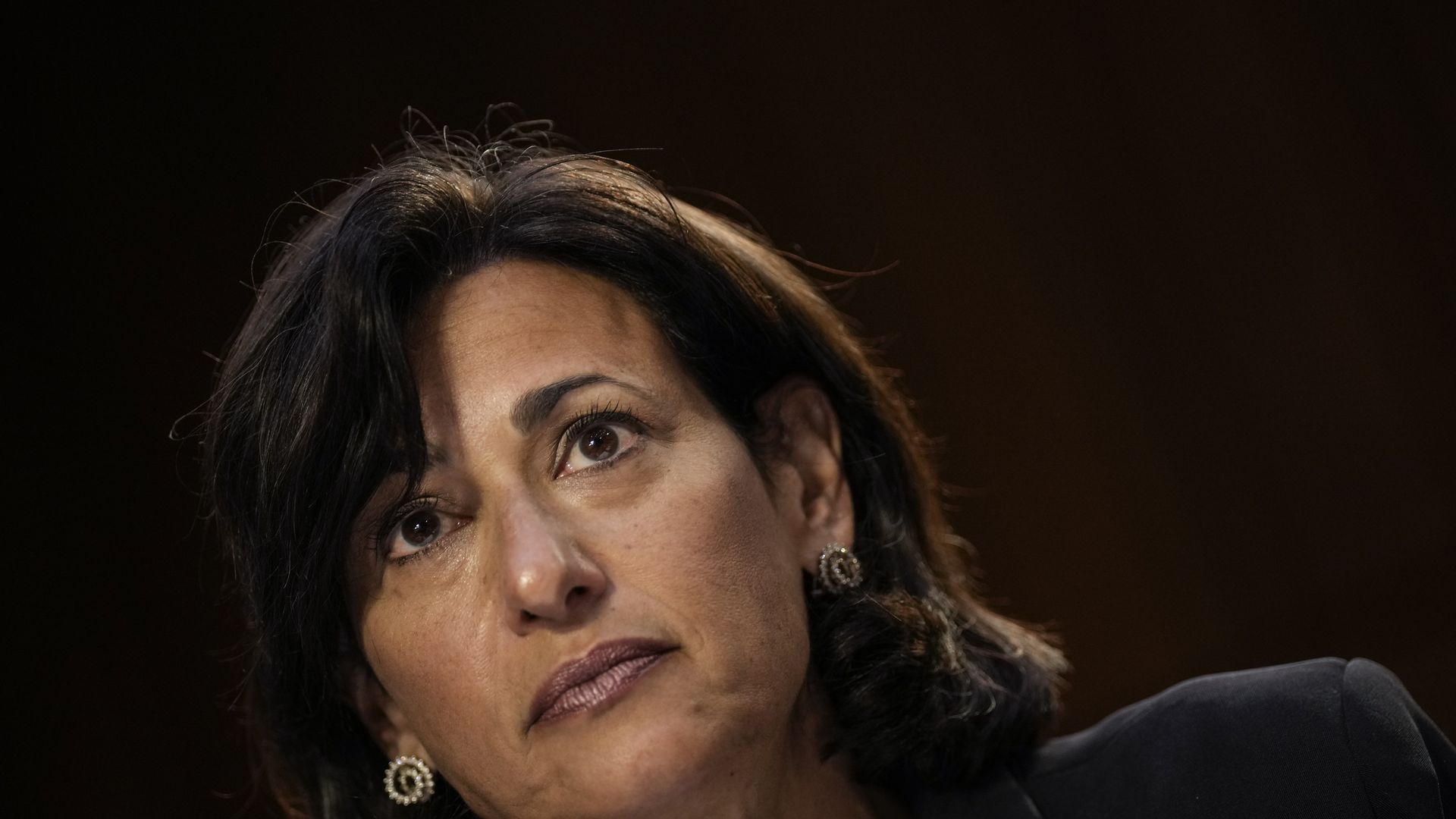
Photo by Drew Angerer/Getty Image
All eyes are on who will replace CDC director Rochelle Walensky, who announced last week she will step down in June, Axios' Oriana González writes.
Zoom out: Walensky led the CDC had a tumultuous and controversial tenure during the COVID crisis, as well as through the mpox outbreak.
- Over the last seven months, she spearheaded a move to restructure the agency, saying "our performance did not reliably meet expectations."
- She has frequently called for more funding and authority from Congress to implement some of the changes.
Be smart: The CDC director role is not yet a Senate-confirmed position but becomes one in January 2025 per the recent omnibus bill.
- That means the Biden administration will have the power to pick the agency's head now, without Congress' blessing.
What they're saying: Walensky, who served since the beginning of the Biden presidency, "has saved lives with her steadfast and unwavering focus on the health of every American," President Biden said in a statement.
5. While you were weekending

Illustration: Aïda Amer/Axios
👀 In the post-Roe era, letting pregnant patients get sicker—by design. (The New Yorker)
🦠 The long COVID mystery has a new suspect. (Wired)
🧠 Can brains bounce back? Patients recovering from addiction turn to science to map the effects of meth. (The Guardian)
Thanks for reading, and thanks to senior editor Adriel Bettelheim and senior copy editor Bryan McBournie for the edits.