Axios Vitals

March 29, 2023

Happy Wednesday, Vitals readers. Today's newsletter is 851 words or a 3-minute read.
💻 Tune in today: Axios' second annual What's Next Summit kicks off this morning at 8:10am. Register to livestream the event here.
1 big thing: GOP lawmakers expand gender-affirming care restrictions to adults

Illustration: Aïda Amer/Axios
State efforts to restrict gender-affirming care are moving beyond trans youth and increasingly focused on patients over the age of 18, Axios' Oriana González writes.
The big picture: Legislators in Kansas, Oklahoma, South Carolina and Texas have introduced bills barring health providers from offering care such as hormone treatments or surgery to people as old as 26, even though such services are endorsed by leading medical groups.
- In contrast to past messaging around protecting children, some proponents of the latest proposals portray gender-affirming care as a business that is exploiting people in need of psychological care.
- "We think that [gender-affirming care] is bad medicine and that it's consumer fraud," said Terry Schilling, president of the conservative group American Principles Project, which works with lawmakers to introduce anti-trans measures. "We don't believe that men can change into women based off of removing body parts or changing our hormone makeup."
Gender-affirming care advocates say the efforts are proof anti-trans lawmakers want to block all access to those services, not just restrict care to minors.
- "This was always a long-term plan of trying to eliminate all access to care, all visibility and safety for trans people of all ages," said Milo Inglehart, staff attorney at the Transgender Law Center.
Driving the news: This month, Texas state Rep. Tony Tinderholt introduced HB 4574, which states that a health professional who provides gender-affirming care to a trans person under 26 — or even refers a patient to another provider — could be sentenced to jail and lose their medical license.
- A similar bill was introduced in Oklahoma in January, but the bill's author ended up lowering the age limit to 18 following intense backlash.
- The bills in Kansas, Oklahoma and South Carolina look to ban health care for trans people under 21.
2. Congress eyes "zombie drug" designation

Illustration: Shoshana Gordon/Axios
Congress is moving to designate an animal tranquilizer that's infiltrating the illegal drug trade as a controlled substance to better allow authorities to track it and prosecute traffickers, Axios' Sabrina Moreno writes.
Driving the news: Bipartisan legislation introduced Tuesday by Sens. Catherine Cortez Masto (D-Nev.) and Chuck Grassley (R-Iowa) reflects the growing alarm over the proliferation of xylazine, a sedative known as "tranq" or "zombie drug" that's often mixed with fentanyl, resists common overdose reversal treatments like naloxone and causes skin-rotting wounds.
- In a Monday letter to clinicians, SAMHSA wrote that xylazine is an emerging public health threat and noted that routine toxicology tests do not test for the substance.
- Last week, the Drug Enforcement Administration warned about the increased risk of xylazine-fentanyl mixtures, and administrator Anne Milgram called xylazine "the deadliest drug threat our country has ever faced."
- At the end of February, the FDA announced new restrictions on the import of xylazine to ensure it’s not diverted for illegal use.
- Cortez Masto told Axios that conversations about scheduling xylazine began around January and included the DEA, veterinarians and cattle ranchers.
Between the lines: The legislation in Congress comes as state and federal lawmakers are pressing for more aggressive punishment for fentanyl possession and dealing, as the opioid and its derivatives continue to drive a worsening addiction crisis.
- The bill would make xylazine a Class III controlled substance — the same category as ketamine, testosterone and buprenorphine.
3. FDA advisers to weigh OTC birth control

Illustration: Annelise Capossela/Axios
FDA advisers will meet May 9 and 10 to weigh making a contraceptive pill available without a prescription for the first time, Axios' Arielle Dreher writes.
Why it matters: Health experts say making birth control pills available over-the-counter will reduce the number of unwanted pregnancies and could cut down on the need for abortions.
- But key questions remain over cost and whether insurers will cover them.
- Reproductive rights groups, as well as the nation's largest physician groups, back making birth control available without a prescription.
Flashback: HRA Pharma, a French drug company owned by Perrigo, applied to switch its Opill pill from prescription-only to over-the-counter last July.
- The FDA in October postponed the meeting of outside experts to help decide the switch.
The details: Opill could generate $100 million in peak sales, according to analysts.
- "Just over 15% of women who walk into a pharmacy with a prescription for an oral contraceptive don’t walk out with it filled," Raymond James analyst Elliot Wilbur wrote in a note. "This presents a unique capture opportunity since the potential user is already in [the] store."
4. Quote du jour: Baby formula problems not fixed
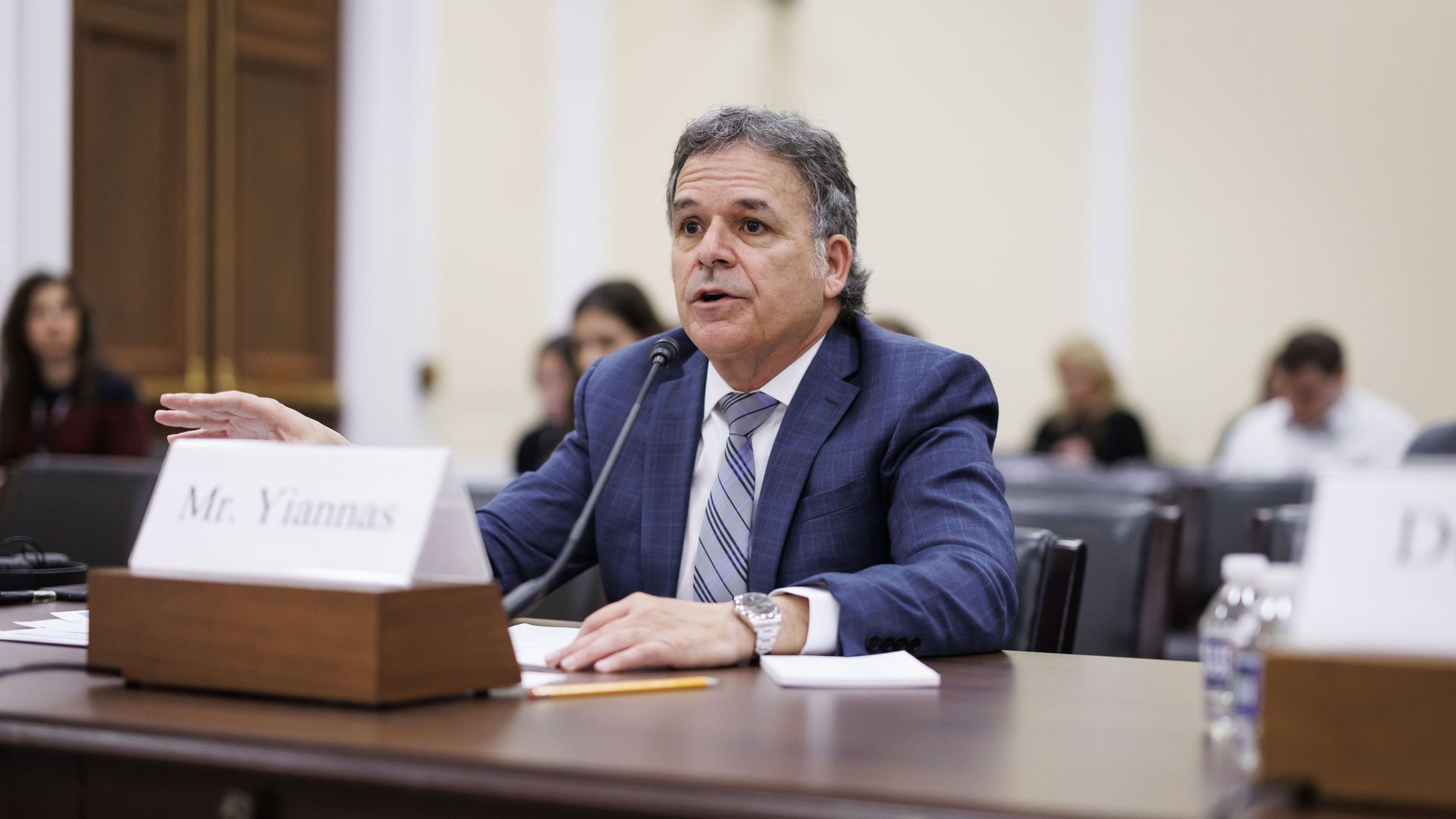
Photo: Ting Shen/Bloomberg via Getty Images
"The state of the infant formula industry today is not much different than it was then ... In other words, the nation remains one outbreak, one tornado, flood or cyber-attack away from finding itself at a similar place."— Frank Yiannas, a former deputy commissioner of the FDA's Office of Food Policy and Response, told the House Oversight and Accountability health subcommittee on Tuesday
5. Catch up quick
🏛 At trial, Minnesota says e-cigarette maker Juul targets kids. (ABC News)
👀 The FDA is expected this week to allow over-the-counter Narcan. But price and stigma remain obstacles. (New York Times)
👉 House GOP members press Biden's health secretary on abortion and unaccompanied migrant kids. (The Hill)
💥 Starting today, medical device companies now need to prove to the FDA they're protected against cyberattacks. (STAT)
Thanks for reading, and thanks to senior health care editor Adriel Bettelheim and senior copy editor Bryan McBournie for the edits.