Axios from Tel Aviv
June 21, 2023

Welcome back to Axios from Tel Aviv, where I have some exciting news: I'll be joining Axios full time in Washington, D.C., to cover the 2024 elections, foreign policy and national security.
- That means Axios from Tel Aviv will be ending next week, but you can still follow my reporting on axios.com and in Axios Sneak Peek. Sign up here.
- Before then, we still have a lot to get through. Let's hop in.
Today's edition (2,049 words, 8 minutes) starts with the escalation in the occupied West Bank.
- 🇮🇷 Situational awareness: Iran held a "serious and constructive" meeting with a senior EU official involved in nuclear negotiations, Iran's top nuclear negotiator Ali Bagheri Kani tweeted today. The meeting took place amid indirect talks between the U.S. and Iran over possible “understandings” around Tehran’s nuclear program and regional de-escalation.
1 big thing: Dramatic West Bank escalation

An Israeli Air Force AH-64 Apache attack helicopter releases flares during an Israeli army raid in Jenin in the occupied West Bank on June 19. Photo: Jaafar Ashtiyeh/AFP via Getty Images
Violence in the occupied West Bank dramatically escalated this week when the situation descended into chaos after:
- The Israeli military killed six Palestinians, including children, in a raid.
- Palestinian militants killed four Israelis.
- Israeli settlers rampaged through a Palestinian town — home to many Palestinian Americans — and torched dozens of homes and cars. One Palestinian was killed by Israeli police.
My thought bubble: The rapid escalation, which came as State Department's senior Middle East diplomat Barbara Leaf visited Israel and the West Bank, shows how quickly the situation in the West Bank can deteriorate and what little influence the Biden administration's warnings to prevent or stop the violence has had on either side.
Driving the news: Several hours before Leaf landed in the region on Sunday, the Israeli Cabinet approved a resolution that will allow it to significantly speed up the process of approving new construction in Israeli settlements in the occupied West Bank.
- The Israeli government also announced that the government committee that approves new planning and building in the settlements will convene next Monday to approve about 4,500 new housing units in the settlements.
- Two U.S. officials said Israel told the Biden administration in advance of both decisions. The U.S. pressed the Israelis not to go forward with the plans, but they did so anyway, the officials said.
As Leaf held talks with Palestinian officials in Ramallah on Monday, the Israeli military conducted a raid against Palestinian militants in the northern West Bank city of Jenin.
- The situation escalated further after an Israeli armored vehicle was hit by an IED and encountered heavy fire. The Israeli military used attack helicopters that fired rockets for the first time in 20 years during the raid in an effort to extract its forces.
- Six Palestinians were killed in the raid. Most were armed, but a 15-year-old boy and a 15-year-old girl were also killed. At least 90 Palestinians, including many civilians, were wounded, according to the Palestinian Ministry of Health. The Israeli military killed another Palestinian in a separate incident in a village near Bethlehem.
On Tuesday, two Palestinian gunmen affiliated with Hamas killed four Israeli civilians during an attack on a restaurant near the Israeli settlement of Eli in the West Bank.
- In response, the Prime Minister's Office announced the approval of immediate planning of an additional 1,000 housing units in the Eli settlement.
The situation continued to escalate on Wednesday when hundreds of Israeli settlers arrived in the Palestinian town of Turmus Ayya near Eli and started torching dozens of Palestinian houses and cars, according to the town's mayor.
- The Israeli military and Prime Minister Benjamin Netanyahu condemned the settler violence.
Worth noting: In addition to the escalation in the West Bank, Netanyahu announced on Sunday he will unilaterally resume the government’s controversial judicial overhaul legislation.
- The Biden administration has been opposed to the plan and stressed that any judicial reform should be done through a broad consensus.
Part II: U.S. tells Israel escalation makes normalization efforts harder
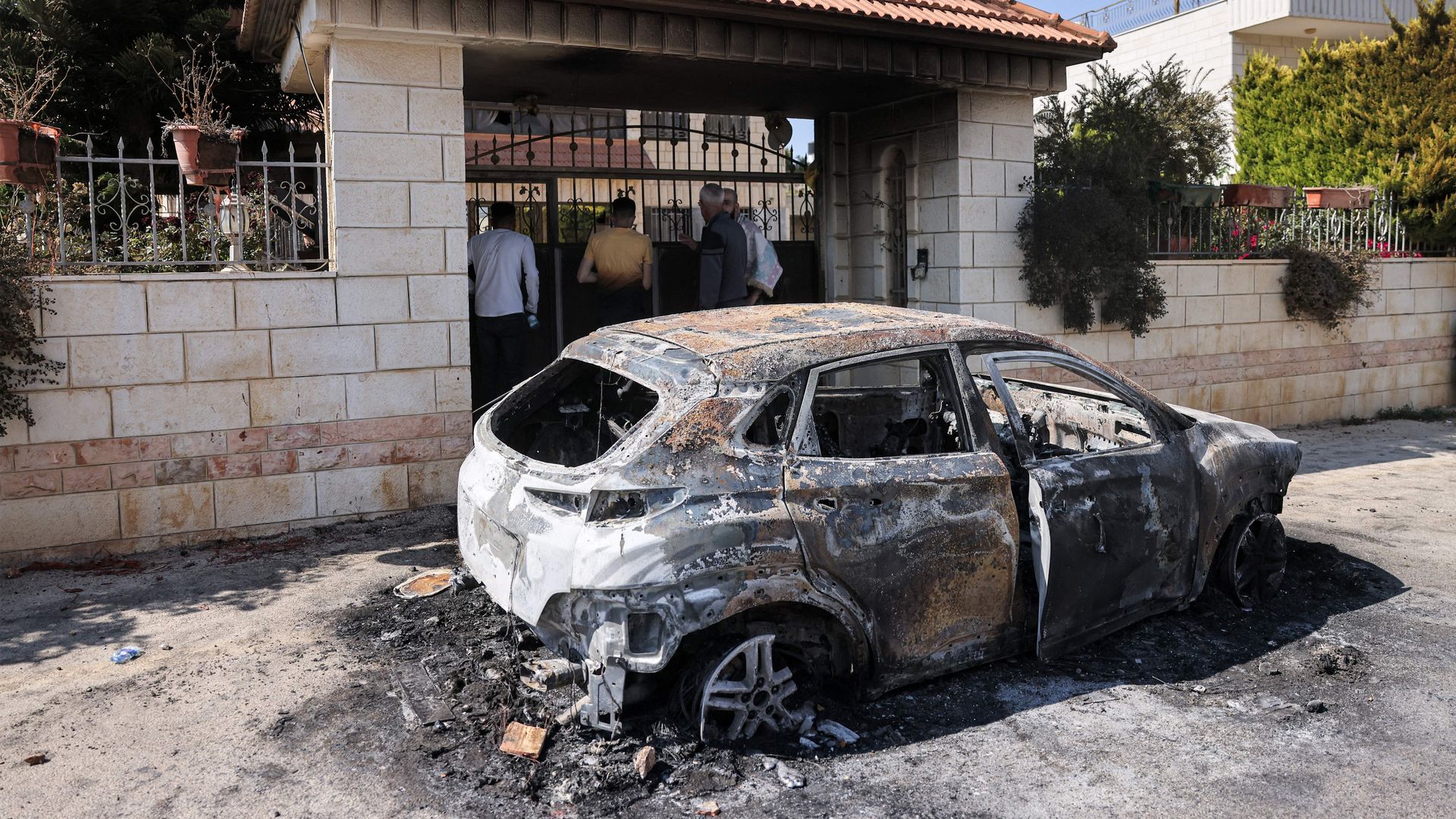
People stand by a torched vehicle, reportedly set ablaze by Israeli settlers, in the occupied West Bank village of Turmus Ayya today. Photo: Ahmad Gharabli/AFP via Getty Images
The Biden administration’s policy toward the Israeli-Palestinian conflict has been of containment and de-escalation.
- Israelis and Palestinians agreed to take steps to de-escalate tensions in the West Bank earlier this year during meetings held with the U.S., Jordan and Egypt in the Jordanian city of Aqaba and the Egyptian coastal city of Sharm el-Sheikh, but the situation on the ground worsened.
What they're saying: State Department spokesperson Matthew Miller condemned Tuesday’s attack near Eli.
- He also expressed concern about the continuation of violence in Israel and the West Bank and the killing of civilians. “We will continue to work with Israel and the Palestinian Authority to promote steps toward de-escalation," he said.
For their part, Palestinian Minister Hussein al-Sheikh said he told Leaf on Monday that the understandings reached in Aqaba and Sharm el-Sheikh no longer exist because Israel disavowed them.
- “I added that it is not possible to continue holding these conferences if there is no actual and tangible positive development on the ground," al-Sheikh wrote on Twitter.
- He also said he told Leaf that the Palestinian leadership is expected to take “decisions and measures” in response to the Israeli policy.
- Al-Sheikh said Leaf expressed concern about the security situation and urged a return to direct dialogue between the parties.
The other side: In Israel, Leaf met with the head of the Shin Bet security agency, the director general of the Israeli Foreign Ministry, and other senior officials and urged them to de-escalate the situation, Israeli officials said.
- It's unclear how the Israelis responded to Leaf's comments.
The Biden administration also made it clear to Israel this week that settlement announcements and escalation in the West Bank are making it harder for the U.S. to convince Saudi Arabia and other Arab countries to continue the normalization process with Israel, according to a U.S. official.
- The U.S. official said the Israeli policy and the situation on the ground could also decrease Biden's motivation to pay political capital in order to help Israel get a deal with Saudi Arabia. Israel's Haaretz newspaper was the first to report the U.S. message.
- Saudi Foreign Minister Prince Faisal bin Farhan said at a press conference with Blinken that "without finding a pathway to peace for the Palestinian people … any normalization will have limited benefits."
3. Israeli diaspora minister tells Jewish Dem lawmakers he's "not woke"
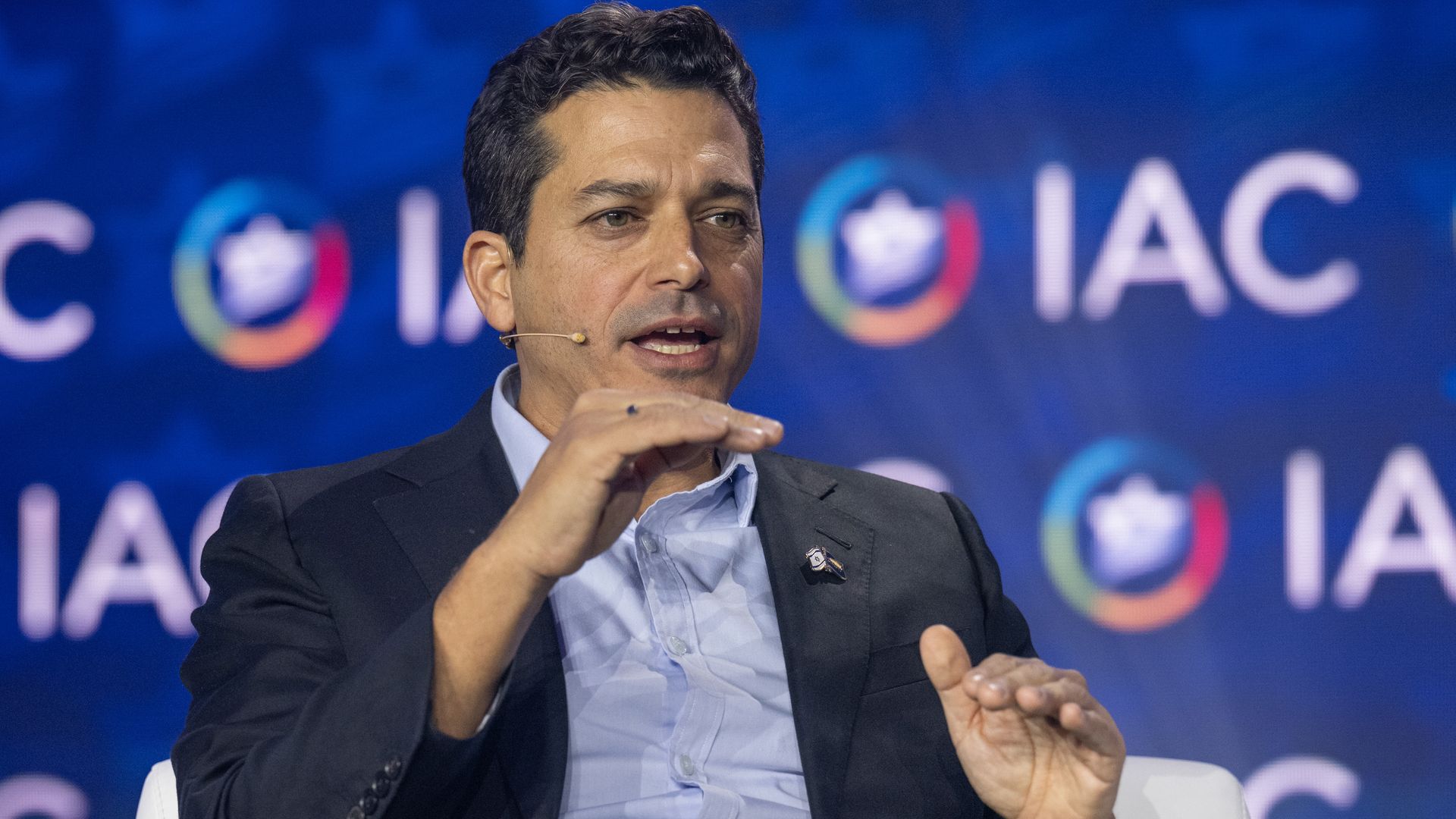
Israel Minister of Diaspora Affairs Amichai Chikli in January. Photo: Shahar Azran/Getty Images
A meeting between Israel’s diaspora minister and a group of Jewish congressional Democrats earlier this month quickly turned tense after the Israeli politician invoked the term “woke," four U.S. and Israeli sources who attended the meeting or were briefed on it told Axios' Andrew Solender and me.
Why it matters: The difficult atmosphere, as well as the criticism and concerns expressed by the U.S. lawmakers during the meeting with Amichai Chikli, shows the growing rift between Jewish Democrats in Congress — many of whom are strong supporters of Israel — and Netanyahu’s right-wing government.
The big picture: The main role of the diaspora minister is to strengthen the connections between the Israeli government and Jewish communities around the world — first and foremost in the United States.
- But since assuming office less than six months ago, Chikli has angered many liberal Jewish people in the U.S. with statements against Reform Jews, the pro-Israel liberal organization J Street, Jewish billionaire George Soros and the anti-government protest movement in Israel.
- Chikli has in the past railed against "progressive ideology” and LGBTQ+ rights, including calling the Tel Aviv Pride parade a "disgraceful vulgarity."
Behind the scenes: During his trip to the U.S. two weeks ago, Chikli met in Washington with a group of roughly 10 Jewish Democratic members of Congress, including moderates and progressives.
- The Jewish lawmakers used the meeting to voice “very sharp” criticism about a range of topics, including Chikli’s remarks about Reform Judaism, LGBTQ+ issues and Soros, as well as the Israeli government’s judicial overhaul plan and its policy of expanding settlements in the occupied West Bank, according to two people who were present in the meeting.
- Early in the meeting, Chikli declared: "I'm not progressive, I'm not woke" — a comment that roiled up the room, multiple sources said.
A source with knowledge of the conversation said: “Even those in the room who may not themselves like the terms 'woke' or 'progressive,' understand that both are weaponized by the right against all Democrats. And that went over very poorly."
- There were attempts to de-escalate the situation, according to two lawmakers, but the members had trouble discerning whether what they said was sinking in, one member of Congress said. "He's not a warm, fuzzy person. And he has a poker face," the lawmaker added.
- The lawmakers requested anonymity to discuss details of an off-the-record meeting.
The other side: Chikli confirmed the details in the story and told Axios he wasn’t aware of the sensitivity around the term “woke." He said that after one of the lawmakers expressed her dismay, he apologized and the meeting continued.
- “I wasn’t trying to be confrontational. The context of my remark was that even though I am not woke or progressive, the government is funding LGBT projects and causes and I am not against it,” he said.
- Chikli said that a lot of the criticism that was voiced by the members of Congress was based on inaccurate information about his position and quotes that were taken out of context. “Nevertheless, the conversation was constructive," he said.
Several of the U.S. lawmakers told Chikli that his remarks and the Israeli government’s policies, in general, have offended their Jewish constituents and make it “terribly more difficult in making a case for Israel," said a source with knowledge of the meeting.
- The lawmakers conveyed to the Israeli minister the message that they didn't appreciate his remarks and behavior. “He was really uncomfortable … it was tense … he physically bristled," one member of Congress said.
4. Biden adviser in Saudi Arabia as part of normalization push
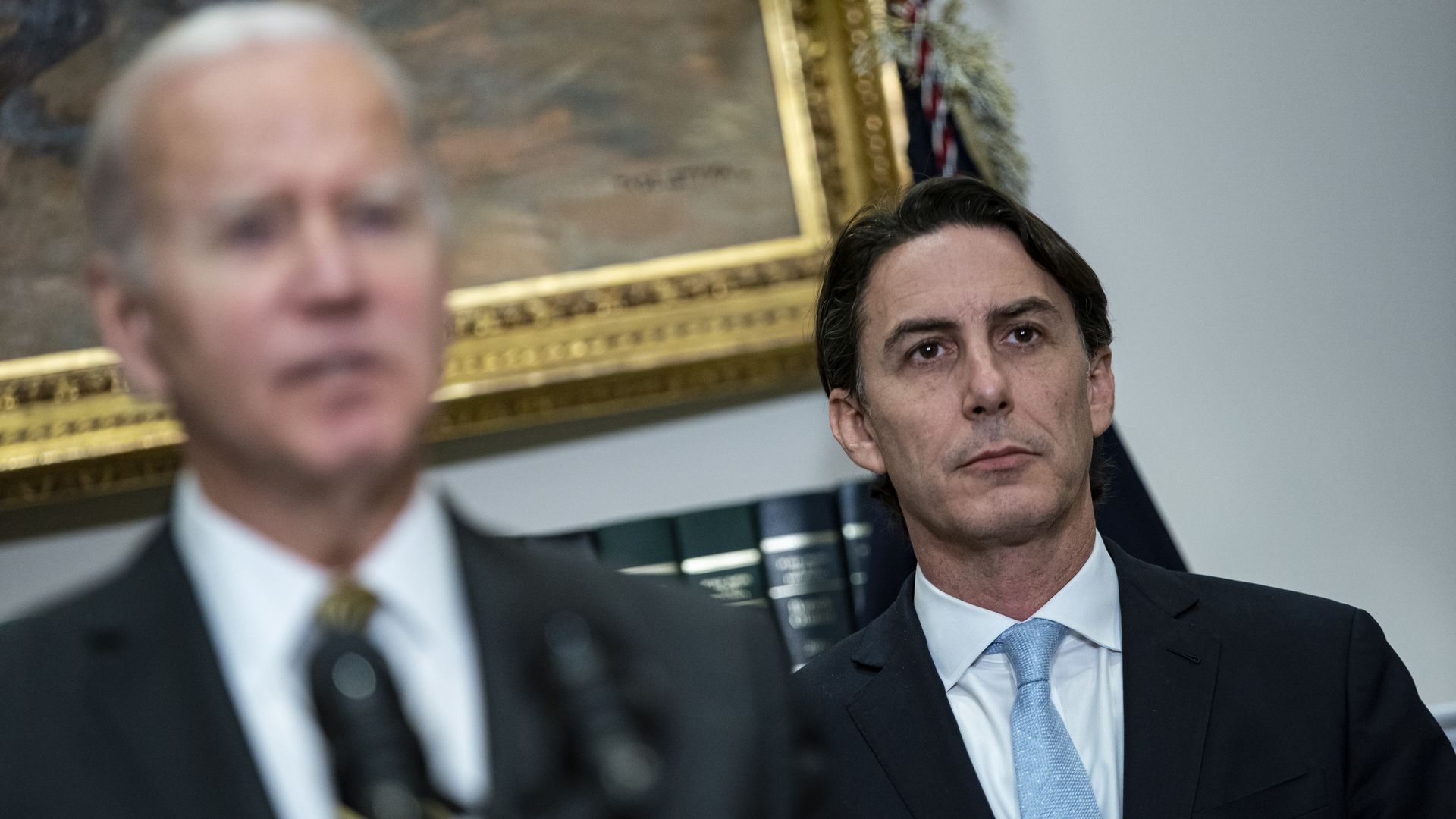
Senior Biden adviser Amos Hochstein and President Biden at the White House in October 2022. Photo: Al Drago/Bloomberg via Getty Images
Amos Hochstein, President Biden's senior adviser for energy and infrastructure, is visiting Saudi Arabia this week for talks with senior Saudi officials, two sources familiar with the trip told me.
Why it matters: Hochstein’s trip is part of the diplomatic push by the White House to try to reach a set of agreements that would upgrade U.S.-Saudi relations and include a normalization deal between Saudi Arabia and Israel.
- The White House wants to try to complete this diplomatic initiative in the next six to seven months before the presidential election campaign consumes President Biden’s agenda, as Axios reported last month.
Driving the news: Hochstein arrived in Saudi Arabia a day after Biden’s top Middle East adviser Brett McGurk finished a separate visit as part of the same effort.
- Among the issues that Hochstein is expected to discuss is the Saudi demand that the U.S. supports a civilian nuclear program in the kingdom that will include uranium enrichment, the source said.
- This is one of the most difficult and sensitive issues in the negotiations between the U.S. and Saudi Arabia and between the U.S. and Israel, according to the source.
The big picture: Any U.S-Saudi deal to upgrade relations will have a major economic component. The source said the U.S. wants to make sure that such a deal keeps Saudi Arabia closer to the U.S. when it comes to competition with China.
5. TBZ's visit to Washington eased U.S.-UAE tensions
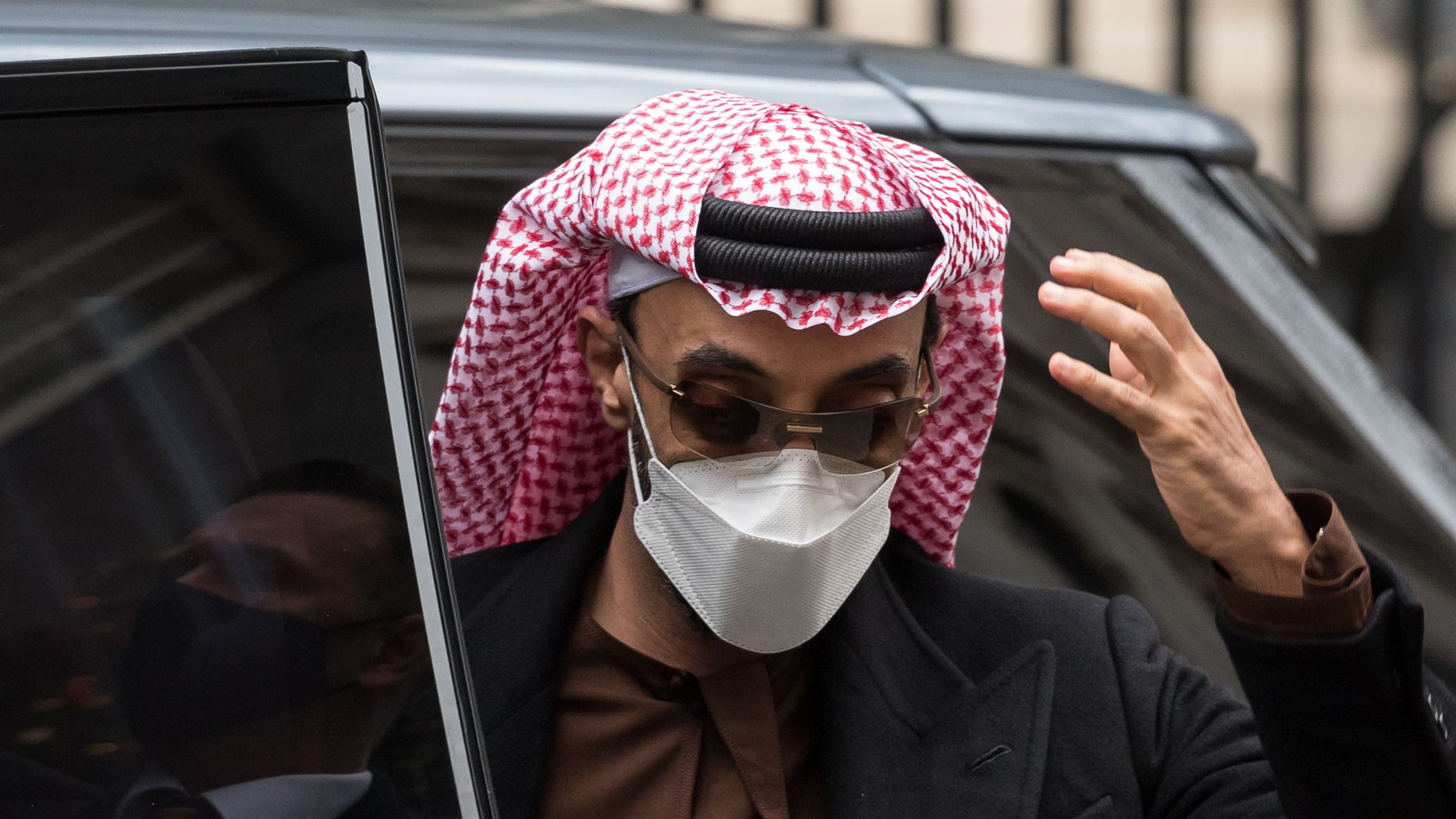
Emirati national security adviser Tahnoun bin Zayed Al Nahyan in December 2020. Photo: Wiktor Szymanowicz/Future Publishing via Getty Images
Emirati national security adviser Tahnoun bin Zayed Al Nahyan’s (TBZ) visit to the White House three weeks ago eased tensions between the U.S. and the United Arab Emirates, according to a U.S. official and a source briefed on the issue.
Why it matters: U.S.-UAE relations have been in crisis mode since a Houthi attack on Abu Dhabi in January 2022 when the Emiratis were offended by what they felt was a slow and weak U.S. response.
- Several attempts since then to fix the relationship, including a meeting between President Biden and Emirati President Mohammed Bin Zayed (MBZ) last July, were not successful.
- U.S. and Emirati officials thought that an apology made by U.S. Secretary of State Tony Blinken in March 2022 eased tensions only to discover that the Emirati leader was still upset.
Driving the news: The Emirati national security adviser met with his U.S. counterpart Jake Sullivan at the White House on June 2. This was TBZ’s first visit to Washington in several years.
- In a joint statement at the end of the meeting, TBZ praised the strong U.S.-UAE security and defense partnership.
- Sullivan said the U.S. is committed to deterring threats against the UAE and other U.S. partners “while also working diplomatically to de-escalate conflicts and reduce tensions in the region."
Behind the scenes: The U.S. official and the source briefed on the talks said they went excellently.
- The source briefed on the meeting said the talks managed to significantly improve the level of coordination between the U.S. and the UAE after a long difficult period.
- One of the issues discussed in the meeting was U.S. concerns about the UAE’s technological cooperation with China, the two sources said. The source briefed on the talks said the meeting produced a road map for addressing U.S. concerns regarding Chinese involvement in the UAE.
- The joint statement at the end of the meeting said Sullivan and TBZ “discussed the importance of building trusted technology ecosystems."
- Emirati officials declined to comment.
What to watch: The source briefed on the meeting said it laid the groundwork for a possible visit by MBZ to the White House for a meeting with Biden this fall.
Big thanks to Sheryl Miller for copy editing this newsletter.