Axios Tampa Bay

November 09, 2023
Hello Thursday!
π€οΈ Sunny, then partly cloudy β 86Β°/68Β°.
- Sounds like: "Hunger of the Pine," alt-J.
ποΈ Programming note: There will be no newsletters tomorrow through Sunday in honor of Veterans Day. We'll be back in your inbox on Monday! Thanks to all who served!
π Happy early birthday to our Axios Tampa Bay member Pat Manginelli!
Today's newsletter is 979 words, a 3.7-minute read.
1 big thing: DeSantis' foreign affairs pitch
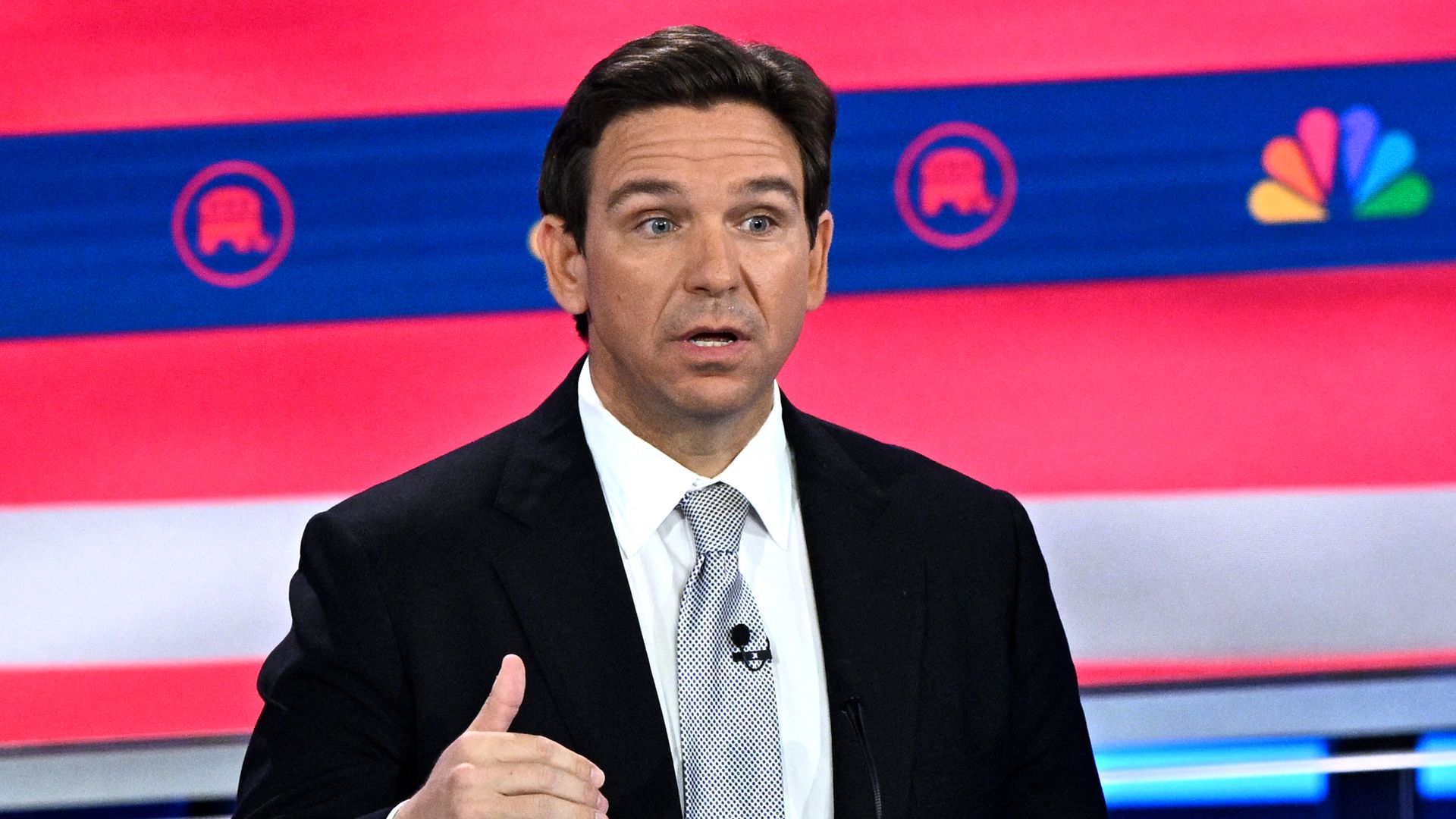
DeSantis debates in Miami. Photo: Joe Raedle/Getty Images
Gov. Ron DeSantis played up moves he's taken beyond Florida during last night's GOP debate β from the U.S.-Mexico border to the Middle East β to position himself as a presidential candidate who can get things done on the world stage.
Why it matters: The blurring of lines between DeSantis' elected office and his presidential campaign was on display in Miami as he highlighted his use of state resources to intervene in national and international issues.
Zoom in: DeSantis, who has faced criticism in Florida for leveraging his elected office to boost his political profile, often pointed to the headline-grabbing actions he's taken as governor when asked about the Israel-Hamas war and China.
- He highlighted his use of state funds to evacuate U.S. residents from Israel and his administration's efforts to quell pro-Palestinian groups on Florida campuses.
State of play: DeSantis' presidential campaign is struggling to establish him as the leading alternative to former President Donald Trump. Former UN Ambassador Nikki Haley's rise in the polls has made that harder β and she took sharp aim at DeSantis last night.
- Haley assailed DeSantis for enforcing a voter-approved ban on fracking in his first term.
- DeSantis countered by positioning himself as a hard-liner who would tear up President Biden's green-energy policies.
The intrigue: The debate in his home state comes amid reports of wavering support for DeSantis among donors. It remains to be seen whether his performance yesterday could change that trend.
- Billionaire Robert Bigelow, a hotel entrepreneur and the Republican governor's biggest individual donor, paused his contributions to the pro-DeSantis "Never Back Down" super PAC in August. He is now considering throwing his support behind Trump.
Yes, but: DeSantis scored a major endorsement this week: Iowa Gov. Kim Reynolds.
2. What this week's abortion rights wins mean for Florida
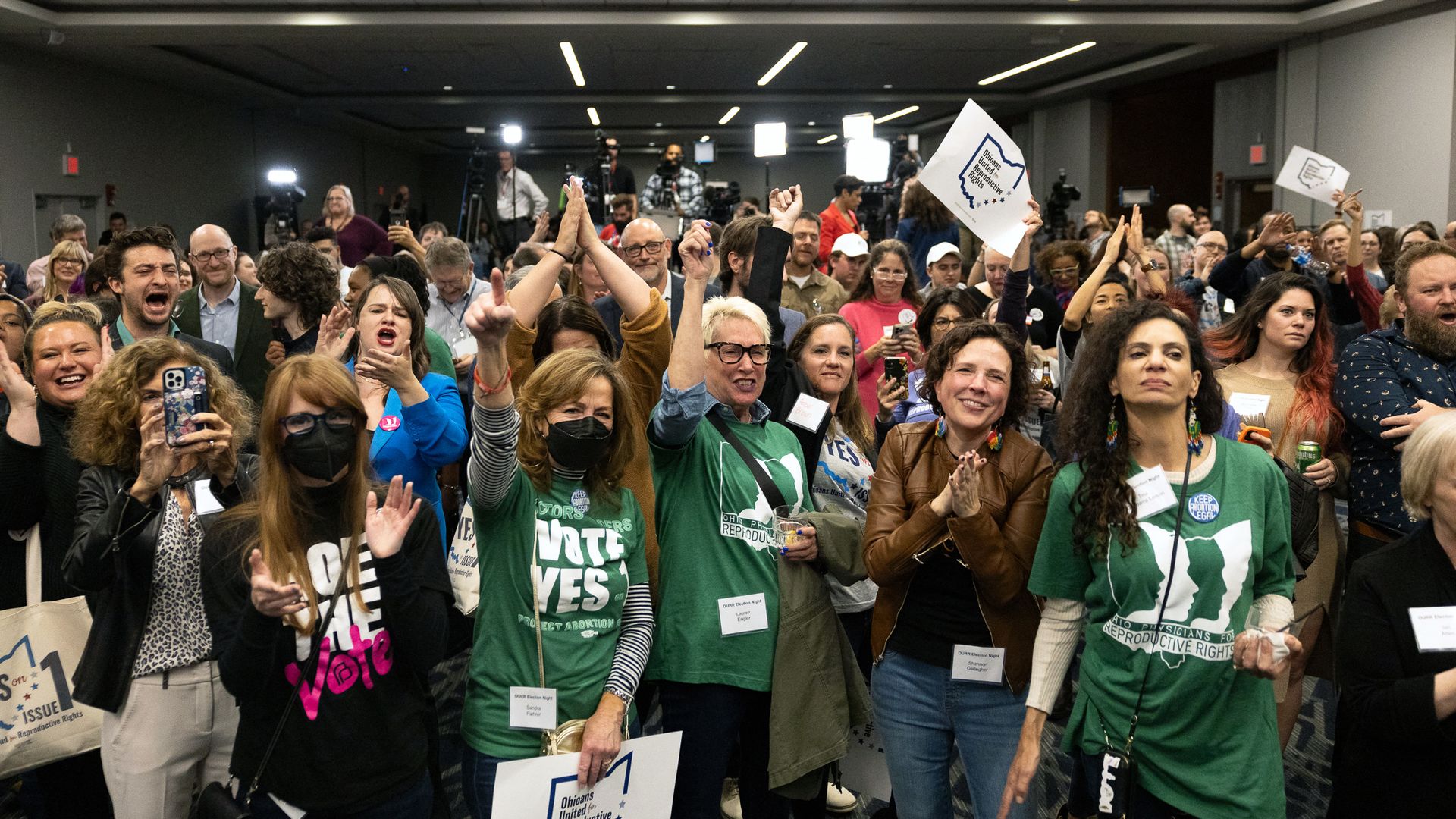
Abortion rights supporters celebrate winning the referendum in Ohio. Photo: Megan Jelinger/AFP via Getty images
Abortion rights won big in Tuesday's elections, Axios' Caitlin Owens and Stef W. Kight report. Florida abortion rights advocates are optimistic the trend could continue here β if the issue makes it onto next year's ballot.
State of play: An effort to enshrine abortion access in the Florida Constitution has steadily gained signatures since launching in May.
- But Attorney General Ashley Moody is trying to kill the proposed amendment before voters have a chance to weigh in.
Why it matters: Moody's effort could prevent the Sunshine State from joining a trend: Voters across the country have flocked to the polls to save abortion access. Abortion rights have won every time they've been on the ballot since Roe v. Wade was overturned last summer.
Driving the news: That includes an abortion rights ballot initiative approved by Ohio voters Tuesday that's similar to the effort in Florida. The victory gave a boost to Floridians Protecting Freedom, the coalition behind the proposed amendment in Florida.
What they're saying: "Ohioans just demonstrated that they don't support politicians interfering in their private medical decisions, and Floridians are even more bold in their opposition to government interference in our private lives," campaign director Lauren Brenzel said in a statement.
Catch up fast: In September, Floridians Protecting Freedom gathered enough signatures to trigger a state Supreme Court review of the ballot question's language.
- Then, this month, Moody filed formal arguments with the court calling the measure's language a "misleading" attempt to "hoodwink" voters, the Florida Phoenix reported.
3. πΊπΈ A million-plus vets to honor

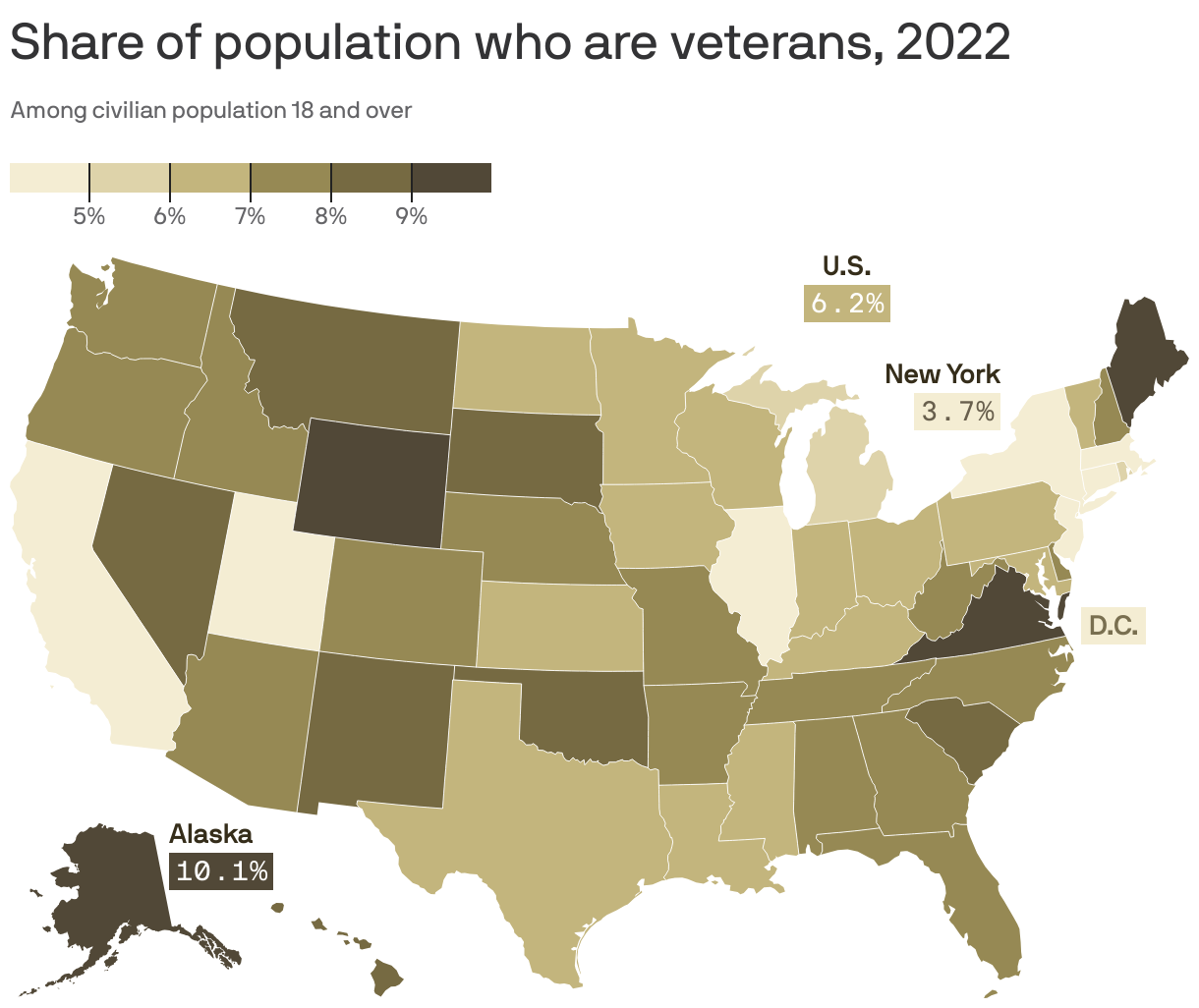
More than 1.3 million veterans live in Florida, according to last year's census data.
Zoom in: That's 7.4% of Florida's civilian population over 18.
4. The Pulp: News you can juice
Illustration: Brendan Lynch/Axios
ποΈ The Manatee County Veterans Day parade returns Saturday for the first time since the COVID-19 pandemic began. (Bradenton Herald)
ποΈ Florida Supreme Court justices seemed skeptical of the state's attempt to block a proposed recreational marijuana amendment from the ballot. (Tampa Bay Times)
βοΈ Breeze Airways will start nonstop service next year from Tampa International Airport to four new cities: Madison, Wisconsin; Burlington, Vermont; Myrtle Beach, South Carolina; and Plattsburgh, New York. (Fox 13)
Fresh job openings around town
πΌ Take your career to the next level and see who's hiring.
- VP, Business Development at Foundever.
- Vice President of Human Resources at United Vein and Vascular Center.
- Senior Account Manager - VIP at Hard Rock Digital.
Want more opportunities? Check out our Job Board
Hiring? Use code FIRST50 for $50 off your first job post.
5. π³ 1 Tree Hugger to go
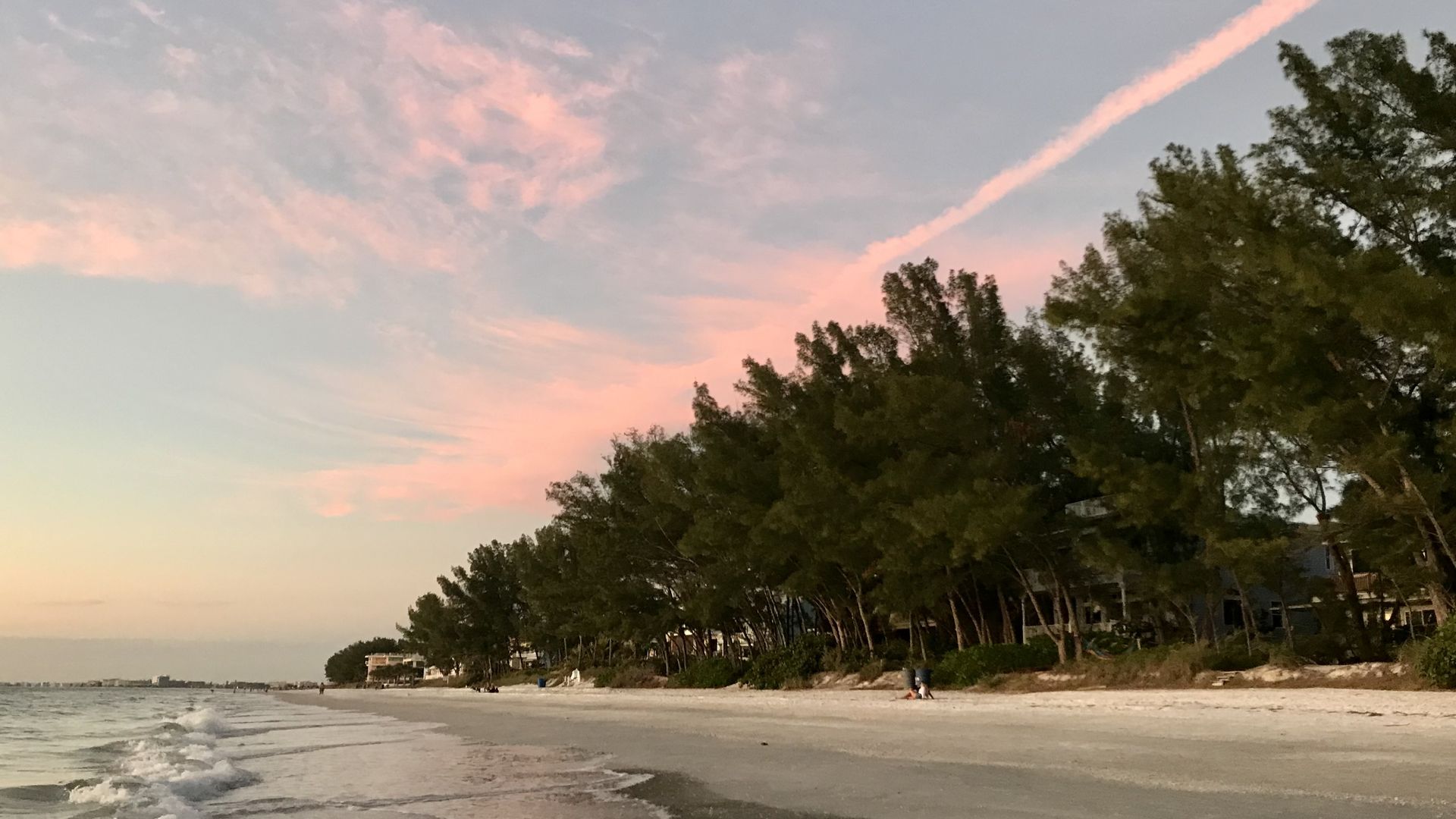
One of the 4,000 photos in my phone of the Australian pines along Sunset Beach. Photo: Kathryn Varn/Axios
Welcome to Tree Hugger, an occasional series about that cool tree in your neighborhood you wish you knew more about.
What's happening: For our first installment, we're bringing you the backstory of Australian pines, which grow all over the Tampa Bay area but are perhaps best known for their presence on our beaches.
π Kathryn here. I remember the first time I went to Sunset Beach and took in the massive, wispy, pine-looking trees lining the shore. They made me feel like I was somewhere else, a slice of, say, the Pacific Northwest in Florida.
- I was enamored.
Yes, but: Turns out, they're bad!
Why it matters: Australian pines are not only invasive but harmful to our coastal ecosystems, experts told Axios. They also topple easily in strong winds, so they're dangerous to have around your home or business.
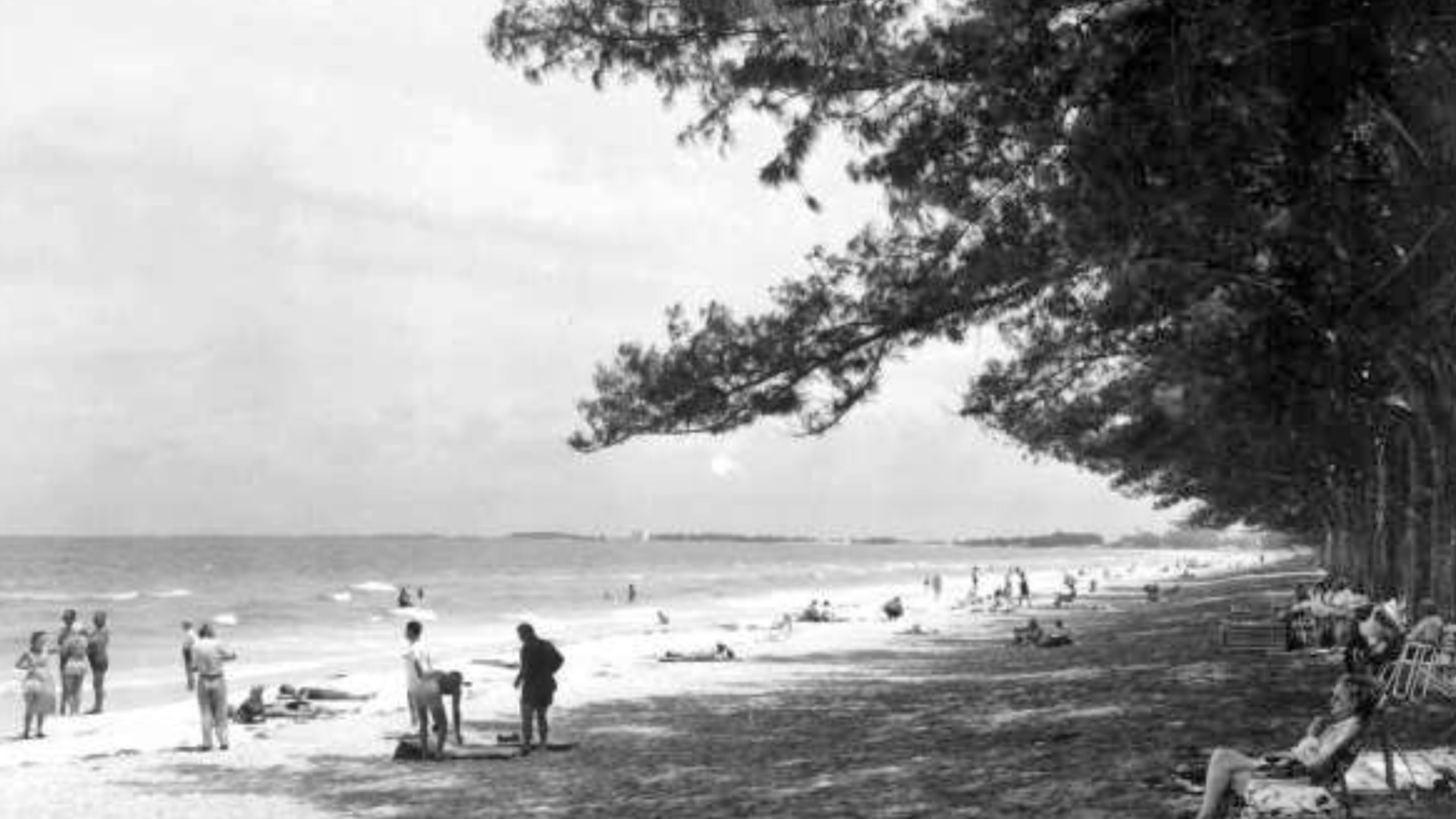
The history: The trees were brought to Florida in the 1890s and planted along shorelines, canals and farms to break the wind, according to Alyssa Vinson, a horticultural expert at the University of Florida Institute of Food and Agricultural Sciences (IFAS).
Reality check: The trees are decent windbreaks β but only to a point.
- And their leaf litter also blocks other native wildlife from growing, Vinson said, which isn't good for the naturally occurring structures that actually save us from hurricanes: sand dunes.
The latest: State and local officials have carried out several removal projects over the years, including at Fort De Soto in 2015. Some governments, like Longboat Key, offer reimbursements to property owners who remove them.
As for my beloved vestige along Sunset Beach, those trees are on private property, a Pinellas County spokesman told me. It'll be up to the landowners to decide what, if anything, to do about them.
- As a now-conflicted fan, I'm glad I'm not the one making that decision.
π¬ Have a tree or tree species you're curious about? Hit reply and we may look into it for a future story! Please include photos and a location if possible.
π Yacob is reading Jessica Knoll's "Bright Young Women."
π Selene is reading "A Heartbreaking Work of Staggering Genius."
π€ Kathryn is probably off hugging a tree somewhere.
This newsletter was edited by Jeff Weiner and copy edited by Azi Najafi.
Sign up for Axios Tampa Bay

Get smarter, faster on what matters in Tampa Bay with Kathryn Varn and Yacob Reyes.