Axios Seattle

August 18, 2026


1 big thing: School shopping starts



Families in Washington and other western states can expect to spend more than the national average on back-to-school shopping this year, with higher prices squeezing household budgets, according to a PwC survey.
Why it matters: Back-to-school shopping is one of the biggest spending seasons outside the holidays, so families may want to start preparing early, Keven Gray of Washington-based Gesa Credit Union told Axios.
By the numbers: Total K-12 back-to-school spending is projected to reach a record $43.3 billion this year, up roughly 10% from last year, according to the National Retail Federation.
- Families in the West plan to spend an average of $960 on back-to-school purchases, compared with $922 nationwide.
What's happening: Prices are higher, classroom needs have changed and kids have more say over what families buy — including requests for pricier items.
- And the spending doesn't end on the first day of school: Families expect to spend another $635 per month on recurring expenses such as meals, snacks and tutoring, according to PwC.
What they're saying: Gray, Gesa's chief retail officer, recommends starting now and spreading purchases over the next few weeks to compare prices, find promotions and avoid one large shopping bill.
Zoom in: Before heading to the store, Gray recommends families take inventory of notebooks, calculators, art supplies, clothing and other items they may already have.
- Shoes or clothes may need replacing, while a backpack or lunchbox that's still in good shape can last another year.
Be smart: Setting a spending limit for each child can help curb impulse purchases, Gray said, especially while families are still juggling summer expenses such as camps, vacations and child care.
- For bigger-ticket necessities like laptops, he recommends considering used or refurbished options.
- If using credit is necessary, Gray said families should understand the total cost and have a repayment plan in place.
The bottom line: Starting early and shopping with a plan can help keep costs in check.
2. 🛝 School recess is back in play

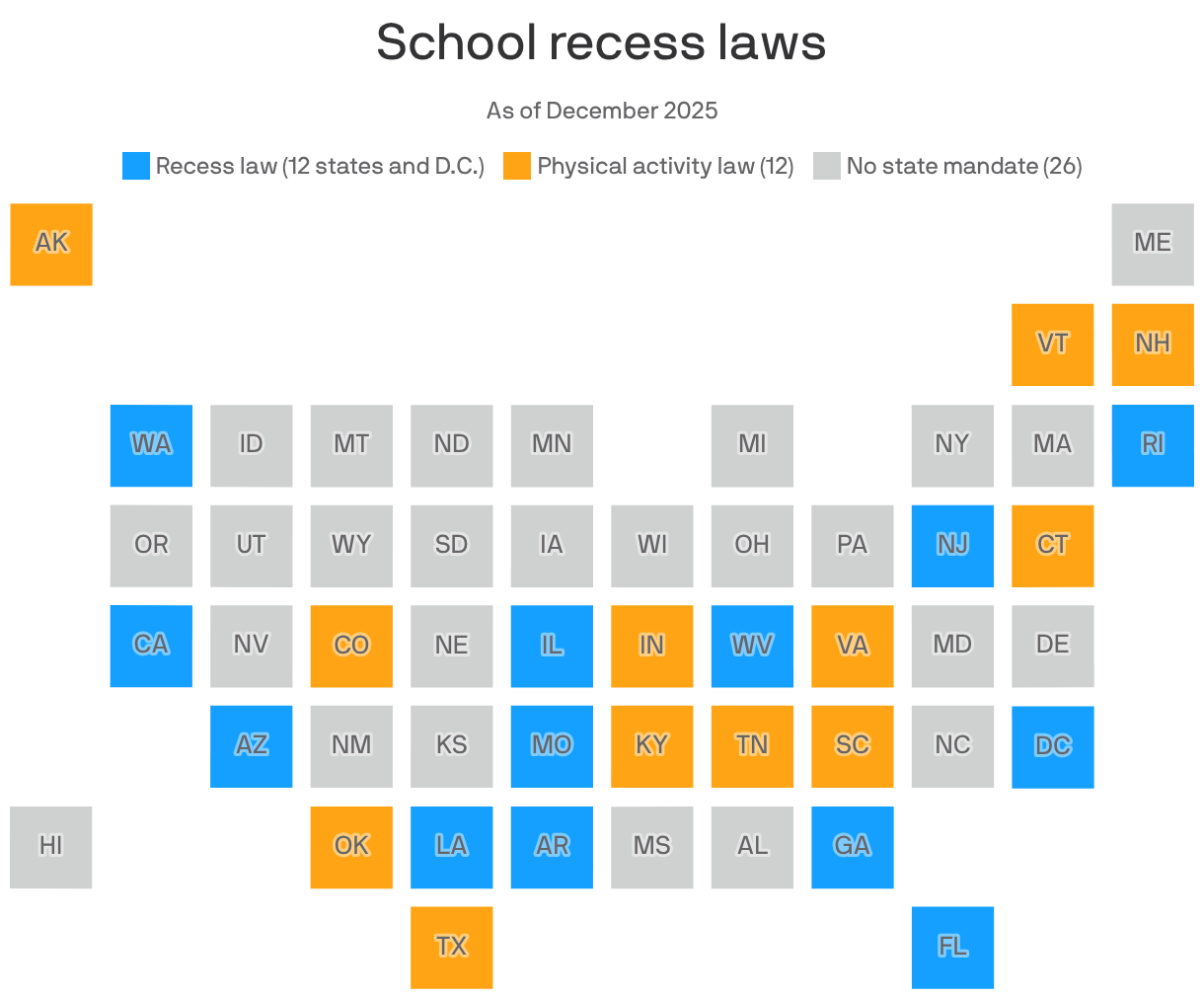
After decades of diminished recess time, a dozen states — including Washington — now require it by law.
Why it matters: Yes, recess is literally child's play. But researchers, pediatricians and parents say it's crucial for young students' physical and mental health.
By the numbers: As of December, school recess is mandated in 12 states and D.C., according to Johns Hopkins research.
Zoom in: Washington adopted a law in 2023 requiring at least 30 minutes of daily recess time for elementary school students.
- Recess sessions must be "student directed" and "held outside whenever possible," the law says.
- Time spent changing into outdoor clothing doesn't count. Neither do physical education classes.
Several other states require physical activity, but don't have a specific recess mandate.
Between the lines: Unstructured play doesn't just teach social skills, but research connects it to increased classroom motivation and behavior, better school attendance, and less stress for students.
- And more physical activity could help academic performance.
What they're saying: "Recess gives you a better feeling about school. Recess refreshes you. Recess helps you feel a little bit less cynical about what's going on," psychologist Peter Gray, author of forthcoming "Restoring Childhood," tells Axios.
- "Anyone who's ever spent even a day with a kid can recognize that if you kept them sitting all day, they'd go insane, they'd drive everybody else insane," says Hannah Thompson, a physical activity epidemiologist with UC Berkeley's Nutrition Policy Institute.
- Although schools don't tend to fight the idea of recess itself, Thompson says it can be a challenge for administrators to carve out more time for it.

4. Morning Buzz: Go go, Gustave!

5. Pic to go: 🛶 Today's remote office
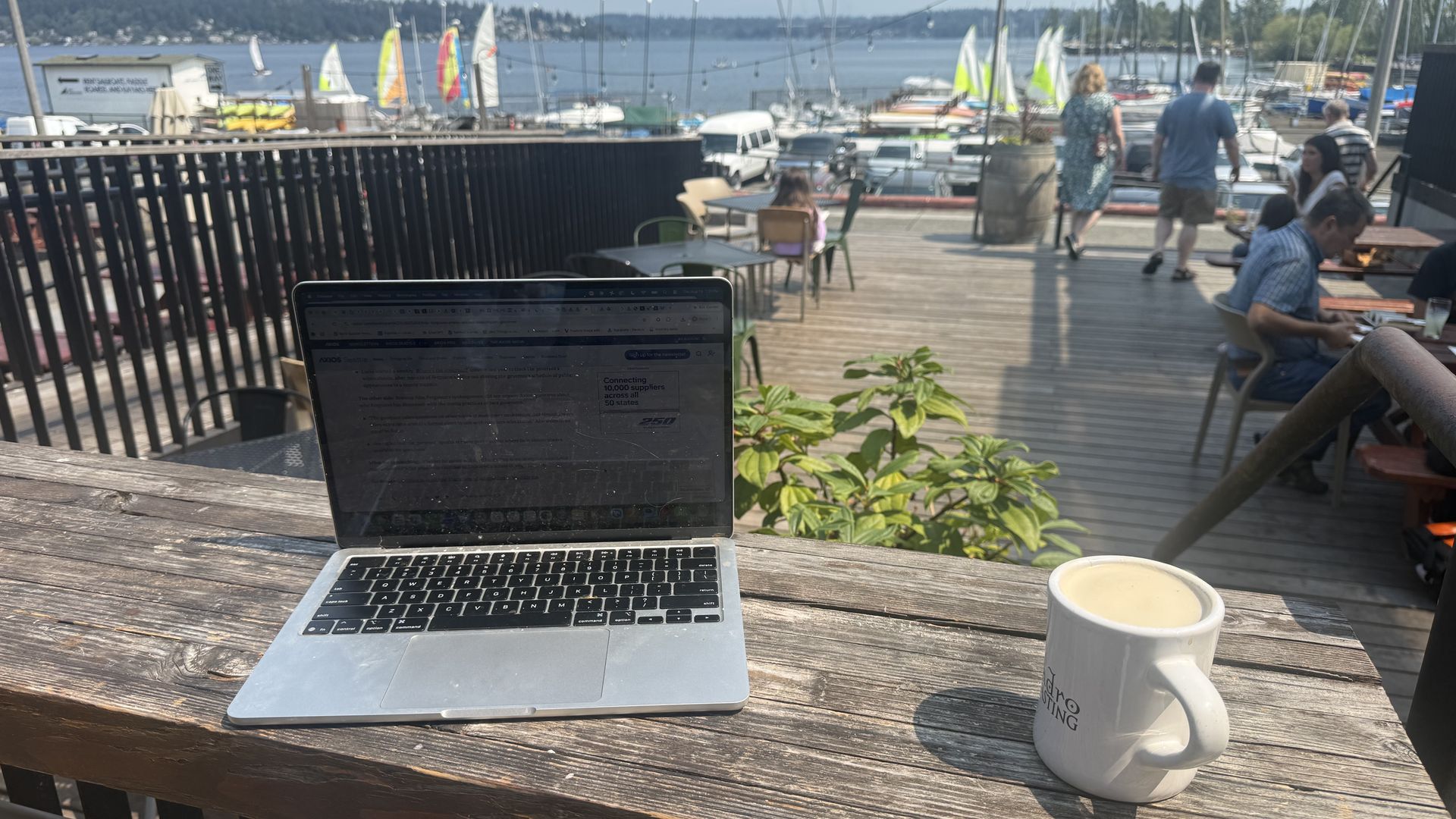
Melissa here, putting the finishing touches on today's newsletter from the patio at Magnuson Cafe & Brewery.
- It's a great place to sit outside near the water — and conveniently located near my oldest kid's summer camp dropoff.
- (I know my computer is filthy — don't judge! I work in random places, sometimes with multiple children crawling on me. That's partly why this patio feels like a break.)
Got any favorite local patios we should check out before summer's over? Hit reply to let us know!
Axios Seattle
