Axios Seattle

March 18, 2026

Hello, Wednesday. It's a great day to laugh off life's cringiest slip-ups, from calling people the wrong name to trailing toilet paper on your shoe.
🌧️ Today's weather: Rain, with a high of 57 and a low of 51.
Situational awareness: What should Axios Seattle do more of — or less of? Tell us in this short survey.
Today's newsletter is 1,042 words, a 4-minute read.
1 big thing: ⚖️ Counties pushed to the limit
Washington state lawmakers rejected a plan to use a new income tax to help pay for lawyers for criminal defendants, despite warnings of a growing public defense crisis.
Why it matters: Rising public defense costs — driven by new caseload limits — could push county governments toward bankruptcy and bring the state's criminal justice system to a standstill, county officials say.
Catch up quick: Early versions of the Legislature's new tax on annual incomes over $1 million — commonly called a "millionaires tax" — would have directed between 5% and 7% of the revenue to county and city public defense costs.
- But that language was stripped out of the final bill.
Instead, local governments could lose more than $300 million per year due to sales tax breaks in the new income tax plan, Derek Young, executive director of the Washington State Association of Counties, told Axios.
- "We're actually going backwards," Young said.
Context: Washington's counties have long shouldered most of the cost of supplying attorneys to criminal defendants who can't afford them — a right guaranteed in the state constitution.
- The state Association of Counties sued the state in 2023, accusing the Legislature of shirking its duty to pay for those services. That lawsuit is ongoing.
- Separately, the state Supreme Court recently ordered public defenders to cut the number of cases they handle by roughly two-thirds.
The big picture: Meeting those standards will more than triple public defense costs statewide, Young estimated.
- Without additional state funding, courts may be forced to delay cases, drop charges or release defendants if there aren't enough public defenders available, he warned.
The other side: State lawmakers signaled plans to set aside $200 million for local governments in the next budget cycle.
- The funding is meant to offset county revenue losses from sales tax cuts under the "millionaires tax" and could support public defense, House Speaker Laurie Jinkins (D-Tacoma) told Axios.
Yes, but: That $200 million is not included in the current budget and wouldn't provide immediate funding for counties.
- "The promise of future money is not enough," Matt Sanders, director of King County's Department of Public Defense, told Axios. "We can't hire lawyers, we can't hire professional staff, and we can't take cases based on promises."
2. 💧Wet week ahead
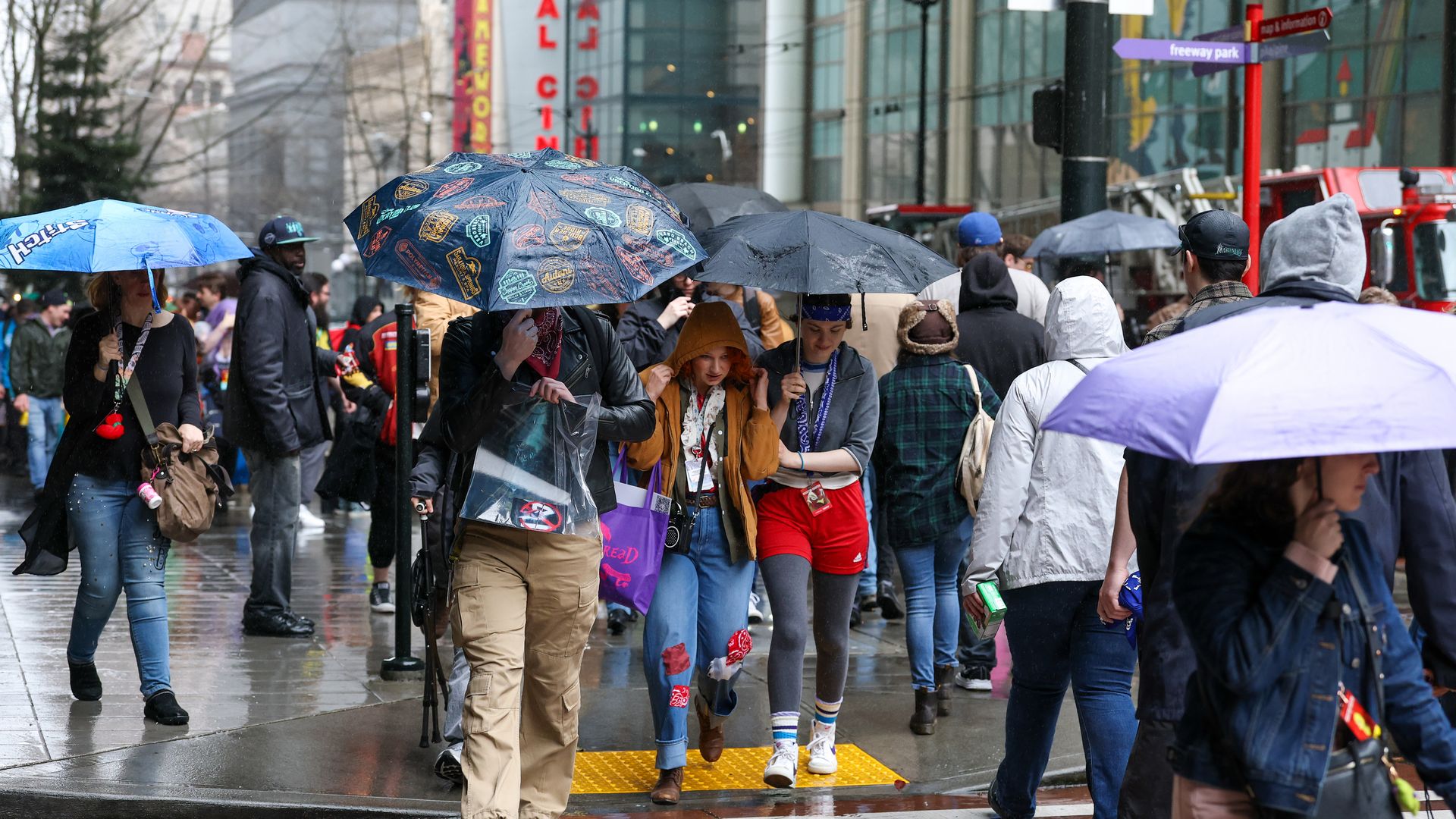
An atmospheric river is hovering over the Pacific Northwest this week, bringing steady rain to the city and heavier precipitation to the mountains.
Threat risk: The bigger concern isn't rainfall totals — Seattle is expected to get a little less than an inch over the next few days, said Melissa Gonzalez-Fuentes of the National Weather Service in Seattle.
- It's the steady rain combined with warmer mountain temperatures that raises concerns about melting snowpack and rising rivers, she said.
Driving the news: Flood watches and advisories are in effect through Friday for some areas in King, Snohomish, Skagit and Whatcom counties.
- Several mountain-fed rivers — including the Snoqualmie, Skykomish, Snohomish, Skagit and Skokomish — are expected to reach minor flood stage, with some spots potentially nearing moderate flooding today and tomorrow, Gonzalez-Fuentes told Axios.
What's next: The atmospheric river is likely to move on before the weekend, but showers remain in the forecast.
3. Morning Buzz: 💵 Needle buys space

⚙️ The Space Needle is buying part of the Pacific Science Center's campus — including the Boeing IMAX — for $17.25 million, giving the science center cash to address financial struggles and upgrade facilities. (Seattle Times)
🅿️ Seattle parking enforcement issued 31% fewer parking tickets, with revenue down about $640,000 between Oct. 1 and the end of January, amid a reported union-related work slowdown. (KOMO)
4. Joe Kent quits Trump admin
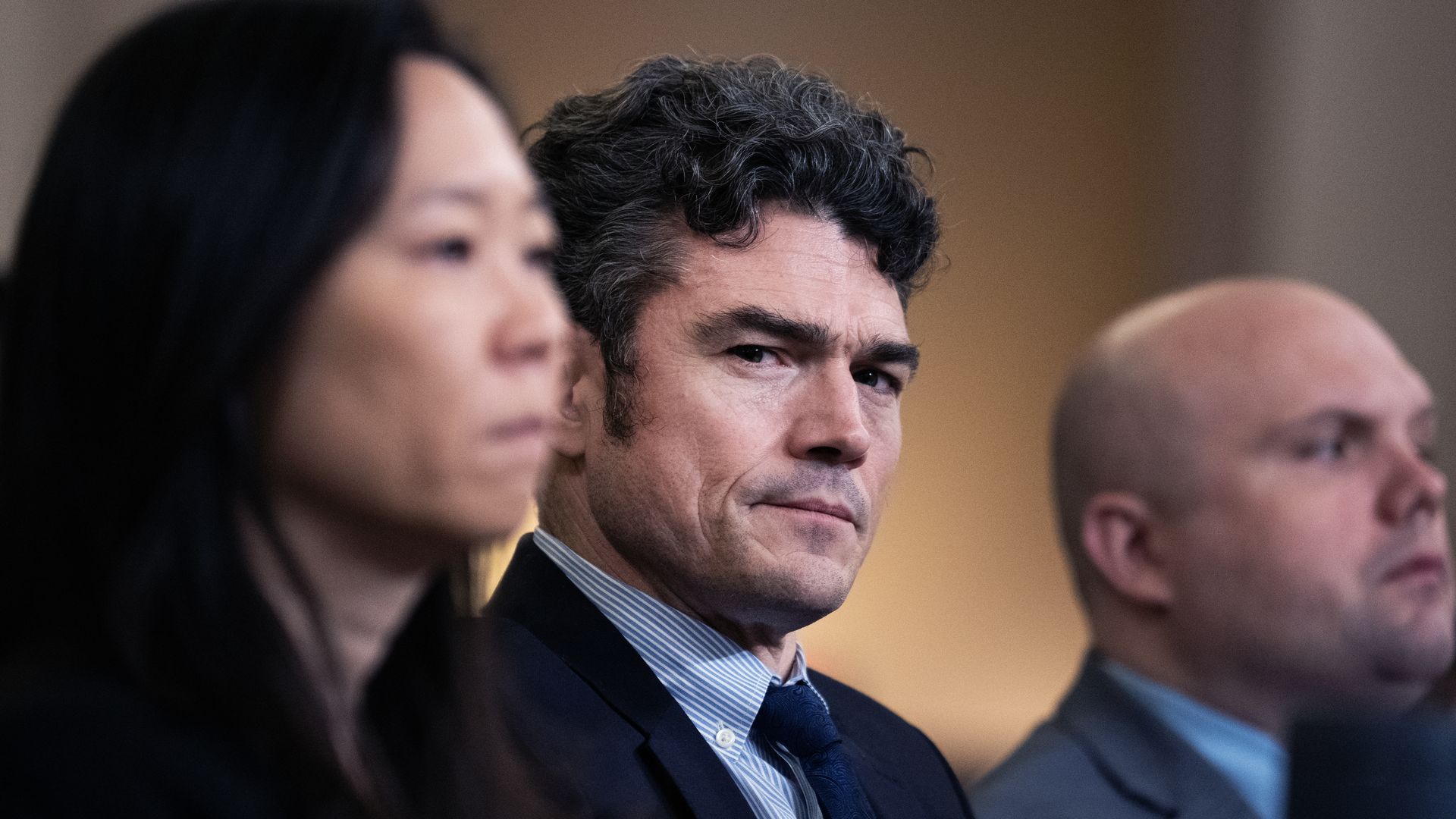
Joe Kent, a former two-time congressional candidate in Washington state, became the first senior Trump administration official to resign over the war in Iran yesterday.
- Kent led the National Counterterrorism Center and was a top aide to national intelligence director Tulsi Gabbard,
Why it matters: Kent's stinging rebuke — that Trump launched the war under pressure from Israel despite Iran posing "no imminent threat" to the U.S. — underscores the discomfort some in the "America First" camp feel about the war.
What he's saying: "I cannot in good conscience support the ongoing war in Iran," Kent posted on social media. "Iran posed no imminent threat to our nation, and it is clear that we started this war due to pressure from Israel and its powerful American lobby."
Asked about Kent's resignation yesterday, Trump said Kent was "a nice guy" but "weak on security."
Zoom out: Kent served in the Army Special Forces before twice running unsuccessfully for Congress in southwest Washington's 3rd Congressional District.
- Kent, who Trump endorsed in both campaigns, lost in 2022 and 2024 to Democratic Rep. Marie Gluesenkamp Perez. Their matchups were among the most competitive House races in the country in both those years.
5. 🌲 Allergy season grows

If you're breaking out the Claritin and Zyrtec early, you're not alone. Seattle's spring allergy season is getting longer and stronger.
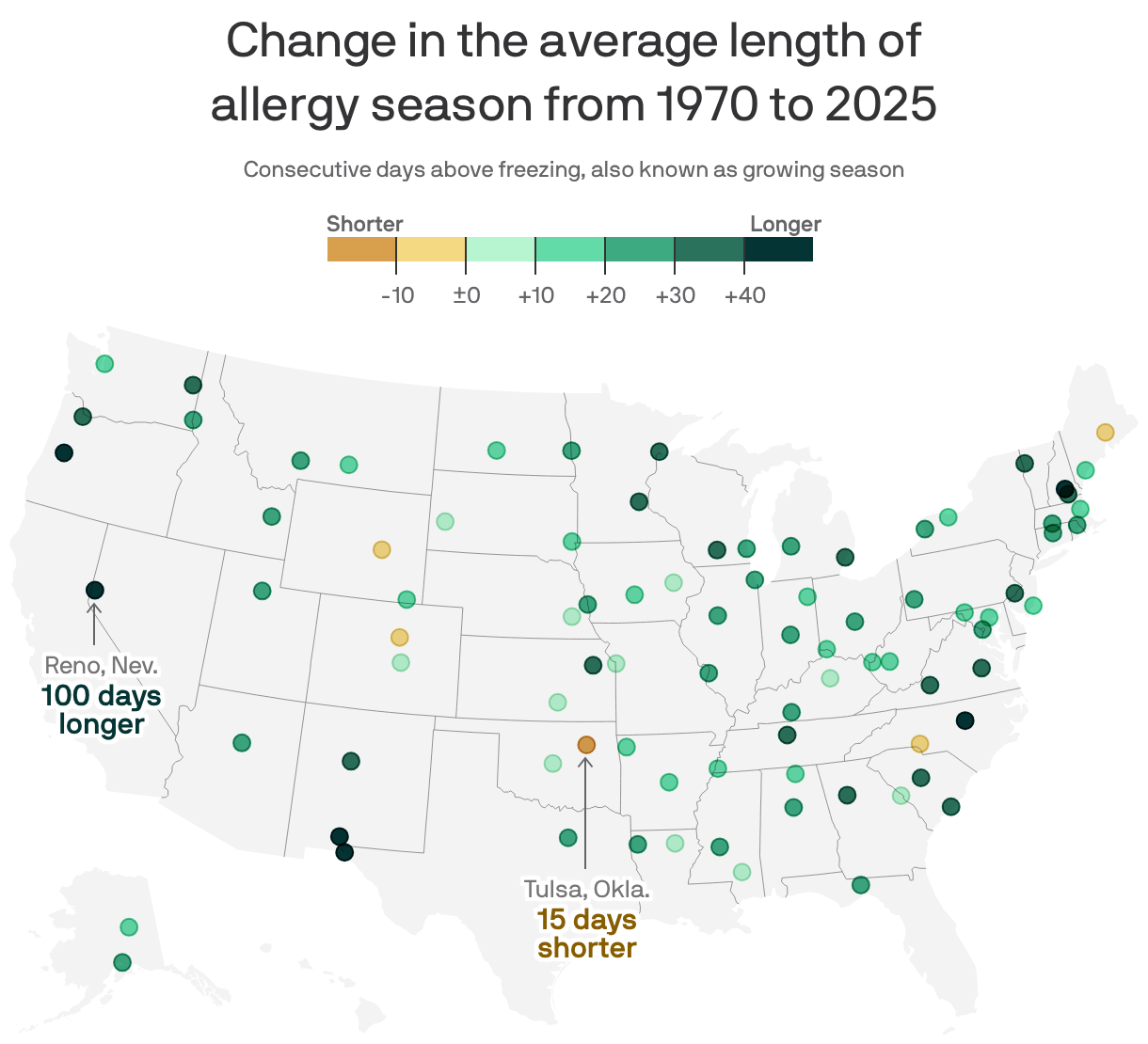
Allergy season has lengthened more in the Northwest than in any other U.S. region in recent decades, per a Climate Central analysis.
- Compared to 1970, the freeze-free growing season for plants is now 12 days longer in Seattle and 33 days longer in Spokane, the climate research group found.
- Seattle's spring allergy season typically ramps up in March, with pollen from trees — elm, alder, cedar, juniper, cottonwood and maple — as the main offenders, according to the Northwest Asthma & Allergy Center.
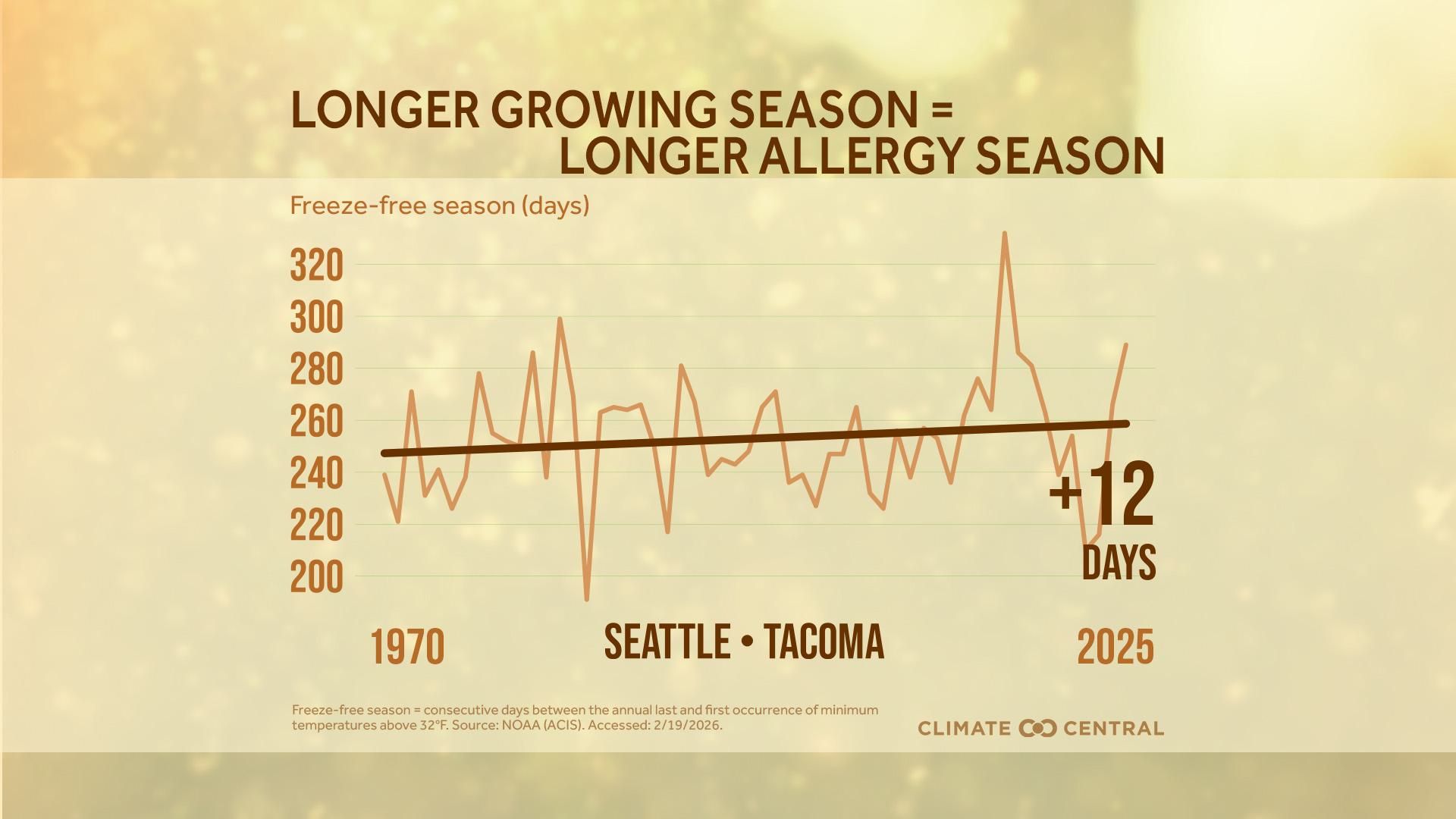
"As temperatures rise, freeze-free seasons are stretching in every region of the country, giving plants weeks of extra time to grow and release pollen," Climate Central's Kristy Dahl said in a statement.
- "For millions of Americans, that means earlier, longer, and often more intense allergy seasons that can take a real toll on health and daily life."
The bottom line: Pass the tissues, would ya?
⚡️ Melissa is struggling to put together Snap Circuits designed for 8- to 10-year-olds.
🗒️ Clarridge is looking forward to chatting with student journalists at Seattle University this afternoon.
This newsletter was edited by Geoff Ziezulewicz.
Sign up for Axios Seattle