Axios Seattle

March 11, 2026


🐪 Happy humpday!
💡 Today, we're diving deep into the push to reconsider nuclear power as our state seeks a carbon-free energy future (not to mention all the extra juice that AI requires).
🌧️ Today's weather: Rain, with a high of 50 and a low of 41.
🏛️ Situational awareness: After more than 24 hours of debate, the state House approved an income tax yesterday on annual earnings above $1 million. The bill now returns to the Senate for final approval.
Today's newsletter is 1,096 words, a 4-minute read.
1 big thing: ⚡️The nuclear return
After decades on the sidelines of Washington's energy debate, nuclear power is back on the table as the state and nation grapple with rising electricity demand from consumers and power-hungry data centers.
Why it matters: Washington's shift mirrors a broader national resurgence in nuclear interest, from Bill Gates' TerraPower project to federal funding for advanced reactors and Amazon's investments in next-generation nuclear power.
- It's not just artificial intelligence driving that demand, Brandon Oyer, Amazon's head of energy and water for the Americas, told Axios. Consumers are also driving this second look at nuclear power.
- "Do you know anyone who's using less electricity than they were 10 years ago?" he said.
Context: In an increasingly power-hungry world, nuclear energy is the carbon-free key for some.
- Unlike wind and solar power generation, nuclear power runs cleanly and almost continuously once built, said Mark Nutt, a nuclear engineer at Pacific Northwest National Laboratory (PNNL), a U.S. Department of Energy–funded national lab.
State of play: Three developments converged over the past few years to bring the nuclear energy option back to the forefront, said Gregory Cullen, senior vice president of Energy Northwest, a public power consortium.
First: The Clean Energy Transformation Act, (CETA) was signed into law in 2019 and requires utilities to eliminate carbon-emitting electricity by 2045.
- "Suddenly, fossil fuels were off the table for the new generation," Cullen said.
Second: Energy Northwest's utility members asked for studies examining how the Northwest could meet a 100% clean standard.
- The study concluded that the lowest-cost fully clean system included a "clean firm" resource — such as nuclear — that can run around the clock.
Third: Congress launched the Advanced Reactor Demonstration Program in 2020, offering billions of dollars in support for next-generation nuclear reactors.
Catch up quick: Energy Northwest is proposing to build up to 12 small modular reactors on a site next to the Columbia Generating Station, which it runs.
Between the lines: Amazon has so far invested billions in carbon-free energy, including $500 million with X-energy to fund early development work at the Cascade Advanced Energy Facility project.
- Amazon has also agreed to purchase power from the first four units, thereby reducing financial risk for utilities and ratepayers, per Cullen.
These new reactors are not the massive megawatt plants built in the 1970s.
2. 🗑️ The waste question
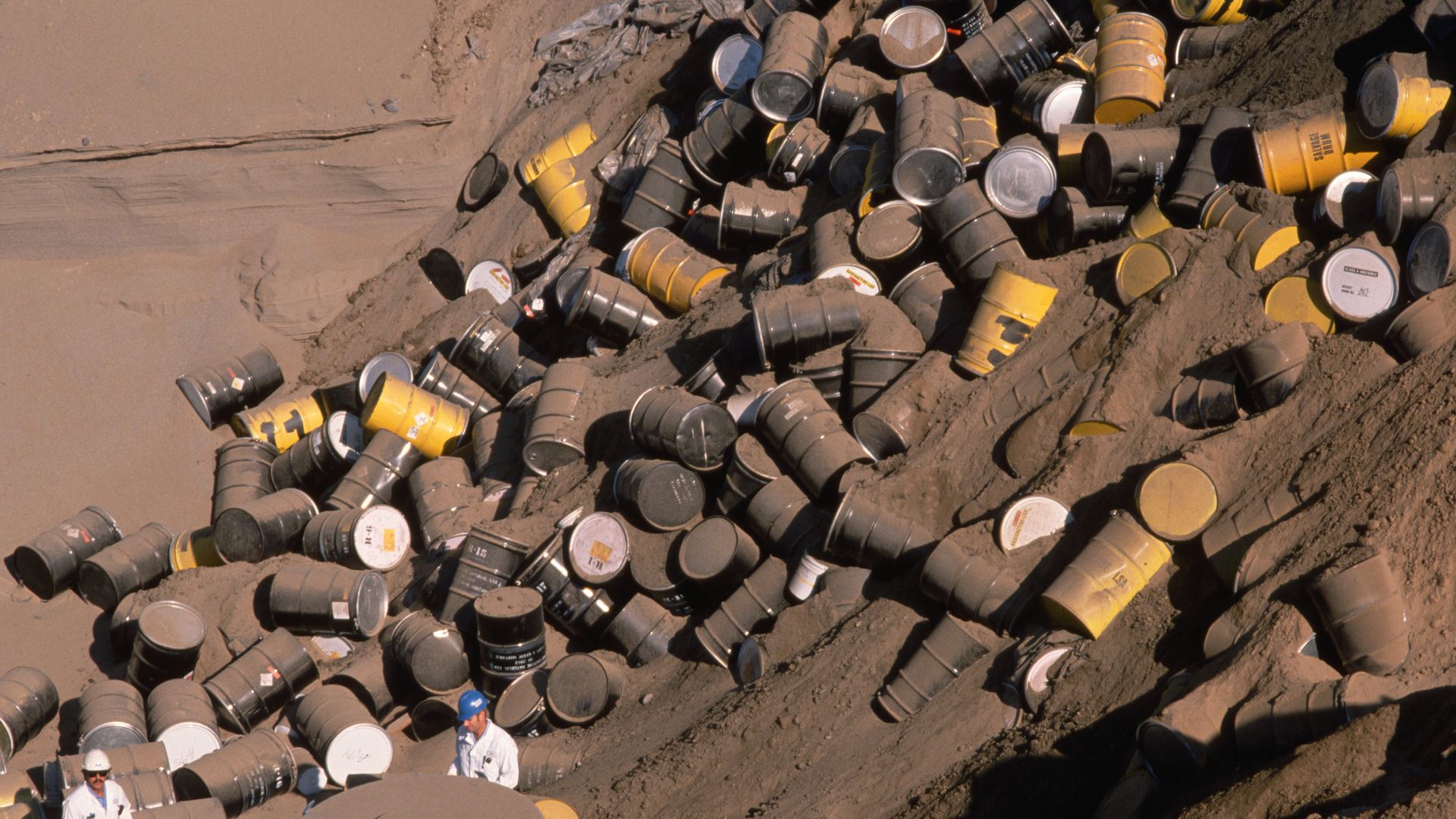
As Washington's energy industry and lawmakers take another look at nuclear power as a way to reach a carbon-free energy future, a perennial question is reemerging: What happens to the waste?
Why it matters: The country still hasn't figured out where to permanently store high-level nuclear waste — and until it does, every new reactor adds to that unresolved burden.
Catch up quick: That question carries particular weight in Washington because of Hanford — the Cold War site where radioactive and chemical waste from weapons production still requires massive cleanup.
- Commercial nuclear waste is not the same as Hanford's legacy defense waste, Nikolas Peterson, executive director of the nonprofit Hanford Challenge, which works to clean the site, told Axios.
But Peterson said the lessons from Hanford still apply when considering nuclear expansion.
- "Don't just build something and assume you'll figure out the waste later," he said. "That's what they did before."
- Wise leadership would nail down the "cradle to grave" path for nuclear waste before adding more, Peterson said.
State of play: At the Columbia Generating Station, the state's lone commercial reactor, used fuel is first cooled in deep water pools, then transferred into steel-and-concrete dry storage casks on site.
- The casks are designed and tested to withstand earthquakes, plane crashes and train derailments among other disasters, according to Northwest Energy spokesperson Jackie Eutsey.
- Still, the casks are considered interim storage and not a permanent solution, said Nutt of PNNL.
The bottom line: Whether Washington expands nuclear energy may depend not just on cost or technology — but on whether the country can resolve the ultimate question of safety, and where the waste will go.
3. 🛣️ The long road
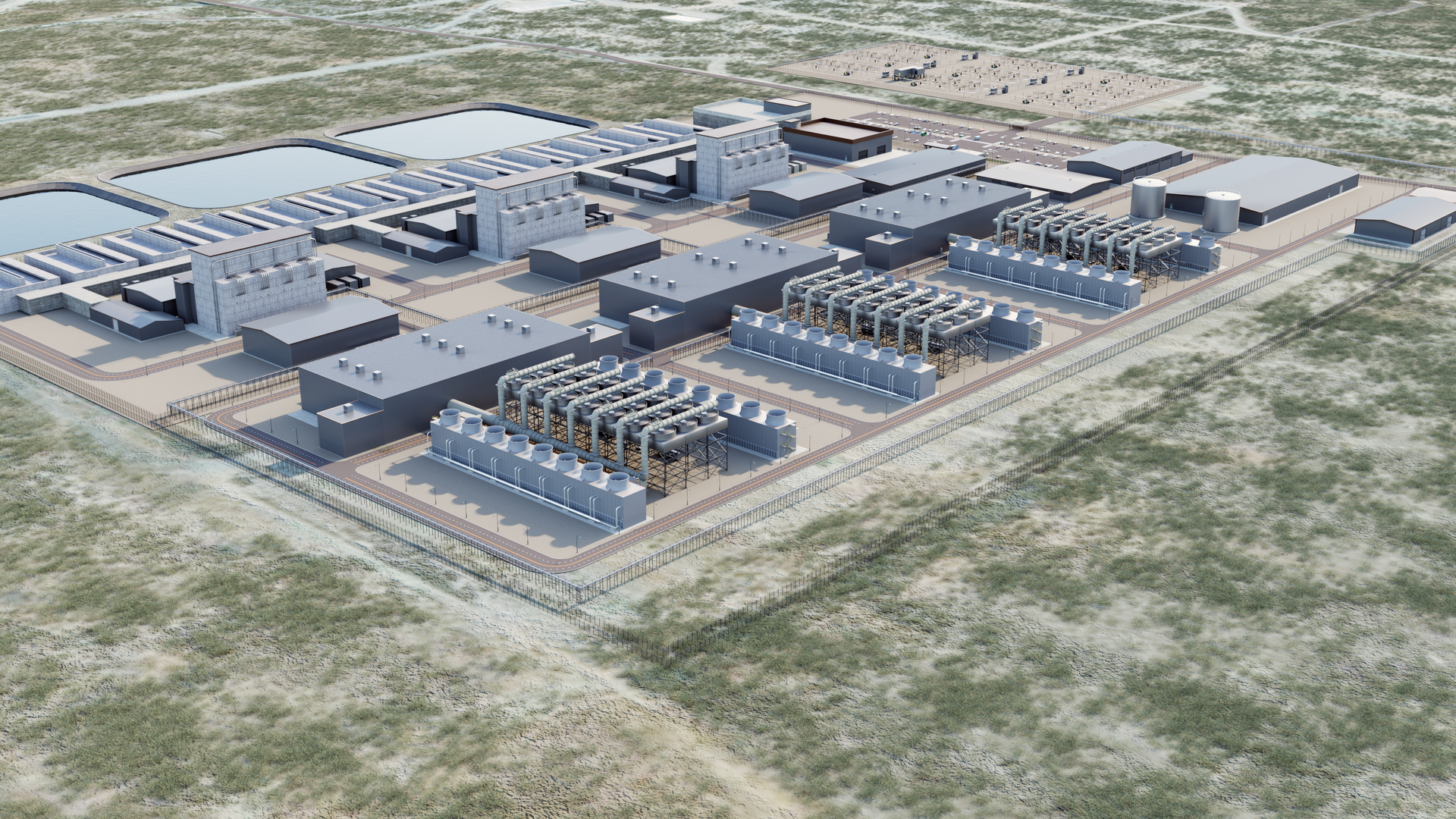
Even if Washington embraces small modular nuclear reactors to alleviate its carbon-free energy needs, it will take years to flip the switch, analysts say.
Why it matters: Energy Northwest estimates the first four units at the proposed Cascade Advanced Energy Facility would not begin operating until the early to mid-2030s because of licensing timelines.
State of play: Before a single watt is produced, Energy Northwest must pass through several regulatory gates, according to the consortium's Gregory Cullen.
- Federal licensing: The U.S. Nuclear Regulatory Commission (NRC) must approve a construction license. Later, the agency must issue a separate operating license before the plant can generate power commercially.
- State siting approval: Washington's Energy Facility Site Evaluation Council (EFSEC) has to approve the project at the state level.
- Financing: The utility must secure billions of dollars to build the reactors.
- Construction and testing: The first four modules — each expected to generate about 80 megawatts — would need to be manufactured, assembled and tested before coming online.
"The first time you do anything, it's hard, it's expensive and it takes a long time," Cullen said.
Flashback: Washington's caution around nuclear power is not theoretical given its history.
- In the 1970s, the Washington Public Power Supply System (WPPSS) set out to build five nuclear reactors.
- Ultimately, all but one — the Columbia Generating Station — were abandoned, and WPPSS defaulted on billions in bonds — at the time the largest municipal bond failure in U.S. history.
The bottom line: Washington once bet big on nuclear energy and lost. This time, the outcome may hinge on whether policy, financing and public trust come together.
4. Morning Buzz: 💰Big library levy
📚 Seattle Mayor Katie Wilson has proposed a seven-year, $410 million property tax levy — nearly 50% larger than the expiring measure — to fund library services, pending City Council approval for the August ballot. (Seattle Times)
✊ Starbucks Workers United has filed an unfair labor practice charge over the company's plan to close five Seattle stores — most of them unionized — as the coffee giant continues broader cost-cutting efforts. (KUOW)
⚖️ Melissa is reading up on past state Supreme Court cases.
✍🏼 Clarridge is trying to write a murder mystery.
This newsletter was edited by Geoff Ziezulewicz.
Sign up for Axios Seattle
