Axios Seattle

September 11, 2024

🐪 Hello, it's Wednesday!
🌧️ Today's weather: Rain. High near 66.
🎂 Happy birthday to our Axios Seattle members Steve Cook, John Fuhr and Joseph Waldherr!
Today's newsletter is 894 words, a 3.5-minute read.
1 big thing: Our traffic congestion is 2nd-worst in U.S.

Drivers in the Seattle metro area are more likely to get stuck in traffic than drivers in nearly any other U.S. city, according to a new analysis.
Why it matters: Understanding which cities have the worst congestion can help people make decisions about where to work, when to work, when to run errands or even when it's time to move, the researchers said.
Driving the news: Seattle has the second worst congestion and the third worst traffic among 49 major metro areas, according to the September Consumer Affairs report that looked at congestion, travel times and fatal crashes.
By the numbers: Seattle sees almost seven hours of average daily congestion on its roads compared with the national average of three hours and 41 minutes, per the study that used information from the U.S. Census Bureau, Federal Highway Administration and the National Highway Traffic Safety Administration.
- That's second only to Los Angeles, which has the worst congestion and the worst traffic in the U.S., Consumer Affairs data analyst Steon Nichols told Axios in an email.
What they're saying: Seattle's traffic is bad for the size of its population, said Bob Pishue, a transportation analyst at INRIX, which provides transportation data and insights.
- The rise in deliveries in dense urban areas, freight vehicles stopping in the middle of the road and more midday traffic "cause more congestion and more chaos," he told Axios.
Zoom in: The average driver in Seattle lost 58 hours due to congestion in 2023. That 12-hour increase in traffic delay from 2022 was the highest increase out of any metro area in the United States, per a separate report from INRIX.
Yes, but: Seattle ranks much better than average in one important criteria, per the Consumer Affairs analysis, with 5.21 fatal crashes per 100,000 residents compared with the national average of 11.8.
Discover local fun
🔍 Plan ahead with these events.
Armoire Fall Warehouse Sale at Armoire Sept 13-14: Do you love thrifting? Join for the chance to shop their designer inventory sale! They will be selling thousands of items of gently-used designer inventory. All well-loved items will be $30 each. Prosecco and light bites will be served. Coffee will be served on Saturday morning.
Hosting an event? Email [email protected].
2. Key moments from governor's debate
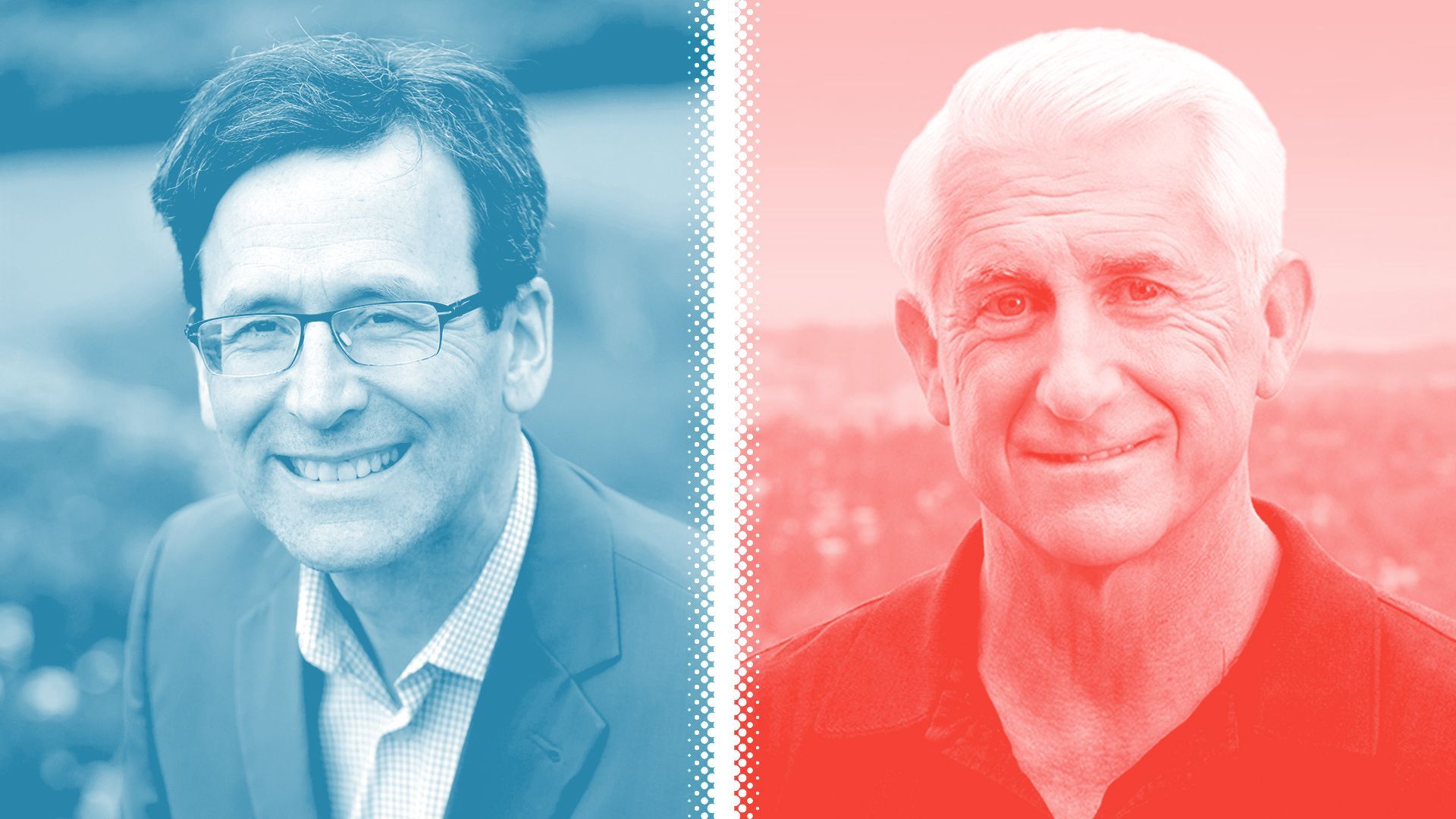
Democrat Bob Ferguson criticized Republican Dave Reichert's stance on abortion while Reichert promised to veto any new tax proposals during the first debate between the Washington state gubernatorial candidates yesterday.
Why it matters: Washington is about to get its first new governor in 12 years, after incumbent Democrat Jay Inslee decided to not seek a fourth term.
Catch up quick: Reichert, a former King County sheriff and past Republican member of Congress, will face Ferguson, Washington's Democratic attorney general, in the November election.
Here were a few of the debate's key moments.
Ferguson slams Reichert over Trump
Ferguson repeatedly attempted to paint Reichert as a yes-man to former President Trump, who won less than 40% of the vote in Washington state in both the 2016 and 2020 presidential elections.
- Reichert responded by telling Ferguson, "You're obsessed with Donald Trump. I've moved past that."
Reichert pledges to veto taxes
"I am going to veto any new tax law that comes to my desk when I'm the governor," Reichert said when asked about the state budget.
- Ferguson fired back by criticizing Reichert's work during his 14 years in Congress.
- "You guys couldn't balance a budget, you drove up deficits year after year after year," Ferguson said.
Conflict over abortions
Ferguson called abortion "a critical, critical difference" between him and Reichert, who voted while in Congress to ban most abortions after 20 weeks.
- Reichert said he wouldn't seek to undo Washington state's voter-approved abortion law, which protects access to abortions until roughly the 24th week of pregnancy, or later to protect a mother's health.
3. New Starbucks CEO's big plans
New Starbucks CEO Brian Niccol is outlining a plan to bring the company back to its roots, acknowledging that the chain has lost its way.
Why it matters: The former Chipotle boss is under pressure to deliver a turnaround at Starbucks with the coffee giant reeling from a slowdown in sales and facing pressure from activist investors.
- Long wait times and supply chain issues have been dogging Starbucks in the post-Howard Schultz era.
Driving the news: Niccol released a letter Tuesday outlining his plans for Starbucks in his first 100 days and detailing what he views as the company's missteps before he joined.
- "We're refocusing on what has always set Starbucks apart — a welcoming coffeehouse where people gather, and where we serve the finest coffee, handcrafted by our skilled baristas," he wrote.
- His plan includes delivering morning orders "on time, every time," and "elevating the in-store experience" with more comfortable seating, he said.
4. Morning Buzz: More details about UW grad's death

The Israeli military says it is "highly likely" that Aysenur Ezgi Eygi, a University of Washington graduate who was killed in the West Bank last week, was shot "indirectly and unintentionally" by Israeli soldiers. (Axios)
A woman accused of causing a fatal crash that killed one person and injured two others on I-5 in Thurston County on Saturday had previously been arrested 47 times, police said. (KING 5)
5. Chart du jour: Autumn heats up

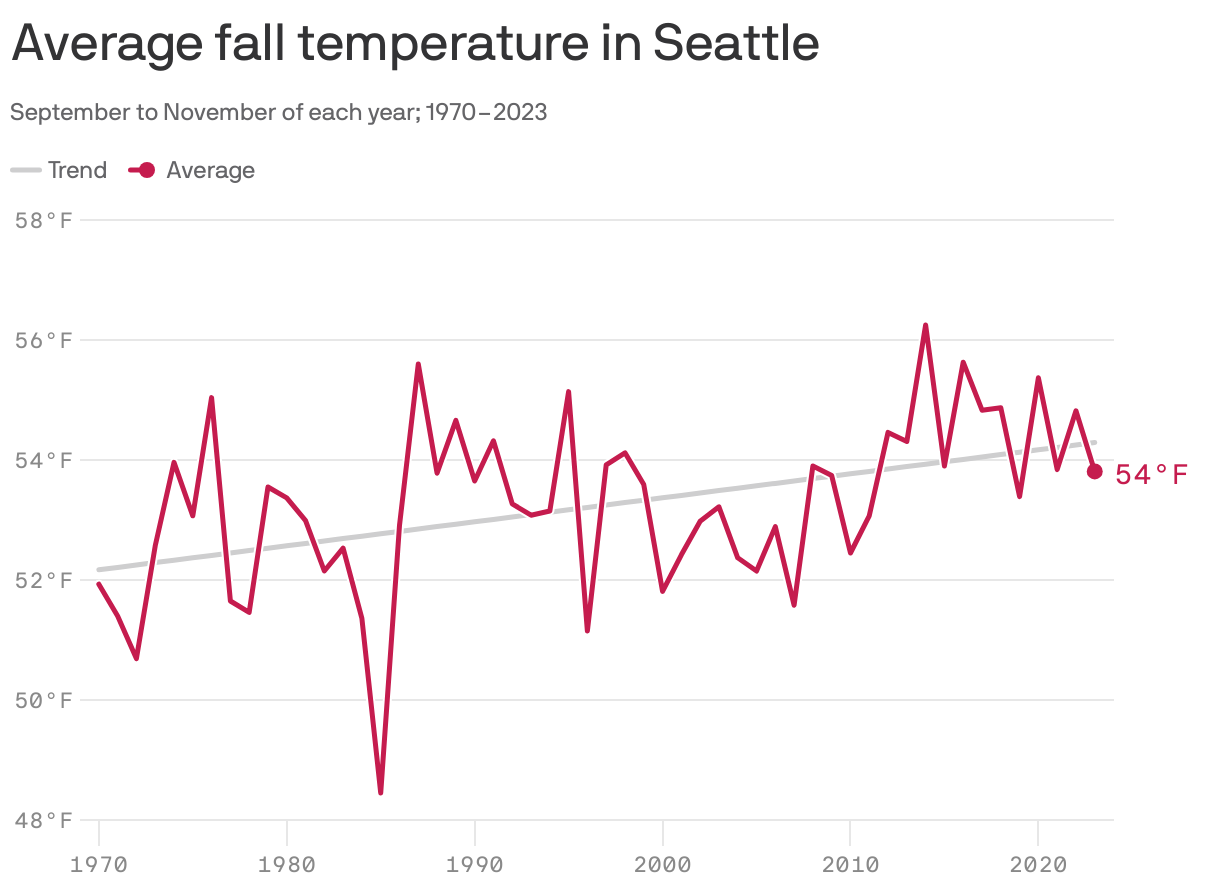
Autumn is getting warmer across the continental U.S., including in Seattle, a new analysis finds.
Zoom in: Fall temperatures in Seattle rose 2.2° on average between 1970 and 2023, according to a new Climate Central report.
- The nonprofit climate research group's analysis is based on average temperatures between September and November each year.
Between the lines: The trend is consistent with climate science findings showing how the planet is responding to human-caused increases in greenhouse gases, such as carbon dioxide.
- All other seasons are also warming, according to data from the National Oceanic and Atmospheric Administration.
🥑 Clarridge can't stop thinking about the vegetarian zen rolls (green beans, eggplant, tofu, avocado) with "eel" sauce she had at Hanazono Asian Noodle in Port Townsend on Sunday.
📺 Melissa is still recovering from spending about three hours watching political debates last night.
This newsletter was edited by Rachel La Corte.
Sign up for Axios Seattle