Axios San Francisco

May 06, 2026

🗳️ It's Wednesday. Ahead of the June 2 primary, we're bringing you an election guide on this year's key races.
🌤️ Today's weather: Partly cloudy with highs in mid-60s, lows near 50.
🎧 Sounds like: "The Times They Are A-Changin" by Bob Dylan.
Today's newsletter is 1,027 words — a 4-minute read.
1 big thing: 🗳️ Your elections primer
By now, every registered San Francisco voter should have received their mail-in ballot for the June 2 primary election.
Why it matters: This year's packed primary — with nearly 20 races — will shape City Hall power dynamics, decide key ballot measures and tee up high-profile November showdowns for Congress and the governor's office.
👉 Expect to vote on:
🌁 Two supervisors: Consider these two elections proxy wars for Mayor Daniel Lurie's agenda, with his appointed supervisors facing voters for the first time.
- In District 2, incumbent Supervisor Stephen Sherrill faces off against community organizer Lori Brooke. Their biggest disagreement: Housing and whether to build more or fight upzoning.
- District 4 incumbent Alan Wong is up against legislative aide Natalie Gee, educator David Lee, small business owner Albert Chow and campus coordinator Jeremy Greco in what's slated to be one of the most closely-watched local contests. It'll be defined by a familiar westside flashpoint — a perceived "war on cars" — following bruising fights over the Great Highway.
🏛️Two U.S. House seats
- In District 11, three congressional hopefuls are battling to succeed Rep. Nancy Pelosi: State Sen. Scott Wiener, Supervisor Connie Chan and former AOC aide Saikat Chakrabarti.
- In District 15, which covers a sliver of the city's southeastern side, incumbent Kevin Mullin faces four challengers.
🗳️ Four local ballot measures
- Proposition A would let San Francisco borrow up to $535 million to fund emergency response and recovery projects, including earthquake safety upgrades.
- Proposition B would limit mayors and supervisors to two four-year terms for life. Currently, they can run again for the same position if they leave office for four years after two consecutive terms.
- Proposition C maintains the city's "overpaid executive" tax, but narrows which companies have to pay it. The expanded exemption would target businesses where the highest-paid employee earns 100 times more than the median worker. Currently, companies that make over $5 million in city revenue must pay the tax. The measure would allow businesses that make $7.5 million or less to avoid it, while moving up a scheduled tax rate increase from 2028 to 2027.
- Proposition D goes the other direction. It would raise the "overpaid executive" tax rate and change how it's calculated — using a company's overall median pay instead of just what employees in San Francisco earn.
Between the lines: Props. C and D come down to a fight over how aggressively San Francisco should tax corporations and whether that risks pushing businesses out.
- Whichever measure gets more votes takes effect, even if both receive majority support.
For statewide elections like the governor and insurance commissioner races, the top two vote-getters — regardless of party — will advance to the general election.
- Find our breakdown of statewide races here.
2. ✔️ How to vote in the primary
After filling out those bubbles, drop your ballot off at one of 37 official boxes across the city or return it via mail, though it must be postmarked and signed by Election Day.
- Track your mail-in ballot here.
To vote in person, head to one of 501 neighborhood polling places open from 7am-8pm on Election Day.
- You can also cast your ballot at the City Hall Voting Center, now open for early voting.
- It's open 8am-5pm on weekdays except for Memorial Day, 10am-4pm the weekend before June 2 or 7am-8pm on Election Day.
If you're late to the game, you can still register online or in-person at the Department of Elections, post office or library until May 18.
- After that, register at City Hall or at your polling place through 8pm on Election Day.
- People experiencing homelessness can register using a cross street, park or shelter as an address.
3. The Wiggle: 👮 Fare evasion crackdown
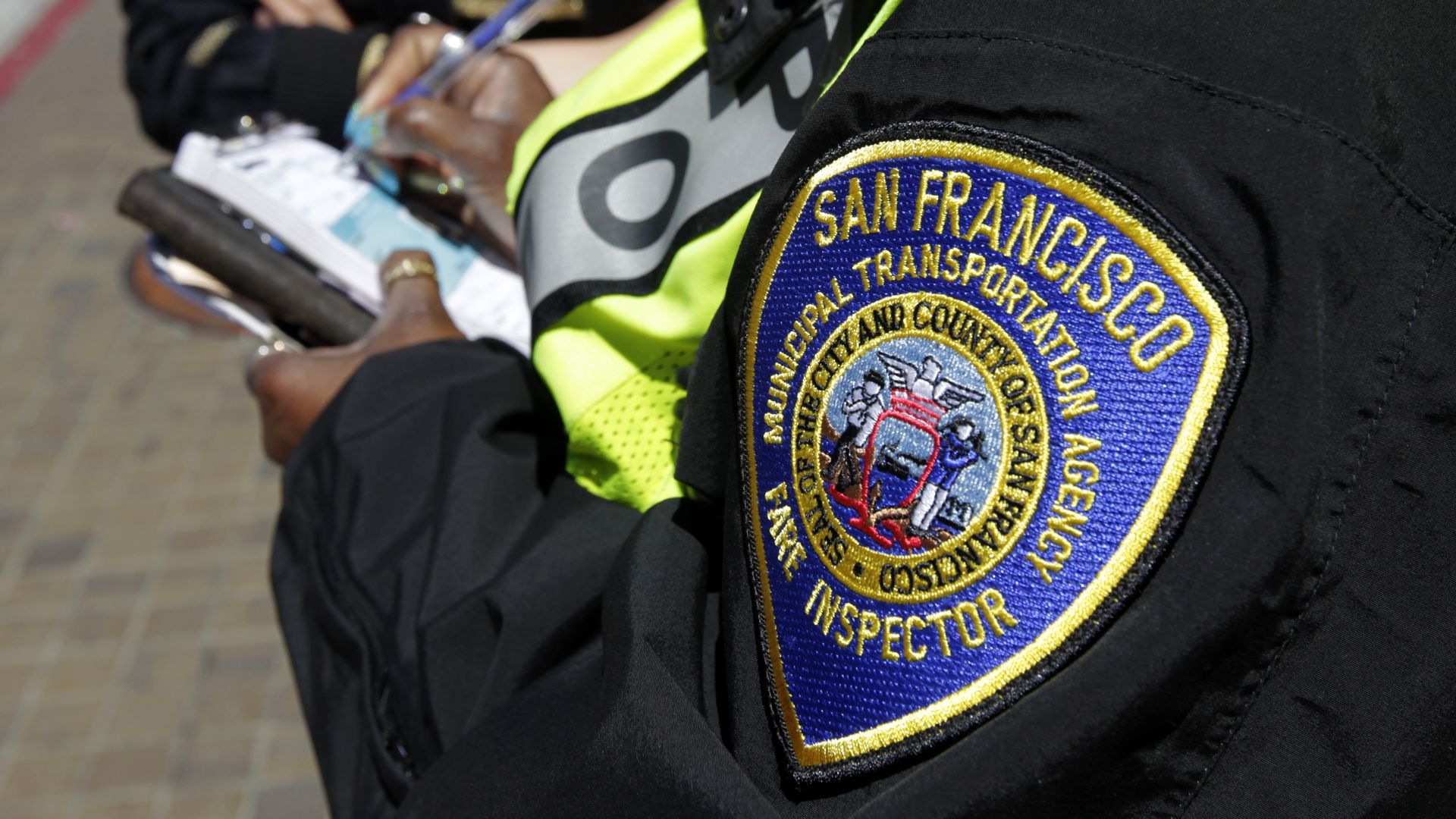
🚨 Muni is ramping up fare enforcement with the hiring of 17 new inspectors and increased patrols. (SF Chronicle)
🐺 DNA evidence revealed that the coyote spotted on Alcatraz earlier this year didn't swim from San Francisco as first thought, but instead made a longer two-mile journey from Angel Island. (SFGATE)
🏛️ San Francisco's immigration court at 100 Montgomery St. — one of the busiest nationally — permanently closed this week. (KQED)
4. 🏛️ Representation at risk
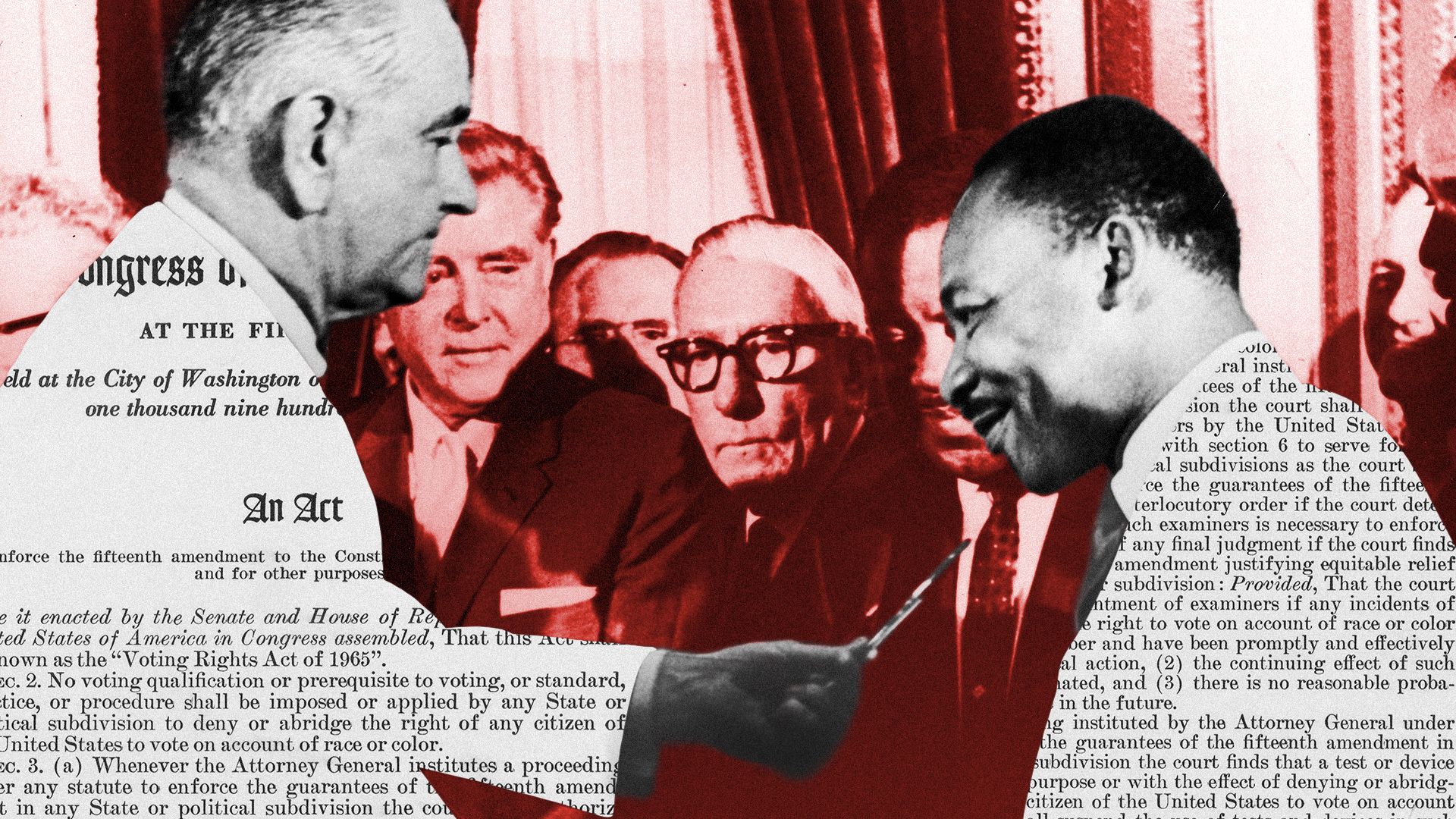
California has long relied on strong voting protections to expand representation, but a new federal ruling could chip away at that foundation.
State of play: The Supreme Court's narrowing of the Voting Rights Act last week weakens a federal backstop that challenged unfair electoral maps, threatens California's Voting Rights Act and potentially reverses gains in representation for voters of color, experts say.
Catch up quick: The court's 6-3 decision in Louisiana v. Callais narrowed Section 2 of the civil rights era law, the primary tool used to challenge racially discriminatory gerrymandering.
The big picture: States can now frame gerrymandering as partisan rather than racial to implement new maps. With Section 2 weakened, fewer federal checks exist as states redraw political power.
Zoom in: The state's Voting Rights Act could face new constitutional scrutiny and potentially be struck down — the Supreme Court ruling signals deep skepticism toward race-based protections, Emily Rong Zhang, a UC Berkeley assistant professor of law, told Axios.
Yes, but: California's independent redistricting system and newly drawn Proposition 50 maps are unlikely to change in the near term because they're already in effect, though the ruling could lead to renewed legal challenges.
- Longer-term effects could be significant for Latino, Asian and Black communities.
The bottom line: California's maps may hold for now, but the legal tools that helped make them more representative are eroding.
5. We ❤️ our "I Voted" sticker
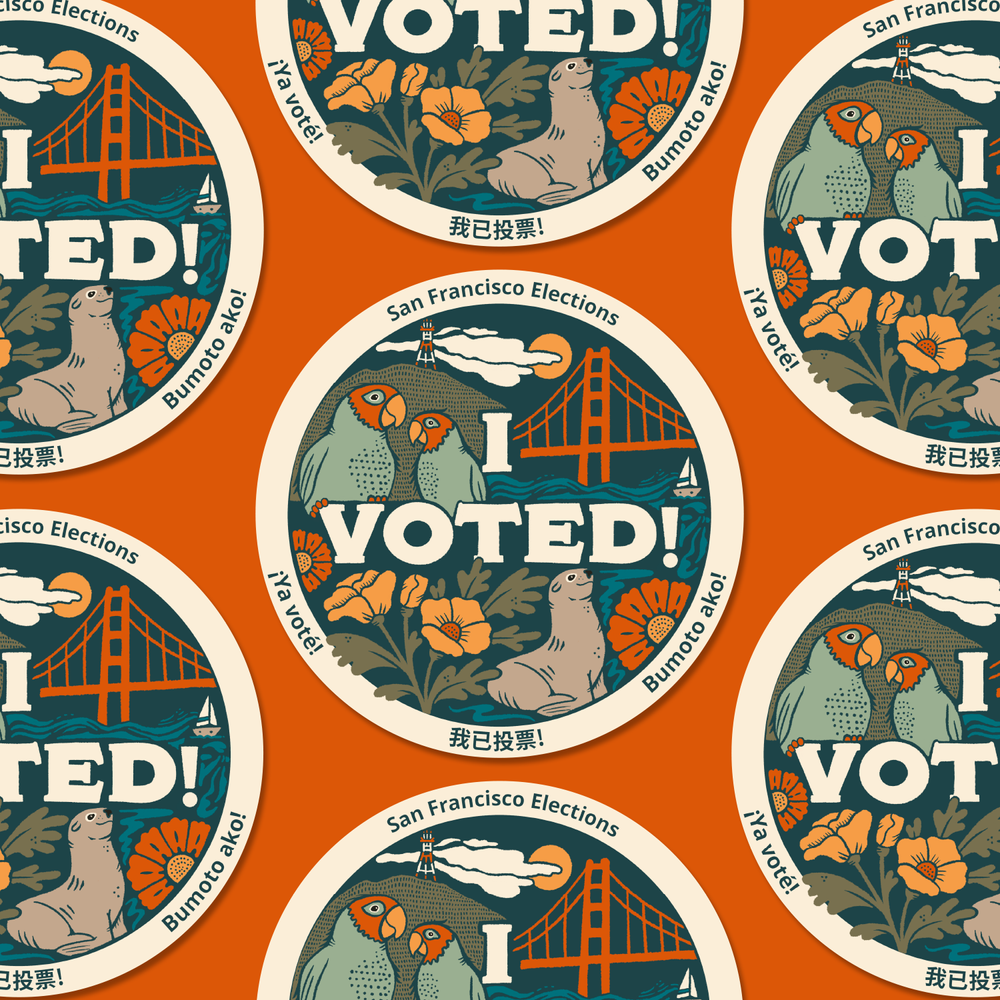
As you get ready to vote, don't forget we have the best "I Voted" sticker in the country.
- This gorgeous design by Hollis Callas took first place in San Francisco's 2023 contest.
Fun fact: You can snag merchandise like t-shirts, tote bags and enamel pins featuring the sticker design from Callas' shop.
Make sure to wear yours proudly after voting in the primary!
😍 Shawna is in love with Callas' "I Voted!" tote!!
🗳️ Nadia is filling out her ballot!
This newsletter was edited by Geoff Ziezulewicz.
Sign up for Axios San Francisco
