San Francisco supervisors approve contentious up-zoning plan

Add Axios as your preferred source to
see more of our stories on Google.

The Sunset, comprised of mostly single-family homes, has historically had strict building height restrictions. Photo: David Paul Morris/Bloomberg via Getty Images
After months of debate and fierce pushback, Mayor Daniel Lurie scored a win Tuesday when San Francisco supervisors approved a sweeping up-zoning proposal allowing for thousands of new homes in historically low-density neighborhoods.
Why it matters: The family rezoning plan calls for denser and taller buildings across wide stretches of San Francisco neighborhoods — including the city's north and west sides — that have long been resistant to new development.
- As part of a state-mandated goal, the measure aims to add new building heights and rules accommodating multi-dwellings on properties to help fill a 36,200 housing unit shortage, improve affordability and address the state's housing crisis.
Driving the news: The San Francisco Board of Supervisors passed the measure in a 7-4 vote Tuesday evening during an hours-long meeting.
Context: San Francisco is behind on meeting an ambitious state goal of building at least 82,000 new homes in the city by 2031.
- California law requires the city to change its zoning rules to by Jan. 31 or face losing $100 million annually in state funding and risk a potential takeover of its housing approval process.
Caveat: Zoning does not guarantee whether new construction is built — it only defines what types of projects are allowed.
Case in point: A recent analysis from the city's chief economist projects the plan would only yield about 14,600 units over the next 20 years.
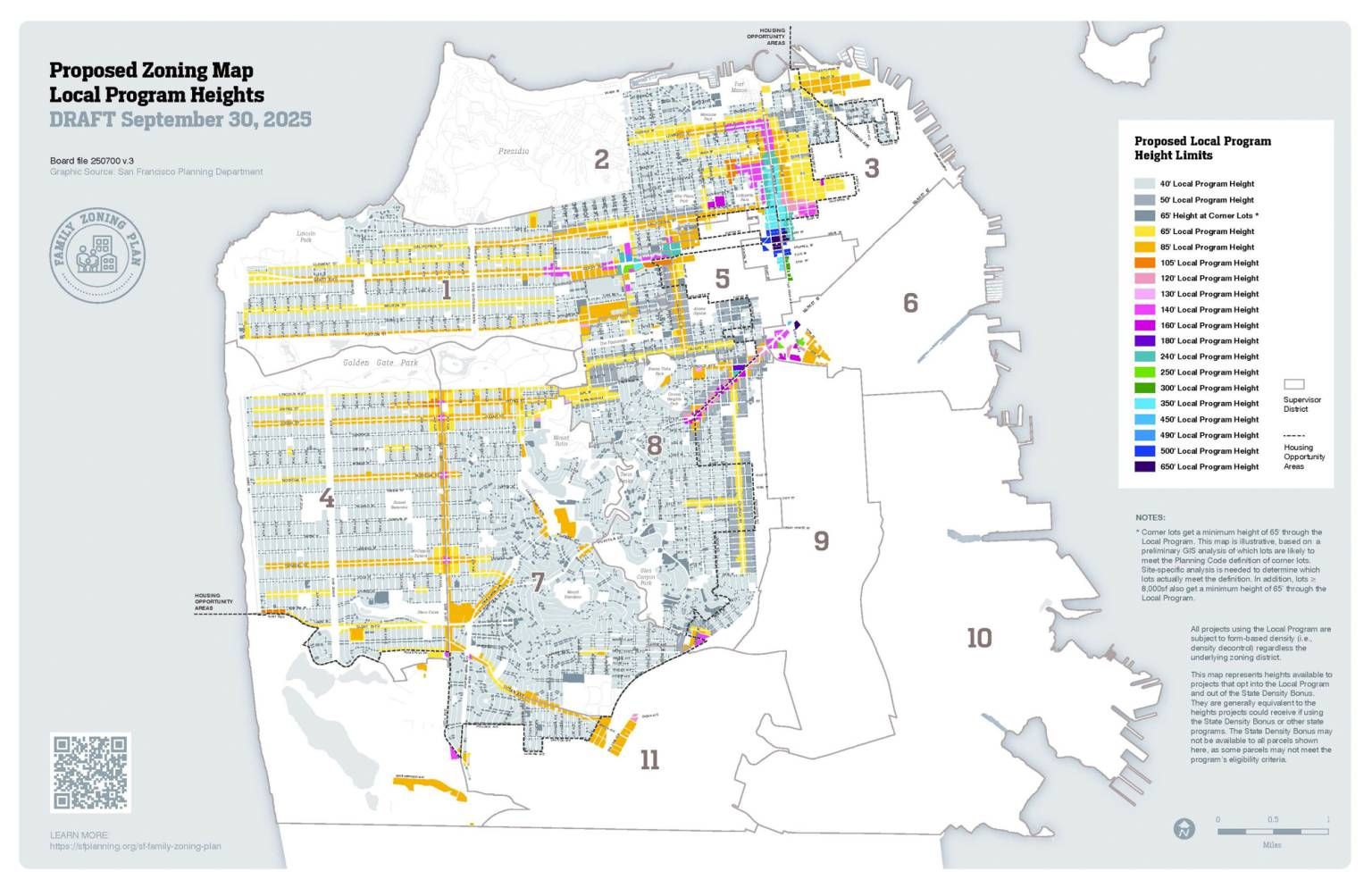
Friction point: Tensions throughout the lengthy process have divided residents, with some railing against the proposal even as pro-housing advocates have hailed it as a long-overdue break in the city's development gridlock.
- Some raised concerns that the measure could erase San Francisco's identity and lead to profit-driven construction, while others expressed its potential to expand living options, reduce housing costs and retain younger households.
Between the lines: Supervisor Myrna Melgar previously proposed amendments to include stronger protections for small businesses and renters. Another significant amendment included the exemption of historic properties.
- "We're leading with our San Francisco values by protecting rent control, opening up new pathways to affordability and encouraging housing near transit," Supervisor Matt Dorsey said.
The big picture: Supervisors were divided over last-minute amendments that would have banned the demolition of any rent-controlled units citywide and made other significant exemptions. They were ultimately rejected — highlighting competing priorities between safeguarding tenants and complying with state housing requirements.
- The measure also leaves some questions unanswered — including what kinds of housing it would create and how affordable housing would be funded.
Supervisor Bilal Mahmood pushed back on claims the proposal would spur evictions or mass demolitions, referring to such statements as "fear mongering."
- "It's factually not true and it's exploiting genuine concerns of residents across the city to score political points — that's not leadership, it's emotional exploitation," he said.
- Walton responded by criticizing the mandate as "bullying" by the state, adding that the plan "is a theoretical framework that will achieve nothing...it most certainly will not put us in line with addressing the housing crisis that we have have here."
The intrigue: Newly appointed Supervisor Alan Wong, who represents an area long resistant to density, broke from that stance and backed the plan out of concerns for "losing local control, which is not acceptable."
What's next: Opponents are eyeing a potential 2026 ballot measure to overturn the new zoning law.