Axios San Francisco

March 09, 2023
Happy Thursday.
- Today's weather: Rain with a high of 56 and low of 48.
Situational awareness: California will not renew its $54 million contract with Walgreens in light of the pharmacy's decision to not dispense abortion pills in certain states where abortion remains legal, Axios' Oriana González reports.
Today's newsletter is 852 words — a 3-minute read.
1 big thing: Safer landings at SFO
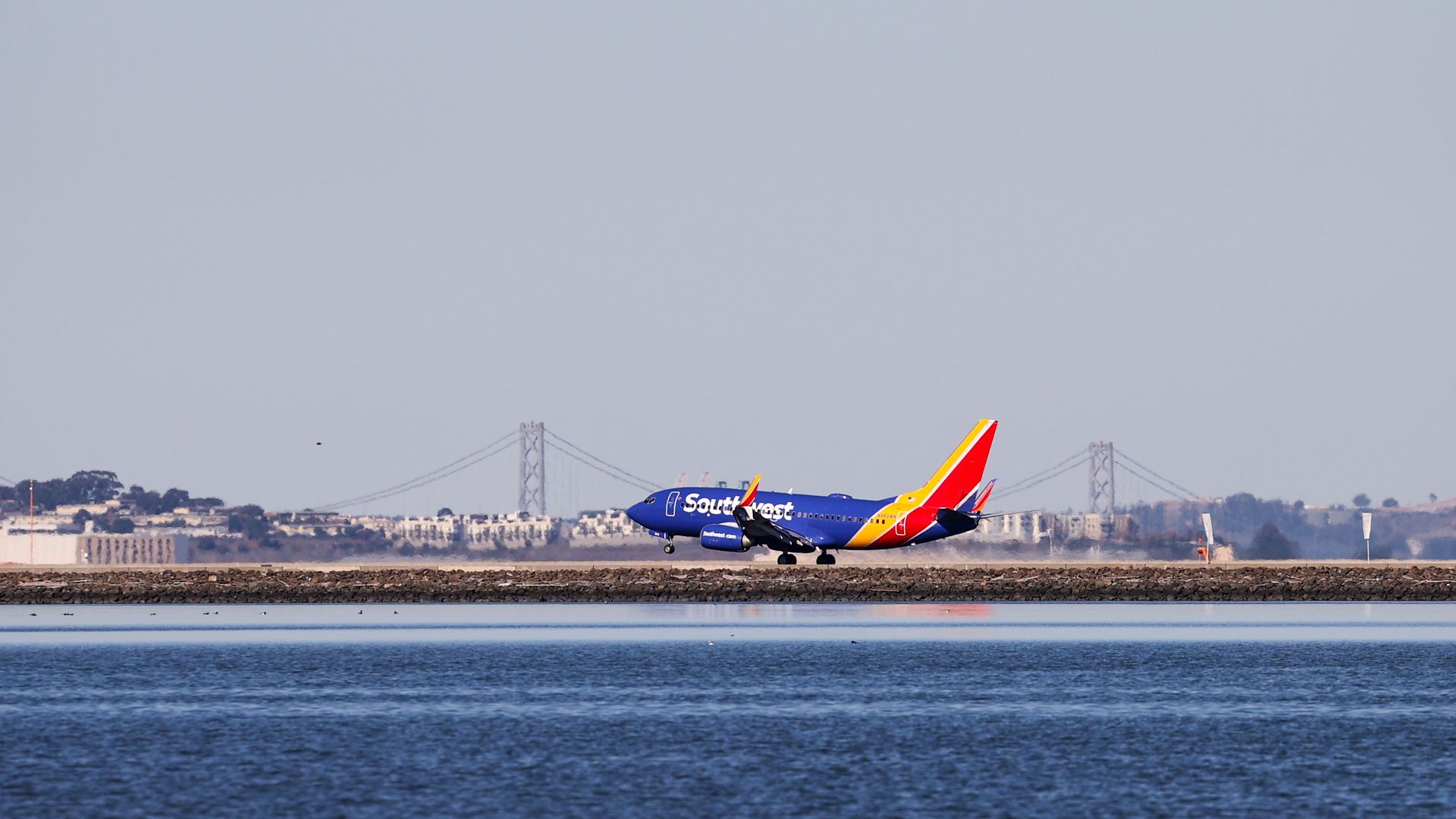
A Southwest Airlines plane lands at San Francisco International AIrport in 2022. Photo: Tayfun Coskun/Anadolu Agency via Getty Images
New software that warns air traffic controllers if an inbound aircraft may be lining up to land on a taxiway rather than a runway has been installed at San Francisco International Airport, the Federal Aviation Administration tells Axios' Alex Fitzpatrick.
Why it matters: Landing on a taxiway — essentially roads for aircraft that connect runways with terminals — can be a major safety hazard.
- There were 1,641 so-called "wrong surface events" between October 2016 and the end of last year, the FAA says — though the vast majority (83%) involved general aviation aircraft, not commercial planes.
Context: There have been a handful of notable taxiway landings by commercial pilots in the last couple of decades.
- In 2006, a Continental Airlines 757 landed on a taxiway at Newark Liberty International Airport.
- In 2009, a Delta Air Lines 767 did the same at Hartsfield–Jackson Atlanta International Airport.
- And in 2015, an Alaska Airlines 737 landed on a taxiway at Seattle-Tacoma.
None of those incidents resulted in injuries. Yet taxiways aren't built to be landing surfaces for heavy jets, and they're often dotted with aircraft about to depart.
- To that point: In 2017, an Air Canada A320 nearly landed on a taxiway at San Francisco International Airport where four other planes were waiting to take off.
How it works: The new software, called ASDE-X Taxiway Arrival Prediction (ATAP), uses radar and other sensors to automatically tell if a plane appears to be lining up to land on a taxiway.
- In such an event, the software alerts controllers to the potential problem. They can then communicate the issue to the incoming pilots.
Details: ATAP has "helped prevent more than 50 wrong-surface taxiway landings since its first implementation at Seattle-Tacoma International Airport in 2018," the FAA said in a news release.
- It's been installed at 43 airports nationwide.
- There have been eight ATAP alerts so far this year.
Be smart: Runways have unique visual indicators — such as numbers, aiming points and the "piano key" threshold markings — and they're lit differently than taxiways at night.
- Yet taxiways often run parallel to runways, and pilots — especially those unfamiliar with their destination airport — can sometimes mistake the two.
Of note: One notable pilot who once accidentally landed on a taxiway? Harrison Ford.
Yes, but: None of the most recent headline-grabbing aviation safety incidents had to do with wrong-surface landings.
A new career is waiting for you
đź’Ľ Check out who's hiring now.
- Manager, Billing & Accounts Receivable at Golden State Warriors.
- Sr. Director of Wholesale at Allbirds.
- Trading Specialist at The Trade Desk.
Want more opportunities? Check out our Job Board.
Hiring? Post a job.
2. Bay Area is not generous with tips, report finds
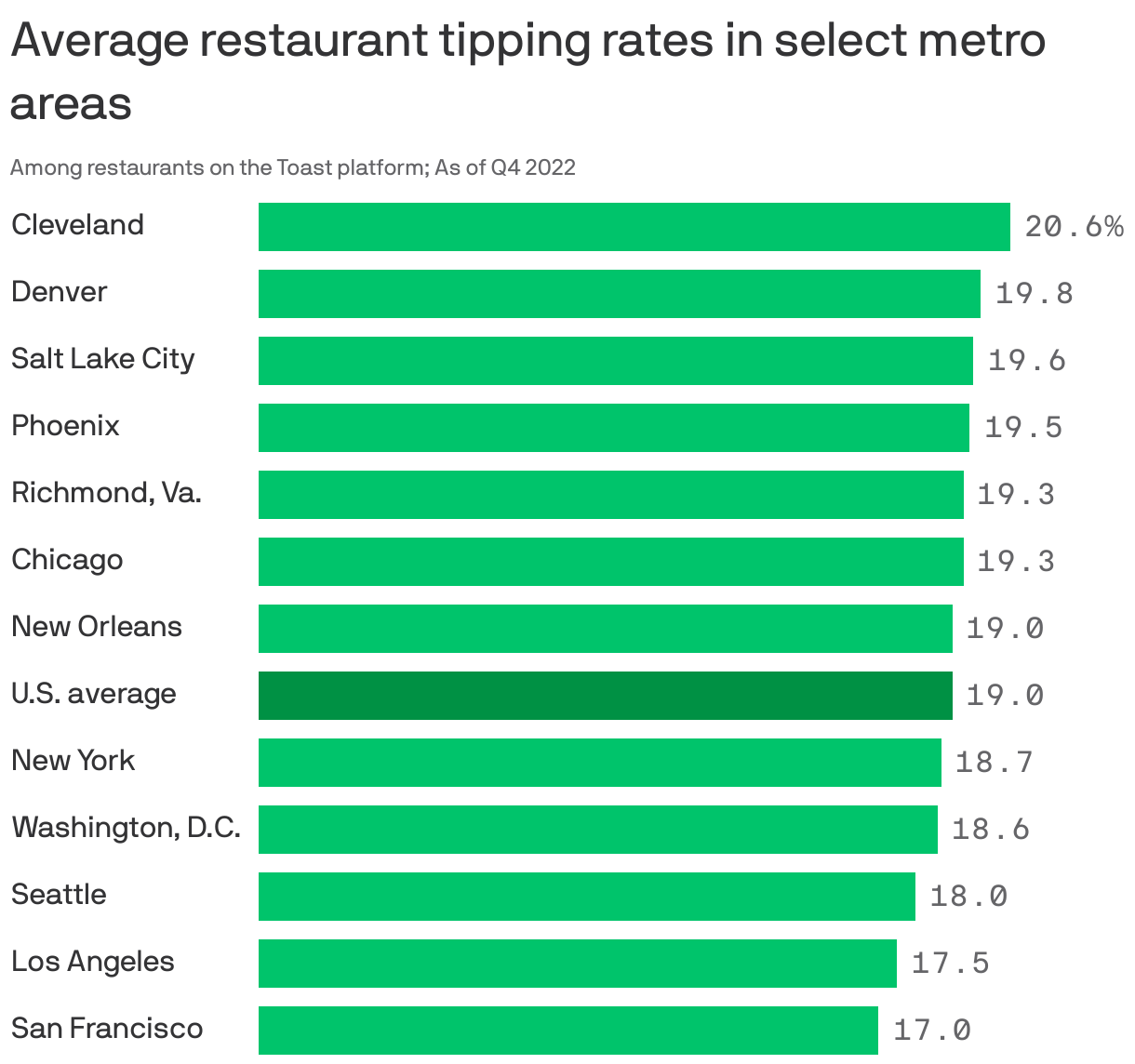
The San Francisco Bay Area is home to some of the stingiest tippers in the country, according to a recent report.
By the numbers: SF Bay Area residents paid an average of 17% in gratuity, per Toast — lower than the national rate of 19%.
- Researchers used data collected from full-service restaurants on the Toast platform throughout the fourth quarter of 2022.
Zoom out: But the Bay is in "good" company, as California is the least generous state for tipping, with an average tip of 17.5%.
- The city with the best tippers: Cleveland (20.6%).
Between the lines: Diners in San Francisco are faced with a variety of extra fees these days, including those for dining in and the SF Mandate tax that funds health care for restaurant workers.
- It would be more effective to simply pay workers livable wages, Andres Pomart, associate director of San Francisco-based workers rights organization Trabajadores Unidos Workers United, told the San Francisco Chronicle.
- "Tipping is a Band-Aid to an industry that doesn't really provide much job security or livable wages to its workers."
3. The Wiggle: Navigating the news

Illustration: Maura Losch/Axios
đź‘€ Supervisor Catherine Stefani announced yesterday that she's running for state Assembly. Stefani lives in District 19, a seat that will be vacant at the end of next year when Phil Ting, western San Francisco's current assemblymember, reaches his term limit. (SF Chronicle)
❄️ Tahoe has received more snow as of this week than any other season since 1971-72, the UC Berkeley Central Sierra Snow Lab confirmed. (SFGATE)
🍛 The team behind Burma Love and Burma Superstar is opening a new restaurant in Hayes Valley this spring called Teakwood. It will serve the group's beloved tea leaf salad and other food with influences from Thailand, China and India. (Eater SF)
🌡 Three City College campuses have been without heat for months, leaving classrooms far below ideal temperatures for learning. The City College Board will vote on a contracting bid this month to fix the broken boilers. (Mission Local)
4. Camp Muni
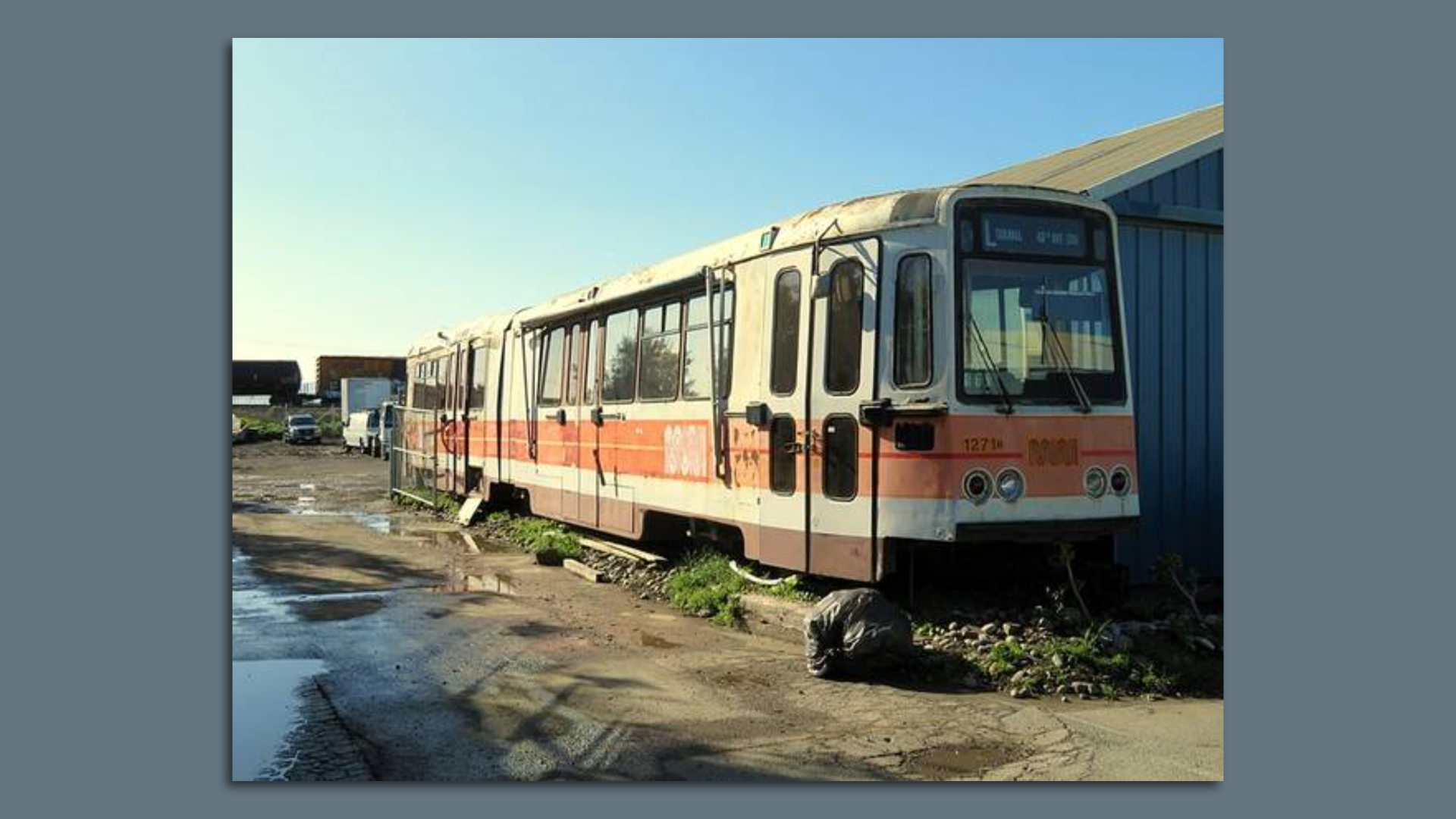
The historic Muni streetcar sat in a Richmond storage lot since the 1990s. Photo: Courtesy of Jorg Fleige
The 1970s Muni streetcar that's been for sale on Craigslist since the start of the year has a new home.
What's happening: It’s headed north to Geyserville, the Chronicle reports.
- The new owners plan to place the 70-foot car on their 56-acre property and restore it for people to rent for overnight stays or special events.
- Think glamping, but in a historic Muni.
What they're saying: "We definitely don't want to keep this to ourselves. We want other people to experience it," one of the owners, Lauryn Guridi, told the Chronicle.
Of note: An Instagram account (@camp_muni) is already live, so you can follow along with the restoration process.
đź’ Nick's thought bubble: Airbnb executives must be ecstatic at the news. Camp Muni is going to crush it.
đź”® Megan is realizing she has major control issues and wants to be able to predict the future. She's also realizing she should probably get back into meditation.
❤️ Nick is pumped for Teakwood.
This newsletter was edited by Rachel La Corte and copy edited by Kathie Bozanich and Yasmeen Altaji.
Sign up for Axios San Francisco

Get smarter, faster on what matters in San Francisco with Nadia Lopez and Shawna Chen.