Axios San Francisco

September 02, 2026

🍂 Happy Wednesday. We're inching into fall!
⛅ Today's weather: Partly sunny with highs in the upper-60s,.
🎧 Sounds like: "Noses in Roses, Forever" by Desert Sessions.
Today's newsletter is 879 words — a 3.5-minute read.
1 big thing: Putting Karl the Fog to work

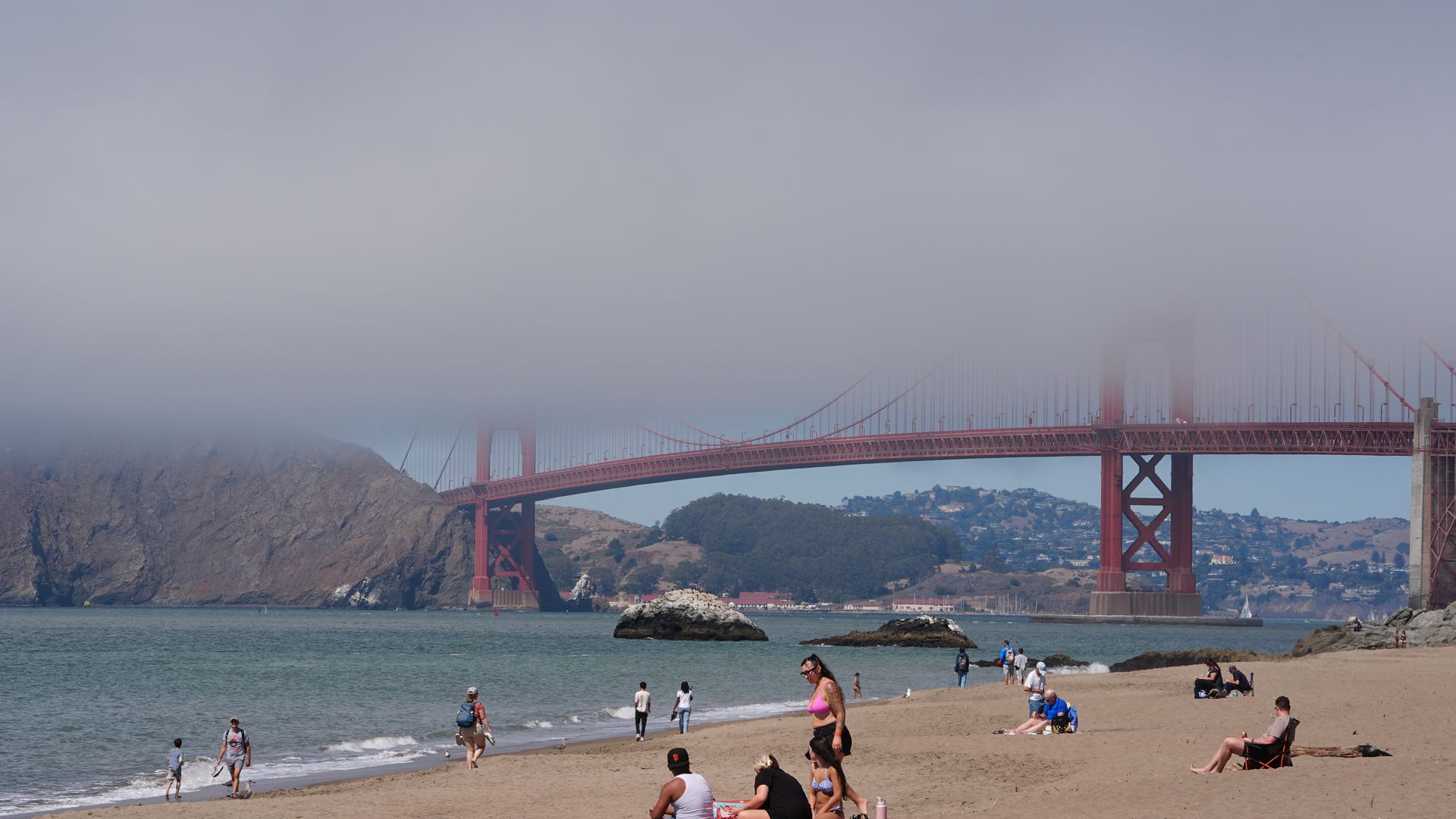
Fog is as definitively SF as cable cars, sourdough and steep hills. And local researchers have spent the last few years capturing water from the region's defining coastal mist to test whether it can become a useful local water source.
Why it matters: As climate change puts more pressure on water supplies, Bay Area agencies are testing increasingly local ways to conserve water — including pulling it straight from the fog.
- About 85% of San Francisco's drinking water travels from Hetch Hetchy in Yosemite. Fog harvesting taps into a source closer to home.
How it works: Mesh nets capture tiny droplets suspended in the air.
- As fog blows through, the droplets collect, combine and drip into containers — or directly onto plants.
Zoom in: The North Coast County Water District began working with researchers back in 2021 to install collectors at several elevated water tank sites in Pacifica.
- Milagra Ridge proved the strongest site, capturing about 350 liters in June and July 2025.
- UC Santa Cruz researchers also placed 12 fog collectors at homes, schools and community gardens around Pacifica that same year.
Zoom out: Fog harvesting has been tested for decades in arid parts of Chile, where coastal communities have captured dense fog as a water source.
What they're saying: "Water conservation in such a unique way is very Pacifica," North Coast County Water District general manager Adrianne Carr told Axios.
- UC Santa Cruz environmental chemist Peter Weiss-Penzias said even a small amount of captured water can matter because it arrives during the dry season.
- "Even though it's a small water input, it comes at a time of year when we don't get any rain at all," Weiss-Penzias told Axios.
Caveat: Fog harvesting is highly location-dependent.
- Carr said some Pacifica participants collected so little fog that researchers removed their equipment, while one resident near Milagra Ridge gathered enough to water strawberries.
If you know SF microclimates, you get the problem.
- Weiss-Penzias has seen the same pattern across the Peninsula. Milagra Ridge is "one of the wettest, foggiest places we've ever observed," he said, while nearby San Bruno produced hardly any water.
Weiss-Penzias' warning for would-be fog harvesters: If a site isn't already extremely foggy — think moisture dripping from trees — houses, trees, valleys and other barriers may prevent enough fog from reaching a collector to produce meaningful water.
2. The Wiggle: 🤖 Our very own 'AI Alley'

🤖 A stretch of Howard Street is being rebranded "AI Alley," as AI firms reshape downtown real estate demand. (SF Standard)
🔌 San Francisco has kicked off a curbside electric vehicle charging program aimed at expanding access for residents without garages or driveways. (KALW)
🏘️ The AI boom and its legions of nouveau riche are helping drive a "mansion shortage" and changing the city's high-end housing market. (KALW)
🌳 Tree advocates are taking a planting dispute to City Hall, escalating a fight over how the city prioritizes and manages its urban forest. (KQED)
🚗 While we remain the epitome of a walkable city, our Chronicle friends explore why traffic remains so horrendous here. (San Francisco Chronicle)
🌧️ With El Niño potentially bringing a wetter, stormier winter, experts say now is the time for residents to prep homes for flooding, wind and power outages. (KQED)
3. 💼 The top-growing jobs

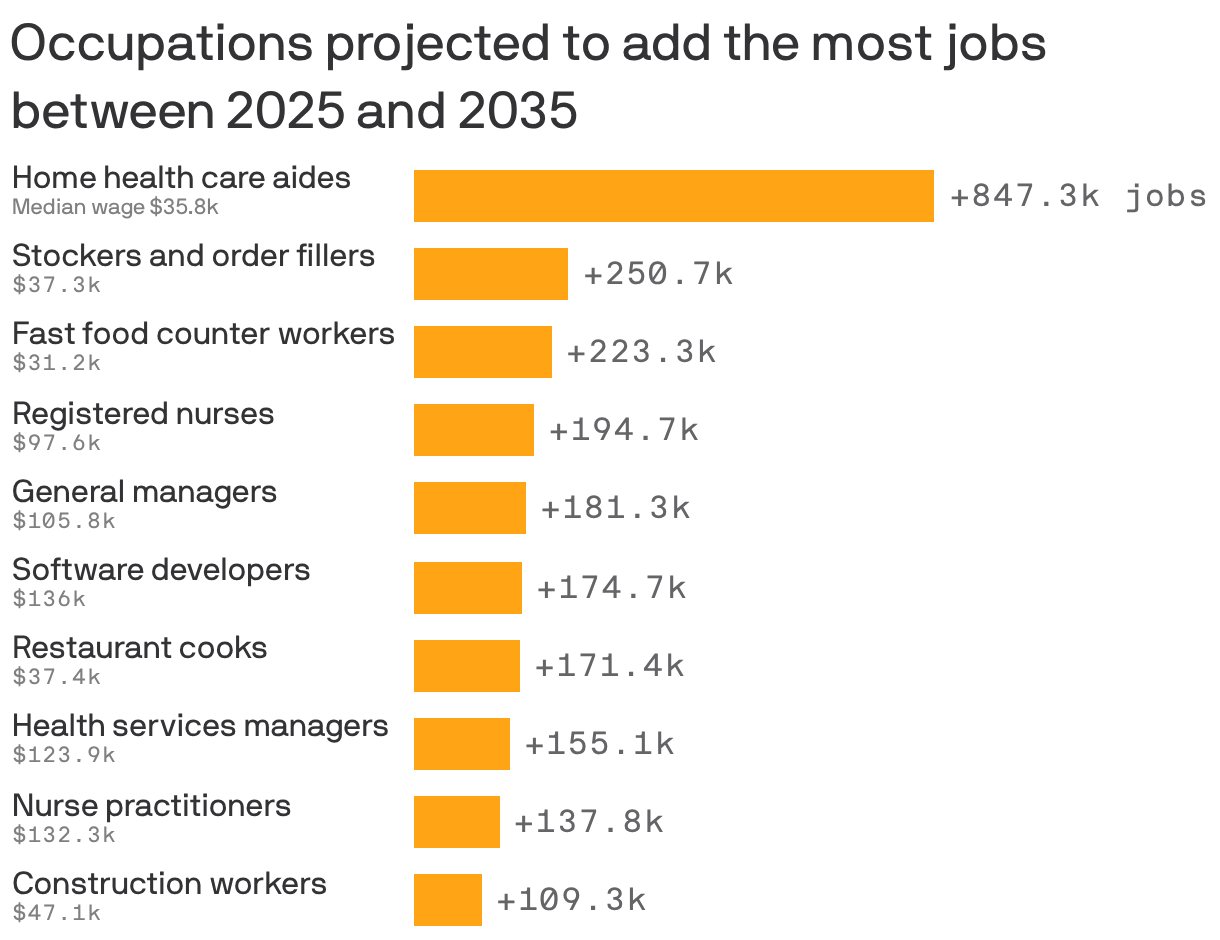
Jobs in health care and social assistance are projected to see the most growth over the next decade, according to a recent report from the Bureau of Labor Statistics.
- The explosive growth in these sectors comes courtesy of the changing fabric of the country — an aging population that needs more care.
- Those demographics are also a reason job growth overall is projected to slow over the next decade.
The big picture: Over the next 10 years, BLS projects that the U.S. economy will add 5.9 million jobs. Total employment would increase to 176.2 million, growing 3.5%.
Zoom in: BLS projects there will be 847,300 new home health and personal care aide jobs created from 2025 to 2035.
- Registered nurses and health services managers are also among the occupations projected to add the most jobs. Nurse practitioners are also the fastest-growing occupation.
The intrigue: For all the talk of an AI job apocalypse, the BLS projections paint a more nuanced picture.
- Over the next decade, AI demand will help drive the need for 926,700 new workers in professional, scientific and technical services — the third-fastest-growing sector of the next decade.
The other side: The BLS also forecasts job losses across several occupations as a result of AI and automation.
- Automation and AI will likely reduce demand for office and administrative support jobs — losing 752,100 jobs over the next decade.
4. 📸 1 Budding business pic to go
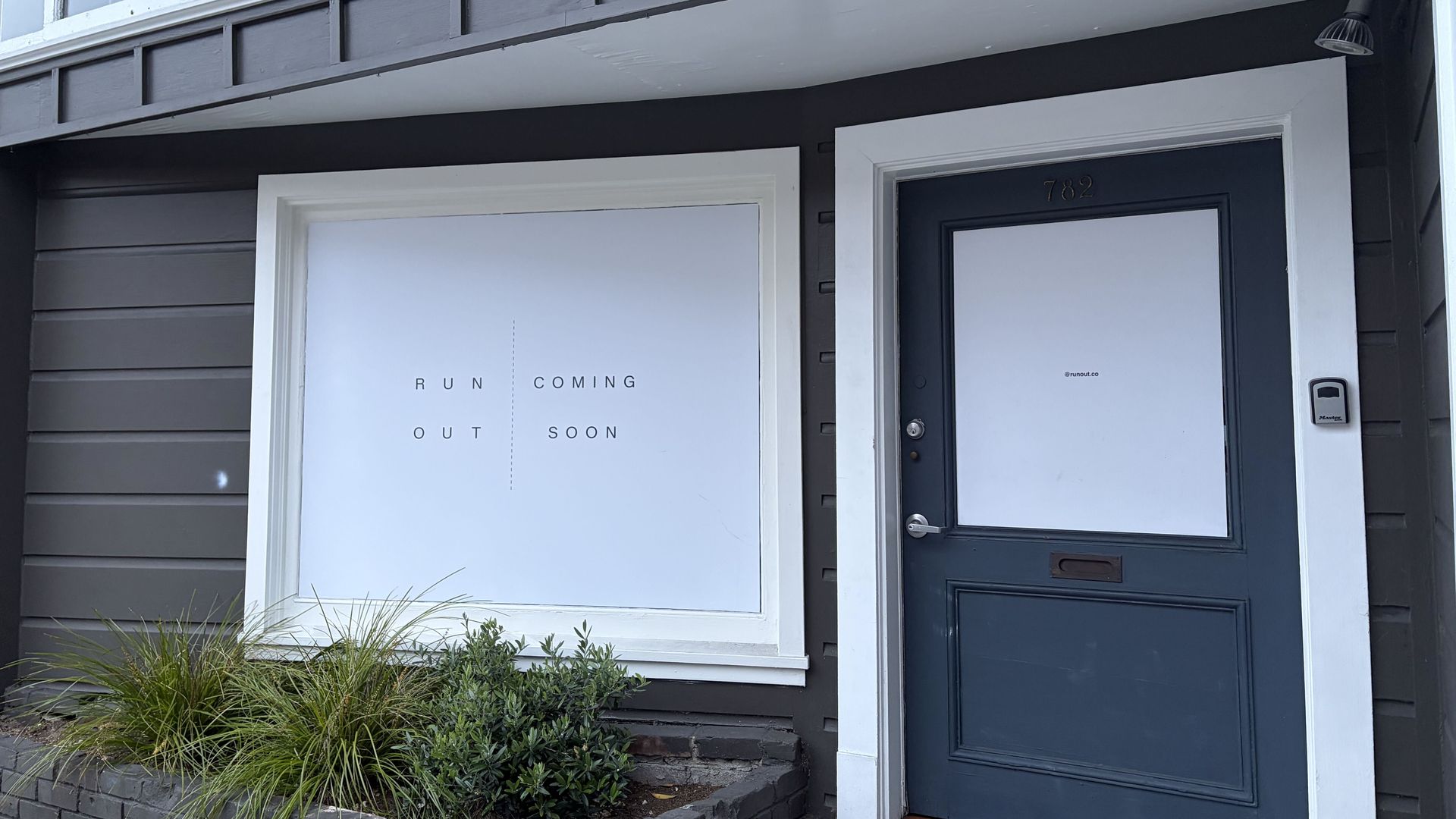
⛺️ A new outdoor gear shop may be headed to the Lower Haight.
- I spotted Run Out's presumed future storefront this week and discovered an Instagram soft-launching of its "outdoor gear made from scratch in San Francisco."
👀 What we're watching: When it opens — and what's inside.
- Keep a close eye on 782 Haight Street.
✨ Nadia is visiting Niebla Librería, a new Spanish-language bookstore in the Tenderloin.
This newsletter was edited by Geoff Ziezulewicz.
Sign up for Axios San Francisco