How local researchers are turning fog into water

Add Axios as your preferred source to
see more of our stories on Google.
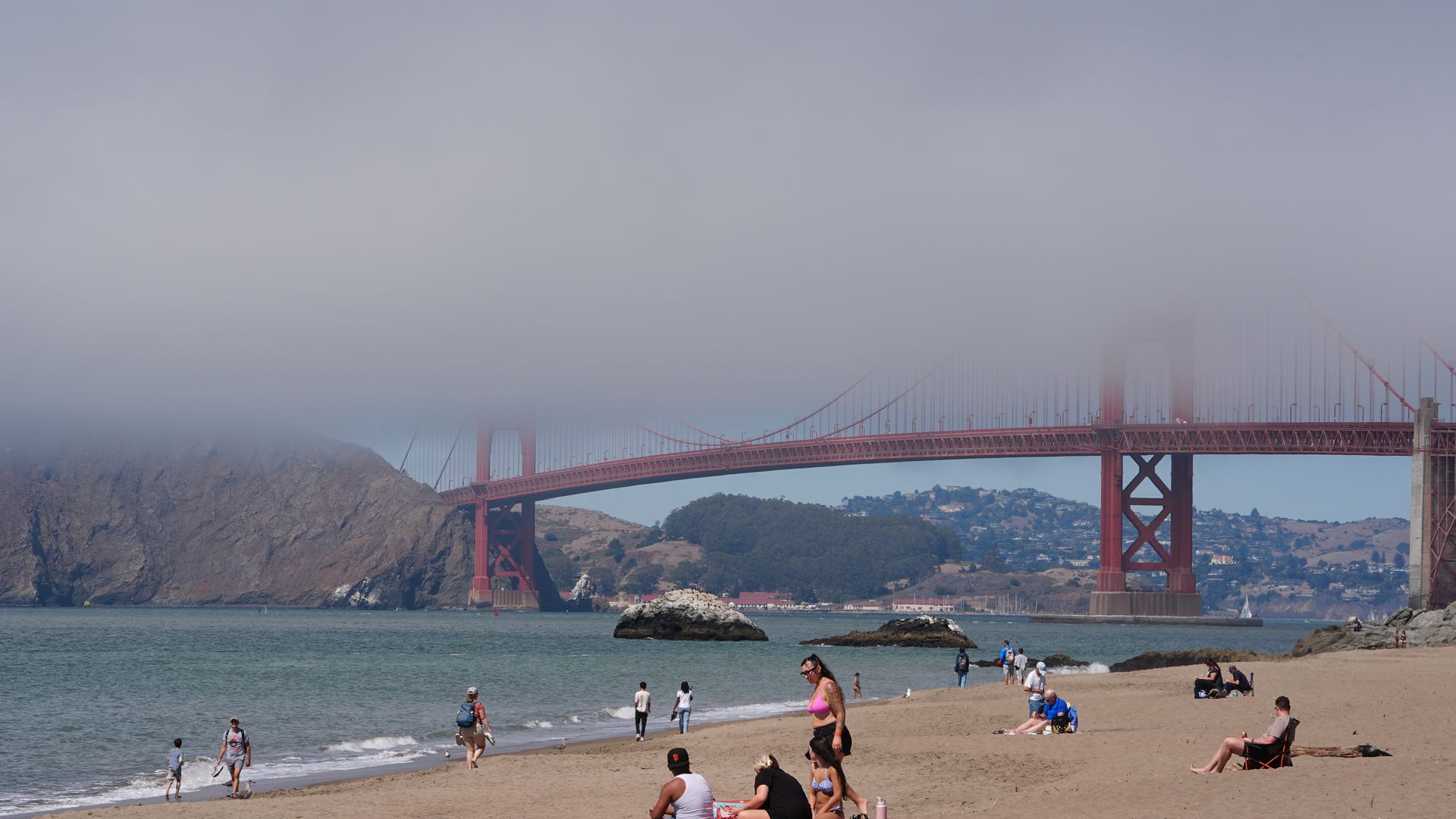
A fog-shrouded Golden Gate Bridge last month in SF. Photo: Tayfun Coskun/Anadolu via Getty Images
Fog is as definitively SF as cable cars, sourdough and steep hills. And local researchers have spent the last few years capturing water from the region's defining coastal mist to test whether it can become a useful local water source.
Why it matters: As climate change puts more pressure on water supplies, Bay Area agencies are testing increasingly local ways to conserve water — including pulling it straight from the fog.
- About 85% of San Francisco's drinking water travels from Hetch Hetchy in Yosemite. Fog harvesting taps into a source closer to home.
How it works: Mesh nets capture tiny droplets suspended in the air.
- As fog blows through, the droplets collect, combine and drip into containers — or directly onto plants.
Zoom in: The North Coast County Water District began working with researchers back in 2021 to install collectors at several elevated water tank sites in Pacifica.
- Milagra Ridge proved the strongest site, capturing about 350 liters in June and July 2025.
- UC Santa Cruz researchers also placed 12 fog collectors at homes, schools and community gardens around Pacifica that same year.
Zoom out: Fog harvesting has been tested for decades in arid parts of Chile, where coastal communities have captured dense fog as a water source.
What they're saying: "Water conservation in such a unique way is very Pacifica," North Coast County Water District general manager Adrianne Carr told Axios.
- UC Santa Cruz environmental chemist Peter Weiss-Penzias said even a small amount of captured water can matter because it arrives during the dry season.
- "Even though it's a small water input, it comes at a time of year when we don't get any rain at all," Weiss-Penzias told Axios.
Caveat: Fog harvesting is highly location-dependent.
- Carr said some Pacifica participants collected so little fog that researchers removed their equipment, while one resident near Milagra Ridge gathered enough to water strawberries.
If you know SF microclimates, you get the problem.
- Weiss-Penzias has seen the same pattern across the Peninsula. Milagra Ridge is "one of the wettest, foggiest places we've ever observed," he said, while nearby San Bruno produced hardly any water.
Weiss-Penzias' warning for would-be fog harvesters: If a site isn't already extremely foggy — think moisture dripping from trees — houses, trees, valleys and other barriers may prevent enough fog from reaching a collector to produce meaningful water.
What's next: Fog water may first find a role in gardens and irrigation, where it can be used without the treatment required for drinking-water systems.
- Pacifica could eventually consider rebates for residents who install small collectors, Carr said.
- Weiss-Penzias has also launched Fog Catcher Solutions to supply collectors to people interested in harvesting fog.
- Meanwhile, Weiss-Penzias and his UC Santa Cruz team are studying the water quality of Pacific coastal fog as part of a five-year project that could help clarify other potential uses.