Axios Raleigh

June 30, 2026

Tuesday. Let's dive in.
☀️ Today's weather: Sunny, with a high of 92 and a low of 72.
🎂 Happy birthday to our members Mark Hayakawa and Lorraine Snyder-Espy!
🗽 This Independence Day, consider supporting independent local journalism. Become a member today.
Today's newsletter is 1,043 words — a 4-minute read.
1 big thing: RTP 3.0 era officially begins
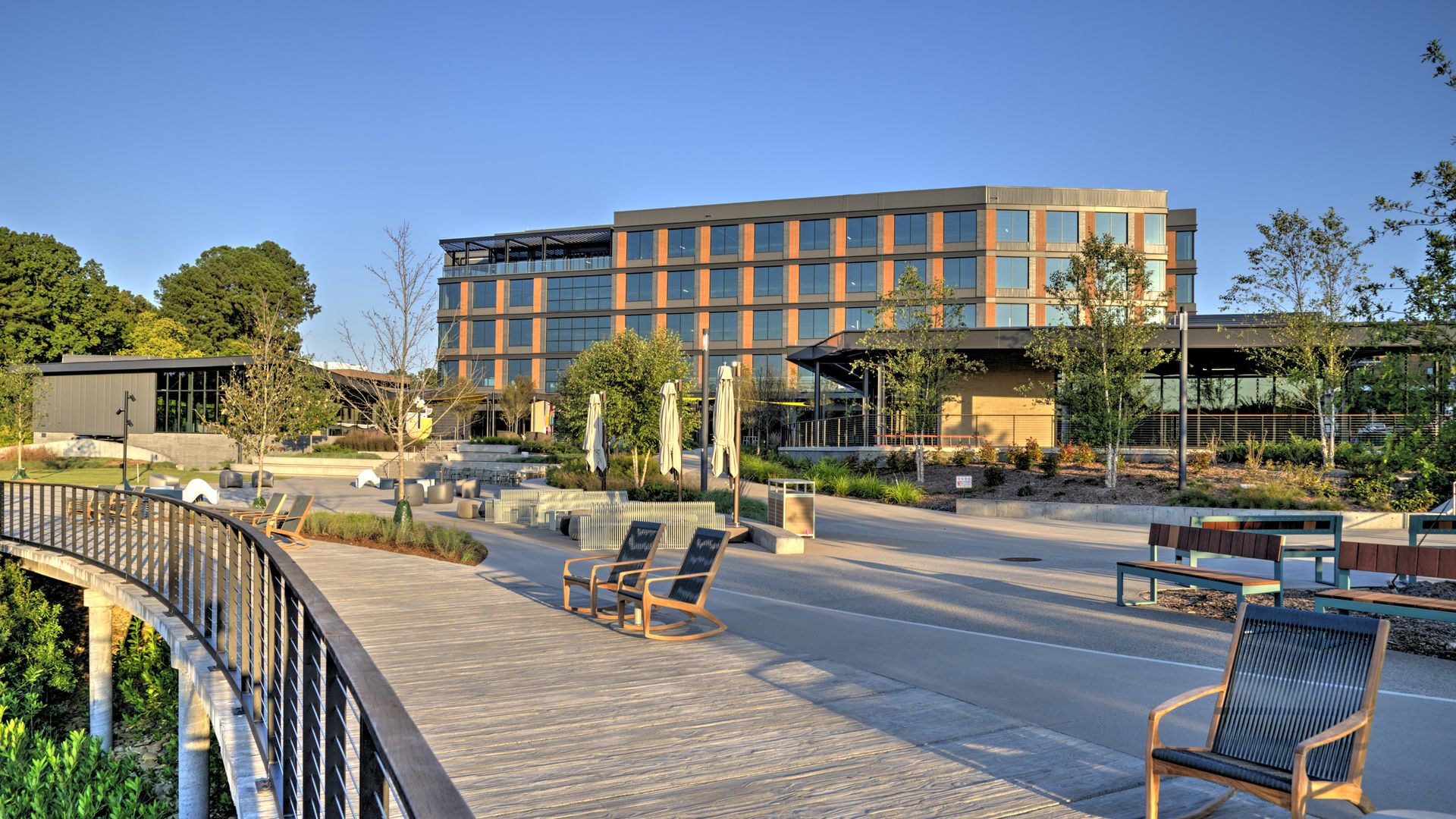
A new era is officially underway in Research Triangle Park after the companies and landowners based in the 7,000-acre campus gave final approval to its RTP 3.0 land rules.
Why it matters: The land-use changes, which had already been approved by Wake and Durham counties, could significantly change the built environment of the Triangle's most influential economic engine of the past six decades.
- Nearly 400 companies are based in RTP, ranging from behemoths like IBM, Lenovo and Biogen to hundreds of startups.
Driving the news: The new rules would give landowners much more flexibility on what they can build, like housing, retail and other commercial buildings for the first time.
- Instead of a building surrounded by a large parking lot, for instance, a land owner can now build much more densely, adding apartments or other amenities. The park is hoping to focus this redevelopment around transit corridors that are coming to N.C. 54.
- It expands the concept that the Research Triangle Foundation, the nonprofit that manages the park, experimented with through its HUB RTP development.
Between the lines: A collection of walled-off corporate fortresses hidden behind trees worked well for 50 years.
- But leaders at Research Triangle Park worried that the existing concept was becoming less attractive in the 2020s, as employees and companies sought more urban-feeling developments that were propping up across the country.
What they're saying: "Starting five years ago, coming out of COVID, our companies had a lot of concerns about talent attraction and retention," Travis Crayton, vice president of planning and public policy at the Research Triangle Foundation, told Axios.
- "The places we create today look very different than they did in 1959," he added. "And this effort really has been about creating the right land-use framework that will allow the park to organically evolve over time to create more of those environments where talent really wants to be."
What's next: Don't expect immediate changes, Crayton said. Landowners are still digesting the possibilities of the new rules.
The intrigue: There already is a lot of curiosity, including from RTI International and IBM.
- It could also give flexibility to redevelop land if a large employer leaves — Lenovo reportedly is considering moving its HQ to the Lenovo Center redevelopment — or if one doesn't arrive at all. (Apple again delayed plans for an RTP campus last year.)
2. ⚽️ Bringing Scandinavia to Wake Forest
👋 Mary Helen here with another timely lunch stop for World Cup fans.
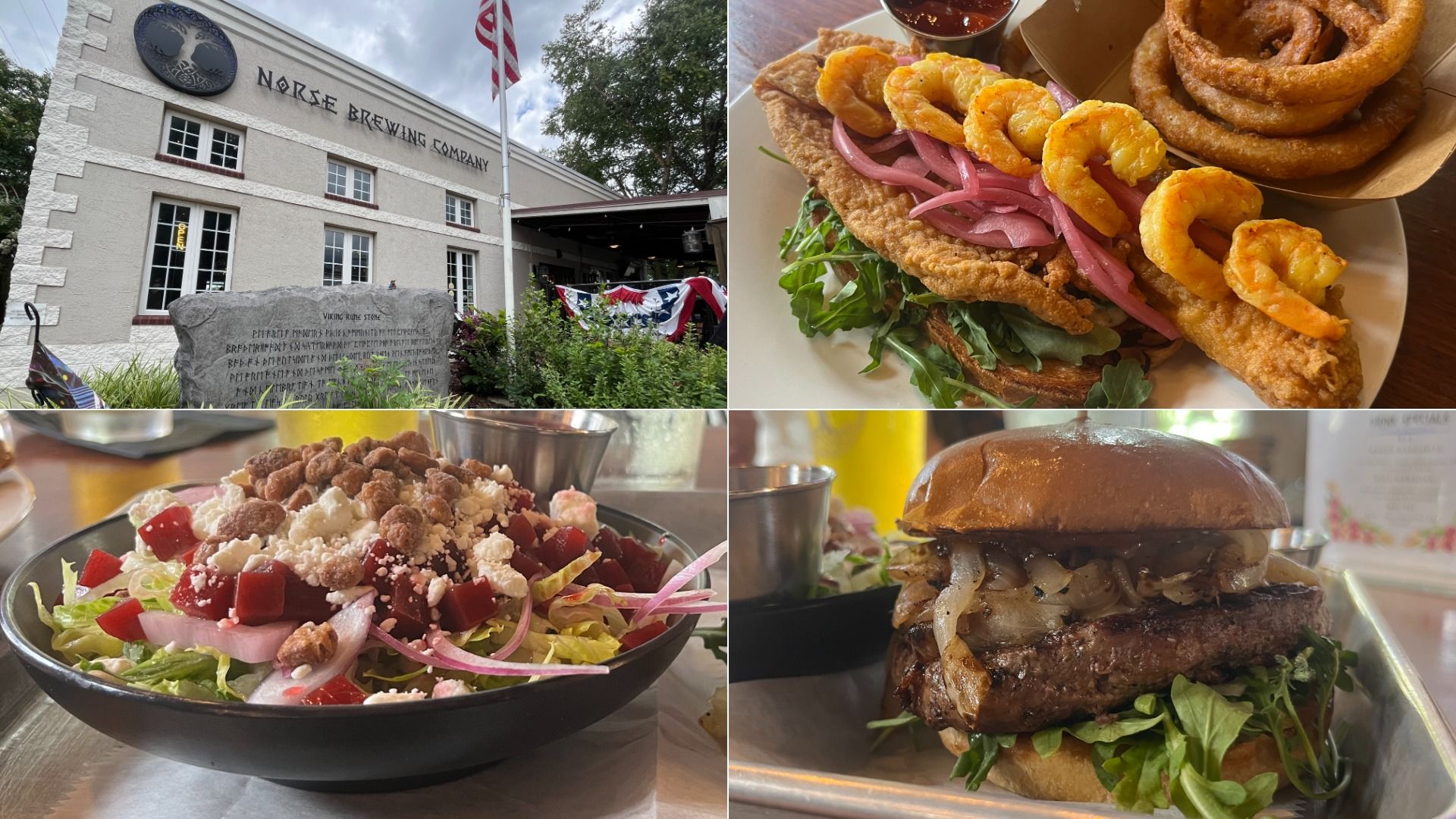
- In Wake Forest, locally owned Norse Brewing Company serves Scandinavian-inspired food and beer in a charming, gnome-filled downtown tavern. And yes, there are TVs.
Why it matters: Norway and Sweden's knockout matches today make it an ideal time to sample Scandinavian cuisine without leaving the Triangle.
- Norway plays Ivory Coast at 1pm.
- Sweden plays France at 5pm.
State of play: To be Norse, I now know, is not necessarily to be Norwegian. Descendants of the Norse are spread across Scandinavia — living in Denmark, Sweden and Iceland in addition to Norway.
- "They were all vikings," our server explained.
Best bites: The Smørrebrød with fried haddock and shrimp ($18) is a crispy open-faced sandwich on sourdough, best eaten with a fork and knife. Tangy remoulade and arugula prevent the fried seafood from tasting overly rich. Outstanding.
- The Viking burger ($21.50) blends bison, elk, boar and beef in the patty. It's got a rich and complex flavor and is topped with caramelized onion, blue cheese and tomato jam.
- The beet salad ($6.75) is tangy and sweet, with a standout lingonberry vinaigrette.
- Their craft seltzer ($7.50) is refreshing in the heat and flavored with passion fruit, orange and guava.
Zoom in: The restaurant and brewery opened in Wake Forest in 2019. A Zebulon location called Norse Brewing Longhouse was added in 2024.
If you go: Both locations are open daily for lunch and dinner.
- 203 Brooks St., Wake Forest
- 120 N. Arendell Ave., Zebulon
3. The Tea: Martin Marietta's big deal

🚜 Martin Marietta, the Raleigh-based construction material supplier, will acquire Lhoist North America, a limestone supplier, for $13.5 billion. (News & Observer)
Former NFL and ECU star running back Chris Johnson has been diagnosed with ALS at age 40. (Axios Nashville)
🍽️ Paul Dombalis, third-generation owner of the beloved Raleigh restaurant The Mecca, has died at 68. (WRAL)
🚔 Inmates took over an eastern North Carolina jail for several hours yesterday and held the guards hostage. (AP)
🍷 After finding success in the Village District in Raleigh, Postino Wine Cafe will expand to University Place in Chapel Hill. (Triangle Business Journal 🔒)
🏀 Former UNC basketball player Ed Davis is charged with making illegal sports bets on NBA player Malik Beasley, who is accused of rigging his stats. (The Athletic)
4. Remote work's staying power

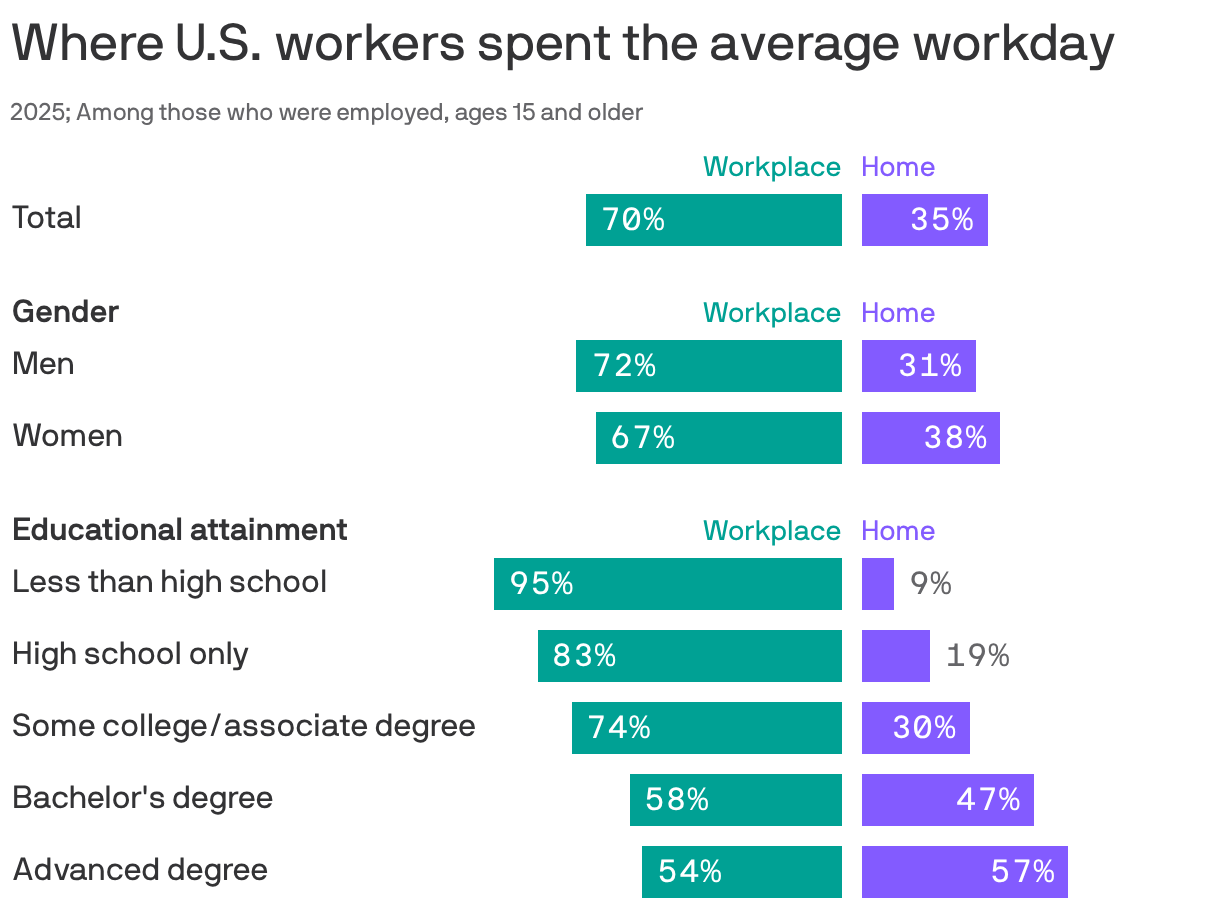
The CEOs lost this one: New government data shows that 35% of U.S. workers did some or all of their work at home last year — significantly higher than in the previous decade.
Why it matters: Despite the best efforts of many prominent executives and leaders, we live in a hybrid work world, with more people doing their jobs remotely, and that's led to big societal change, Axios' Emily Peck writes.
Flashback: The workplace was permanently altered in the pandemic. In 2019, only 24% of workers did some or all of their work from home. By 2022, that number had risen to 34% and has stayed relatively steady since.
Where it stands: Working from home is mostly for workers with more education.
- 57% of those with an advanced degree did some work at home in 2025, per the data from the American Time Use Survey.
- That's compared with 30% for those with some college or an associate degree.
Between the lines: This helps partly explain the gender divide. Women, who earn a bigger share of college degrees, are more likely than men to work remotely.
Zoom in: The Triangle consistently ranks as one of the highest concentrations of remote workers in the country.
😔 Mary Helen was rooting for Japan yesterday.
🍫 Zachery is loving this Hawaiian sea salt dark chocolate.
Thanks to Mike Szvetitz for editing this newsletter.
Sign up for Axios Raleigh