Remote work continues to thrive

Add Axios as your preferred source to
see more of our stories on Google.
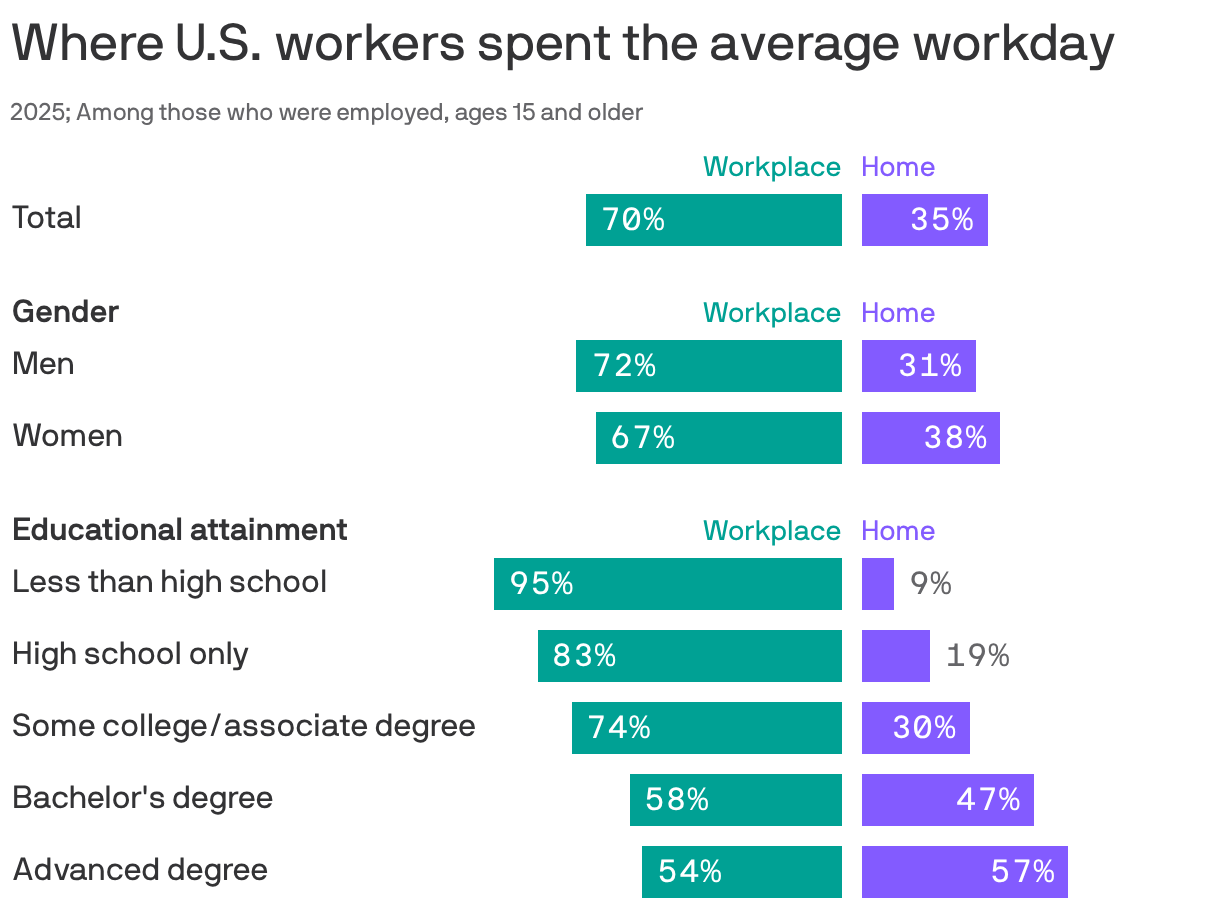
The CEOs lost this one: New government data shows that 35% of U.S. workers did some or all of their work at home last year — significantly higher than in the previous decade.
Why it matters: Despite the best efforts of many prominent executives and leaders, we live in a hybrid work world, with more people doing their jobs remotely, and that's led to big societal change.
Flashback: The workplace was permanently altered in the pandemic. In 2019, only 24% of workers did some or all of their work from home. By 2022, that number had risen to 34% and has stayed relatively steady since.
Where it stands: Working from home is mostly for workers with more education.
- 57% of those with an advanced degree did some work at home in 2025, per the data from the American Time Use Survey.
- That's compared with 30% for those with some college or an associate degree.
Between the lines: This helps partly explain the gender divide. Women, who earn a bigger share of college degrees, are more likely than men to work remotely.
The big picture: The rise of remote work has led to profound cultural and workplace shifts.
Zoom in: Proponents argue that it has increased worker productivity.
- For parents, particularly college-educated mothers, it's been life-changing: In a recent New York Times article, parents explained that they were able to have children and sustain an ambitious career, thanks to remote work — which enables far more flexibility than the tether of an office ever could.
Yes, but: Not all employers tolerate remote work. President Trump, for example, ordered government employees to return to working in the office.
Friction point: Remote work is a part of the clear trend in the U.S. toward social isolation. More people are working alone at home, and not replacing workplace socializing with anything else.
- A recent paper published in Science found that remote work explains about a third of the deterioration in mental health between 2011 and 2024, excluding the peak pandemic years of 2020 and 2021.
- "Although a large body of research finds that workers want to work remotely, our findings suggest that workers may not realize the costs of remote work for their well-being, which may take time to accumulate," they write.
