Axios Portland

May 18, 2026


1 big thing: 🔥 Wildfire wary
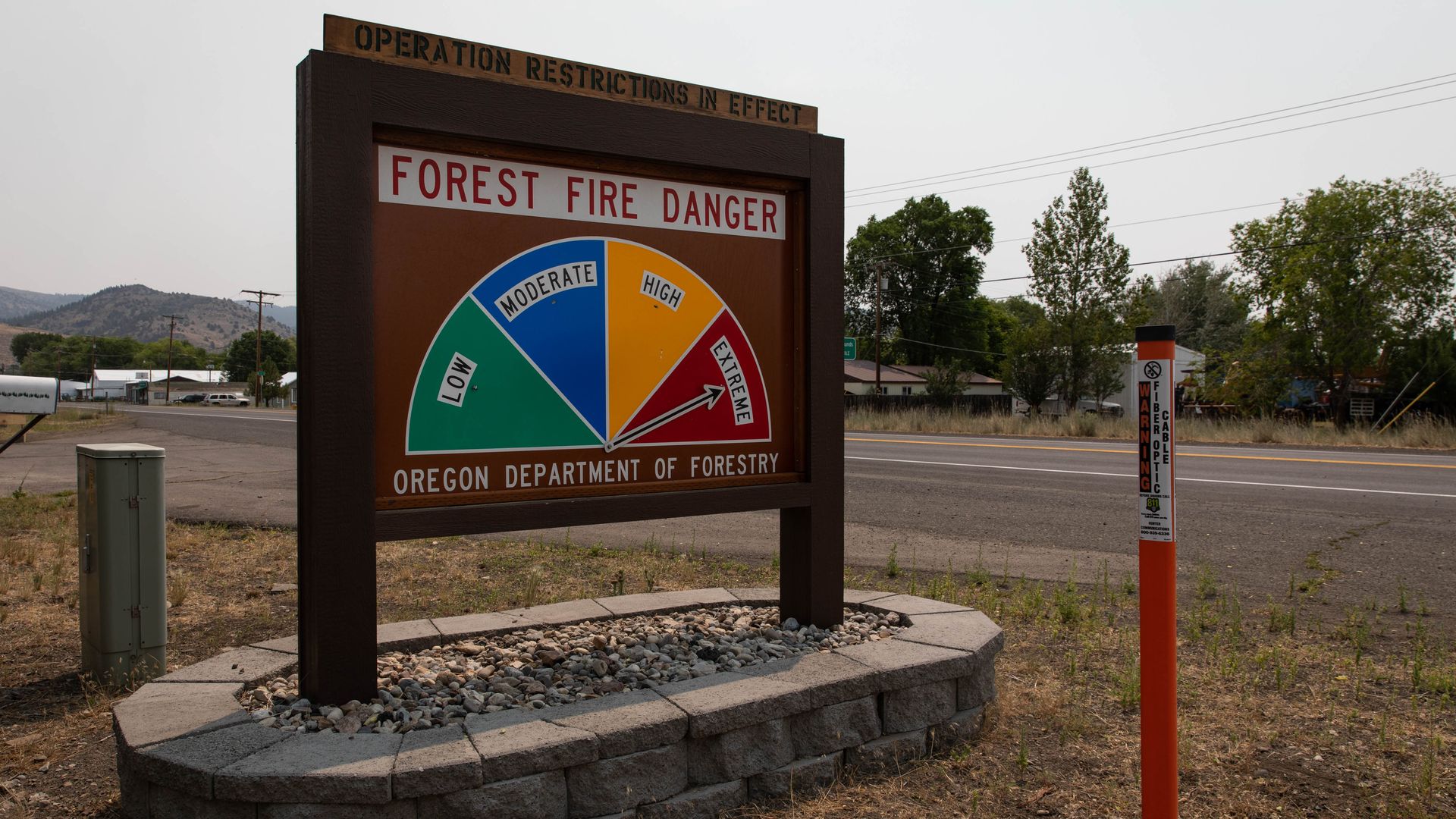
A warm, dry winter has Oregon officials warning of an intense wildfire season fueled by low snowpack and human-caused fire risks.
The big picture: Very dry vegetation could allow fires to spread rapidly across Oregon this summer.
Threat level: "Fuels throughout the state — whether they be forest fuels, shrub vegetation or grasses, even roadside grasses — will be exceptionally dry and receptive to spark," Derek Gasperini, a spokesperson for the Oregon Department of Forestry, told Axios.
- "It's not boding well for fire season."
State of play: Fire season in Jackson and Josephine counties began Friday, with fireworks and debris burning restrictions now in effect.
- Already, the Pine Mountain Fire outside of Bend scorched more than 2,500 acres last week before firefighters contained the blaze.
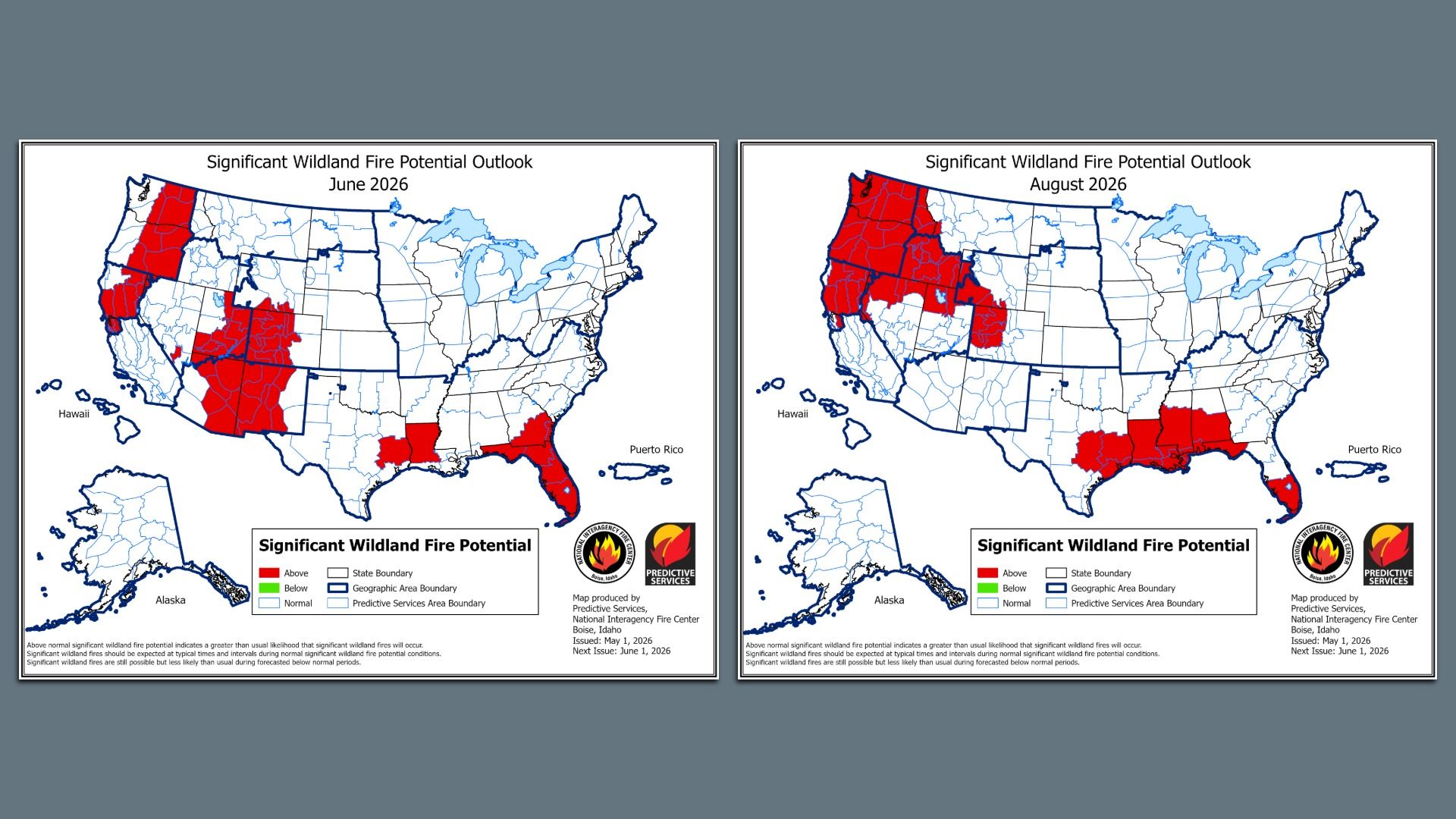
- Federal wildfire officials predict the eastern half of the state will be at high risk for wildfires by June, with the rest of the state following by August.
What they're doing: The state has already started positioning crews and equipment in the most at-risk areas, Gasperini said.
- They've also upgraded their multimission aircraft to include a new plane with longer range and more capacity, as well as AI mapping that can help spot fires faster.
Experts have gotten good at predicting fire weather conditions, Gasperini said, "but we can't ever anticipate how and when human behavior is going to spark a wildfire."
- Human-caused fires can start easily from a tossed cigarette butt, a trash fire or even parking a car over dry grass.
Between the lines: More than half the land in Oregon, 32 million acres, is overseen by the federal government.
- Oregon's congressional delegation has expressed concern about the feds' wildfire readiness, noting the U.S. Forest Service has lost about 1,400 employees who are certified to respond to fires since last year, per the Oregon Capital Chronicle.
- The Department of the Interior said they expect to have around 5,700 firefighters for the season, roughly in line with the numbers from last year, a spokesperson told the Capital Chronicle.
- Gasperani said federal and state officials meet regularly to plan for fire season and he feels confident the feds will be ready to respond when needed.
Local journalism starts with you

3. Rose City Rundown

4. 👋 1 chart to go: Neighborly socializing down

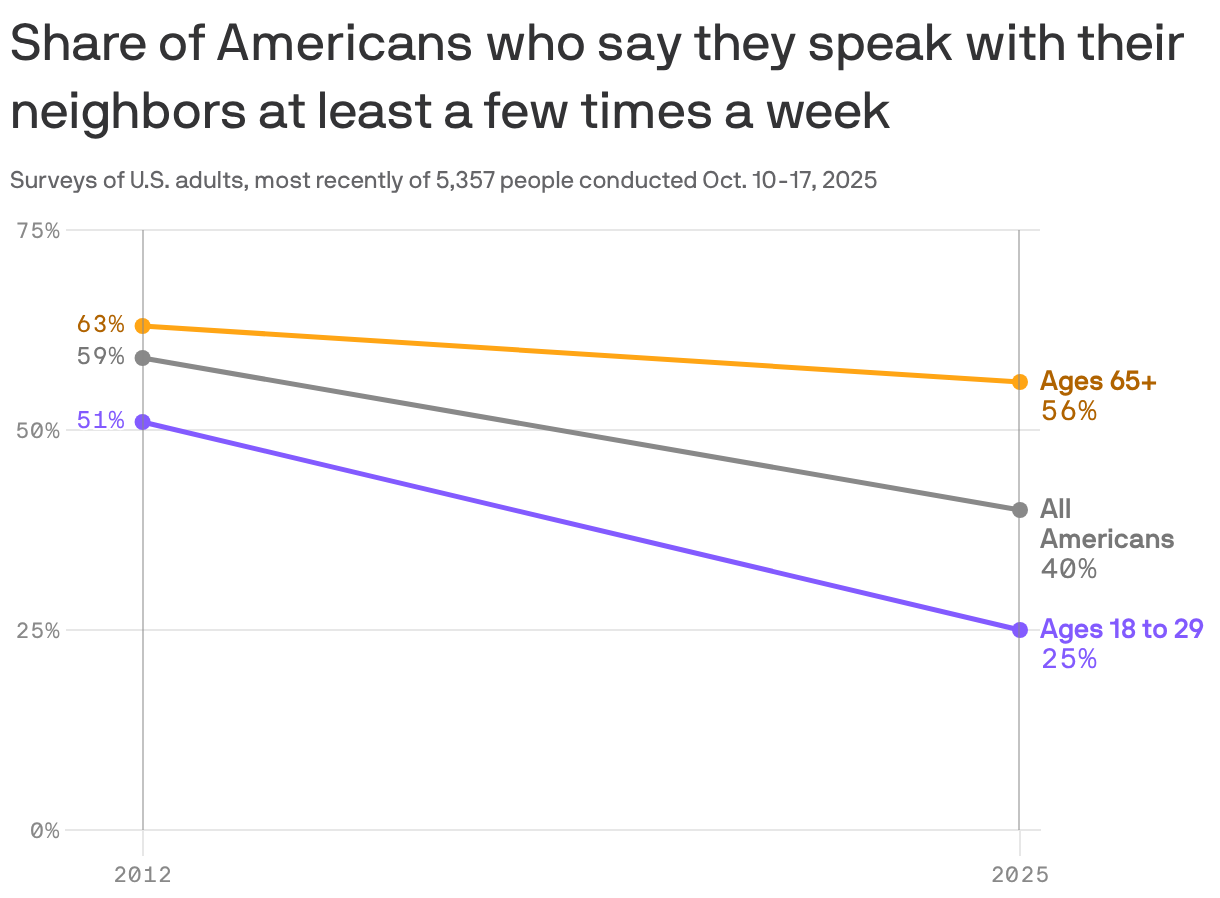
Americans are spending more time at home, yet many have become strangers to their neighbors — especially young Americans, who are increasingly unlikely to socialize with those living feet away.
Why it matters: Without casual conversations with neighbors, people risk becoming more isolated and more dependent on superficial, algorithm-driven digital communities.
- The loss of neighborly interactions may also be contributing to America's political polarization, Daniel Cox, head report researcher and director of the Survey Center on American Life at AEI, told Axios.
Between the lines: Gen Zers are turning toward online communities that allow users to curate what they read, see and hear.
- "That's not really how you learn to live in a pluralistic, multicultural society," Cox said.
- He added that online friends may share a common interest in a game or a hobby, but they can't water your plants when you're on vacation, help you move furniture, or watch your dog.
Meanwhile, neighborhood ties are maintained through shared schools, sidewalks and emergencies.
- They also allow us to connect with people from other races, or have different religions and political ideologies, which Cox said is "really critical."
🗣️ We want to hear from you: What makes a good neighbor? And how often do you socialize with yours?
- Hit reply or email us at [email protected]
- We may use your response in an upcoming edition of the newsletter.
Axios Portland
