Axios Portland

March 10, 2025

🥱 It's Monday. Are you feeling sleepy still from springing forward? We are.
Today's weather: Chance of rain, though mostly cloudy. High around 52, low near 39.
🪴 Sounds like: "Ivy & Gold" by Bombay Bicycle Club
Today's newsletter is 635 words — a 2.5-minute read.
1 big thing: Portland Street Response expands
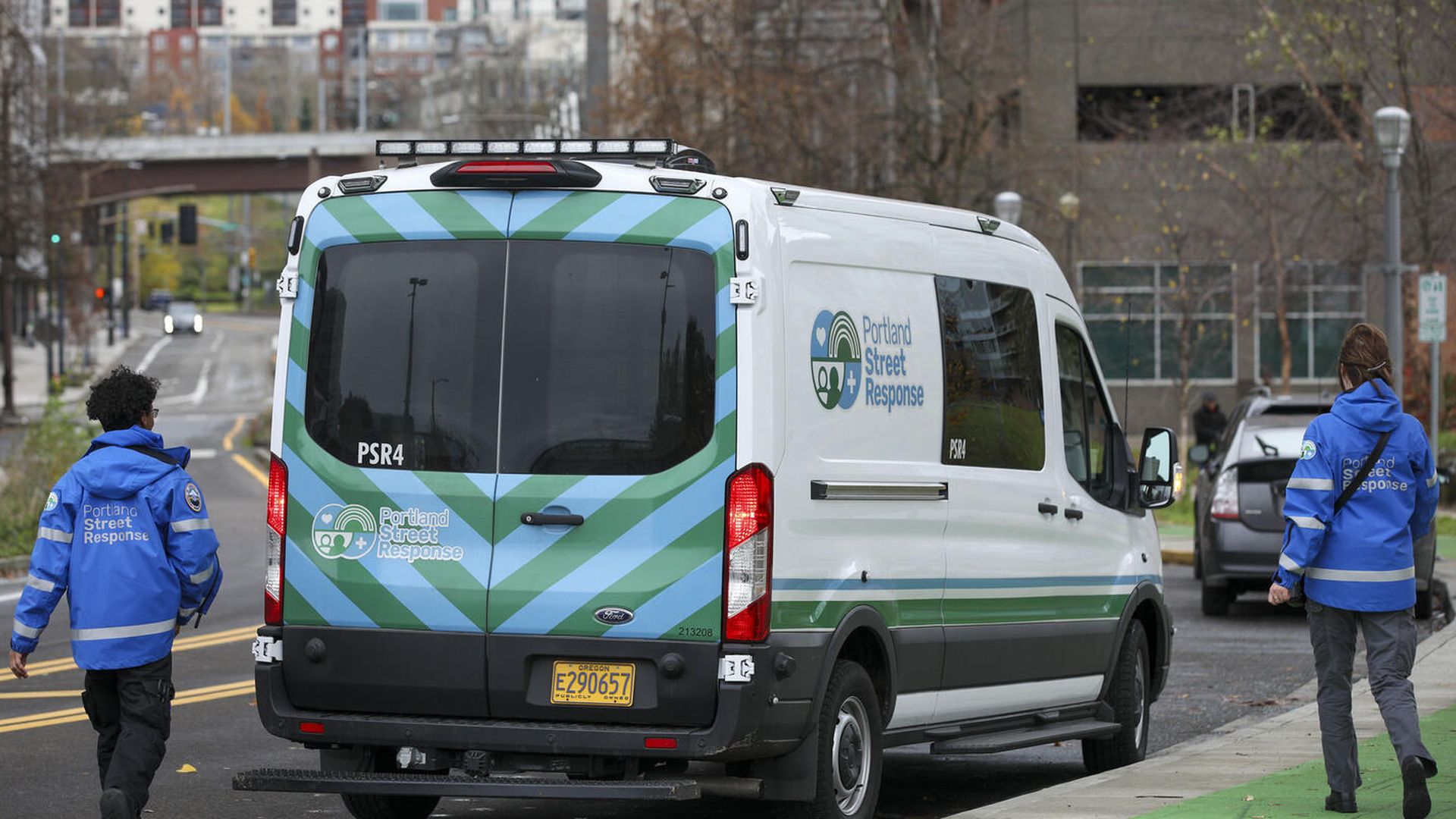
In a unilateral move, Mayor Keith Wilson announced a major expansion of Portland's unarmed crisis response team, raising new concerns among some city council members over fiscal priorities and executive authority.
Why it matters: The move aims to bolster Portland Street Response (PSR) after years of the program operating with limited bandwidth due to budgetary concerns and shifting political priorities.
Context: The city launched PSR in 2021 as an alternative to sending police to scenes where someone is in need of mental or behavioral health support.
Zoom in: PSR teams can now respond to more emergency calls alongside police, firefighters and EMTs, according to a news release from Wilson's office last week.
- That includes being able to respond to calls inside government and commercial buildings. They can also now shuttle people to homeless shelters, addiction treatment centers and food pantries.
- However, the 52-person team cannot respond to calls involving suicide or persons with a weapon, nor enter private residences or board public transportation without police, due to safety concerns.
What they're saying: "Once these changes have been fully implemented, PSR personnel will be able to respond to more call types, connect more individuals to the help they need most and create better outcomes for those they serve," Wilson said in a statement.
By the numbers: The expansion is not expected to go outside of the program's $7.4 million annual budget, city spokesperson Dan Douthit told Axios.
Between the lines: Portland's new government structure allows Wilson to make administrative changes to city programs without City Council approval.
- The council's public safety committee will discuss PSR's future, operations and cost at a meeting tomorrow.
Yes, but: The move is another example of the executive branch making decisions without getting feedback from the legislative body first.
- Angelita Morillo, who represents District 3, told the Oregonian that the council was not "involved in the process of making this change" and heard about it shortly before a press release was published.
- "I just don't see how it wouldn't impact the budget," she said, adding that the council should have been consulted first.
Give back
We're so thankful to our members for their support of our work through their contribution to our newsroom.
If you join as an Axios Portland member, you'll get insider notes from the team, birthday shoutouts in the newsletter and other perks.
- Plus, you'll be part of our growth and ensure that our news is always free and accessible to the community.
We're grateful for your trust and continued readership.
2. Rose City Rundown
🏙️ Gov. Tina Kotek announced a new joint task force with Mayor Keith Wilson aimed at addressing Portland's chronic apartment construction slump, and recommended the city do more about its convoluted permitting process. (The Oregonian)
Melissa Fireside resigned last week as a Clackamas County commissioner after she was indicted on several felony charges of theft and forgery. (OPB)
🛝 A new immersive, education play space for kids and families designed by local artist Mike Bennett, who is also behind Wonderwood Springs, is coming to downtown this summer. (Willamette Week)
3. 🌼 Map du jour: Flonase for days
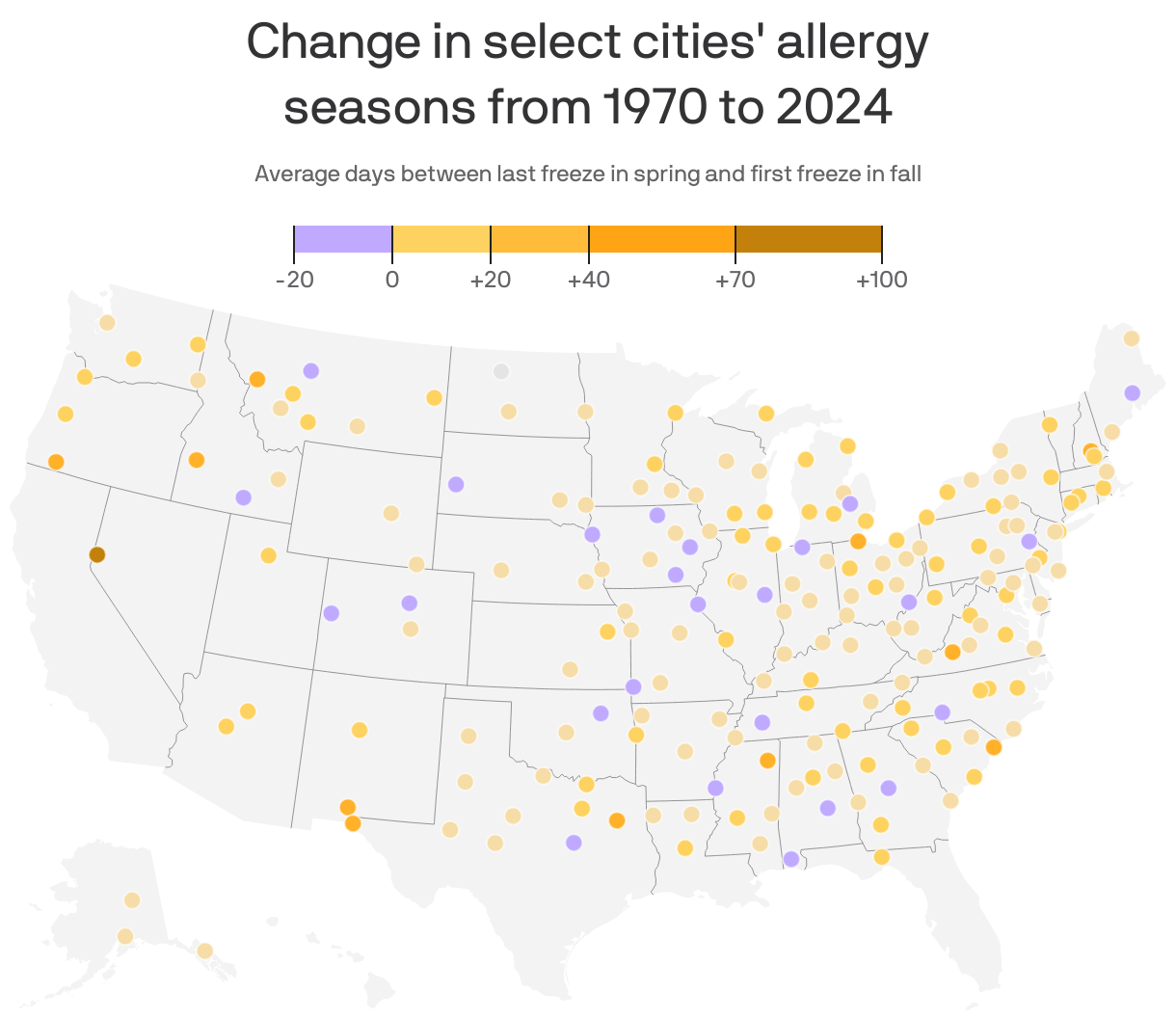
Most major U.S. cities — including Portland — are suffering from longer allergy seasons amid human-caused climate change, a new analysis finds.
Why it matters: Peeping the cherry blossoms is way less fun when you can't stop sniffling.
- Millions of Americans endure runny noses, itchy throats, and worse health effects each spring allergy season.
By the numbers: Portland's freeze-free growing season lengthened by 26 days between 1970 and 2024, per an analysis by Climate Central, a research and communications group.
- The increase was even larger for those in Eugene and Medford — cities with close proximity to Oregon's biggest grass seed producers — with the season extending by 39 and 63 days, respectively.
How it works: Climate Central uses the freeze-free period — the number of consecutive days with minimum temperatures above 32° F — as a proxy for allergy season.
Between the lines: "Higher levels of planet-warming CO2 in the air can boost pollen production in plants, particularly in grasses and ragweed," according to Climate Central's report.
- Nationwide pollen production stands to dramatically increase alongside high CO2 pollution, per a 2022 study highlighted in the report.
Go deeper: Allergy season is getting longer. Blame climate change
🏎️ Meira is bingeing "Drive to Survive" and will be watching Lewis Hamilton's Ferrari debut at the Australian Grand Prix this week.
✌️ Kale will be back tomorrow.
This newsletter was edited by Hadley Malcolm.
Sign up for Axios Portland


/2025/03/07/1741371771377.gif?w=3840)