Axios Portland

January 12, 2026

Welcome back to Monday. It feels like we were here just last week.
🌤️ Today's weather: Mostly sunny. High around 54, low near 38.
Situational awareness: An air stagnation advisory is in effect until Friday, according to the National Weather Service.
- Limited air movement can lead to worsening air quality, which could impact those with respiratory issues.
Today's newsletter is 1,135 words — a 4.5-minute read.
1 big thing: 🪧 Portlanders in the streets
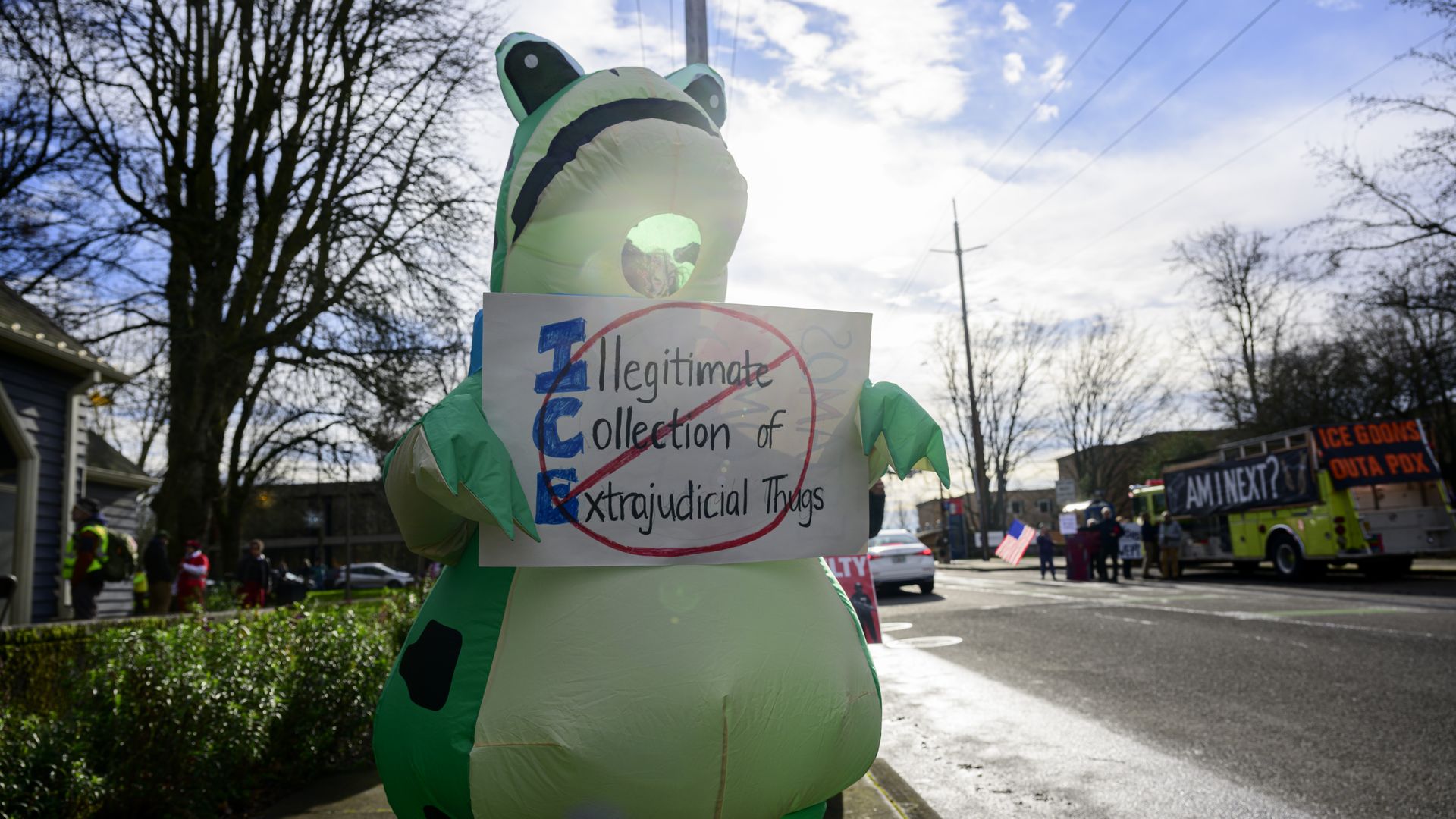
Thousands took to the streets of Portland to protest the shooting of two people last week by a federal agent as a defense attorney for one of the wounded pushed back against allegations that the pair had ties to a Venezuelan gang.
The big picture: Demonstrations in Portland came among scores of other protests around the country after a woman was shot and killed by a U.S. Immigration and Customs Enforcement officer last week.
The latest: Over the weekend, large crowds turned out across Portland to protest the shootings.
- At least 1,000 marched along the waterfront, per the Oregonian, with hundreds more showing up to demonstrate at smaller rallies around town.
- Rep. Maxine Dexter got a standing ovation at a town hall in East Portland when she reiterated her call for the impeachment of Department of Homeland Security Secretary Kristi Noem.
Zoom in: DHS accused the two people shot in Portland — Luis David Nino-Moncada and Yorlenys Betzabeth Zambrano-Contreras — of ties to Tren de Aragua, which the Trump administration has designated a global terrorist organization, and said they entered the U.S. without authorization.
- In a news conference Friday afternoon, Portland Police Chief Bob Day said a shooting in Northeast Portland over the summer had been linked to Tren de Aragua.
- Zambrano-Contreras' and Nino-Moncada's names had surfaced in the investigation, though neither had been named as a suspect, and Day did not elaborate on their potential involvement.
Yes, but: Fidel Cassino-DuCloux, a federal defender representing Nino-Moncada, disputed the allegations.
- The shooting by a U.S. Customs and Border Patrol agent and the subsequent allegations of gang ties "follow a well-worn playbook that the government has developed to justify the dangerous and unprofessional conduct of its agents," Cassino Du-Cloux said in a statement to OPB.
- Day was also careful to clarify that facts about police involvement with Nino-Moncada and Zambrano-Contreras were not intended "to condone or support or agree with any of the actions that occurred" in the shooting.
- The pair were in stable condition as of Friday, according to Day.
What we're watching: Though Nino-Moncada and Zambrano-Contreras were in federal custody while hospitalized, no charges had been filed against them as of Saturday, Cassino-DuCloux told OPB.
2. ICE vs. Border Patrol, explained
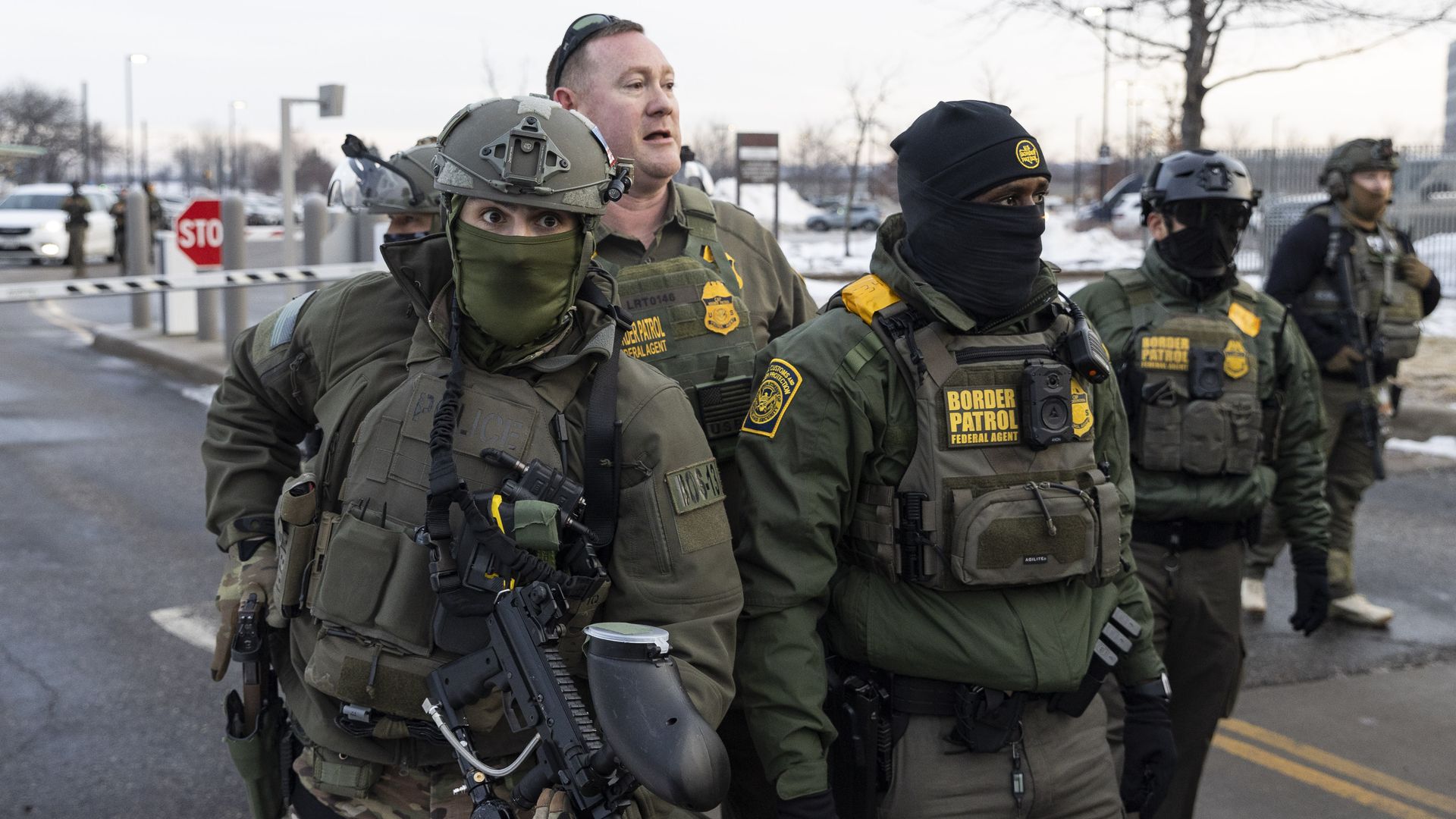
Two separate shootings by federal agents in Portland and Minneapolis last week have drawn widespread protests and concern from Americans — but the two agencies accused of the shootings have slightly different mandates.
The big picture: Despite many linking the two incidents together, the fatal shooting of a U.S. citizen in Minneapolis was done by an ICE agent, whereas two people were shot by U.S. Customs and Border Protection agents in Portland.
- ICE and CBP both fall under the Department of Homeland Security. But these two agencies are vastly different and cover separate aspects of federal law and immigration enforcement.
- Both agencies have expanded and been given cash infusions by President Trump and DHS to support the White House's new immigration policy.
What CBP covers and where it operates
CBP is mainly charged with securing the U.S. border, as well as enforcing the law when it comes to international travel and trade, including collecting tariffs.
- The agency looks to protect the border "against illegal entry, illicit activity or other threats to uphold national sovereignty and promote national and economic security," CBP website reads.
- CBP acts as a counter-terrorism unit and looks to combat transnational crime.
Context: CBP's Office of Field Operations typically operates at ports of entry — airports, seaports and land crossings.
- U.S. Border Patrol agents typically monitor the border and conduct traffic checkpoints.
- While ICE acts inside the country's interior, CBP generally patrols the U.S. border and 100 miles from it.
Zoom in: Border Patrol agents in Portland might seem odd. However, the city is roughly 100 miles from the U.S. coastline, which gives CBP authority.
- Border Patrol has also been tasked with assisting ICE with interior enforcement in Trump's second term as the agency tries to surge the number of agents in specific cities.
3. Rose City Rundown
💾 Intel's stock spiked after the chipmaker's CEO Lip-Bu Tan met with President Trump on Friday, who orchestrated a deal last summer to make the U.S. government the largest shareholder in the company. (The Oregonian)
⭐️ Portland was named one of 56 top travel destinations for 2026 by the New York Times, which highlighted the city's "a jolt of momentum" thanks to our newly-renovated art museum, a new WNBA team and the incoming James Beard Market. (The New York Times)
Oregon Health & Science University quietly stopped offering gender-affirming surgeries for patients under 19 last year despite saying President Trump's executive order restricting federal funding for the care wouldn't have an immediate impact on the hospital's offerings. (Willamette Week)
🧑🏻🍳 Hospitality jobs in Portland's urban core need to make a strong comeback if the city is going to return to the "Portlandia economy of the 2010s," city economists warned in a budget outlook. (The Oregonian)
4. ⚕️ Oregon's health, ranked

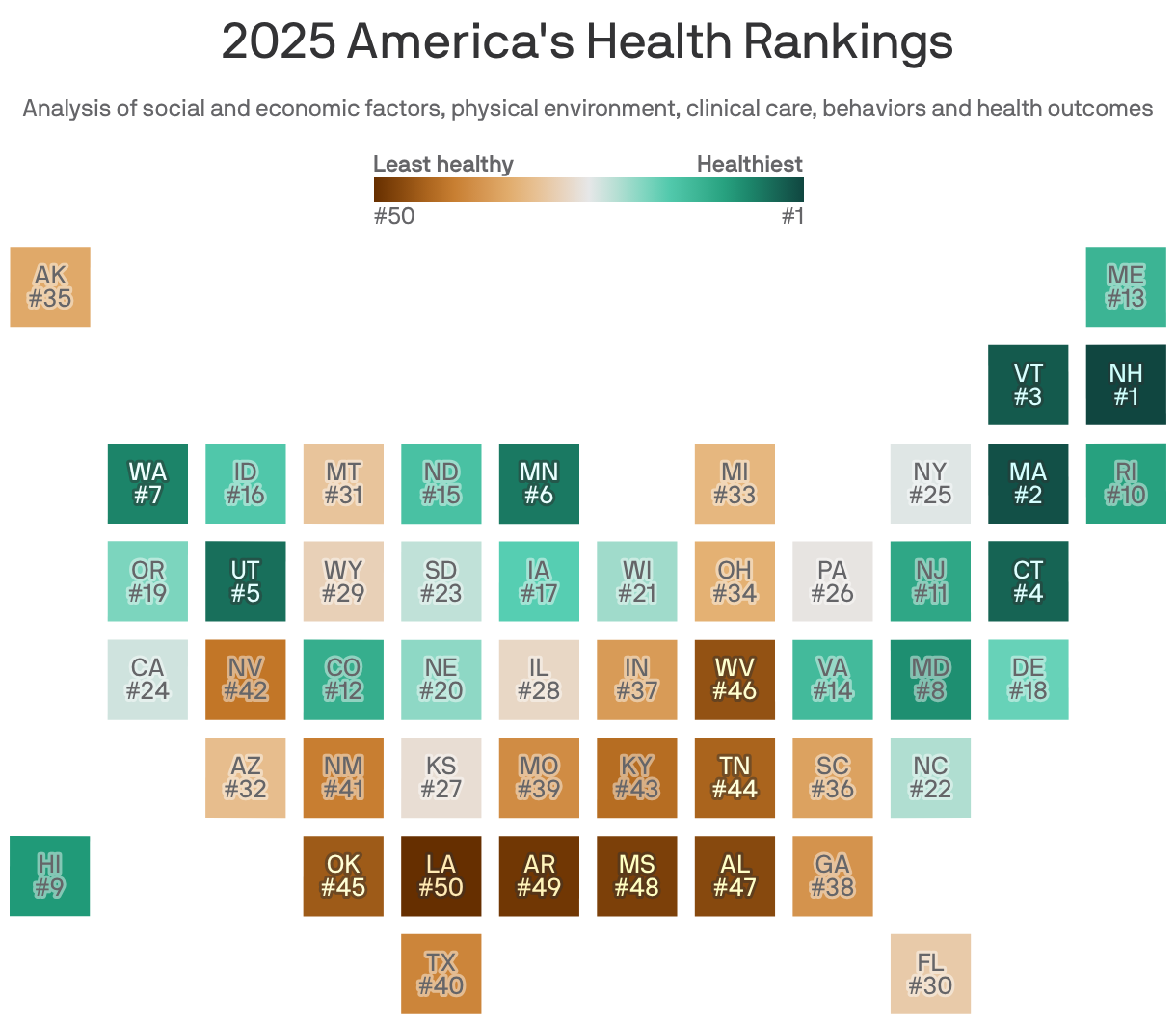
A state-by-state health report card, out today from the United Health Foundation, puts Oregon at No. 19 in the nation.
Why it matters: America's Health Rankings — from the United Health Foundation, established by UnitedHealth Group — synthesize 99 measures of health and well-being, drawn from 31 data sources, to produce a "comprehensive portrait of health at both the national and state levels."
Zoom in: Oregon's ranking was helped by a high prevalence of high school completion, a low rate of uninsured people and high voter participation.
- The state faces ongoing challenges with mental illness, people suffering from chronic conditions and high rates of drug use, which brought our ranking down, per the report.
Between the lines: The report finds an array of encouraging signs for America: Rates for premature death, drug deaths, firearm deaths and homicides all fell. Rates of cancer screenings, physical activity and volunteerism all increased.
- But rates of e-cigarette use and multiple chronic conditions increased. Homelessness and unemployment — socioeconomic factors that help determine the nation's health — rose.
Zoom out: Topping the rankings were New Hampshire, Massachusetts and Vermont.
- Mississippi, Arkansas and Louisiana took the bottom three spots.
New Year, Same Mission
We aim to be your go-to source for timely, relevant stories that impact your community.
Help us continue our mission to keep you informed and become an Axios Portland member today.
- Contributions start at $25 a year and your contribution will help support your Local newsroom.
Thank you for reading.
5. 🦆 Welp
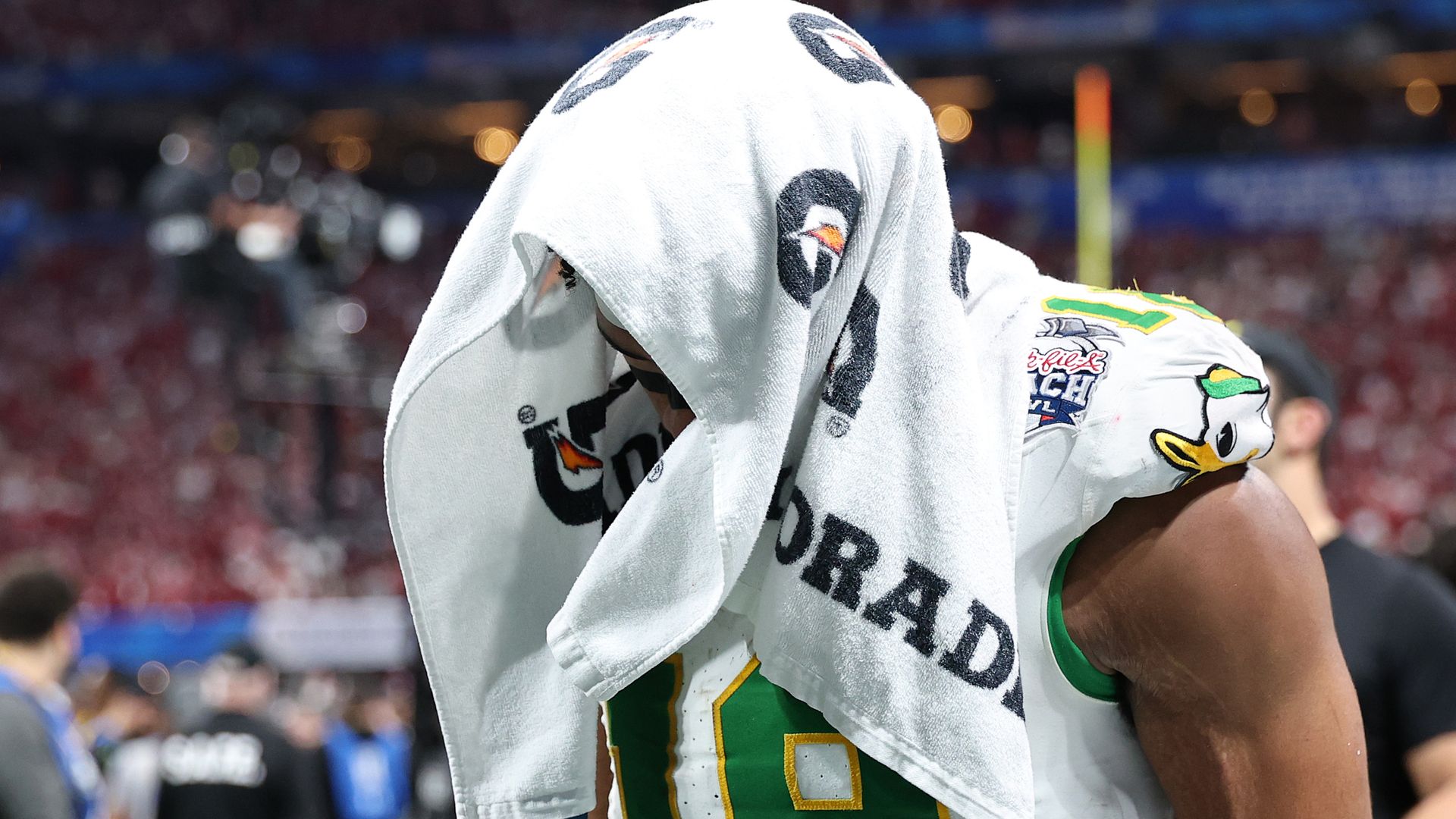
We could write a lot of words about what happened to the Ducks in the Peach Bowl on Friday night, but the picture above sorta tells the whole story.
- In case you somehow missed it, the final score was 22-56.
Better luck next year, boys.
🚬 Meira is rewatching "Mad Men."
🧘🏻 Kale is trying to stay grounded.
This newsletter was edited by Geoff Ziezulewicz.
Sign up for Axios Portland