Who are the Latin American cartels the U.S. labeled as terrorist organizations

Add Axios as your preferred source to
see more of our stories on Google.
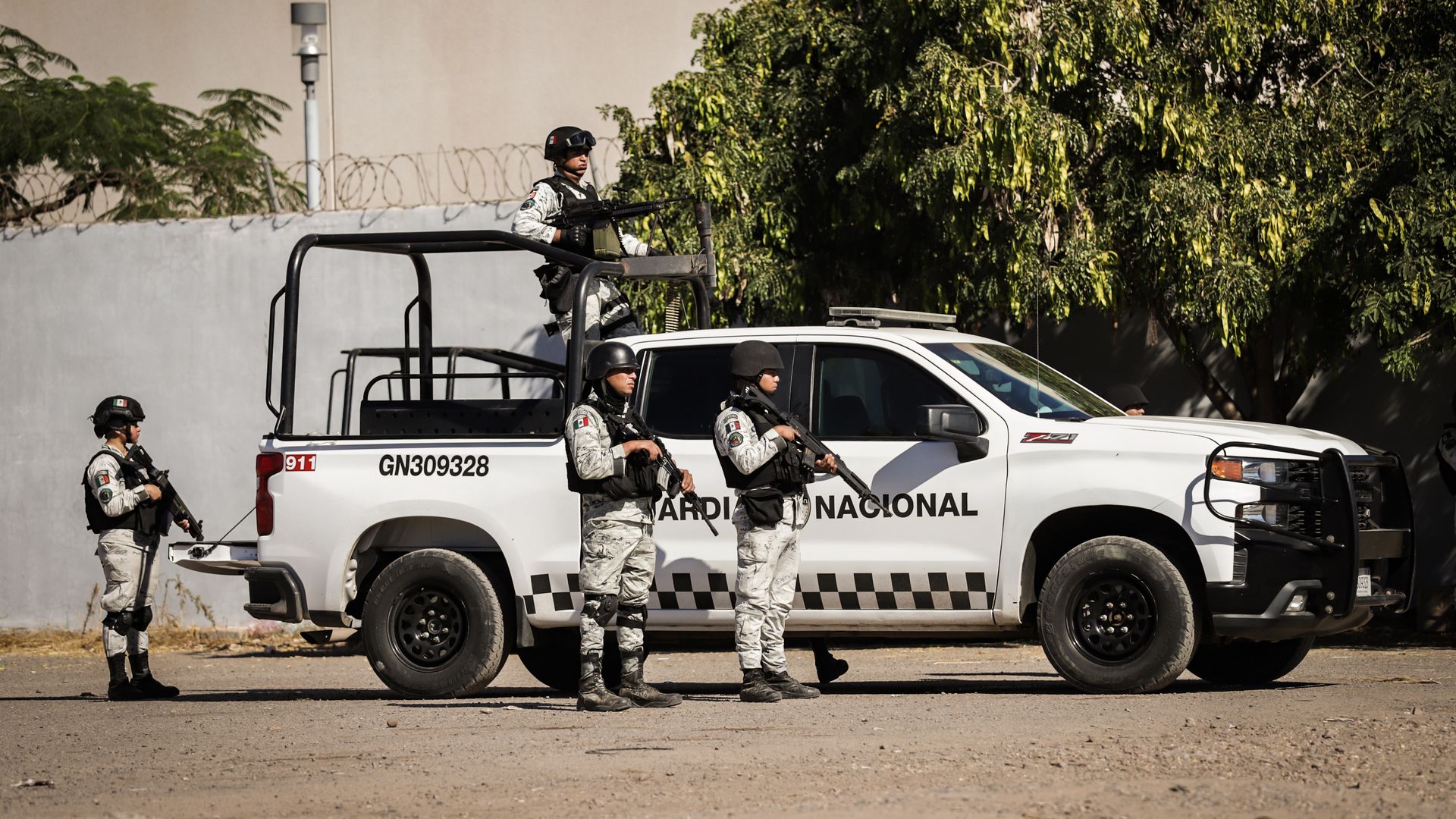
The National Guard monitors the Aguaruto Prison in Culiacan, after confrontations between Cartel de Sinaloa and the National Defense Secretariat in Sinaloa, Mexico, on Jan. 7, 2023. Photo: Jesus Verdugo/Anadolu Agency via Getty Images
The Trump administration on Wednesday designated eight drug cartels — including MS-13 and the Sinaloa Cartel — as global terrorist organizations.
The big picture: The move comes after President Trump signed an executive order on his first day in office vowing to crack down on cartels for a "campaign of violence and terror."
Driving the news: Secretary of State Marco Rubio said in a Federal Register notice Wednesday that the groups pose a threat to national security and should be labeled as terrorist organizations under Section 219 of the Immigration and Nationality Act.
- The groups include: Tren de Aragua; Mara Salvatrucha (also known as MS-13); Cartel de Sinaloa; Cartel de Jalisco Nueva Generación; Carteles Unidos; Cartel del Noreste; Cartel del Golfo; and La Nueva Familia Michoacana.
Here's a look at the history of the cartels:
- South American cartels sprouted in the late 1960s and early 1970s, at a time when the U.S. was cracking down on drug trafficking from Mexico.
- During the 1980s, the cartels in South America became the largest suppliers of narcotics in the world, chiefly of cocaine.
- Meanwhile, demand in the U.S. for cocaine and marijuana was rising rapidly.
- Colombia took control of the expanding market, refining the drugs there and smuggling them into the U.S.
U.S. declares War on Drugs
As the cartels targeted U.S. clientele, the American government began to crack down.
- The U.S. pressured Latin American governments to shut down the supply of narcotics coming in to the county, but Latin American countries insisted the market was driven by U.S. demand for the drugs.
- President Nixon first declared a war on drugs in 1971, and years later, extradition treaties were signed for drug traffickers.
- Throughout the 1990s, the issue continued to cause tensions between the U.S. and Latin American countries.
Here's a timeline of when and where the eight newly deemed global terrorist organizations originated:
Tren de Aragua
Tren de Aragua, also known as Aragua Train, was founded around 2009 to 2010.
- The cartel is based in Venezuela and has a presence in the U.S., Brazil, Colombia, Peru, Ecuador, Bolivia, Panama, Costa Rica, Chile, Mexico, Trinidad and Tobago.
Mara Salvatrucha
MS-13 originated in Los Angeles, California, in the 1980s in communities composed largely of refugees from El Salvador's civil war.
- Members who were deported spread the gang to El Salvador. where it grew quickly.
Cartel de Sinaloa
Also known as Sinaloa Cartel, Mexican Federation and Guadalajara Cartel, the criminal group is likely Mexico's oldest, dating to the 1970s.
- The Sinaloa Cartel expanded in the 1990s and 2000s under leaders like Joaquín "El Chapo" Guzmán.
Cartel de Jalisco Nueva Generacion
The group, known as New Generation Cartel of Jalisco, CJNG and Jalisco New Generation Cartel, was founded in Mexico in 2009.
- Jalisco distributes cocaine, methamphetamine and fentanyl in all 50 states, per the U.S. Drug Enforcement Administration.
Carteles Unidos and La Nueva Familia Michoacana
Carteles Unidos is known by several names, including United Cartels, Tepalcatepec Cartel, Cartel de Tepalcatepec, The Grandfather Cartel, Cartel del Abuelo and Cartel de Los Reyes.
- La Nueva Familia Michoacana, or LNFM, originated in 2011 in Mexico. It splintered into its own group after the original La Familia Michoacana lost power.
- Both groups produce synthetic drugs but are of a concern to the U.S. because of the threat they pose to avocado exports coming from the state of Michoacan, per AP.
Cartel del Noreste
The group, known as CDN, Northeast Cartel and Los Zetas, was founded in Mexico in 2014.
- They are alleged to have operations in the U.S., Guatemala, Honduras and Colombia.
Cartel del Golfo
Also known as CDG, Gulf Cartel and Osiel Cardenas-Guillen Organization, the group was founded in the 1930s in Mexico.
- The group has an international network and is alleged to be affiliated with crime groups in the U.S. and on other continents.
