Axios Phoenix

June 22, 2026


🔥 Welcome to a special edition where we're diving into wildfire season in the West, marked this year by dry conditions and new firefighting challenges.
- Axios reporters from across the region explore what's changing as officials confront a combustible mix of extreme weather, evolving federal policy and increasingly destructive fires.
☀️ Today's weather: Sunny, high of 108.
Today's newsletter is 1,024 words — a 4-minute read.
1 big thing: Federal lab cuts could hamper forecasting

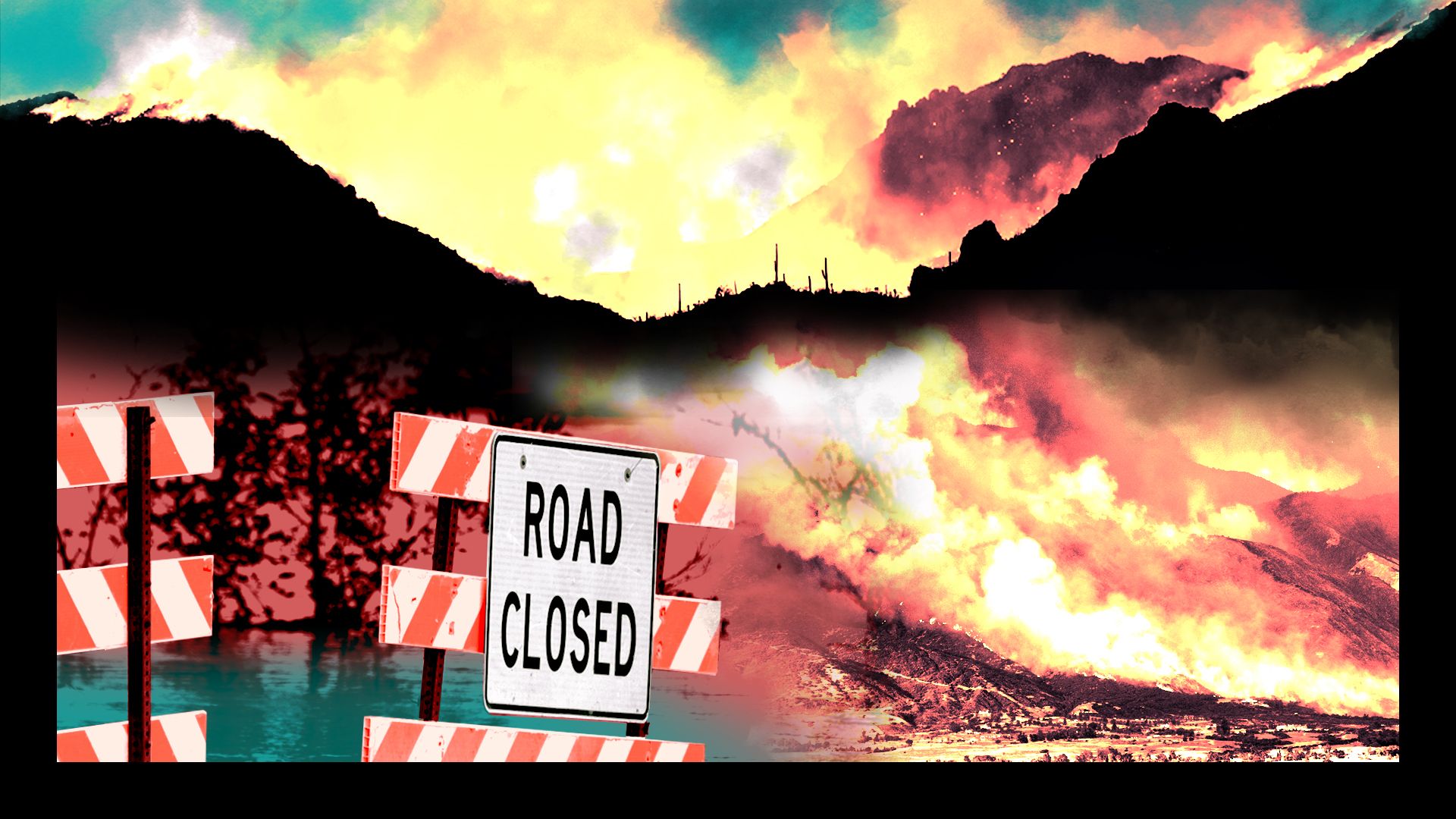
Researchers say the biggest wildfires often emerge when dry landscapes collide with short-term weather events that remain difficult to forecast.
Why it matters: Those forecasts are becoming more important as fire seasons grow more destructive. But federal science cuts threaten some of the research and infrastructure behind them.
Reality check: Even in dry years, most fires never become major incidents, according to Janice Coen of the National Center for Atmospheric Research.
- That makes predicting rapid fire growth more important than predicting the number of fire starts.
Zoom in: Wind is one of the biggest drivers of explosive fire growth — and one of the hardest to forecast.
- Broader weather patterns can be modeled up to two weeks out, but the wind patterns that drive fast-moving fires are often predictable only a day or two in advance.
Between the lines: Much of that forecasting depends on federal labs, like the National Oceanic and Atmospheric Administration, which are facing budget uncertainty.
What they're saying: "You check your phone [for the forecast], that came from a computer model that someone ran on a supercomputer ... all of that infrastructure comes from the federal government," Cooperative Institute for Research in Environmental Sciences associate director Jen Kay tells Axios.
- "If you cut NOAA by 50%, you cut the quality of the forecast you get on your phone by 50%."
What's next: Budget uncertainty is already affecting researchers' work.
- "You don't know what projects will continue, you don't know what people will be there," Kay said.
2. Firefighting shakeup

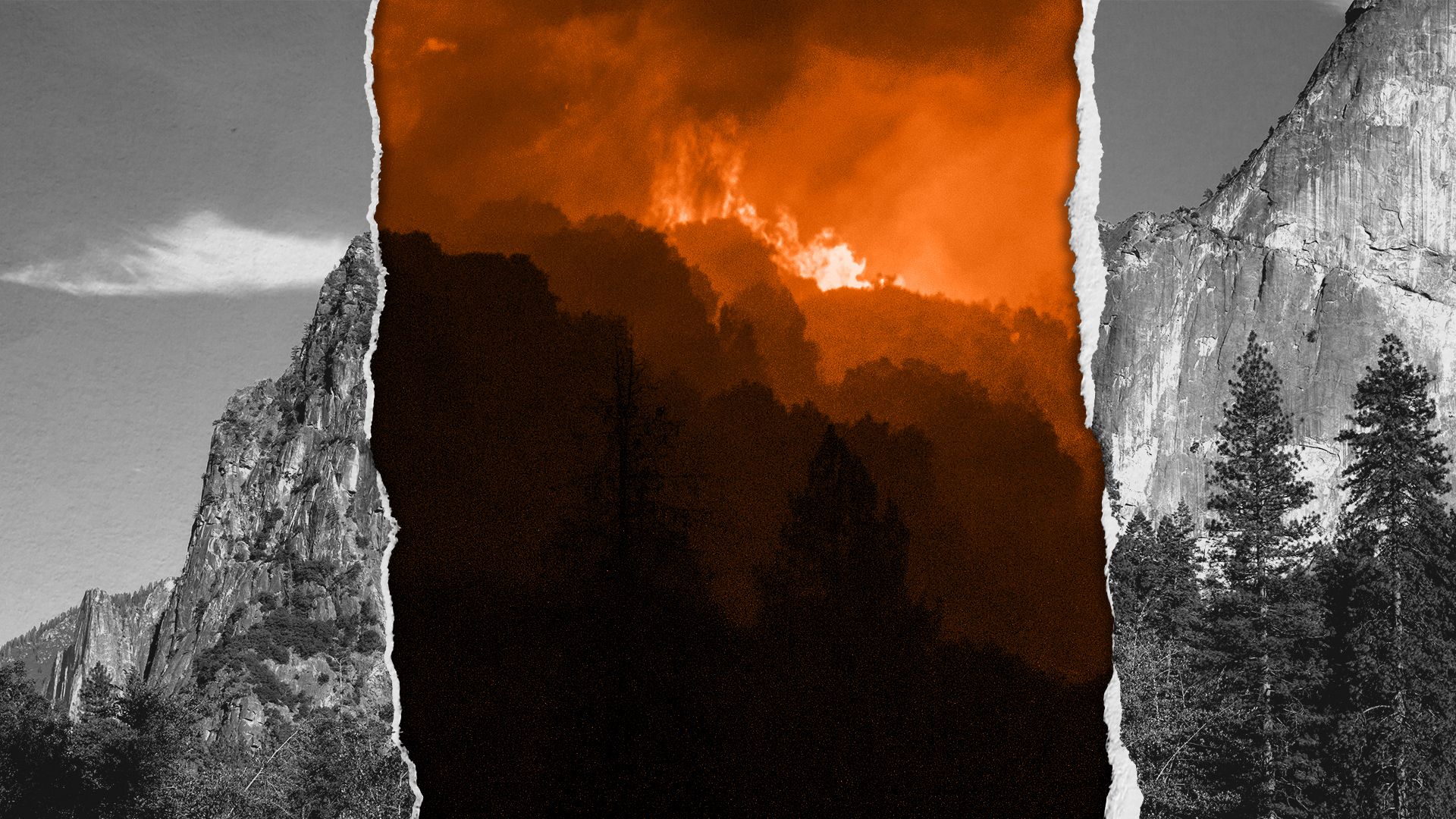
The West is heading into wildfire season with record-dry conditions and a federal firefighting force that's undergoing an unprecedented reorganization.
Why it matters: A landscape ready to burn and the organizational shakeup have some elected officials questioning whether federal response systems are prepared for a severe wildfire season.
Catch up quick: Most federal wildfire resources are now overseen by the Department of the Interior after President Trump signed an executive order last year to consolidate operations.
- Previously, firefighters from several agencies — the U.S. Forest Service (part of the Agriculture Department), the Bureau of Land Management and the Bureau of Indian Affairs among them — all responded independently to wildfires.
What they're saying: "I'm extremely concerned that we're not ready," U.S. Sen. Jeff Merkley (D-Ore.) told Axios.
The other side: Firefighting operations would be "largely unchanged" from previous years, Interior spokesperson Elizabeth Peace told Axios in an email.
The bottom line: Merkley said the bone-dry landscape, coupled with the federal reorganization, has left him wary of the months ahead.
- "All of this is amounting to a hold-your-breath summer," he said.
3. Dragon Bravo Fire spurs strategy shift
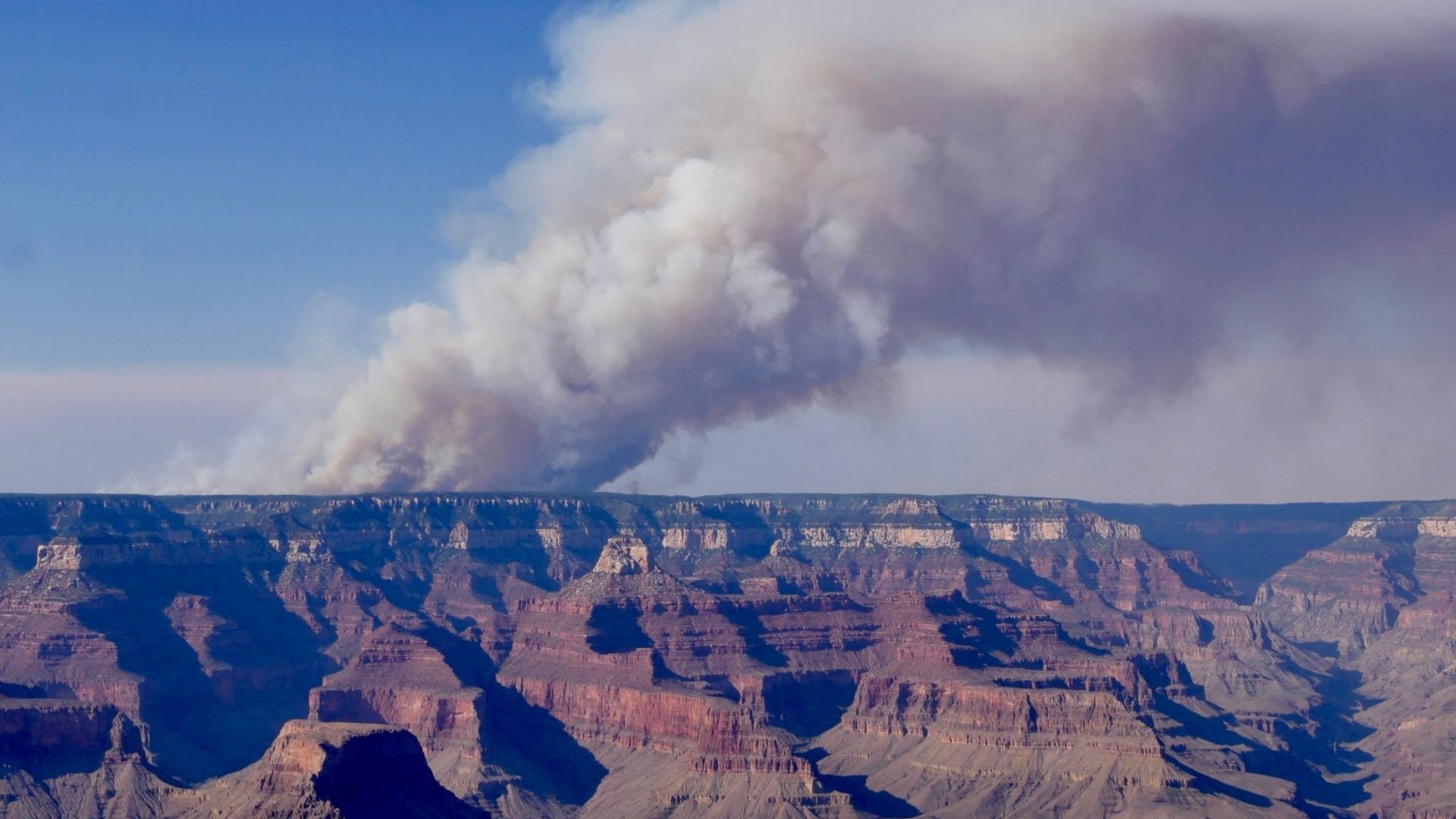
Federal officials are switching to an aggressive fire suppression strategy after mismanagement fueled a historic blaze that torched the Grand Canyon's North Rim.
Why it matters: Arizona faces heightened risk this wildfire season due to drought and record heat, along with an infestation of beetles that have killed pine trees.
The latest: Federal officials this year will prioritize suppression, "meaning when a fire begins, we'll put it out," U.S. Interior Secretary Doug Burgum said during an April subcommittee hearing.
Catch up quick: The Dragon Bravo Fire, ignited by a lightning strike, burned around 145,000 acres last summer.
- The fire also destroyed the century-old Grand Canyon Lodge.
- Dragon Bravo burned for three months and became the seventh-largest wildfire in Arizona history and the largest wildfire in the U.S. last year.
Zoom in: At the time, the National Park Service defended its strategy of allowing the fire to burn to consume fuel.
- But Burgum later acknowledged that federal officials erred and that letting the fire burn likely allowed it to spiral out of control.
- "In retrospect, an approach of suppression versus containment might have saved hundreds of millions of dollars of historic properties," he said in April.
4. How AI helps spot wildfires before 911 calls

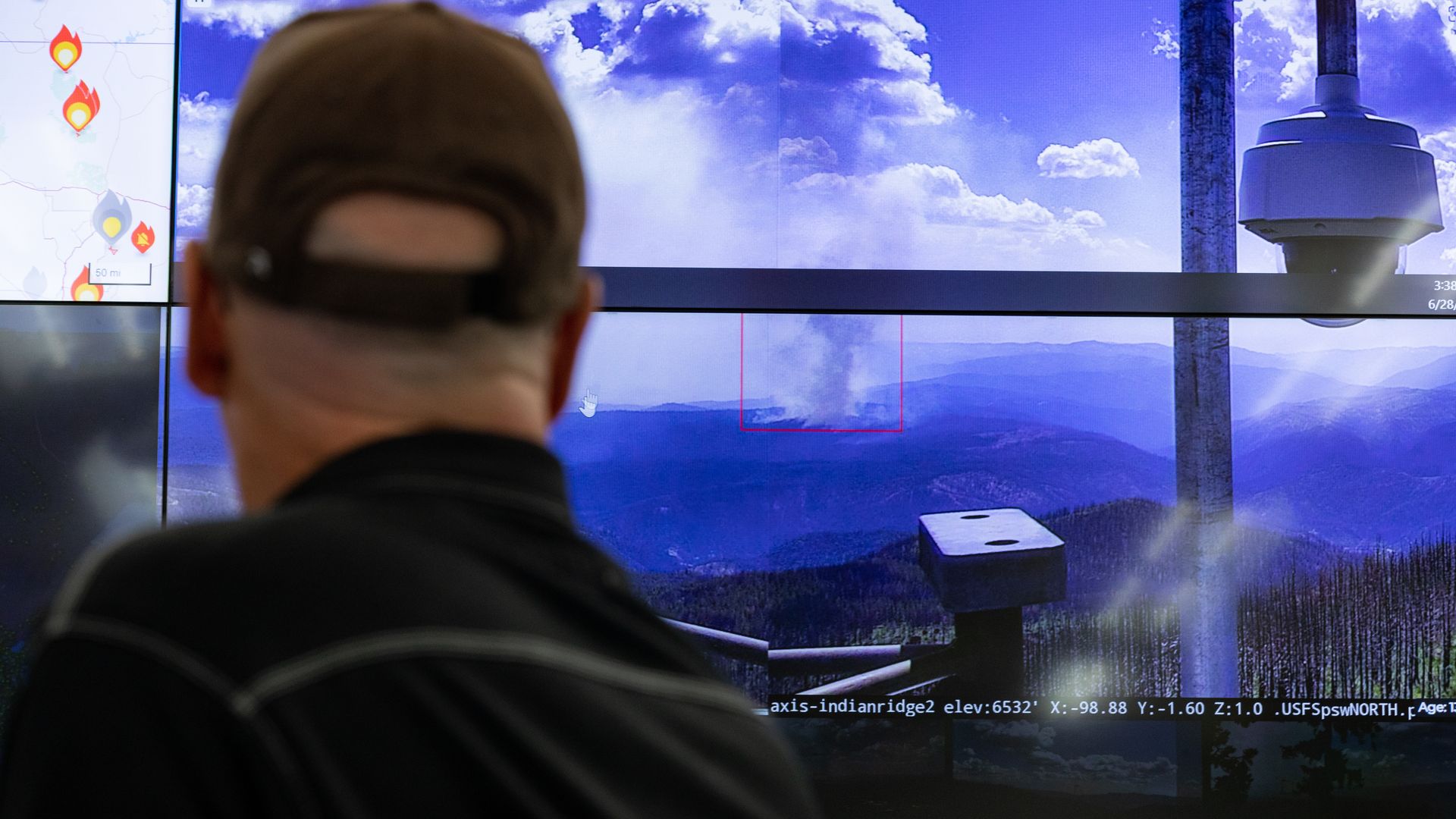
As wildfires become faster-moving and more destructive, agencies across the West are adopting AI-powered cameras, satellites and other detection tools.
Why it matters: The technology is designed to buy firefighters time — often their most valuable resource.
- "Even two seconds makes a difference in detection and response," Leland O'Driscoll, director of Oregon Hazards Lab, told Axios.
Zoom in: Arizona Public Service has several dozen AI smoke detection cameras throughout the state.
- Between APS, Salt River Project and the Arizona Department of Forestry and Fire Management, there are now 60 cameras operational statewide, with 88 expected by the end of the year, the Arizona Republic reported.
- One of the APS cameras was used in March to detect what became known as the Diamond Fire, which was contained after burning seven acres in the Coconino National Forest, per the Associated Press.
Meanwhile, NOAA recently debuted its AI-powered satellite imagery system that can identify hotspots from space and track a fire's spread and intensity.
Yes, but: "There's still a vast wildland area that's uncovered that needs monitoring, full stop," O'Driscoll said.
Reality check: Human operators still review AI-generated fire alerts before crews are deployed.
5. Chips & salsa: Sycamore Fire burns 6k acres

🔥 The Sycamore Fire north of Globe had burned 6,281 acres and was only 7% contained as of yesterday evening. (Arizona's Family)
🗳️ The Arizona Court of Appeals on Thursday temporarily halted a judge's order that the Maricopa County Board of Supervisors return control of some election duties to Recorder Justin Heap. (Votebeat)
- Heap said he'll appeal to the Arizona Supreme Court.
🐕 The Phoenix City Council last week updated its animal cruelty ordinance to prohibit people from tethering dogs outside without their owners' direct supervision. (12 News)
🚫 Vice President JD Vance canceled a planned visit to Oro Valley today because he is in Switzerland leading Iran negotiations. The Arizona Republican Party said the trip would be rescheduled. (AZcentral)
🧑🧑🧒🧒 Jeremy had a great Father's Day with his family.
👧 Jessica is loving this stage of life with her daughter.
Thanks to Gigi Sukin for editing.
Sign up for Axios Phoenix
