Axios Media Trends

August 11, 2026

Hello. Today's Media Trends, edited by Christine Wang and copy edited by Katie Lewis, is 2,328 words, a 9-minute read. Sign up.
🔒 This is the free version of Media Trends. Unlock exclusive scoops, reporting and insights by becoming a Media Trends Executive member.
1 big thing: 📺 Risky TV bet
The FCC's move to lift the 39% national broadcast ownership cap last week is already facing legal challenges, potentially throwing a wrench into broadcasters' consolidation plans.
Why it matters: Legal experts argue there's a real chance the agency loses in court, creating significant uncertainty for deals premised on the change.
- Benton Institute senior counselor Andrew Jay Schwartzman tells Axios he estimates the FCC has a "better than 50/50 chance" of losing.
The big picture: The central legal question is whether the FCC has the authority to change the cap at all, an issue even Republicans are grappling with.
- Former House Majority Leader Tom DeLay wrote in an op-ed last week that Congress deliberately codified the 39% broadcast ownership cap in 2004 to prevent the FCC from raising it on its own.
- Senate Commerce chairman Ted Cruz said last month he is "skeptical a change can be made absent an act of Congress."
State of play: So far, Free Press is the only group to challenge the ruling, but more appeals are expected, per Schwartzman.
- "I would be surprised if there are fewer than half a dozen — maybe as many seven or eight — appeals," he said.
- Potential challengers are likely weighing when and where to challenge the FCC's decision.
- Which circuit ultimately takes up the appeal or consolidated appeals could impact the outcome.
Zoom out: The uncertainty is especially consequential for Nexstar, which closed its $6.2 billion takeover of rival Tegna in March.
- An antitrust case filed by state attorneys general and DirecTV has forced the TV giant to keep Tegna operating independently under a preliminary injunction while litigation proceeds.
- Schwartzman says there is a "non-trivial chance" Nexstar could ultimately be required to unwind the transaction and sell the Tegna stations.
- Because Tegna shareholders have already been paid and its top executives have departed, he argues those stations could fetch considerably less in a forced sale than Nexstar paid for them.
What to watch: To-date, Carr and Republican commissioner Olivia Trusty have had to include commissioner Anna Gomez, the lone Democrat, in votes, as the law requires at least three FCC commissioners to establish a quorum. But that could change.
- Danielle Thumann Severs, a longtime aide to Carr, was nominated by President Trump on Friday to fill one of the agency's two vacant seats.
- If confirmed by the Senate, Thumann Severs would make it much easier for the Republican-led FCC to hold and pass votes unilaterally without any Democratic friction.
2. 💥 Ellison threatens to leave CA; Bonta blasts "blackmail"
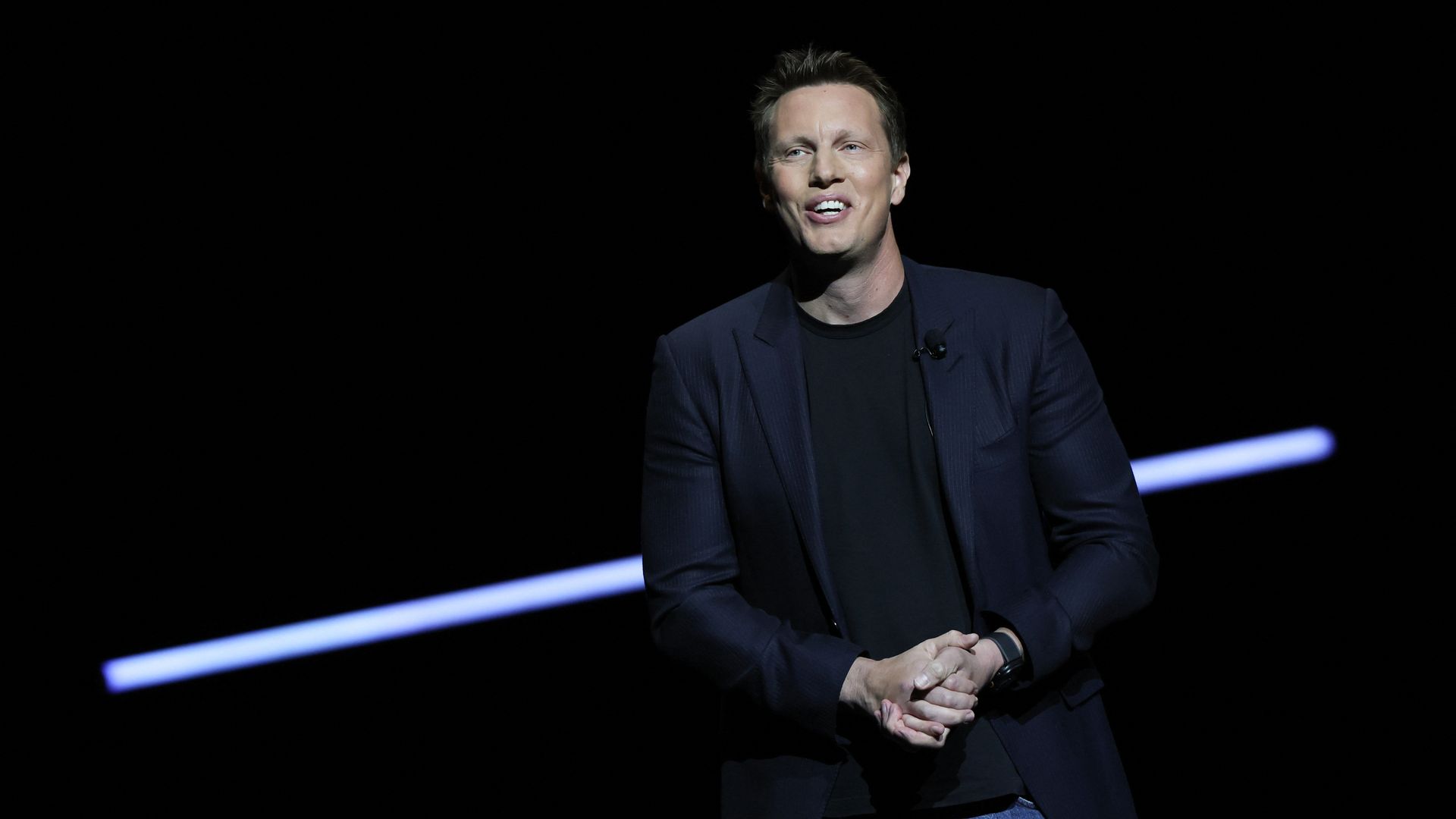
Paramount Skydance chairman and CEO David Ellison is considering moving the company out of California amid his legal battle with California Attorney General Rob Bonta over the $110 billion Warner Bros. Discovery takeover, a source familiar with Ellison's thinking confirmed to Axios.
Why it matters: It's a striking rebuke of California by a major Hollywood studio when the state is fighting to keep film and television production from relocating elsewhere.
Driving the news: Ellison raised the possibility of moving Paramount's operations out of California during a meeting with the company's leadership team last week, a source told Axios.
- The move, first reported by Semafor and later Puck, would see Paramount begin planning to shift its headquarters in the coming months, unless Ellison is able to negotiate a settlement with Bonta, whose office is leading a 12-state coalition to block the merger.
- Paramount did not comment.
Zoom out: In recent weeks, tensions between Ellison and Bonta have escalated.
- Ellison argued in a New York Times op-ed last week that efforts to block his WBD takeover are driven by politics and fears over his stewardship of CNN.
- Yesterday, Bonta countered in a Deadline op-ed that he is leading a straightforward antitrust case that would prevent an unprecedented concentration of power in Hollywood.
Bonta escalated the tit-for-tat today, calling Ellison's threat to leave California "another attempt to blackmail the state into letting an illegal deal through."
What to watch: Ellison has not indicated where he would move the company, but has strong ties to Tennessee.
3. 👀 IMAX weighs in on Ellison antitrust fight

As antitrust pressure mounts around the Paramount-WBD deal, a critical theatrical voice refuses to take a side.
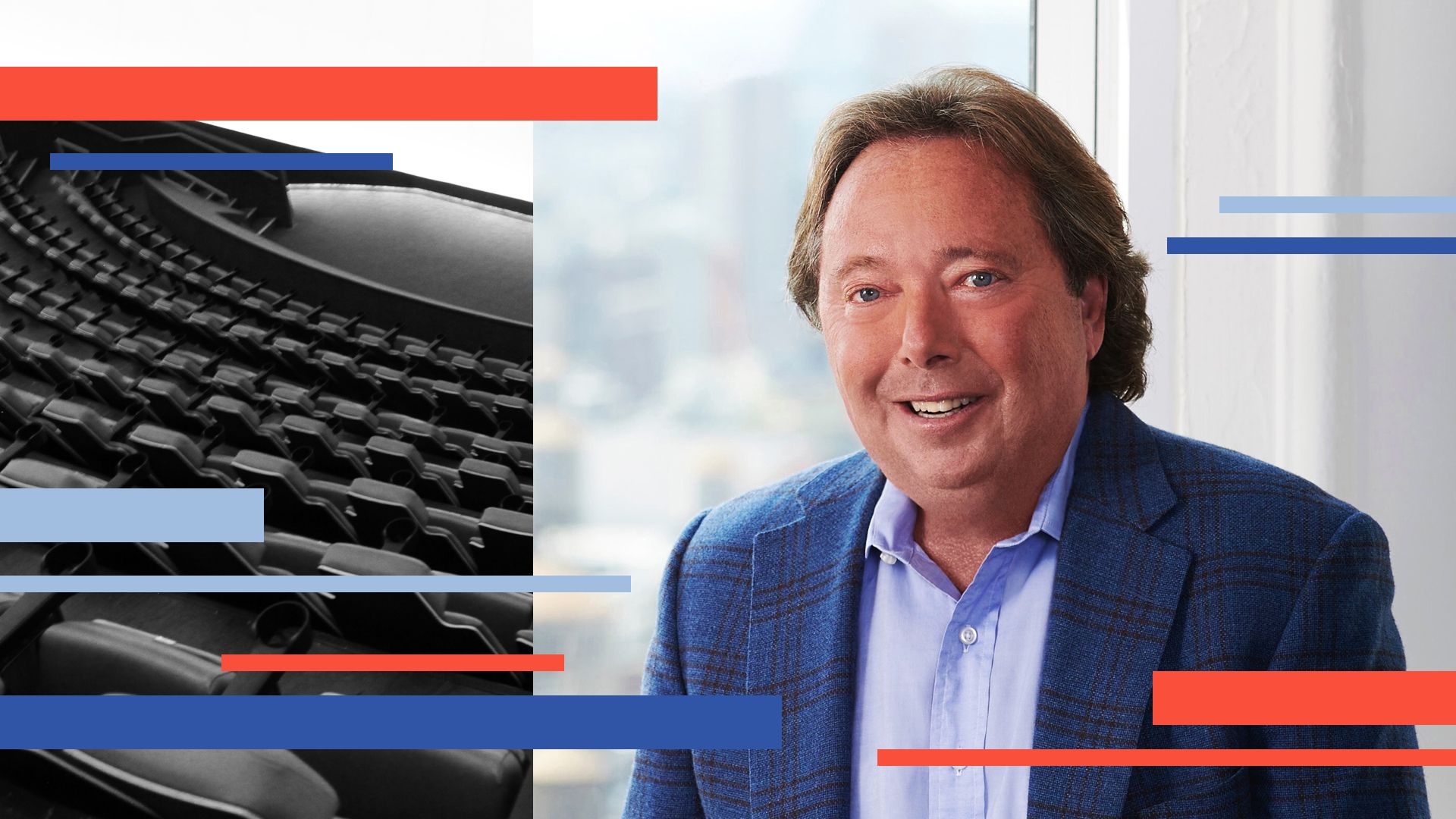
IMAX CEO Rich Gelfond told Axios today, "We judge everything, and it's facts, and we try and tell it the way it is."
- "The answer is: I can see advantages to the Paramount acquisition, and I can see advantages to Warner staying alone," he said. "But we're not going to sell our opinion for a way that brings us short-term benefits."
Why it matters: Theater owners are split on Ellison's overture to distributors, but the biggest chains are increasingly siding with Ellison.
- As more studios lean into premium experiences to sell tickets, IMAX has become an even more important voice within the industry.
🎞️ State of play: Ellison is positioning himself as theatrical's biggest champion, with Bloomberg reporting Paramount has offered to sign deals with major theater chains pledging to release 30 movies a year with a minimum 45-day theatrical window.
- AMC, Regal and Vue CEOs have now publicly backed the Paramount-Warner deal, even as the industry's trade body, Cinema United, continues to oppose it.
Zoom out: The 12-state antitrust lawsuit opposing the merger argues the combined company would have an illegal monopoly over wide-release theatrical distribution and top-grossing theatrical distribution in the U.S.
- IMAX has become an important player in the top-grossing theatrical market and is cited alongside other premium formats in the lawsuit.
- IMAX closed 2025 with its largest global market share ever (3.8%) of the global box office.
4. 📈 Billion-dollar blockbusters


Five movies have crossed the $1 billion global box office revenue mark so far this year — the highest since before the pandemic.
Why it matters: Blockbusters are driving the box office recovery as more studios lean into big-screen events that can reliably sell tickets.
💰 State of play: Analysts predict the domestic summer box office, which runs between Memorial Day and Labor Day, will surpass $4 billion in sales.
- That's only occurred once since the pandemic, when the "Barbie"-"Oppenheimer" craze took theaters by storm in 2023.
🕷️ Zoom in: "Spider-Man: Brand New Day" crossed the $1 billion last week, a mere six days after its debut.
- The film has become Sony's fastest-ever to reach that milestone, after setting a domestic opening weekend record. It's on track to become Sony's highest-grossing film of all time, past 2021's "Spider-Man: No Way Home."
- "The Odyssey," which crossed the $1 billion mark around three weeks after its debut, has become director Christopher Nolan's highest-grossing movie ever and the highest-grossing IMAX movie ever.
🍿 Zoom out: The box office is currently pacing 18% ahead of last year and 11% ahead of 2023.
5. 🎭 Ari Emanuel's $6B theater megadeal
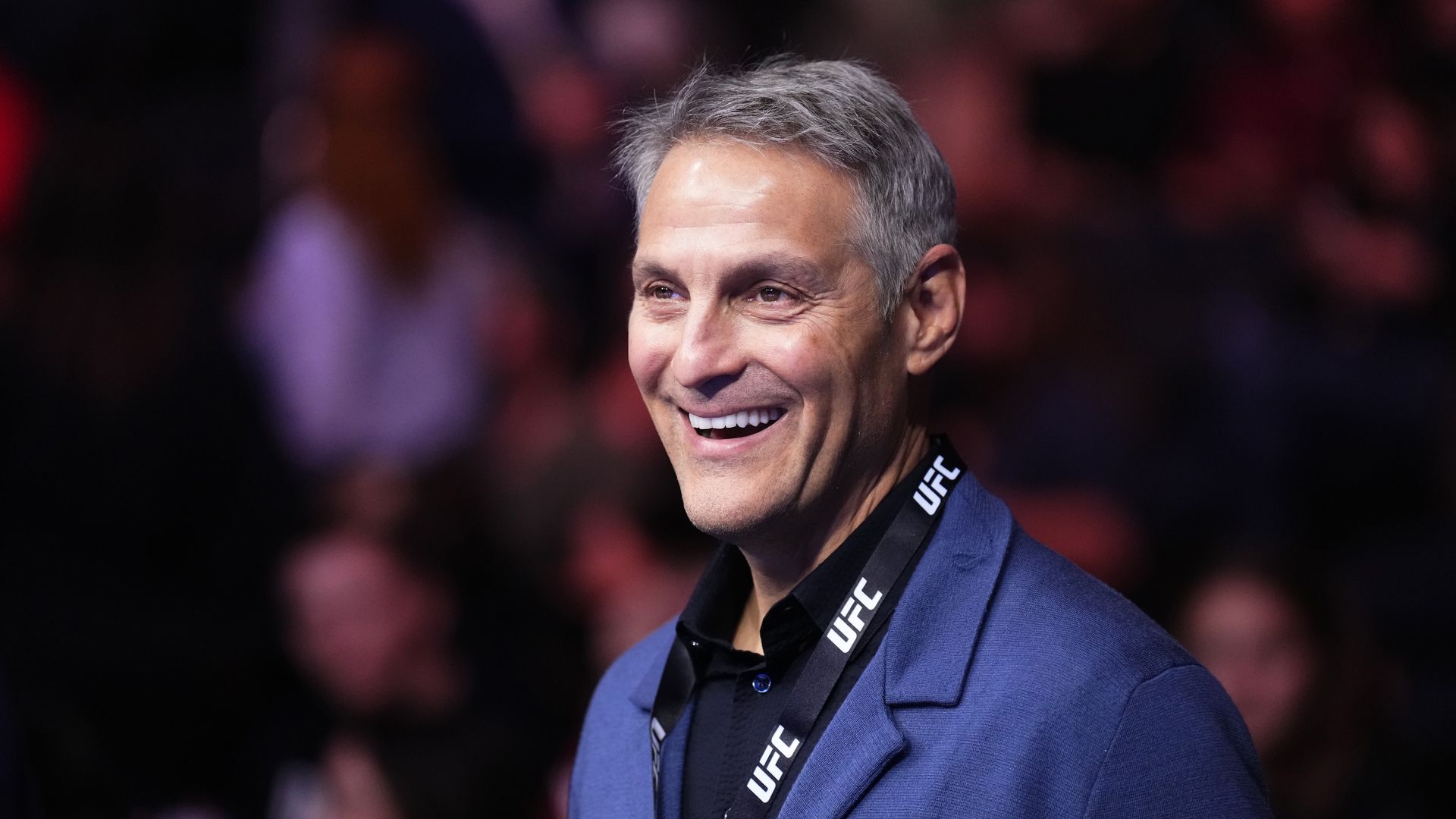
Mari, the global events and experiences company founded last year by media and talent mogul Ari Emanuel, has agreed to acquire ATG Entertainment, one of the world's largest live theater and stage performances companies.
Why it matters: The deal significantly expands Emanuel's footprint across live entertainment, adding dozens of live performance venues globally to his portfolio of live sports and events ventures.
🤝 Zoom in: Mari is acquiring ATG from Providence Equity Partners, which has been ATG's majority owner since 2013. Blackstone became a minority owner in 2024.
- The deal, reportedly valued at $6 billion including debt, gives Mari access to 70 ATG-operated venues across the U.K., U.S., Germany and Spain, including seven on Broadway and 10 in London's West End.
Catch up quick: Emanuel launched Mari in 2025 after private equity giant Silver Lake took his Hollywood entertainment company Endeavor private.
The big picture: Theater and live performances have staged a strong post-pandemic comeback, prompting newfound attention from streamers and movie theaters.
- 🎟️ The 2024-2025 Broadway season was the highest grossing in recorded history at $1.89 billion and second best in attendance, per The Broadway League.
- ⚡️ ATG is part of that momentum. Its Lyric Theatre is home to "Harry Potter and the Cursed Child," which has run since 2018. The production is the highest-grossing play on Broadway.
What's next: We're diving deeper into the live experience and events boom this Saturday for Media Trends Executive members.
- Sign up to receive exclusive insights, analysis and reporting.
6. 🤖 Exclusive: Chatbot gets tabloid treatment
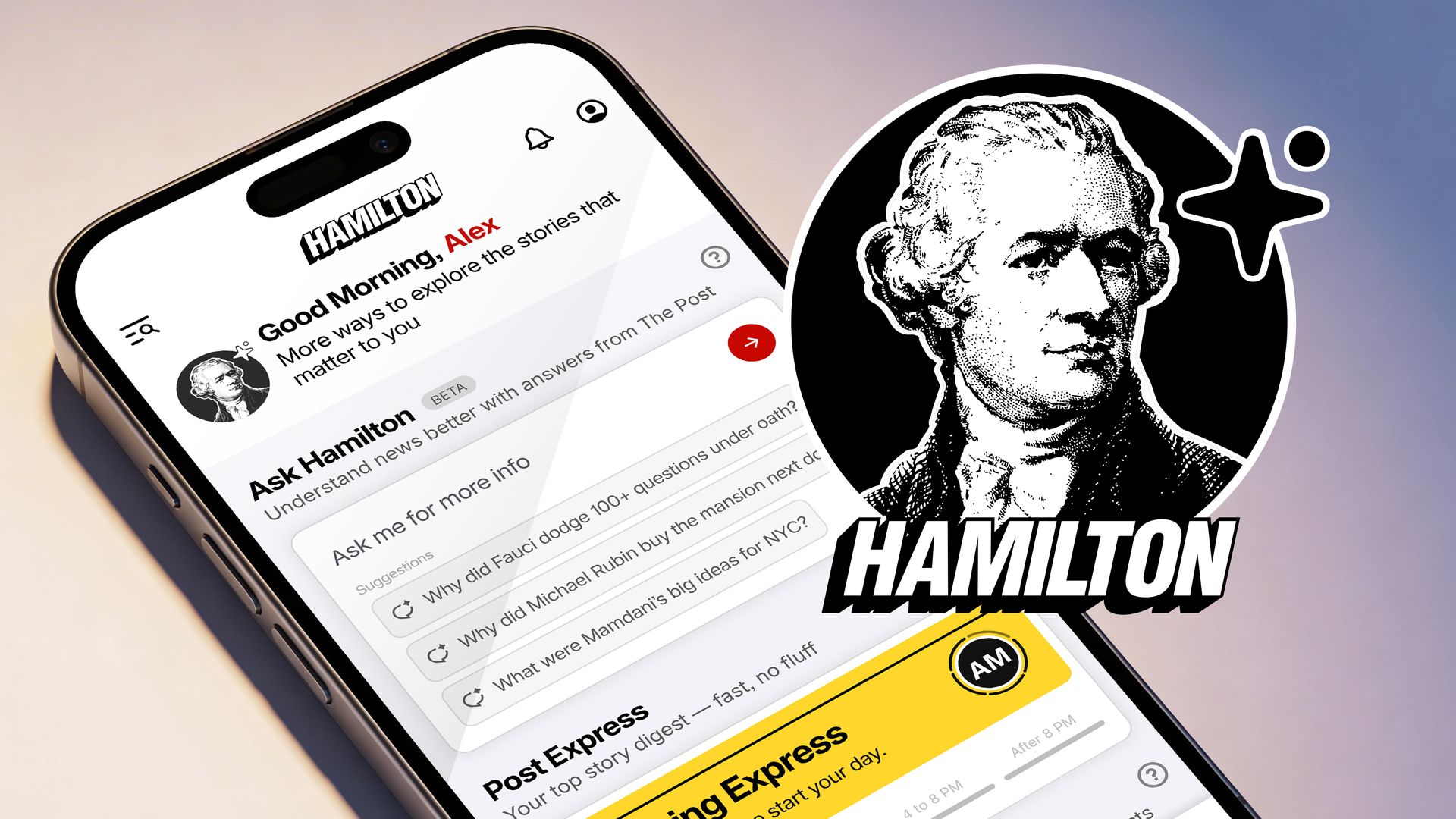
The New York Post, a 225-year-old newspaper company, is launching a custom chatbot as part of a broader AI-powered personalized news experience called Hamilton, executives tell Axios.
The big picture: Publishers are turning to AI interfaces to keep readers engaged on their own platforms, as AI-driven changes eat away at search and social traffic referrals.
- The Washington Post, Time and USA Today have all experimented with their own AI chat interfaces.
📜 Driving the news: The new chatbot and suite of AI products is named after the paper's founder, Alexander Hamilton.
- Starting today, users will see Hamilton across the New York Post and California Post Android and iOS apps.
Zoom in: Hamilton is an umbrella brand for AI-powered personalization features, including chatbot "Hamilton Search," personalized news briefing "Post Express," recommendation engine "Picked For You" and commentary and analysis discovery tool "Post Voices."
☁️ How it works: The tools were built using Google Cloud infrastructure, including its Gemini Enterprise Agent Platform and Gemini models.
- The Post controls the editorial boundaries and product experience, while Google provides the underlying cloud infrastructure, models, search and recommendation capabilities, Ariscielle Novicio, chief technology officer and senior vice president of product and digital strategy at New York Post Media Group.
- While Google Cloud works with many publishers to power secure backend tech infrastructure, this is the first time it's worked with a news partner in North America to power an AI chatbot, per Michael Clark, president of Google Cloud, North America.
Between the lines: While the Post's archive powers Hamilton, it is not licensing that content to train Google's general-purpose AI models through this agreement.
7. 🤳 Looming "influencer cliff"
YouTube announced yesterday that it's doubling the watch-time threshold for new creators to qualify to earn money from ads and subscriptions.
Why it matters: Platforms are changing their policies to reward creators with loyal communities over broad followings, making it hard for influencers with big, passive followings to sustain their momentum.
- Carmen Vicente, a social content strategist, calls this dynamic the looming "influencer cliff."
- She argues the current influencer model incentivizes creators to sell out, disappointing fans on the other side of their parasocial relationships.
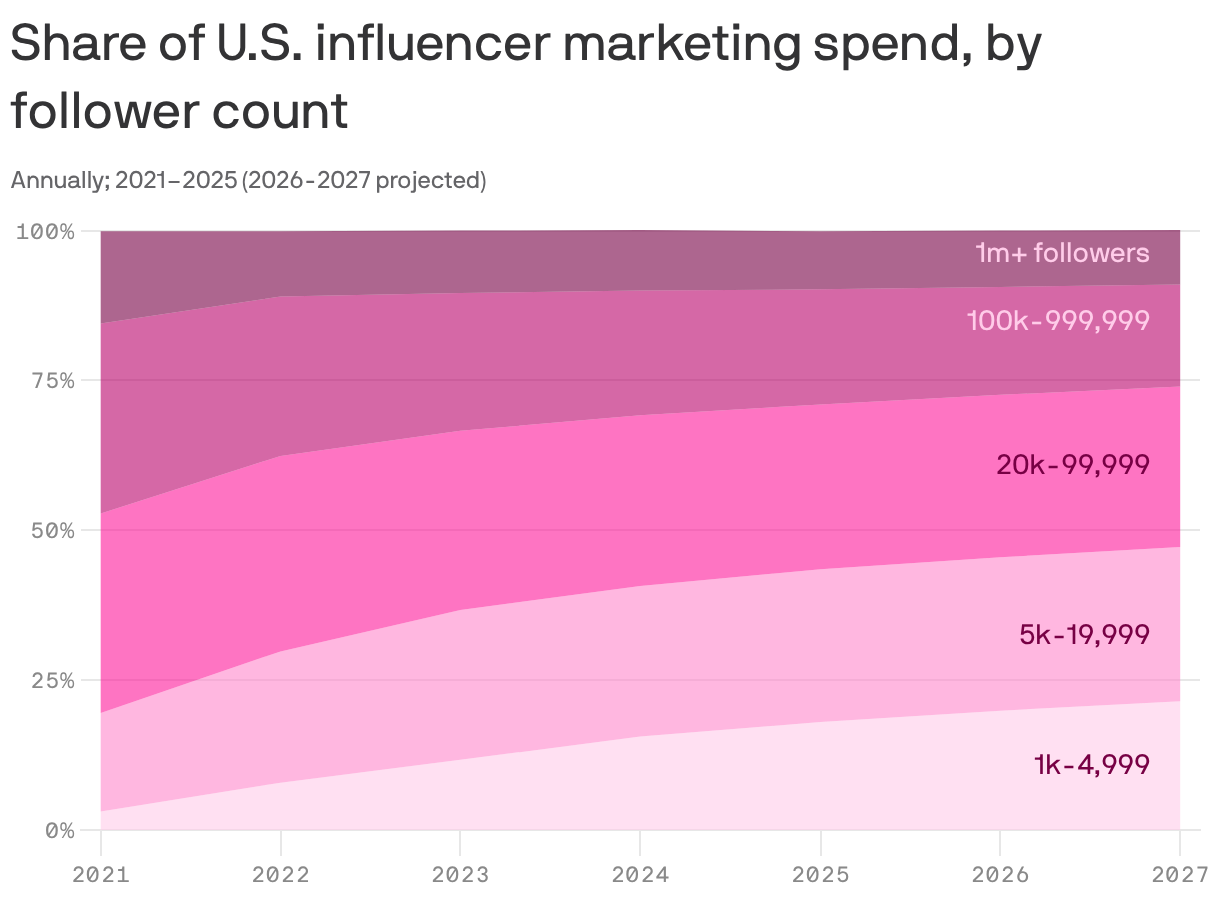
State of play: More platforms are shifting creator monetization programs to prioritize engagement and loyalty over scale, including X, Snapchat and TikTok.
The big picture: More ad money is following niche creators, with nearly half (45.5%) of influencer marketing spend in the U.S. this year expected to go to influencers with fewer than 20,000 followers, per eMarketer.
What to watch: Making YouTube's official "Partner Program" harder to access should encourage creators to take advantage of other types of monetization opportunities that make sense for those with smaller followings.

8. 📏 Media measurement goes private
Nielsen said last week it's acquiring ad tech giant DoubleVerify for about $2.15 billion in cash, the latest in a string of go-private deals for media measurement companies.
Why it matters: Many of those firms are profitable, but public markets have pressured valuations as growth slowed.
- These companies have proven ripe investments for private equity firms hoping to juice better margins with better tech and management structures.
Zoom in: For Nielsen, which itself was taken private by Elliott Management and Brookfield Asset Management in 2022, the deal will beef up its ad measurement capabilities.
- Nielsen is currently a leader in audience measurement. DoubleVerify focuses on ad verification and effectiveness.
Zoom out: Most major media measurement firms are now privately owned and many are private equity-backed, including Integral Ad Science and Kantar Media.
- Samba TV secured up to $60 million in venture debt from Horizon Technology Finance Corporation, an affiliate of Monroe Capital, last year. It filed IPO paperwork in 2021 but withdrew plans in 2022.
What to watch: VideoAmp weighed an IPO back in 2021 but has stayed private — though it has gone through big leadership shifts.
- The company yesterday confirmed it laid off about 20% of its workforce, including its tech chief, in an effort to reorient its business around AI.
9. ⚖️ Information wars move to court

A series of landmark lawsuits are starting to shape the way news and information companies can operate and strike deals.
Why it matters: Absent any meaningful action at the federal level, state regulators, consumer groups, trade organizations and individual class action claimants are leveraging lawsuits to rein in Big Media and Big Tech.
Driving the news: A U.S. Appeals Court ruled yesterday that thousands of lawsuits targeting Meta's apps, ByteDance's TikTok and other tech giants over claims that social media is harmful and addictive can proceed.
- It's a major loss for social platforms that have for decades enjoyed broad legal immunity for content posted on their sites.
- The judge ruled that while existing laws protect tech firms from liability over third-party content, they can't stop the firms from being sued for having addictive features.
- The court also denied Meta's request to postpone a trial over allegations that it used data from children to keep them on its platforms.
Between the lines: The rulings follow a set of similar setbacks for social media giants earlier this year.
Context: The legal pressure has forced tech firms to roll out product changes, such as monthly usage limits and notification restrictions, and make other preemptive updates, like content filtering and app time limits for teens.
Zoom out: Within the media industry, state attorneys general are suing companies like Paramount, Nexstar and Live Nation/Ticketmaster in an attempt to fill a void they argue is being left by federal antitrust regulators.
Sign up for Axios Media Trends