
Axios Media Trends

December 10, 2024

Today's Media Trends, copy edited by Mickey Meece, is 1,960 words, a 7½-minute read. Sign up.
❄️ Heading to Davos? Join us at the Axios House for a week of programming at the World Economic Forum. Register.
🎥 Situational awareness: OpenAI has made its powerful video creation tool, Sora, available to millions of ChatGPT users.
- "We're about to witness an at-scale experiment in what it means for people to create and consume large quantities of video content that is photorealistic but fake," Axios' Scott Rosenberg writes.
1 big thing: The Free Press expands
In roughly a year, The Free Press — a media startup launched by former New York Times writer and editor Bari Weiss — has accrued nearly 1 million email sign-ups, more than 136,000 of which are paid subscribers, Weiss told Axios.
Why it matters: Weiss is a rare connector between the West and East Coasts, which typically live in their own bubbles.
- She launched The Free Press as independent publishing was becoming more sustainable. And between the cancel-culture backlash and the U.S. reaction to the Israel-Hamas war, Weiss fed a starving market with unconventional, sometimes daring, content.
State of play: To usher in its next era of growth, the company has hired former Wall Street Journal editor-turned-banker Dennis K. Berman as its first publisher and president. It's also brought on Hearst and Bloomberg product veteran Daniel Hallac as its first chief growth officer.
- The Free Press will soon roll out a redesigned website and in the new year, it plans to launch a dedicated mobile app.
- While newsletters will continue to be the firm's core product, it plans to expand its slate of podcasts, video offerings and live events next year.
- Weiss' wife and The Free Press co-founder, Nellie Bowles, a former New York Times correspondent, said the company wants to go deeper on topics like personal health, business, and culture.
By the numbers: Weiss declined to provide information about financials but with more than 136,000 subscribers paying around $8 per month, it's safe to assume The Free Press takes in at least $10 million annually from just subscription revenue.
- There are around 60 full-time employees and contractors working for The Free Press.
Follow the money: Weiss confirmed a recent report that the company was valued at more than $100 million after raising a $15 million series A round earlier this year but said the Free Press doesn't have plans to raise money again.
- Series A investors include Allen & Co.'s Herbert Allen Jr., Starbucks' chairman emeritus Howard Schultz, and former Activision CEO Bobby Kotick. Seed investors include venture capitalists Marc Andreessen and David Sacks.
2. The Daily Wire eyes growth investment

The Daily Wire is looking to possibly partner with a larger company or raise a significant round of capital next year to meet its growth ambitions, its co-CEO Jeremy Boreing told Axios.
Why it matters: The company's commercial success has caught the attention of investors and potential buyers looking to gain a foothold in the younger conservative culture.
- Semafor reported Sunday that Fox Corp. was eyeing potential acquisitions of conservative podcast companies, including Daily Wire.
Asked about a deal with Fox, Boreing said the company isn't actively looking for a buyer, but "we're not closed off to an offer."
- "It's easy to imagine a strategic partnership with Fox or someone like Fox, that could be mutually beneficial. I think that we complement Fox and don't compete with Fox," he added, noting Daily Wire's audience is primarily younger and more coastal urban.
By the numbers: The Nashville-based company, which is on track to surpass $200 million in revenue this year, would come with a hefty price tag.
- Daily Wire raised an undisclosed round of capital in 2023 at a valuation well north of $1 billion, a source told Axios.
- The firm was initially funded by Republican fracking billionaire Farris Wilks, but until its latest raise, it relied mostly on its profits to fuel its growth.
What to watch: Most of Daily Wire's content today is focused on news analysis and entertainment. But looking ahead, Boreing said the firm wants to invest more in original journalism.
- "We think that there's a real opening for us," he said.
3. Marketing mega-merger


The $13.3 billion mega-merger between Omnicom Group and Interpublic Group (IPG) will usher in a new era of consolidation across the advertising industry.
Why it matters: The merger, which would create the world's largest ad holding company, will put pressure on other agencies to find efficiencies that can offset the cost of new investments in AI.
By the numbers: The all-stock deal will give Omnicom shareholders 60.6% of the combined company and Interpublic shareholders 39.4%, on a fully diluted basis.
Zoom in: The transaction is expected to generate annual cost synergies of $750 million, and to close in the second half of 2025.
- Omnicom CEO John Wren will serve as CEO of the combined entity. Interpublic CEO Philippe Krakowsky and Interpublic COO Daryl Simm will serve as co-presidents and COOs.
The big picture: Omnicom is the third-largest advertising holding company globally by revenue, reporting $14.7 billion in 2023, followed by IPG at $10.9 billion. WPP and Publicis Groupe are the largest at $18.5 billion and $15.8 billion, respectively.
- Omnicom's continued growth has provided buying leverage in deals. Last year, it acquired digital commerce company Flywheel Digital for $835 million.
- IPG, which has a market value of nearly $11 billion, has struggled to boost revenues and has been offloading some assets to invest in digital growth. Last week, IPG announced it sold digital experiences agency Huge. It plans to sell its digital marketing giant R/GA.
Reality check: Analysts don't foresee regulatory hurdles in getting this deal approved, because they weren't an issue the last time two major holding groups tried to combine in 2013.
- Omnicom and Publicis announced a merger in July 2013, but it fell apart less than a year later due to business and cultural rifts.
What to watch: The Omnicom-IPG behemoth is eyeing more mergers and acquisitions with a combined $3.3 billion in free cash flow, the CEOs told Axios' Kerry Flynn.
4. Ad market hits $1 trillion


More than $1 trillion in advertising will be transacted globally this year, according to a new forecast from GroupM.
Why it matters: The ad industry typically grows at the same rate as the GDP, but a positive economic outlook and the rise of AI have led the ad market to new heights.
- The global ad market is projected to outpace the GDP in terms of growth this year and next, Axios' Kerry Flynn and I write.
Yes, but: Nearly all that growth is going to a small subset of AI-driven ad businesses.
- Google, Meta, TikTok owner ByteDance, Amazon and Alibaba are expected to earn more than half of all 2024 ad revenue.
By the numbers: Global ad revenue is expected to grow 9.5%, according to a year-end forecast from GroupM.
- Growth was supported by the continued rise of pure-play digital advertising, the industry's largest segment, which includes retail media, search and social media.
- Pure-play digital advertising is expected to account for 72.9% of total advertising in 2025 and 76.8% in 2029.
- In 2025, streaming TV revenue is expected to grow by 19.3% while linear TV declines by 3.4%.
What to watch: GroupM's forecast suggests that growth in the Chinese ad market — which kicked off in the back half of 2024 — could drive more momentum to the global ad market in 2025.
- That may impact U.S. growth, depending on the impact of President-elect Trump's proposed tariffs on Chinese imports. Other downside risks include fragmentation of global trade and geopolitical conflict.
5. 🦊 Rupert loses family trust battle in court
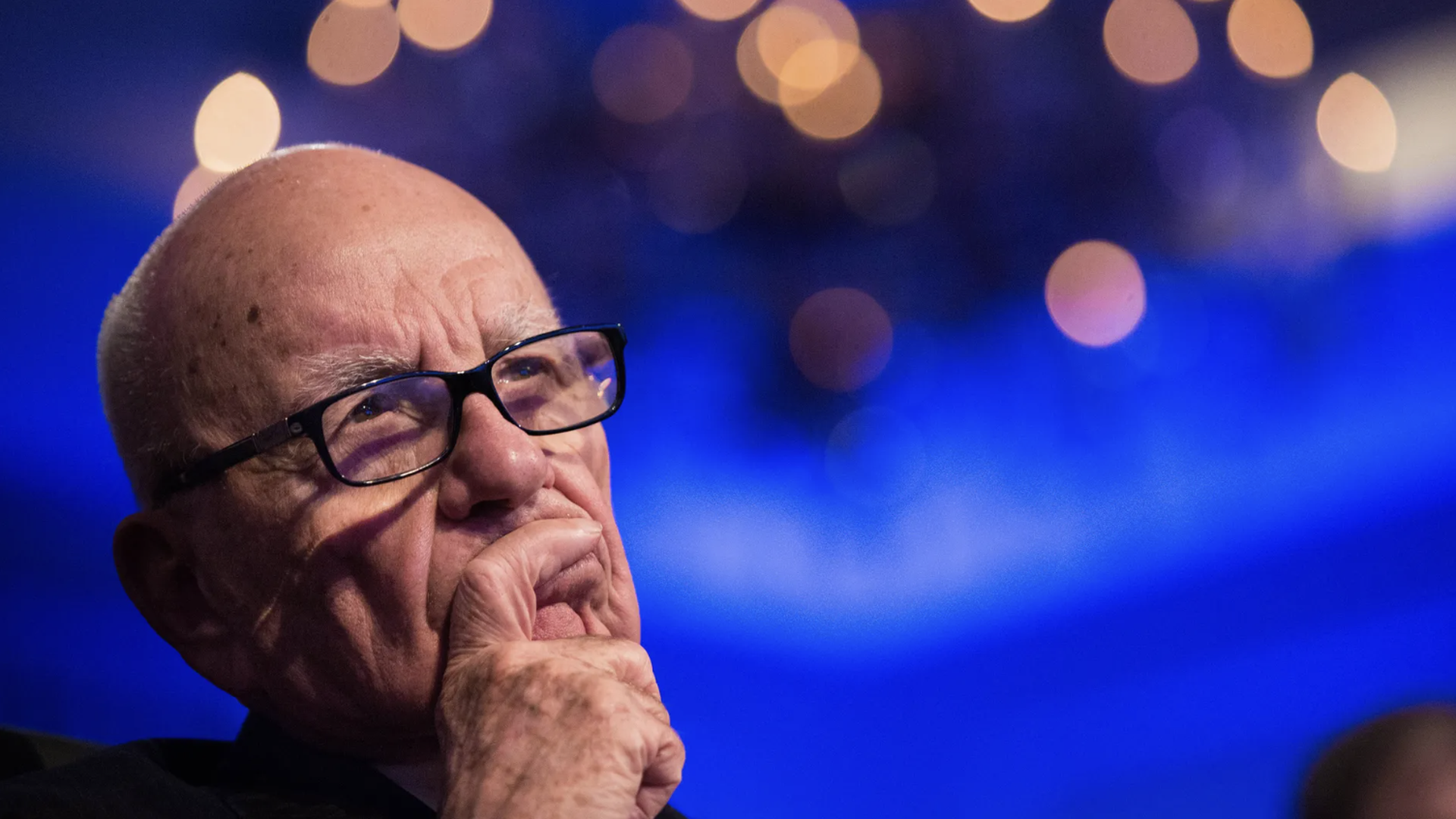
A Nevada commissioner has ruled against Rupert Murdoch's legal attempt to alter his family trust so that his eldest son, Lachlan Murdoch, will control the family's media and business empire when he dies.
Why it matters: Barring a successful appeal, the decision ensures Murdoch's media empire will be left equally to his four oldest children, who are not all ideologically aligned with the conservative views of Rupert and Lachlan.
- Notably, James Murdoch — once considered a contender to take over the family business — resigned from the board of News Corp. in 2020, citing disagreements over editorial content published by the Wall Street Journal and the New York Post.
Zoom in: Commissioner Edmund J. Gorman Jr. ruled against Rupert Murdoch and Lachlan Murdoch, arguing they acted in "bad faith" by trying to alter the terms of the trust, according to the NYT, which obtained a copy of the sealed court document.
- Media outlets petitioned for access to the closed-door trial but were ultimately denied by a judge who argued that the matter should be litigated privately.
The big picture: The trust, established in 1999, was created as a compromise amid Rupert Murdoch's divorce from his second wife, Anna Torv Murdoch Mann.
- Lachlan and his three siblings — Elisabeth, James and Prudence — are equal beneficiaries of the trust, which has roughly 40% of voting stakes in News Corp. and Fox Corp.
- Rupert Murdoch, 93, stepped down as chairman of Fox Corp. and News Corp. last year and named Lachlan his corporate successor.
The intrigue: Murdoch's children started doing secret PR planning for how to handle their father's death last year after an episode of "Succession," the HBO series that draws on the Murdoch family drama, according to The Times.
- In that episode, the patriarch dies and chaos ensues for the family and the business.
What's next: Rupert Murdoch's lawyer told the Times he plans to appeal the decision.
6. ⚖️ TikTok's Hail Mary
TikTok has asked a federal appeals court to grant it an emergency injunction while it waits to hear whether the Supreme Court will hear its case on First Amendment grounds.
Why it matters: If the injunction isn't granted, tech giants like Google and Apple will be forced to remove TikTok from their app stores by Jan 19.
- If they chose not to comply, they could face civil penalties of $5,000 for each user still on the app, per Axios' Maria Curi.
Zoom in: If they comply, it would be a slow fade out for the app.
- The more than 170 million Americans who have the app downloaded on their phone would still be able to access TikTok, but they wouldn't be able to update the app, which would eventually make it obsolete.
The other side: If an injunction is granted, the TikTok ban would be placed on hold until the Supreme Court decides whether to take up the case.
- TikTok says the injunction would give the incoming administration time to review its case.
- President-elect Trump has flip-flopped his position on TikTok and now says he opposes a ban. With the law in place, his options to save the app are limited. He could try to get a Republican-led Congress to repeal the law or pressure the DOJ not to enforce it.
Of course, TikTok could also try to sell itself to a U.S. company or investor group, but the Chinese government would have to bless that transaction, which seems unlikely.
Between the lines: TikTok tried to argue that the sale-or-ban measure, passed by Congress and signed into law by President Biden earlier this year, violated its First Amendment rights.
- But a federal appeals court last week upheld the law as constitutional, forcing TikTok to resort to its last option — the Supreme Court.
What's next: The companies are asking for a decision no later than Thursday. The Department of Justice has until Wednesday to file any response.
7. 🚨 Biden believes Austin Tice is alive
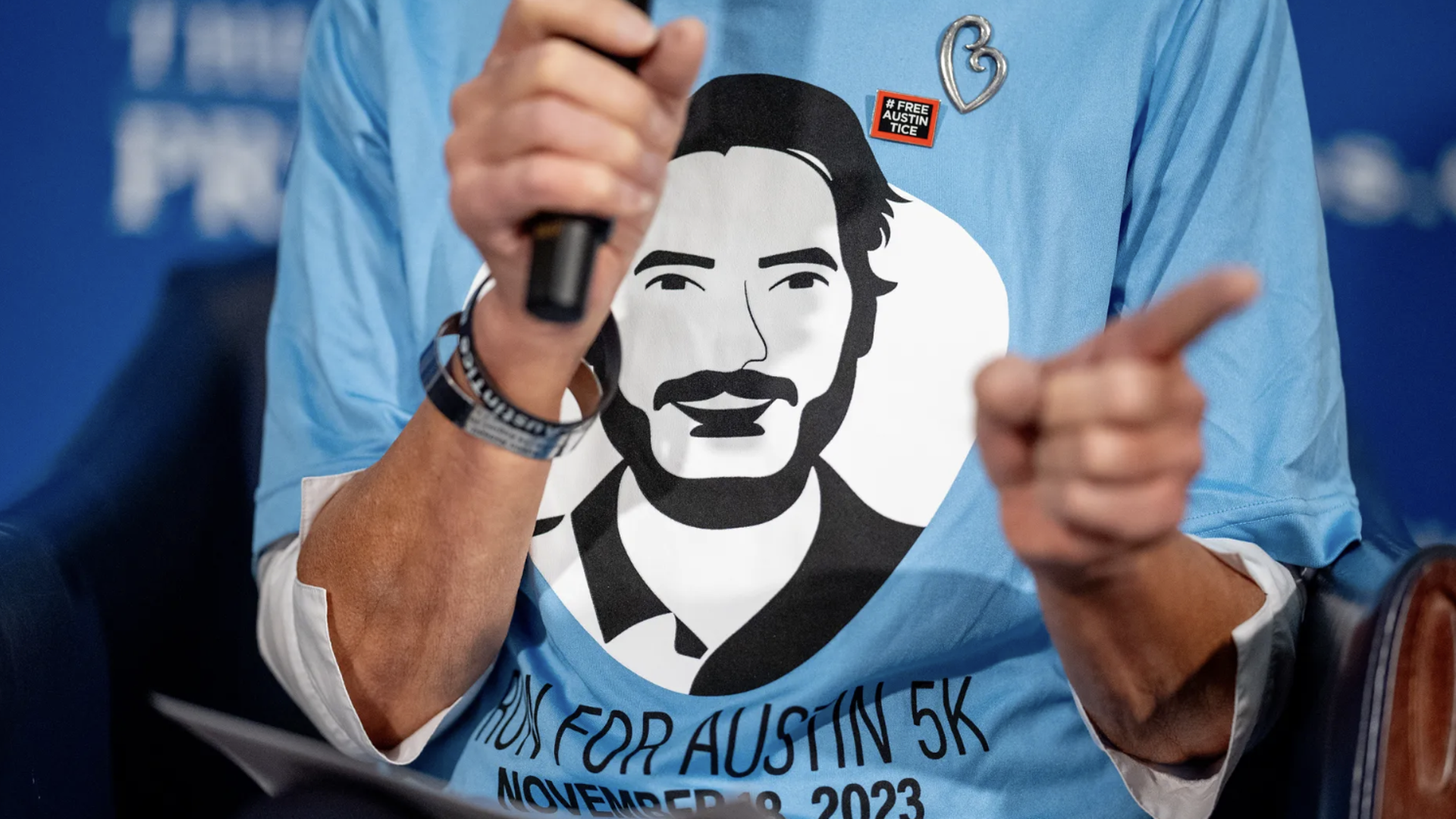
President Biden told reporters Sunday that the U.S. believes American journalist Austin Tice, who has been missing in Syria for 12 years, is alive and that "we think we can get him back."
Why it matters: The U.S. government has long believed that Tice is alive and held by the Government of Syria. But the Assad regime — which collapsed Sunday as Syrian rebels seized control of Damascus — has never acknowledged Tice's detention, Axios' Zach Basu writes.
🖼️ The big picture: Countless political prisoners and Syrians disappeared into the country's vast and shadowy detention system over the Assad family's five-decade rule. Many are now being reunited with their families.
- Tice's mother, Debra, had said at a press conference in D.C. Friday that she believes her son is alive, citing a "significant source" that has been "vetted all over our government."
Sign up for Axios Media Trends