Axios Media Trends

June 23, 2026

🇫🇷 Bonjour from Cannes, France! Today's Media Trends, edited by Christine Wang and copy edited by Sheryl Miller, is 2,008 words, a 7½-minute read. Sign up.
⚓️ Don't miss the final two days of Axios House Cannes. Join us aboard the yacht for conversations with Dhar Mann, Grace Wells, Hoda Kotb and other leaders across media, technology, business and culture. RSVP here.
📣 Media Trends Live is also back this year. Join us Oct. 20 in New York City for an afternoon of programming focused on the future of publishing, entertainment, sports, advertising and technology.
1 big thing: 🛥️ Google tension at sea

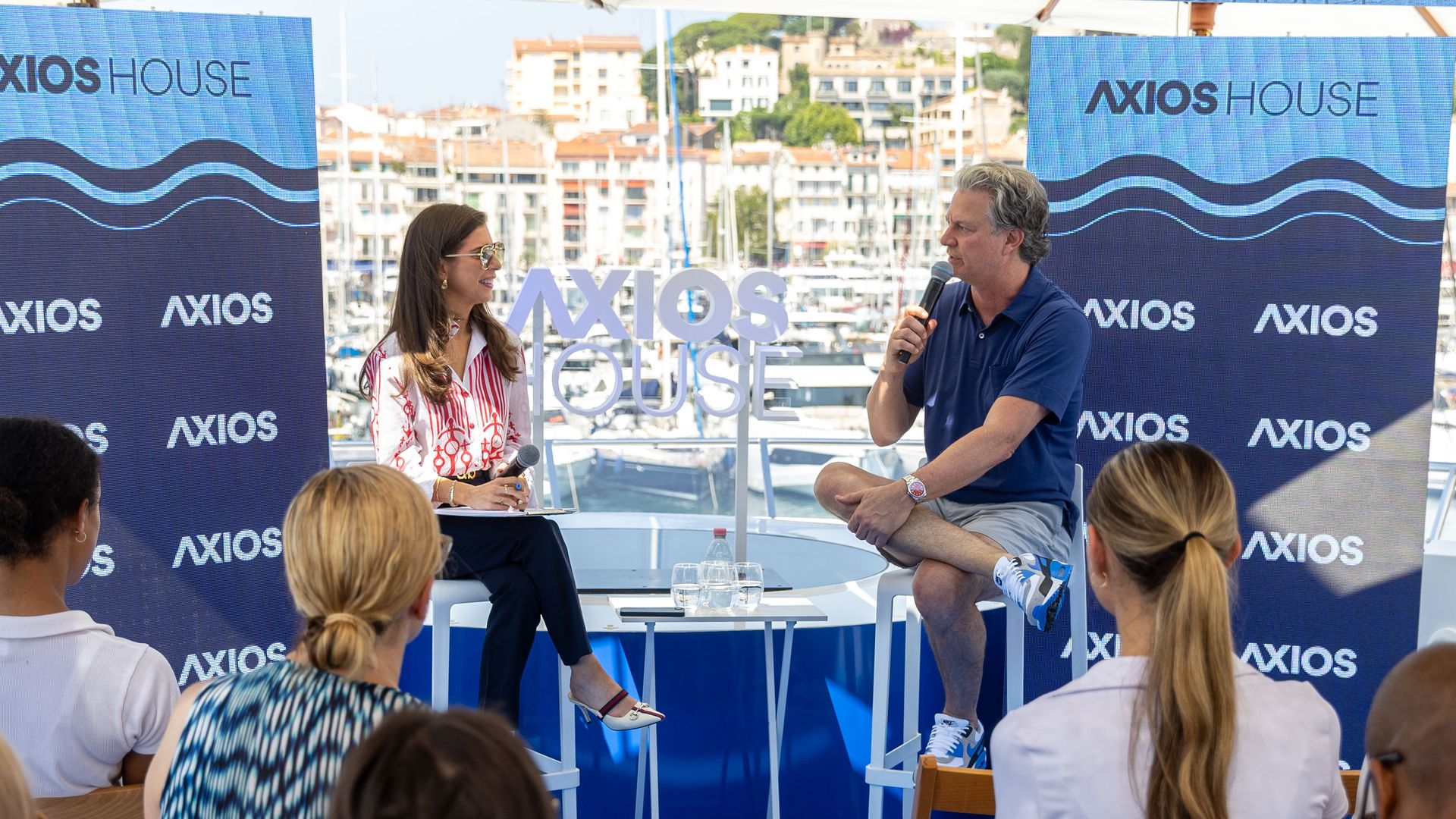
People Inc. CEO Neil Vogel accused Google of abusing its market power by using the same crawler for both search and AI, speaking today aboard the Axios House yacht at the Cannes Lions International Festival of Creativity.
🔍 Why it matters: Google's unique position as the dominant provider of traditional search traffic makes it tricky for some publishers to navigate their relationship with the tech giant in the AI era.
- "We can't actually block Google, because Google uses the same crawler for search as they do for AI, which is like an incredible abuse of market power," Vogel said.
- "We would love to do something productive with them, but we're probably heading towards more confrontation than productivity with those guys."
Zoom out: Absent regulatory intervention in the U.S., most publishers have had to decide whether to partner with AI companies, opt out of their platforms or sue them. But elsewhere, regulators are beginning to step in.
- Earlier this month, the U.K. Competition and Markets Authority said online publishers can choose not to appear in Google's AI overviews of search results, something Cloudflare co-founder and CEO Matthew Prince called a "win" in a separate interview with Axios shortly after Vogel.
- "Splitting the crawler up is the key to getting Google to play by the same rules as everyone else," he said.
- A local German court also ruled that Google is liable for false statements generated by AI overviews. Google previously said it plans to appeal the ruling.
🤖 The other side: Google said publishers can prevent their content from being used for training Gemini models through Google-Extended without affecting search.
- The company is also testing new features that let publishers opt out of appearing in or helping ground Google's AI search features.
By the numbers: Prince said last year it was "five times as hard to get traffic from Google to your site than it was just four years ago. That's gotten twice as bad today. So now it's 10 times as hard to get traffic."
- "That's the good news. Last year, we talked about OpenAI being 750 times harder than the Google of four years ago. Now it's 1,500 times harder. Last year we talked about Anthropic being 30,000 times harder. This year it's 70,000 times harder," he said.
- Cloudflare, which provides a number of tech services including cybersecurity and content delivery networks, has advocated for publishers to be fairly compensated for content.
- It partnered with several outlets on new tools to prevent robot crawlers from scraping their content.
The big picture: Publishers have already sued Google in recent years over its ad tech dominance. Now, it's facing the possibility of new legal claims over AI.
- Penske Media sued the company for its AI overviews, alleging the summaries illegally use its content and reduce its search traffic.
- Google has previously called both the ad-tech allegations and Penske case "meritless claims."
⚖️ Between the lines: In the U.S., publishers are hoping a few landmark lawsuits that are set to go to trial this year will help establish precedents around what is considered "fair use" by AI platforms.
- New York Times president and CEO Meredith Kopit Levien said yesterday that the Times is confident in its AI legal fights and believes the law is on its side.
- The company, which has spent $20 million on AI-related legal fees over two and a half years, became the first major media company to pursue claims against leading AI firms when it sued OpenAI and Microsoft in 2023.
- The Times has since sued Perplexity, but also brokered a licensing deal with Amazon.
What to watch: OpenAI also debuted at Cannes Lions this year, pitching marketers on ChatGPT's ad business and Codex as it preps for an IPO.
2. 📚 Book behemoth eyes expansion


OverDrive, parent company of digital reading app Libby, has named former ViacomCBS Digital CEO Marc DeBevoise as its new chief executive to power its next phase of growth.
Why it matters: OverDrive is already one of the largest content marketplaces in the world, but DeBevoise thinks the business has ample room to expand if it applies a consumer growth playbook to its enterprise business.
📖 How it works: OverDrive provides e-books and digital content to the vast majority of public libraries in North America and tens of thousands more abroad.
- Last year, the Cleveland-based firm powered 820 million checkouts to over 87,000 libraries and schools across 115 countries.
- The company is for-profit, but prioritizes providing free content to consumers as part of its mission to expand access to reading and learning worldwide. "A more literate public is a public benefit," DeBevoise says.
Zoom out: DeBevoise will be tasked with turning OverDrive's library-focused infrastructure into a much larger global consumer platform by growing the number of readers, library card holders and users.
- While the COVID-19 pandemic accelerated OverDrive's growth, DeBevoise sees much more potential.
- Less than half of Americans have library cards, he noted in an interview. In many markets, fewer than 20% of cardholders use Libby.
The big picture: The overall share of Americans who have read a book in the past year has remained roughly stagnant over the past decade, per Pew Research Center, but the way they're reading has changed, and OverDrive stands to benefit from that shift.
- The share of U.S. adults who say they have read a print book in the past 12 months has declined from 72% in 2011 to 64% in October 2025, but the share of digital and audiobook usage has increased from 17% to 31% and 11% to 26%, respectively.
Go deeper
3. 🤳 MrBeast goes direct
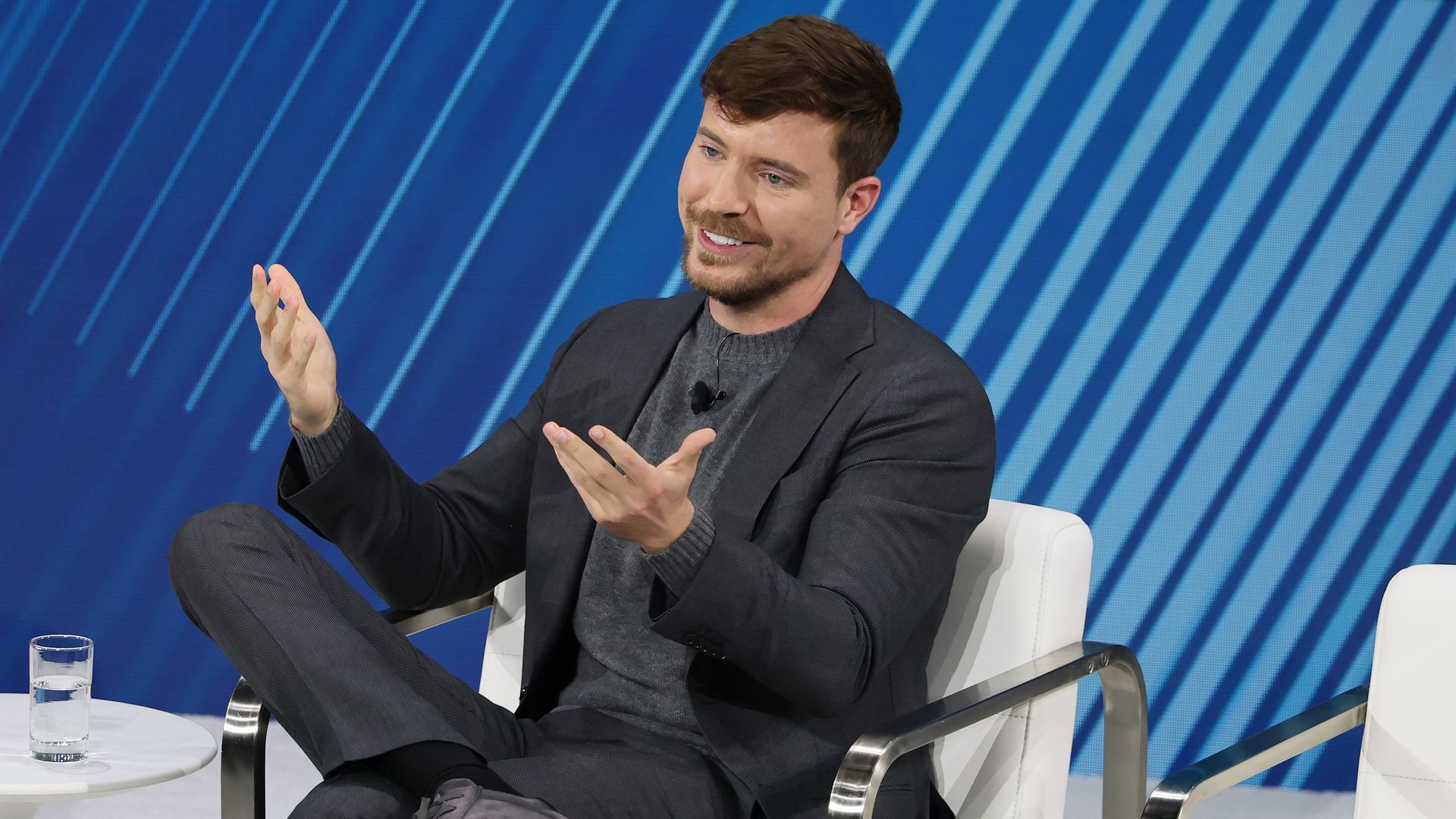
Beast Industries, the holding company for MrBeast's empire, is building a new consumer platform to connect fans directly to their favorite creators, Beast Industries CEO Jeff Housenbold told Axios yesterday.
Why it matters: No consumer app has had a major takeoff in the U.S. since TikTok. But with more than 500 million YouTube subscribers and hundreds of millions more across the internet, Beast Industries has a rare organic marketing opportunity.
📱 Zoom in: The new app will be available for free and also via a paid subscription, Housenbold confirmed.
- Unlike apps like Patreon that focus on helping creators monetize their audiences, this app will prioritize helping consumers form closer connections with their favorite creators and micro-communities.
Zoom out: The app is part of a broader push by Beast Industries to expand MrBeast's empire beyond social platforms to commerce, live events and now consumer tech.
4. 🕶️ Spiegel defends Specs rollout
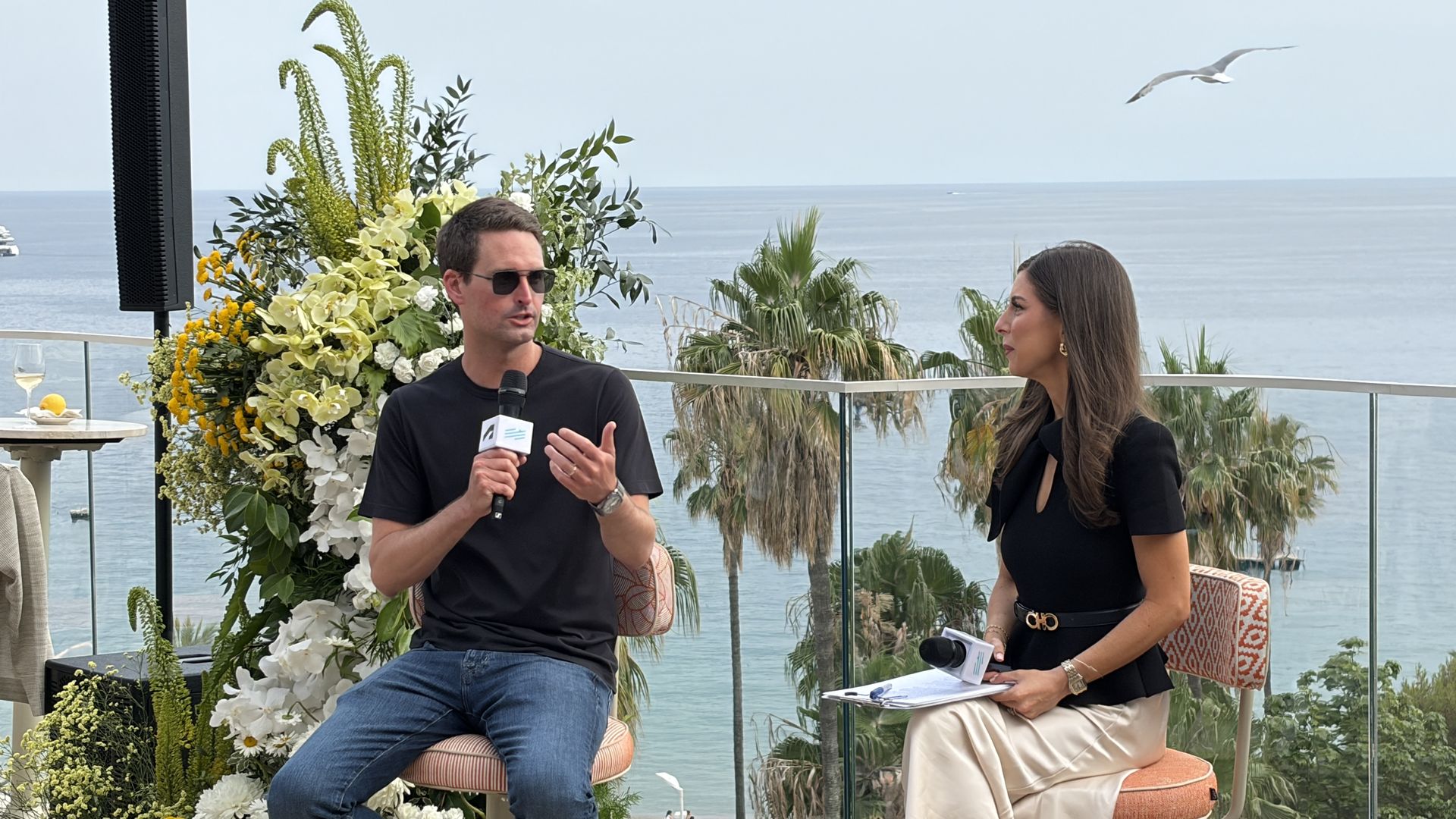
Snap CEO Evan Spiegel says the company plans to hold in-person consumer demos this fall after debuting Specs last week without a formal demo.
Why it matters: Spiegel has been working on an AR-driven glasses prototype for over 10 years, but Wall Street was unimpressed by the rollout.
- Snap's stock fell roughly 10% after the 36-year-old CEO and co-founder debuted Specs at the Augmented World Expo.
- "We've worked for a long time, about 12 years on Specs, and the goal, really, what we've been working on is trying to make computing more human, and that continues a lot of the work that we've been doing since we started Snapchat," he said.
State of play: Wall Street has been putting pressure on the firm to grow its ads business as it continues to invest in Specs.
- For now, Specs remains a wholly owned subsidiary of Snap and is funded by cash from the parent company's core business.
- Spiegel didn't rule out a future where the two are separate companies or raising capital to fund a huge acquisition or accelerating Specs' growth.
Zoom out: Spiegel says Specs is a bid on the future of social networking returning to real-world interaction.
- "What's really inspiring to me is this idea that the future of a social network is actually returning to in-person interaction, but empowered through computing, and that's the big shift from screens to being able to use see-through glasses," he said.
💸 The big picture: Specs enters a crowded field of wearable technology. Its pre-orders are priced at $2,195.
- Unlike competitors Meta and Google that have partnered with Ray-Ban and Warby Parker, respectively, Snap is building both the frames and the software.
- Spiegel explained the company prioritized the customer experience and "worked backwards from that to arrive at the Specs frame design."
🎉 What to watch: Snap is nearing the 1 billion user mark, with 956 million MAUs in the first quarter.
- Spiegel said he's "semi-seriously considering" a suggestion from a friend who is a part-owner of the Los Angeles Dodgers that the Santa Monica, California-based company throw a party at Dodger Stadium and invite Snapchatters.
5. 🏈 Disney's Super Bowl blitz
Disney's sweeping plans for next year's Super Bowl will flex the entertainment giant's massive platform across broadcast, streaming and experiences, Rita Ferro, president of global advertising at Disney, said yesterday.
Why it matters: Media companies are betting on live sports as they compete for subscribers in a maturing streaming market.
What she's saying: "Live has really been a cornerstone driving our growth strategy and our brand partnership strategy for so many years," Ferro said, adding that brands have been especially focused on that opportunity over the past year.
- "They want to take advantage of cultural conversation, really take it beyond the screen and activate it across their full platform and our full platform, and really leverage it to drive growth and connections with audiences," she said.
Catch up quick: Disney has the broadcast rights for Super Bowl LXI next year, which will be played at SoFi Stadium in Inglewood, California.
- Disney's other live events broadcast rights include the Grammys starting next year, the Oscars through 2028 and the CMAs through 2032. ESPN has college football playoff rights.
Zoom in: ESPN plans to set up a live studio on Santa Monica Pier that will serve as the network's hub for the week before the Super Bowl.
- For advertisers, Ferro noted that half of the Super Bowl's audience is women and that next year's game falls on both Valentine's Day and a long weekend, which she said is an opportunity to "show up differently and tell stories differently."
- "It's a blessing and a curse. There is way more demand than there is units available to sell," Ferro said.
The bottom line: Disney can tap into different audiences across its portfolio with Hulu and Disney+ as well as its international markets.
- "The reach and scale that we have, I think, is one of the reasons that the NFL is now in partnership with ESPN in a very different way," she said.
6. 🔮 1 fun thing: No LA28, SNL bets for Colin Jost
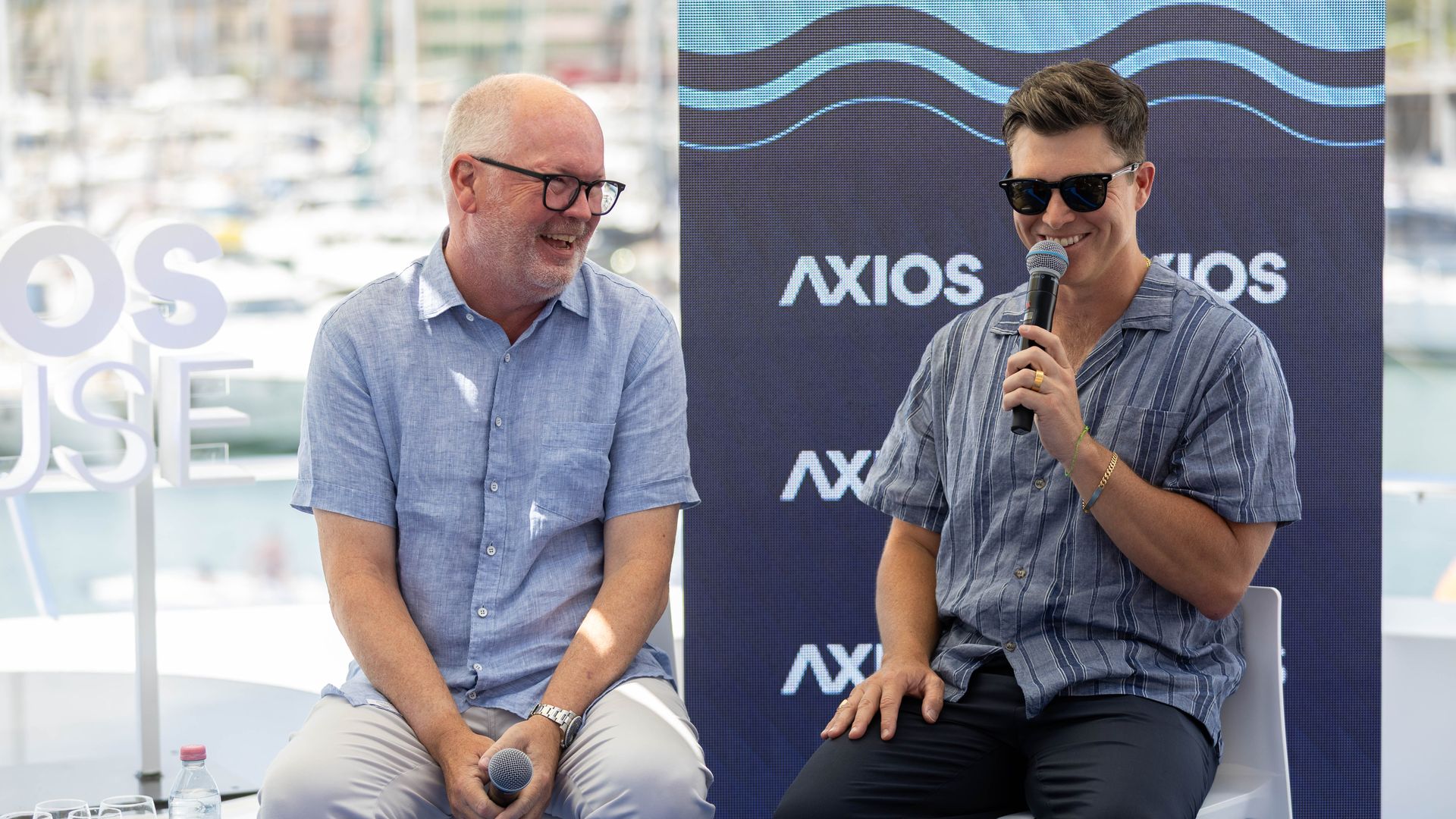
SNL star Colin Jost won't be making his fortune through Kalshi or Polymarket anytime soon, even though he knows unannounced guests for the live sketch comedy show and suspects he'll be sent to Oklahoma for the Los Angeles Summer Olympics in 2028.
🌴 What he's saying: Asked about LA28, Jost joked he's likely being sent to a noncentral location, given he was in Tahiti for the Paris Games, and at Lake Placid for the Milan-Cortina Games this year.
- "The next one's in LA, and already they were like, 'We hear there's one softball event that's in Oklahoma,' so I'm like, I know I'm gonna get sent to Oklahoma. I just know it, so I can't wait. So thank you in advance," he said.
- Asked about betting on that hunch, Jost said the SNL's writers room made similar jokes about betting on host-musical act pairings before Jack Black and Jack White were announced together.
- "Then immediately people started going to jail for it. We were like, 'Oh, I guess that wasn't worth winning $1,000 in a Polymarket bet, going to prison," he said.
Sign up for Axios Media Trends