Axios Markets

January 07, 2025


🌄 Tuesday morning. Just like Monday but with slightly more hope?
Today we're digging into labor, and what happens when a union wants something but its members aren't necessarily on board.
- Plus: Another company steps back from DEI, and Meta steps further toward Trump.
All in 1,160 words, a 4-minute read.
1 big thing: When unions and members don't align

President Biden blocked Japan's Nippon Steel from buying U.S. Steel last week, earning the approval of the United Steelworkers union, which desperately wanted the deal crushed.
- But steel workers themselves may be less than enthused.
Why it matters: It's not at all clear that the president's pro-union move will actually wind up benefiting rank-and-file members of U.S. Steel or other workers in the Pennsylvania region where the storied company is based.
Catch up quick: U.S. Steel has warned that without a deal it would be forced to close some operations in Pennsylvania, where it employs close to 4,000 people.
- Most threatened, as Axios' Dan Primack has reported, is believed to be Mon Valley Works, a steel processing plant with more than 3,000 workers. U.S. Steel also said it might relocate its Pittsburgh headquarters.
- President-elect Trump was opposed to the deal and has an evolving relationship with organized labor himself, raising questions around if or how he might step in to help the workers. (He's also changed his mind on deals with national security complications before, like TikTok.)
Zoom in: While the union's top brass vehemently fought Nippon, it's not totally clear rank-and-file members lined up behind them.
- Many said they supported the deal, seeing it as a "lifeline" for a dying industry, as the Washington Post recently reported.
- Hundreds of workers staged a protest last month demanding the government let the deal go through.
Between the lines: Ostensibly, the deal was blocked due to national security concerns.
- Almost no observers or experts buy that argument, and some of Biden's closest advisers reportedly wanted the deal to happen.
- "President Biden claiming Japan's investment in an American steel company is a threat to national security is a pathetic and craven cave to special interests that will make America less prosperous and safe," Jason Furman, who chaired the Council of Economic Advisers in the Obama administration, posted on X last week. "I'm sorry to see him betraying our allies while abusing the law."
Japan is typically seen as a very low-risk investor country, says Alexis Early, a partner at Jenner & Block who specializes in CFIUS cases.
- The decision in this case has left us "scratching our heads," she says, calling it a "brouhaha car-wreck" that's spooking low-risk foreign investors. The risk is some may decide to pull back. "That could hurt workers beyond the steel industry."
Reality check: There are many unknowns ahead for U.S. Steel, amid lawsuits and the possibility that another buyer could jump in.
- The company's been steadily shedding workers for years, from nearly 50,000 in 2008 to around 23,000 last year. At the height of its power, in the 20th century, U.S. Steel employed hundreds of thousands of workers.
What to watch: If layoffs happen, then clearly this wasn't good for the rank and file, says Lee Adler, a lecturer at Cornell University's School of Industrial and Labor Relations.
- Or the Democratic Party, since Biden and union leadership will catch the blame, he says. "This is a cauldron."
2. McDonald's is ending some DEI programs

McDonald's is rolling back some of its diversity, equity and inclusion programs.
Why it matters: Backlash against corporate DEI efforts appears to be intensifying ahead of Trump's inauguration.
- The president-elect has been an outspoken opponent of corporate diversity efforts.
Where it stands: In a letter to franchise owners, suppliers and current employees, McDonald's proclaimed its commitment to diversity and inclusion but said it would modify some practices after conducting a "civil rights audit."
- The fast food company cited the Supreme Court ruling in 2023 that ended affirmative action in universities, and the shifting legal landscape.
Zoom in: The company said it would end "aspirational representation goals." That could include specific hiring targets that have come up for criticism in the wake of the Supreme Court decision.
- It will pause "external surveys," which could include participation in the Human Rights Campaign's Corporate Equality Index.
Between the lines: The announcement came just days after anti-DEI activist Robby Starbuck first reached out to the fast food giant, he said in a post on X.
- Starbuck told them he'd do a story on their "woke policies," he wrote.
- "Things move faster now because so many companies have hired consultants to pre-plan how to respond to me," Starbuck told Axios in a text, taking credit for the changes.
- His campaigns have led to similar retreats at Walmart, Tractor Supply Company, and John Deere.
Context: This update has been "considered over recent months," McDonald's told Axios in an email from its press account.
- "Our plan has been to communicate our updated approach at the start of the year."
Flashback: McDonald's has repeatedly hailed DEI as essential in the past.
- "We believe everyone deserves a safe, inclusive and accepting workplace where they can thrive," McDonald's global chief diversity officer Suheily Natal Davis said last year on LinkedIn.
3. Meta takes another step Trumpwards
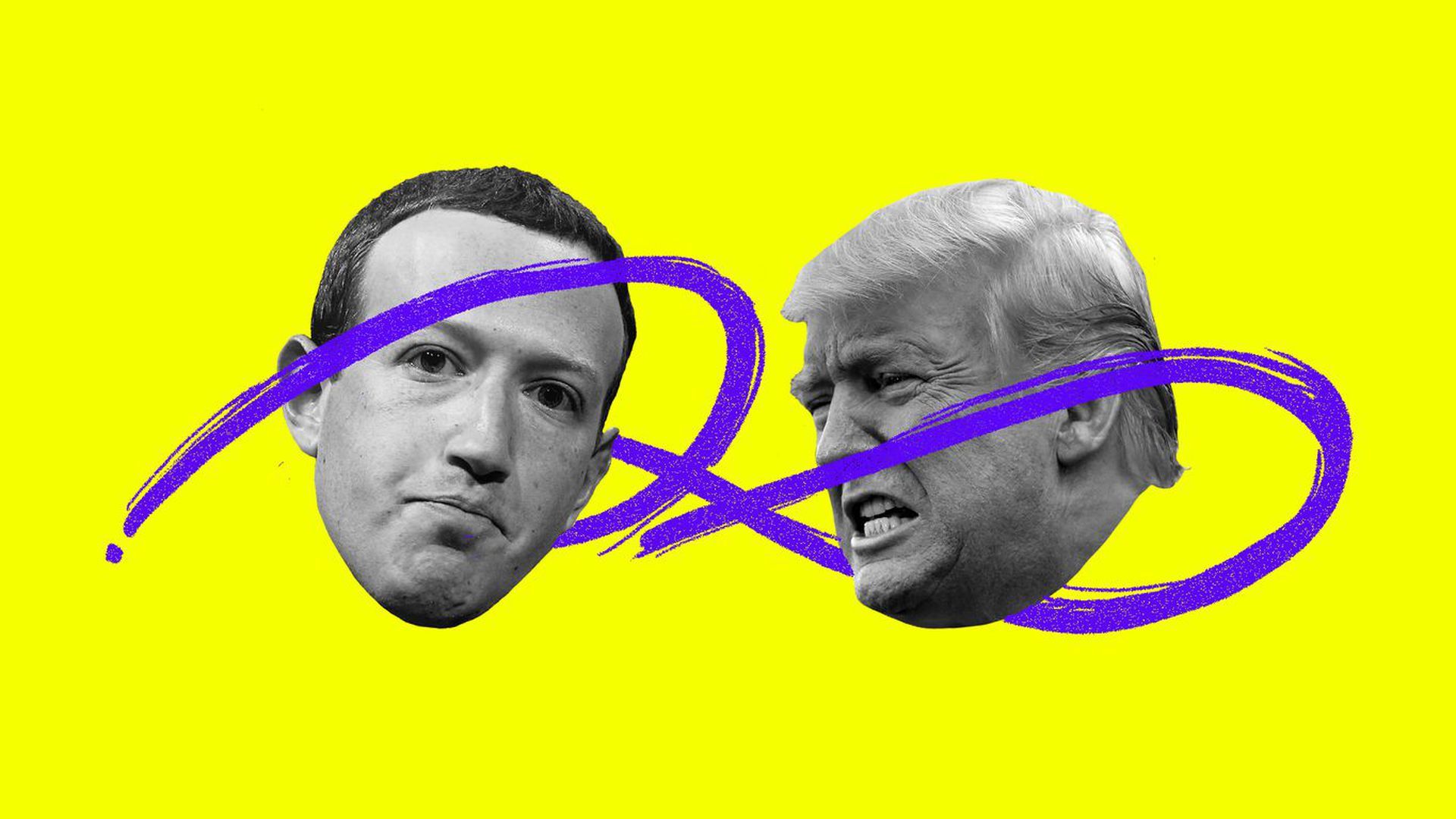
Mark Zuckerberg moved further in the direction of MAGA yesterday, when he appointed three white men, including UFC chief executive and Trump friend Dana White, to the Meta board of directors.
Why it matters: We're a long way from 2022, when Peter Thiel resigned from the same board in order to be able to support Trump-aligned candidates.
By the numbers: After Thiel's resignation, the Meta board was 44% female — five men and four women. Today, it's 23% female — 10 men and three women.
- In terms of corporate control, of course, only one vote matters. Thanks to his Class B shares, Zuckerberg will always have the final say.
- The company did not return a request for comment on the changes.
Between the lines: Seven of the 10 men — Marc Andreessen, John Arnold, John Elkann, Drew Houston, Hock Tan, Tony Xu, and Zuckerberg himself — are billionaires.
- White might not have reached the $1 billion mark quite yet, but he's well on his way.
Driving the news: The reinvention of Facebook can be seen in the departure of liberal Democrat Nick Clegg as policy head, and his replacement by prominent Republican Joel Kaplan.
- It can also be seen in the $1 million Meta donated to a Trump inauguration fund, a donation made by many other tech companies.
The bottom line: As Axios has reported, the fate of Big Tech over the next four years depends on who has Trump's ear at critical junctures.
- Zuckerberg seems to be doing everything he can to ensure Meta is in exactly that position.
Thanks to Ben Berkowitz for editing and Anjelica Tan for copy editing. See you back here tomorrow!
Sign up for Axios Markets