Axios Markets

August 14, 2023

1 big thing: The new debt juggernaut


The private credit industry was already growing like gangbusters — then came 2023, Axios' Kate Marino writes.
What happened: The banking crisis in March along with the pending regulatory changes to bank capital requirements are adding even more rocket fuel to an asset class that's more than tripled in size since 2015.
Why it matters: The growth of the private credit industry is changing the lending landscape in the U.S., disintermediating banks from the process, and even taking the rough edge off the Fed's monetary tightening efforts.
- But a private credit market of this size is untested in a downturn, and regulators have little visibility into the risks it could pose to the markets.
The heavy hitters of the industry aren't hiding their excitement: On his firm's Q2 earnings call, Apollo Management's Marc Rowan hailed this era as a "great time" for private credit; Jon Gray of Blackstone called it a "golden moment."
- Meanwhile: Jamie Dimon, scion of legacy banking, seems less pleased. He accused these upstarts of "dancing in the streets" in response to the more onerous capital requirements that banks are set to face.
- Those rules are "great news for hedge funds, private equity, private credit, Apollo, Blackstone," the JPMorgan CEO said on the bank's Q2 earnings call.
Catch up fast: Private credit funds, sometimes known as "direct lenders," are arms of asset managers that lend directly to companies, often without using investment banks as a go-between. They hold the debt and collect interest, rather than sell it off in pieces to other investors like a bank would.
- Even before the pandemic, private credit funds were muscling in on an increasing share of the corporate lending deals typically arranged by investment banks — and spreading into other areas like specialized asset-backed lending.
- Then, last year, guess who stepped in to keep the leveraged buyout machine running when the banks froze up? Yup, private credit.
State of play: Now, with the balance sheets of small and midsize banks in disarray, private credit funds are popping up anywhere a bank needs to monetize some assets. They'll take the assets off your hands — at a discount of course.
- They've purchased tens of billions of dollars worth of auto loans and personal loans, Bloomberg reported. They've scooped up portfolios of mortgages, commercial real estate loans, student loans, and even receivables on timeshares.
What's next: Banking supervisors at the Fed are pushing forward with new rules requiring banks to hold more capital on their balance sheets — a rule change that's designed to constrain their markets activity, in the name of systemic safety.
- That may translate into more opportunities for private credit funds, Danielle Poli, managing director of Oaktree's global credit strategy, tells Axios.
- After all, "greater capital requirements for banks spells less deal activity by banks," says Gary Creem, partner at Proskauer and co-head of the firm's private credit group.
2. Blunting the FOMC's impact
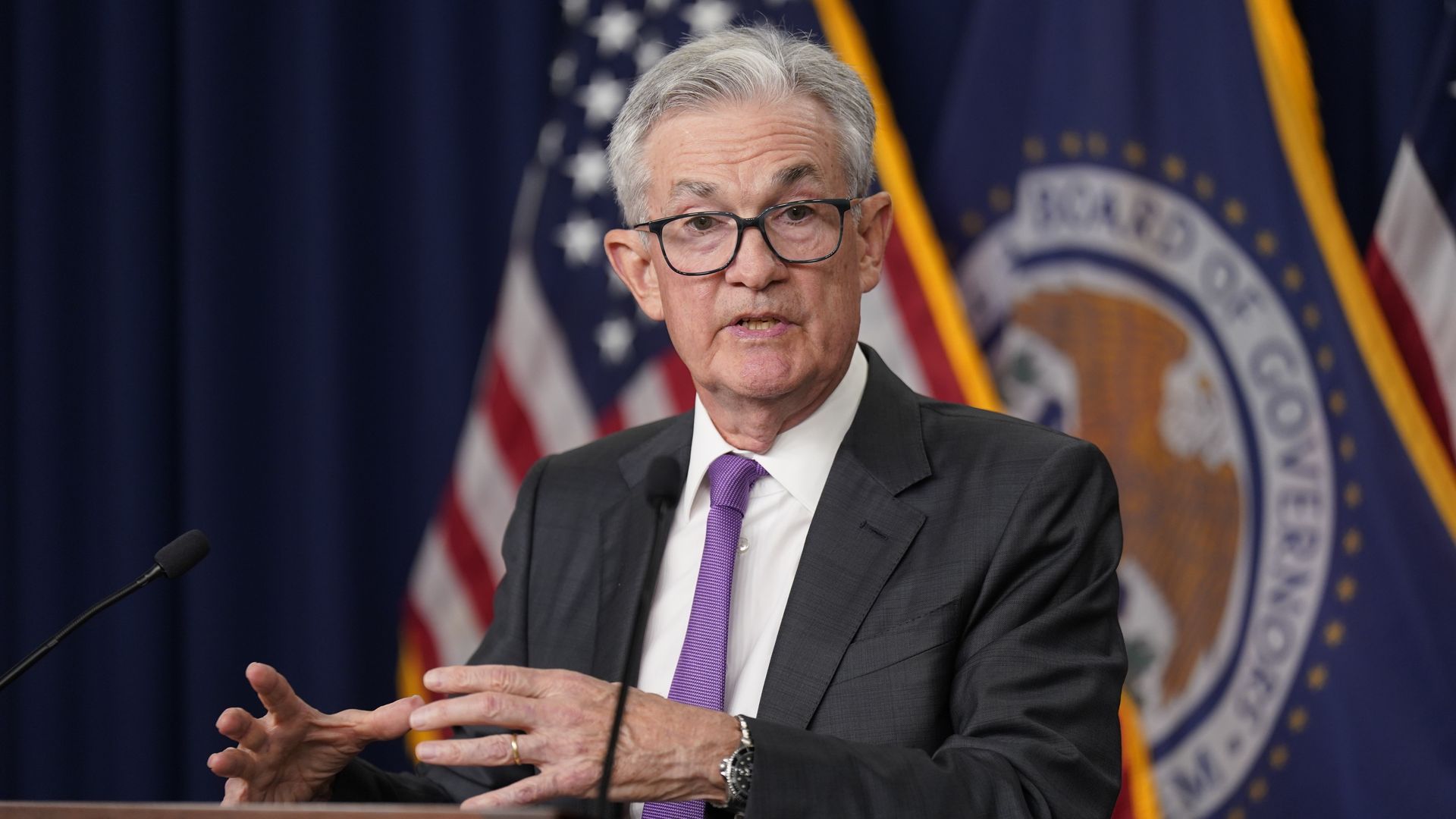
Fed chair Jerome Powell on July 26 after the announcement to raise interest rates to a 22-year high. Photo: Al Drago/Getty Images
3. Fundraising pick-up


Fundraising by private credit funds re-accelerated in Q2.
- Globally, the private credit industry had about $1.5 trillion in assets at the end of 2022, according to Preqin.
4. Risk assessment

Illustration: Aïda Amer/Axios
5. Catch up quick
Axios Markets

Stay on top of the latest market trends and economic insights