Axios Markets

January 20, 2026

🎢 The stock market may be in for a ride after President Trump threatened additional levies on European nations that don't support a U.S. purchase of Greenland. More on that below.
- Plus: Some investors are leaning into buy signals from Washington.
- And: A risk-averse way to play the AI trade whether it wins or loses.
Let's get into it. All in 1,080 words in 4 minutes.
1 big thing: Greenland tariff threats stir markets

U.S. stock futures are under pressure this morning with European stocks down for a second day after President Trump threatened tariffs on eight European nations for opposing his efforts to control Greenland.
Why it matters: Tariffs are not an issue investors can put behind them.
State of play: Investors are showing concerns about a brewing trade war. The dollar is lower, while gold, which typically benefits from geopolitical tensions, is up.
- Germany said the Trump administration had reached a red line with its tariff threats, which could upend the levy agreements already reached between the U.S. and the European Union and the U.K. last year.
What they're saying: "Watch for any dumping of dollar-denominated assets," Joe Brusuelas, chief economist at RSM US, tells Axios.
- European nations own $8 trillion of U.S. bonds and equities.
- They could move to adjust that if trade tensions continue to escalate.
- U.S. Treasury yields are up this morning after a selloff in Japanese bonds.
Zoom in: The E.U. could put retaliatory tariffs on more than $100 billion of U.S. goods, which could exacerbate inflation for Americans.
- If inflation accelerates, the Federal Reserve could keep interest rates on hold, or even potentially raise rates.
- That would be in opposition to the Trump administration seeking lower rates amid an affordability crisis.
Zoom out: The overall effective tariff rate could continue to come down "in a plain sacrifice to the inflation and mid-term election gods," Henrietta Treyz, a co-founder at Veda Partners, writes in a note to clients.
Reality check: Goldman Sachs economists say the 10% levy would have "very small" inflation effects.
- The president signaled the tariffs could increase to 25% by June and would continue to increase until a deal is reached for the purchase of Greenland.
What to watch: The Supreme Court is set to rule on the legality of Trump using the International Emergency Economic Powers Act to declare tariffs such as this, possibly as soon as this week.
2. Wall Street bets on Washington policy plays
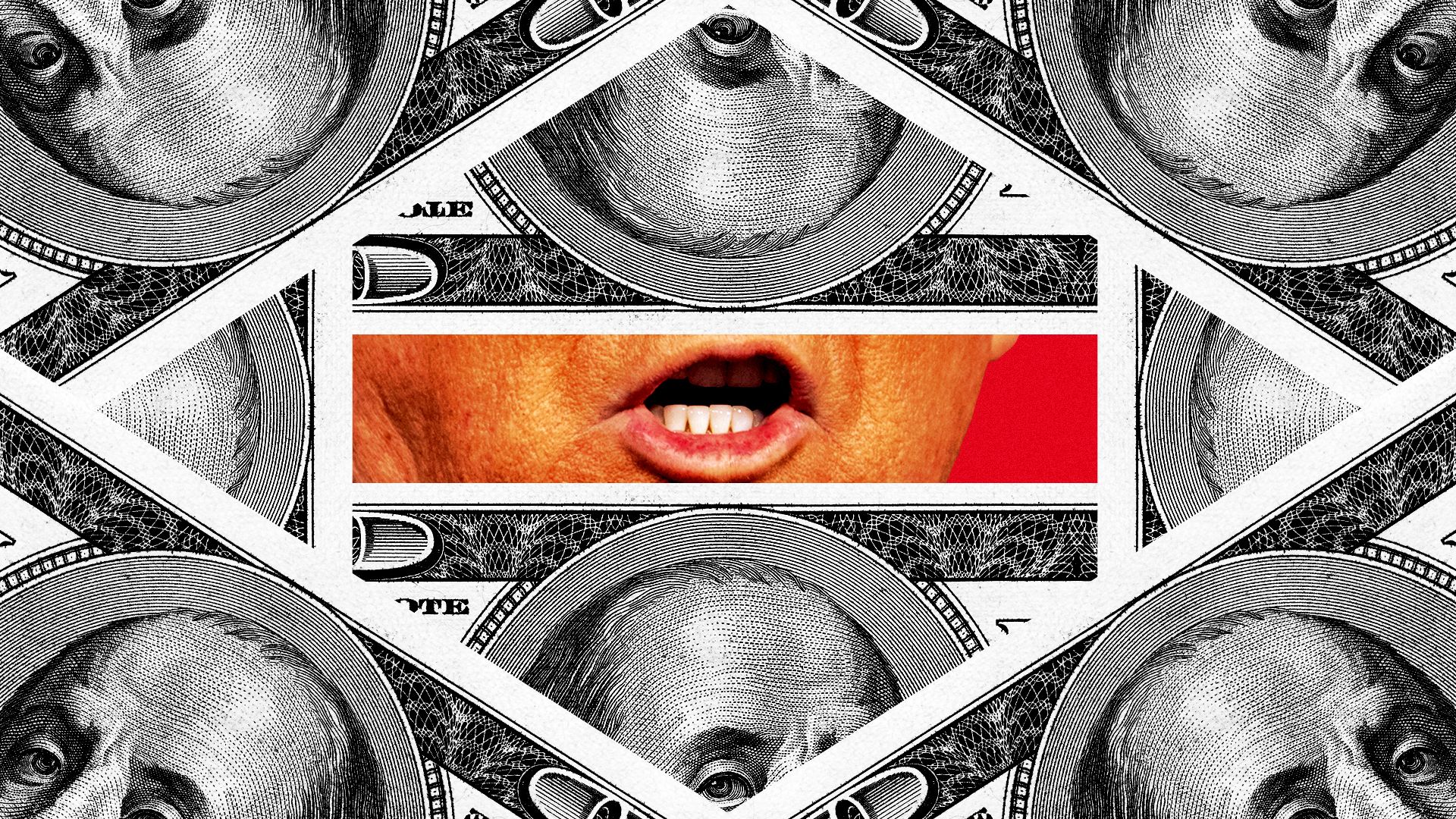
Investors usually expect companies to focus solely on increasing shareholder value. Now, companies are increasingly seeking an additional goal: pleasing the White House.
Why it matters: Policies from Washington are Wall Street's new buy signal.
State of play: The Trump administration is funding its ambitions through deals with corporations rather than through the legislative process.
- The U.S. and Taiwan agreed to cut tariffs and secure about $250 billion of Taiwanese investment, led by TSMC expanding chip fabs in Arizona, in exchange for tariff relief.
- The administration now holds equity stakes in companies like Intel, Trilogy Metals and a "golden share" in U.S. Steel as part of its industrial policy.
- The administration completed its first sale of Venezuelan oil worth about $500 million and will continue to control these sales "indefinitely."
Zoom out: In its 2026 outlook, JPMorgan encouraged clients to invest in "strategic industries" that Washington feels are critical to the future of the country.
- Industrials, materials, energy and technology are clear priorities for the administration amid a push for deglobalization, Stephen Parker, global strategist at JPMorgan, tells Axios.
- Those sectors have already become market winners. Returns for the basket of stocks JPMorgan looks at in "strategic industries" have doubled over the last six or nine months, with "more room to run," Parker says.
- The earnings boost is driven not just by fiscal spending, but also by corporate spending, as companies work alongside the White House.
- JPMorgan is investing $1.5 trillion in these critical industries.
Threat level: "This is stimulus without a bond auction — and someone still pays," Mark Malek, chief investment officer at Seibert Financial, writes in a note to clients.
- Trump is getting companies to pay for his agenda rather than tapping the Treasury and increasing the deficit, a tough pill to swallow for the Milton Friedman free-market capitalists of the stock market.
- Regardless, investors broadly seem to have accepted the command capitalism framework from Trump and aim to profit from it.
Follow the money: The risk that comes with this trade is any misalignment between what's good for companies and what's good for the White House.
- JPMorgan acknowledges this is the big risk here but doesn't view it as a broad issue that will stop the momentum driving these sectors higher.
The bottom line: Wall Street is taking trading cues from Washington.
3. How to make money whether AI wins or loses
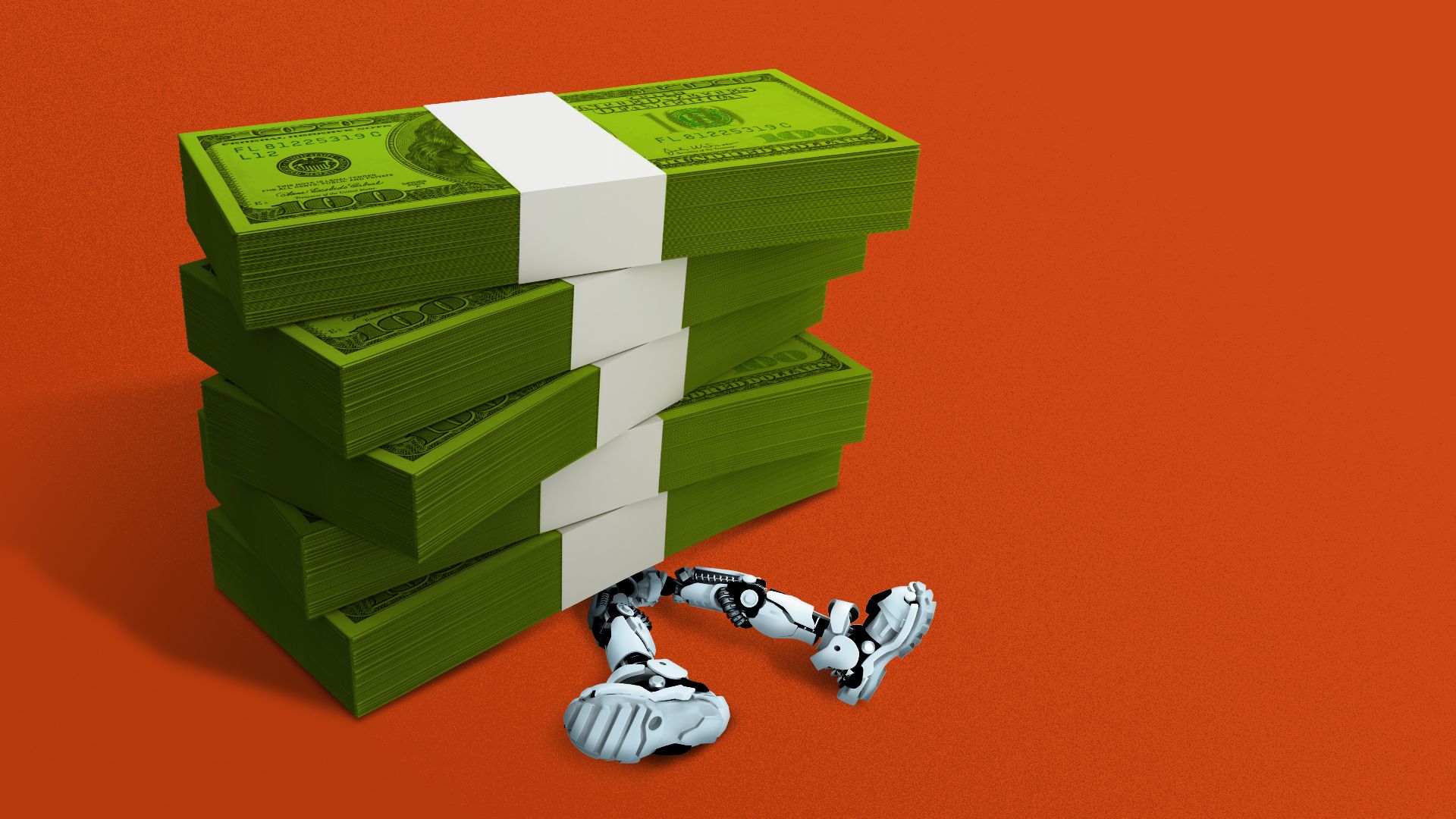
Banks sent notes to clients last week on how to prepare their portfolios for an eventual AI bubble, while still making sure they benefit from the current rally in Big Tech stocks.
Why it matters: Wall Street strategists may still believe in the AI trade, but they are also aware of the risks that come from a boom-and-bust cycle.
What they're saying: It is "definitely a bubble," Jennifer Bender, global chief investment strategist at State Street, tells Axios.
- Bank of America is telling clients how to hedge the AI bubble by investing in corners of the market that benefit from the buildout regardless of how this movie ends.
Zoom in: Bank of America points investors toward "transition" sectors that AI depends on but that have their own demand drivers outside of the technology.
- Infrastructure and grids. Utilities, power networks and efficiency upgrades tied to electrification and reliability, not just data centers.
- Defense and security. Companies that benefit from rising federal government and national security spending, not the AI hype.
- Critical metals. Copper, aluminum, lithium, nickel and rare earths necessary for AI hardware and the broader energy transition.
Threat level: Bank of America advises clients to avoid doubling down on the AI trade with investments in stocks highly correlated with Big Tech stocks.
- The preferred plays are transition names whose stocks move less with the AI trade and more with policy, regulation and long-cycle capital spending.
- The key filter here is "low AI beta."
The bottom line: Wall Street is telling clients to hedge AI bubble risks by owning assets that will rally no matter what.
Got tips? Email me at [email protected]. I would love to hear from you about anything that may be of interest for our investor audience.
Thanks to Jeffrey Cane for editing and to Anjelica Tan for copy editing. See you tomorrow!
Sign up for Axios Markets