Trump's command capitalism playbook signals a new economic era

Add Axios as your preferred source to
see more of our stories on Google.
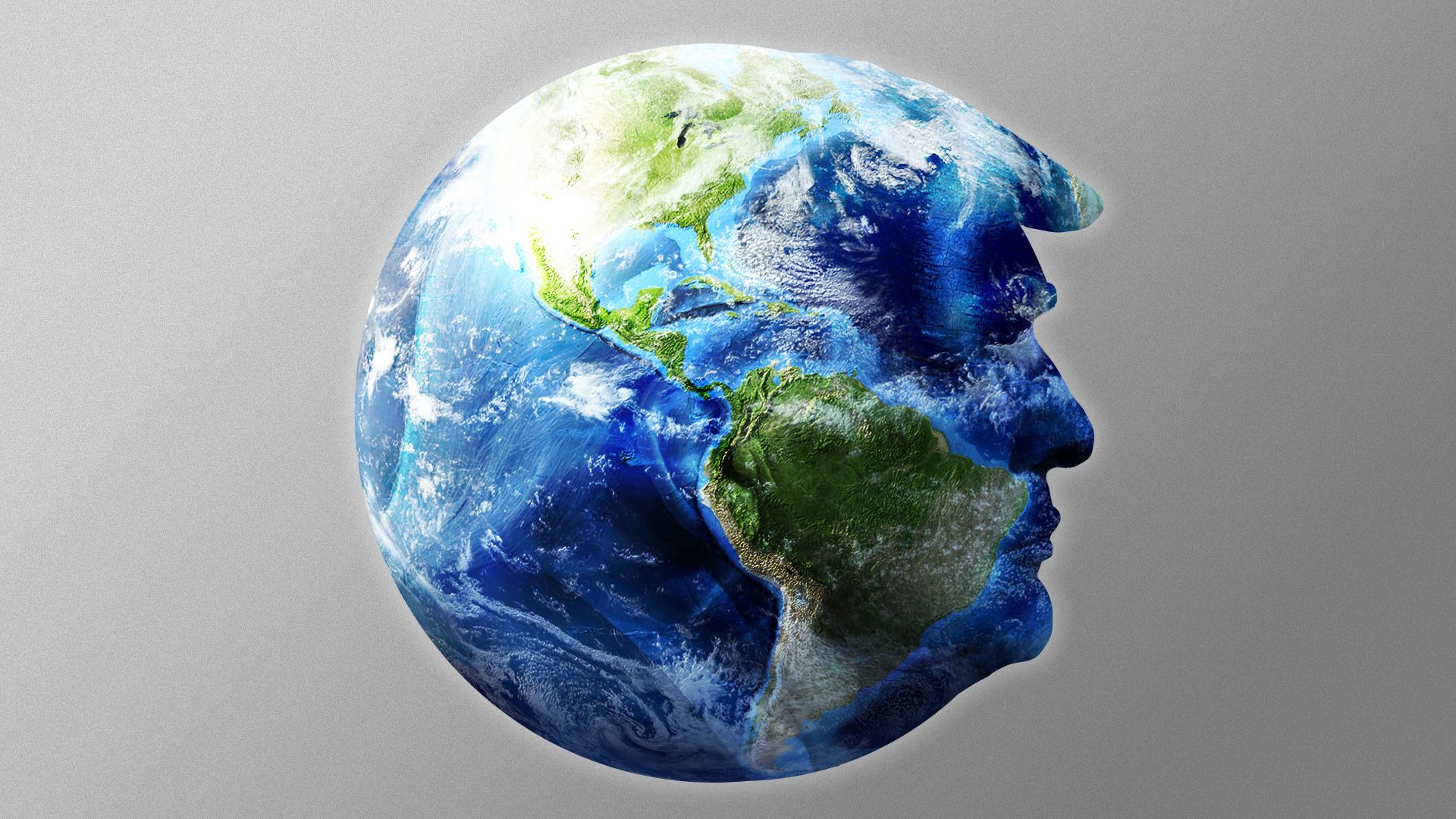
Illustration: Sarah Grillo/Axios
President Trump is rushing toward a new style of economy, with deals that some worry don't look much like the red-blooded capitalism that defines America.
Why it matters: In the Trump 2.0 era, the White House routinely makes extraordinary — and in at least one case, unprecedented — interventions in the domestic and global economy, as well as in corporate America.
- If materialized, the commitments might supercharge economic investment.
- Longer-term consequences of such a pivot, however, are harder to predict.
Driving the news: Semiconductor giants Nvidia and AMD will be able to sell key chips in China, but only after the companies agreed to hand 15% of some of those sales over to the U.S. government.
- The administration said it would ban exports of Nvidia H20 chip earlier this year, citing national security concerns.
- The Financial Times, which first reported news of the deal, said the firms would be the first ever to commit a chunk of revenue in exchange for export permissions.
What they're saying: "What we are seeing is in effect the monetization of U.S. trade policy in which U.S. companies must pay the U.S. government for permission to export. If that's the case, we've entered into a new and dangerous world," former trade negotiator Stephen Olson told Bloomberg.
The big picture: It's the latest deal that demonstrates a firm Trump-shaped imprint on corporate America and the world economy.
- Intel CEO Lip-Bu Tan will be at the White House on Monday, a bid to smooth over tensions with Trump, who said last week the executive "must resign, immediately."
- The more than $1 trillion investment collectively committed by Europe, Japan and others came as Trump threatened to escalate global trade wars. In the case of Japan, the funds will be distributed "at President Trump's direction," according to a White House fact sheet.
- Last week, Trump said Apple would be exempt from future chip tariffs because of the company's plans to invest $100 billion in the U.S. over the next five years. (For what it's worth, the upbeat meeting with CEO Tim Cook was cheered by Wall Street — the stock had its best week in five years.)
- The administration retains a "golden share" in the combined Nippon Steel-U.S. Steel entity, giving the government a say in key corporate decisions.
The intrigue: Veteran Wall Street investor Peter Boockvar opened his market memo to clients Monday morning saying his "political head [was] spinning again" after learning about the deal.
- He added that he prays "for the sake of American free market capitalism and my support and appreciation of low taxes that it stops here."
Reality check: To be sure, a tilt in favor of government power and away from free-market orthodoxy has been underway for years.
- But Trump's moves are the splashiest yet — and unlike years past, receive little public pushback from global leaders and CEOs.
The bottom line: Brace yourself for a new economic era, one in which the White House wields even bigger influence over the global economy and private industry.
