Axios Markets

February 19, 2025


🐪 Hump day! Today we consider the federal government, and how DOGE has changed the way workers work, potentially forever.
- Plus: Speaking of Elon Musk, he may be tariff target No. 1.
All in 1,290 words, a 5-minute read.
1 big thing: DOGE changes federal work forever

DOGE-led mass firings of federal employees are tearing at the promise of job security that's come with government work for more than a century.
Why it matters: Millions of federal workers are now feeling the same kind of job anxiety more familiar to those in corporate America, including the tech sector, where Elon Musk's firing playbook is far more common.
What they're saying: "This is not the same government it was a month ago," a longtime federal employee told Axios, requesting anonymity because they've accepted the administration's "deferred resignation" offer and don't want to jeopardize it.
- "The mentality that federal workers have — that their jobs are protected — none of that exists anymore," they said.
Yes, but: The White House said it's within its rights to fire probationary workers, who don't have the same kinds of protections as longer-term employees.
- "The probationary period is a continuation of the job application process, not an entitlement for permanent employment," per policy guidelines shared by an administration official.
Not all workers who've been fired were probationary, including those at USAID and inspectors general.
Zoom out: To understand why civil service jobs differ from private sector jobs, you need to go back to the 19th century, when the U.S. government was staffed by a "spoils system" in which people were hired based on connections or even because they paid for the job.
- After President Garfield was assassinated in 1881 by a man who was upset he didn't get a government gig, Congress enacted a civil service law called the Pendleton Act, to ensure folks were hired based on merit and skill.
- Today, most federal jobs are handled in this system. Only a few thousand positions are held by political appointees.
How it works: Government workers have a lot more job protections than those in the private sector, including more union protections.
- 30% of public sector federal government employees are represented by unions, compared to 7% in the private sector, according to federal data.
- All of this "gives people a lot of security to work hard, do their jobs and not worry about playing personality politics," said David Super, a professor at Georgetown Law, whose research focuses on administrative law.
For the record: "President Trump returned to Washington with a mandate from the American people to bring about unprecedented change in our federal government to uproot waste, fraud, and abuse," White House principal deputy press secretary Harrison Fields said in a statement.
- "This isn't easy to do in a broken system entrenched in bureaucracy and bloat, but it's a task long overdue."
The bottom line: Until recently, taking a job with the federal government meant accepting lower pay in order to reap the rewards of job security.
- Now the rewards haven't changed, but the risks are skyrocketing.
Are you a federal employee with a tip? You can reach Emily Peck confidentially on Signal @emilyrpeck.71.
2. How the world may retaliate against Elon Musk
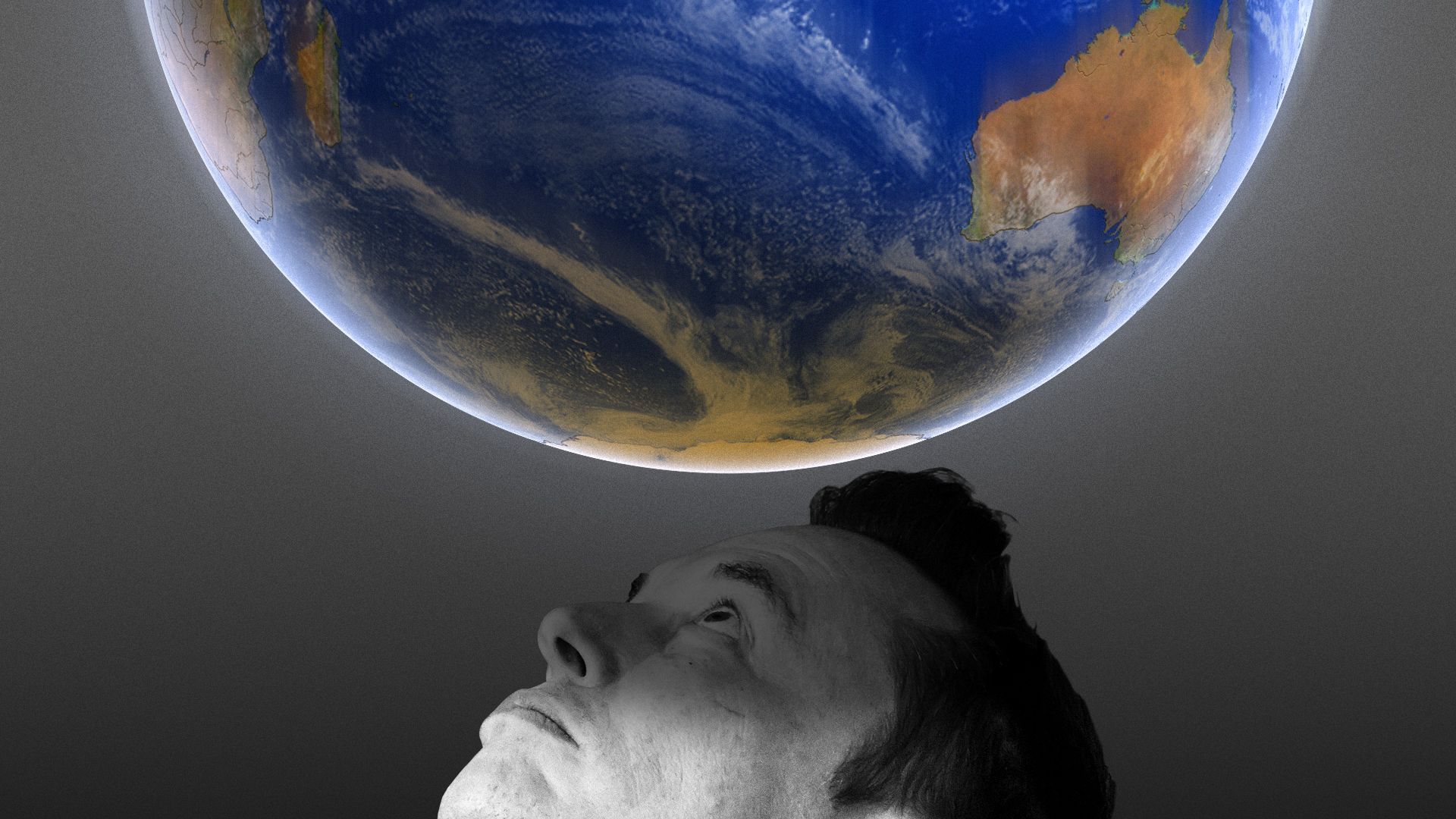
As the world seeks ways to retaliate against U.S. tariffs, so-called "first buddy" Elon Musk appears to be high on the list of targets.
Why it matters: Targeted retaliation is designed to give supporters of Donald Trump an incentive to try to persuade him to deescalate any trade war.
- No Trump supporter is closer to the president than Musk.
Driving the news: China is slow-walking approval of Tesla's autonomous driving technology, the FT reported on Monday, with authorities seeking to use that approval "as a bargaining chip in trade negotiations with Trump."
- The White House, in response to state lawsuits, has said Musk has "no actual or formal authority" to make decisions himself.
The big picture: A key aspect of negotiating with Trump is being able to influence him directly.
- It helps explain why a Brookings Institution analysis found that Chinese retaliatory tariffs will affect more than twice as many workers in counties that voted for Trump in 2024 as workers in counties that voted for Kamala Harris.
- Similarly, when Trump announced 25% tariffs on all Canadian imports, the premier of British Columbia, David Eby, banned alcohol from red states in government-run BC Liquor Stores.
How it works: Canadian politicians like Eby have offered a playbook of sorts.
- Doug Ford, the premier of Ontario, said he's "ripping up the province's contract with Starlink," a unit of Musk-owned SpaceX, explaining that "Ontario won't do business with people hellbent on destroying our economy."
- New Democratic Party leader Jagmeet Singh and Liberal Party leadership candidate Chrystia Freeland have called for a 100% tariff on Tesla imports.
Where it stands: Musk's businesses have substantial international exposure. The U.S. accounts for less than half of Tesla's total sales, which means foreign governments in general, and China in particular, have a significant amount of control over how many cars he can sell.
- SpaceX, too, has many foreign clients. Its rockets have launched satellites for countries like Australia, India, Turkey, Spain and South Korea, while Starlink's fastest growth is seen in countries like Nigeria and Kenya.
- X, Musk's social network, was found in breach of Europe's Digital Services Act and faces multiple other complaints. Possible remedies, all of which will be handed down when U.S. relations with Europe are plumbing historic lows, range from massive fines to an outright ban.
- In Tesla's most recent list of risk factors in public filings, there's nothing about Musk's closeness to Trump, but there is a note that Musk's work at DOGE could end up meaning he spends less time running Tesla.
The bottom line: Musk's fortunes have until now seen a boost from his close association with Trump, although that already seems to be waning.
- If the rest of the world starts to think of his companies as being a proxy for Trump, and therefore worth attacking, the value of his Trumpiness might even turn negative.
- "Elon Musk's visionary leadership has been central to Tesla's rise," Saxo analyst Jacob Falkencrone wrote in a note this month, "but in 2025, his political and personal controversies are becoming a major investor concern."
3. It takes a riddle to win the meme stock game

Gamestop shares jumped last week on a report the meme stock (and video game retailer) was considering investing in bitcoin. But most retail traders already suspected that, thanks to a picture posted six days earlier on X.
Why it matters: They say a picture is worth 1,000 words. These days, they can also be worth a billion in market cap.
State of play: Carefully curated pictures, often cryptic but highly discernible with the right knowledge, are becoming an essential part of the meme stock game.
- That was the case when Gamestop CEO Ryan Cohen posted a picture of himself standing next to a guy with a gray beard.
Zoom in: People in the know identified the other guy as Michael Saylor, chairman of the recently rebranded Strategy.
- That's relevant because Strategy's strategy is to buy as much bitcoin as it possibly can, and then buy more.
- So was Cohen saying, possibly, that GameStop is going to turn itself into a Strategy-like bitcoin play?
The impact: GameStop shares spiked 10% at the open last Friday after CNBC reported that it was weighing the crypto strategy.
- But those investors who jumped in the weekend before, after Cohen's picture, post saw gains of more than 17% at the post-spike top.
The big picture: This isn't the first time a riddle-like picture has served as a market moving headline on GameStop.
- Back in May, Keith Gill, the trader GameStop investors know better as Roaring Kitty, posted a picture of a person leaning forward in a chair, appearing to hold a video game controller. (He was on a three-year social media hiatus until then.)
- GameStop's stock exploded, adding billions in market value in a day.
The bottom line: If you want to win in the meme stock game, it helps to be good at riddles.
Thanks to Ben Berkowitz for editing and Anjelica Tan for copy editing. See you tomorrow!
Sign up for Axios Markets