
Axios Markets

October 09, 2026

🎉 Happy Friday! This morning, oil prices have edged back from their highs after President Trump said there wouldn't be attacks on Iran until after the midterm elections.
- And U.S. stock futures are pointing to a positive open even as the AI trade wobbled yesterday on new details about OpenAI's revenue.
Below, you'll find Matt musing on the implications of the breakneck growth of all things related to AI compared with, well, just about everything else. What does it mean? Growing concentration risks.
- Emily dives into the latest immigration restrictions the White House slapped on Microsoft and other tech companies.
🗓️ Quick programming note: We'll be off on Monday and back in your inbox Tuesday.
🎤 You know what to do; just bust a move. In 855 words, a 3-minute read.
1 big thing: The AI-versus-everything-else economy
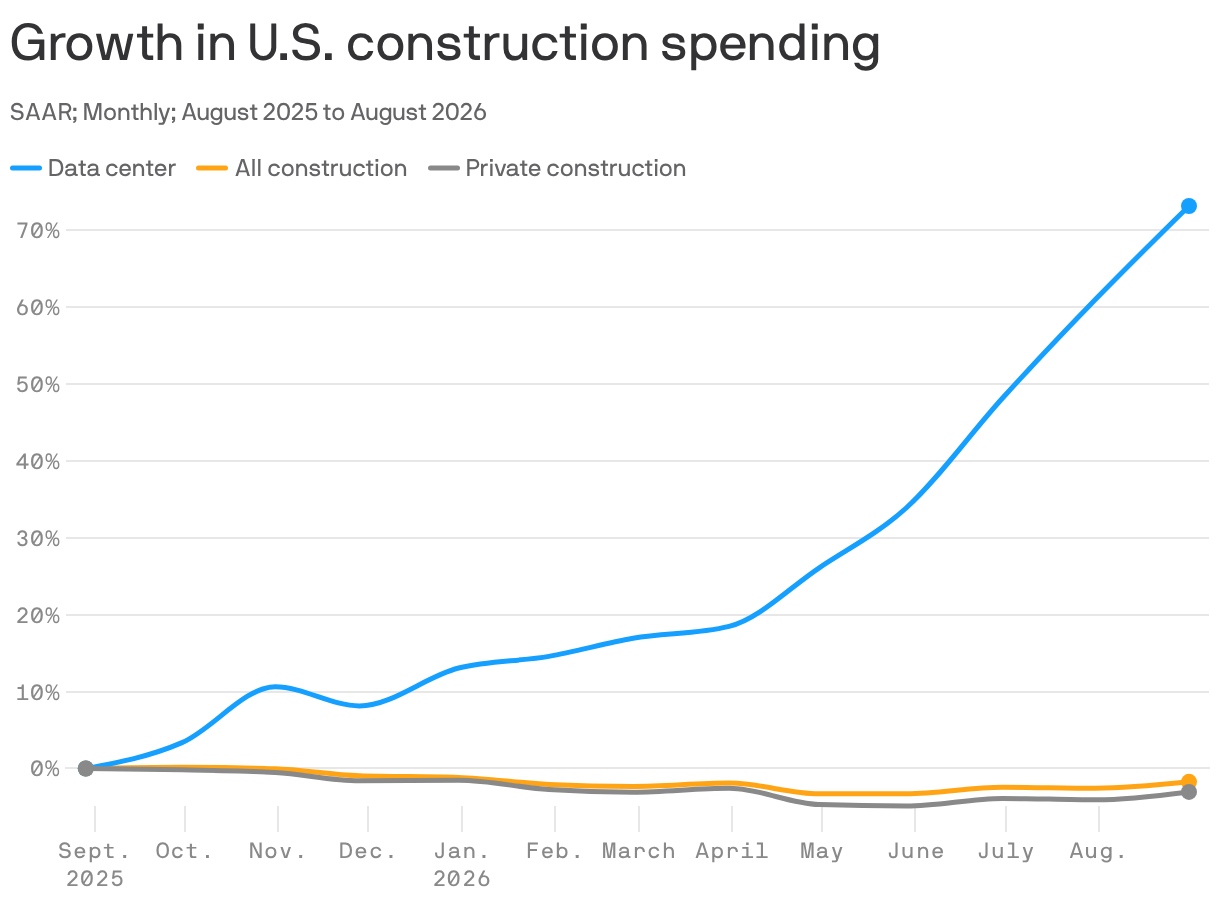
More and more, it seems as if there's the AI economy — and everything else.
Why it matters: The growing chasm between the breakneck growth of the AI world and the slower pace of the economy where most Americans work and live has huge implications, especially for the markets.
Zoom in: The most recent numbers on U.S. construction spending through August — shown above — paint the picture remarkably clearly.
Zoom out: The same divide is an important theme in the markets as well.
- In corporate bonds, AI-related offerings accounted for more than half of net investment grade issuance for the year through the end of August, according to data from Apollo and Bloomberg.
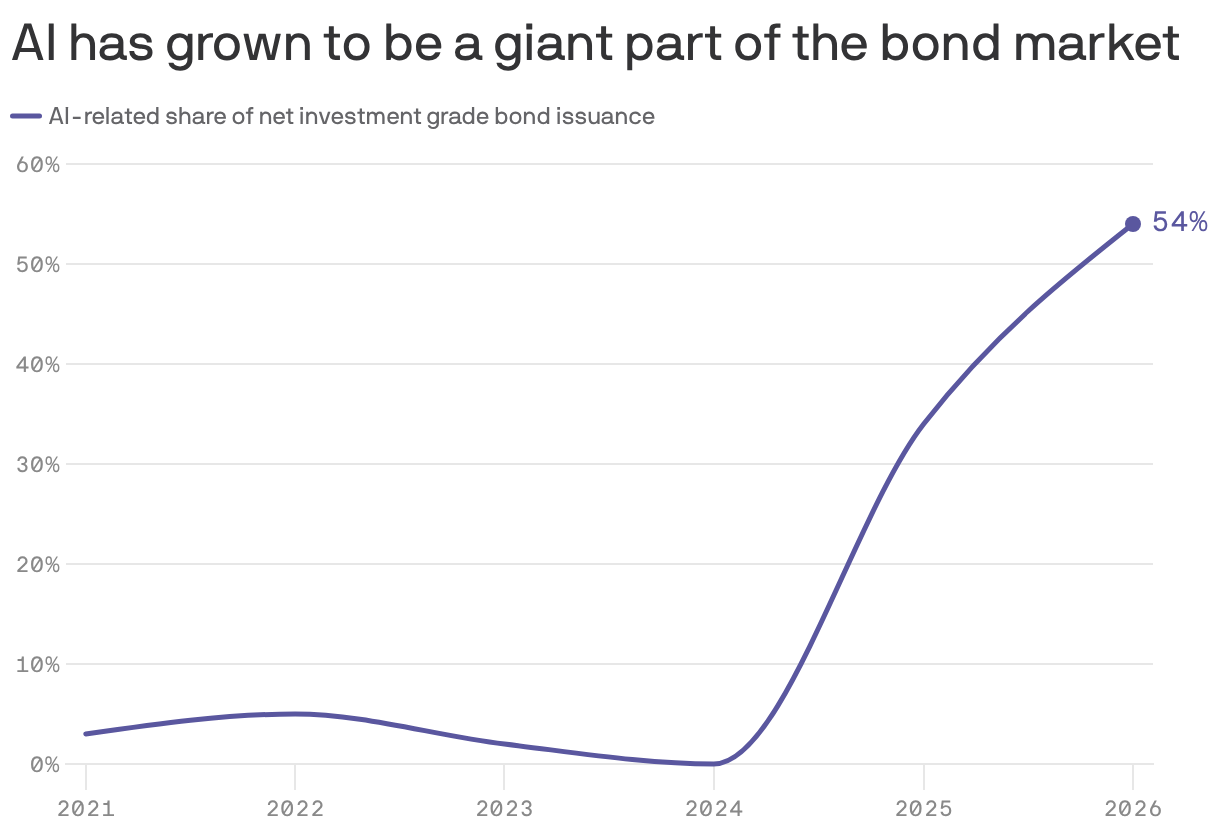
And of course, excitement over all things related to AI has supercharged the market values of Nvidia, the hyperscalers and other AI-related tech stocks.
Stunning stat: The weighting of the S&P 500 technology sector in terms of market capitalization is now roughly 40%. That's higher than during the peak of the dot-com bubble.
- But that actually underplays the impact of AI.
- If you throw in the hyperscalers Meta and Amazon, which S&P doesn't include in the tech sector, the share of the AI-pilled part of the blue-chip index climbs closer to 50%.
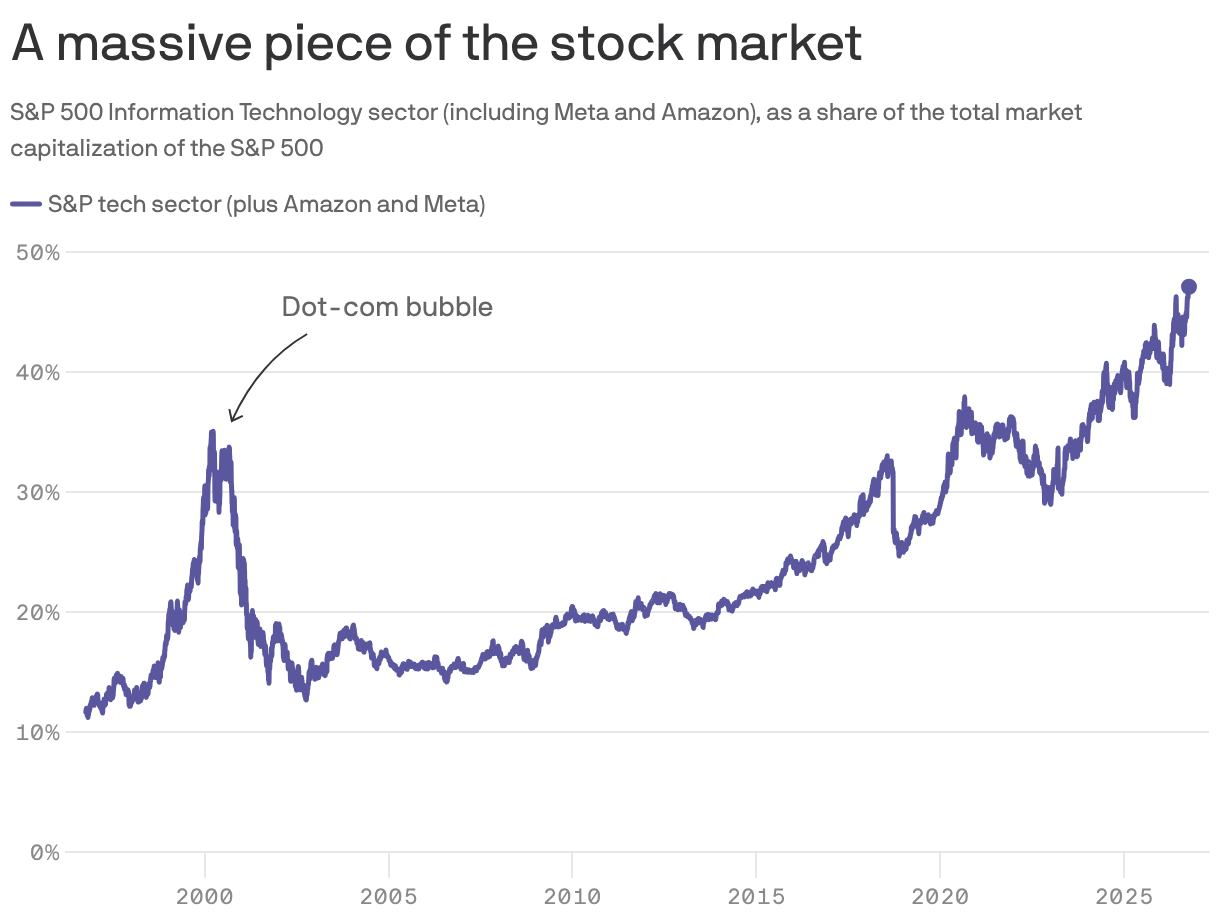
The bottom line: The growth gap between AI and everything else means the U.S. economy and the markets are increasingly yoked to AI — and all the risks that come with it.
2. Immigration split screen
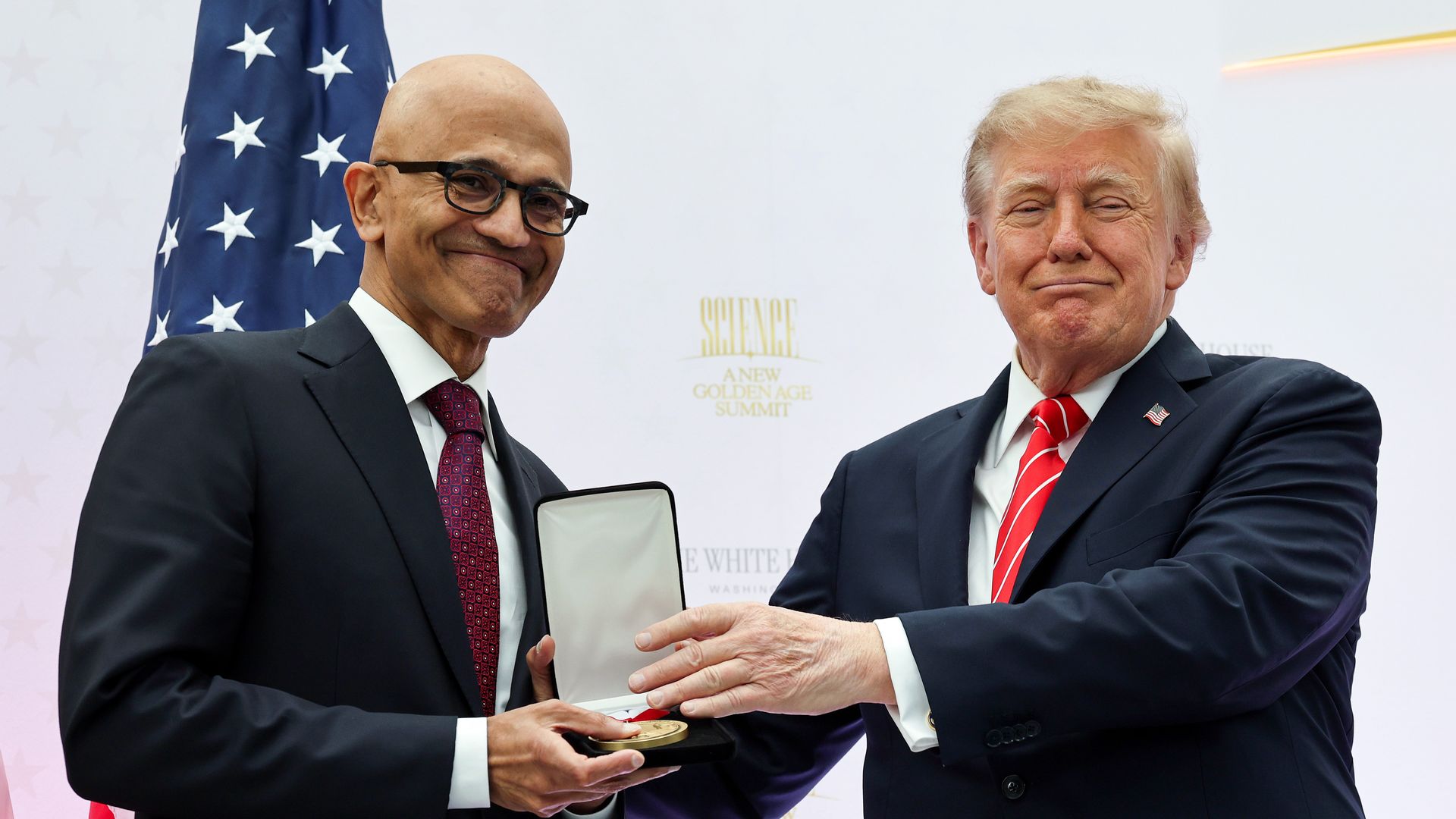
The Trump administration said yesterday that it was suspending Microsoft from a key program used to sponsor employees for green cards. Later in the afternoon, the administration honored the tech giant's CEO with a medal for innovation.
Why it matters: The split-screen day highlights the tension between the administration's championing of Big Tech and its immigration policies, which constrain an industry that has long relied on hiring foreign-born workers.
- Tech leaders have said that restrictions on hiring hamper the country's ability to compete — especially at a moment when the U.S. is in a race with China on AI.
Driving the news: The administration's move yesterday also targeted Adobe and six IT services firms over the Permanent Employment Program.
- It's typically the first major government approval step in employers sponsoring workers, often H-1B holders, for employment-based green cards.
- The administration accused these companies of hiring foreign workers and paying them less, at U.S. workers' expense.
State of play: Trump awarded Microsoft CEO Satya Nadella with the National Medal of Technology and Innovation at the White House's New Golden Age Summit last night.
- Elon Musk, Nvidia CEO Jensen Huang, Google co-founder Sergey Brin and CEO of AMD Lisa Su — like Nadella, all immigrants to the U.S. — were awarded the National Medal of Science.
- At the event, Trump called the honorees "national treasures."
What they're saying: Vice President Vance addressed the apparent contradiction at a press conference earlier yesterday, saying: "Our message to Microsoft is not that we want to harm your company; it's that we want your company to thrive, but we want it to thrive by employing and empowering your fellow Americans."
The other side: Microsoft said in a statement that 80% of the applications it submitted in the last fiscal year were to extend or change the status of existing employees — not to hire new people.
- "We pay our employees some of the highest compensation in the tech sector, and our wages are among the highest of all H-1B filings."
Zoom in: The application for a green card can already take years for some workers. Many are long-time trusted employees inside those companies.
What to watch: Lawyers say the move could make companies more reluctant to sponsor workers for visas and permanent residency. And it could turn off talented foreign workers and students from coming to the U.S.
Catch up quick: This isn't the administration's first effort on the H-1B labor force.
- In September 2025, Commerce Secretary Howard Lutnick announced a $100,000 fee on H-1B visas.
- Roughly five months later, just 85 people had paid the fee, according to a court filing.
- Numerous federal judges have now struck down the fee.
Brittany Gibson contributed reporting.
Thanks for sharing your week with us. Send us your thoughts, suggestions for coverage or just say hello at [email protected] and [email protected] or reply to this email.
Thanks to Jeffrey Cane for editing and Carlin Becker for copy editing this edition.
Tell your friends to sign up here.
Sign up for Axios Markets