Axios Markets

August 23, 2022

1 big thing: No U-turn for office workers

Illustration: Brendan Lynch/Axios
2. Charted: Natural gas pains


Europe is plunging headlong into an energy crisis, with the Russian gas supplies that power the continent coming close to a halt, Matt writes.
Driving the news: Natural gas futures prices shot to a new record high in Europe, as Russia signaled that it will end supplies through its Nord Stream 1, pipeline at the end of the month, ostensibly for maintenance.
- Benchmark European natural gas prices shot higher by roughly 13%, to roughly €280 per megawatt hour.
- That's more than 10 times higher than the price at the end of 2020.
Yes, but: Americans will also feel the pinch.
- U.S. natural gas prices have climbed in sympathy with prices across the Atlantic, pushing close to $10 per million British thermal units. That's the highest since 2008, a jump that will raise utility bills for Americans already stressed by inflation.
3. Catch up quick
4. Nuclear stocks power up
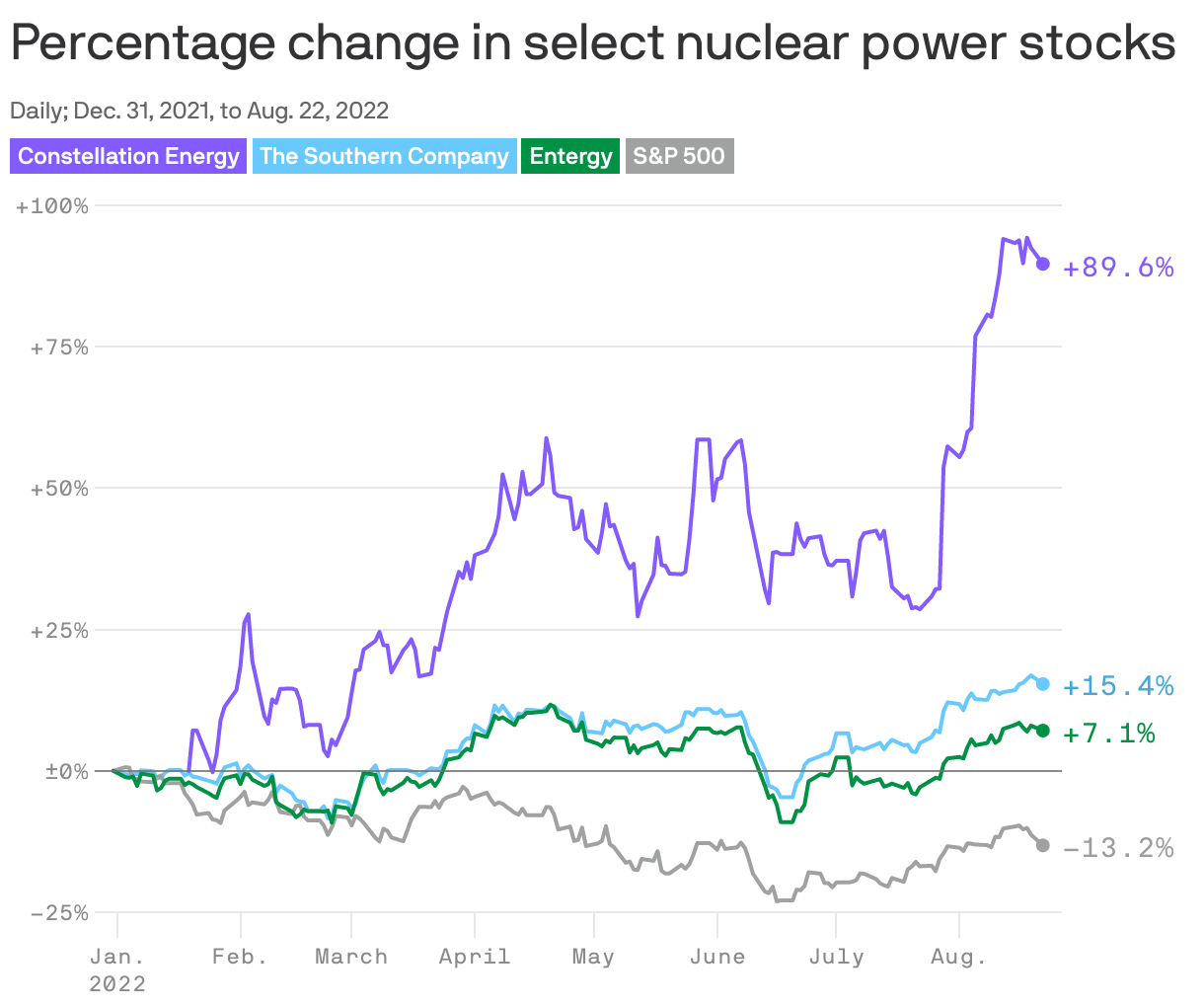
Nuclear power providers are outperforming, as investors take a fresh look at the sector amid a global energy spike and growing climate crisis, Matt writes.
Driving the news: Utilities with nuclear power operations are handily outpacing the overall market this year, after getting a helpful fillip from the passage of the Inflation Reduction Act.
- Constellation Energy, one of the biggest U.S. nuclear power companies, has soared roughly 90% this year, including a nearly 50% gallop over the last month.
- Other nuclear power stocks — such as NRG Energy, Xcel Energy and Entergy Corp. — have also posted solid gains over the last month, far outpacing the S&P 500.
Why it matters: If shares of nuclear providers keep posting outsized returns, it could drive additional capital into the aging atomic sector, a crucial part of cutting U.S. carbon emissions.
- Nuclear power provides more than 50% of U.S. emission-free energy, and more than all other sources such as wind, solar and hydroelectric, combined, according to the Department of Energy.
Context: The romp in nuke stocks got rolling as it became clear that Congress would pass the Inflation Reduction Act.
- The law included climate-related provisions that were positive for nuclear, including extending a kind of subsidy known as "production tax credits" to existing plants for the first time.
5. The Boise buyers' market
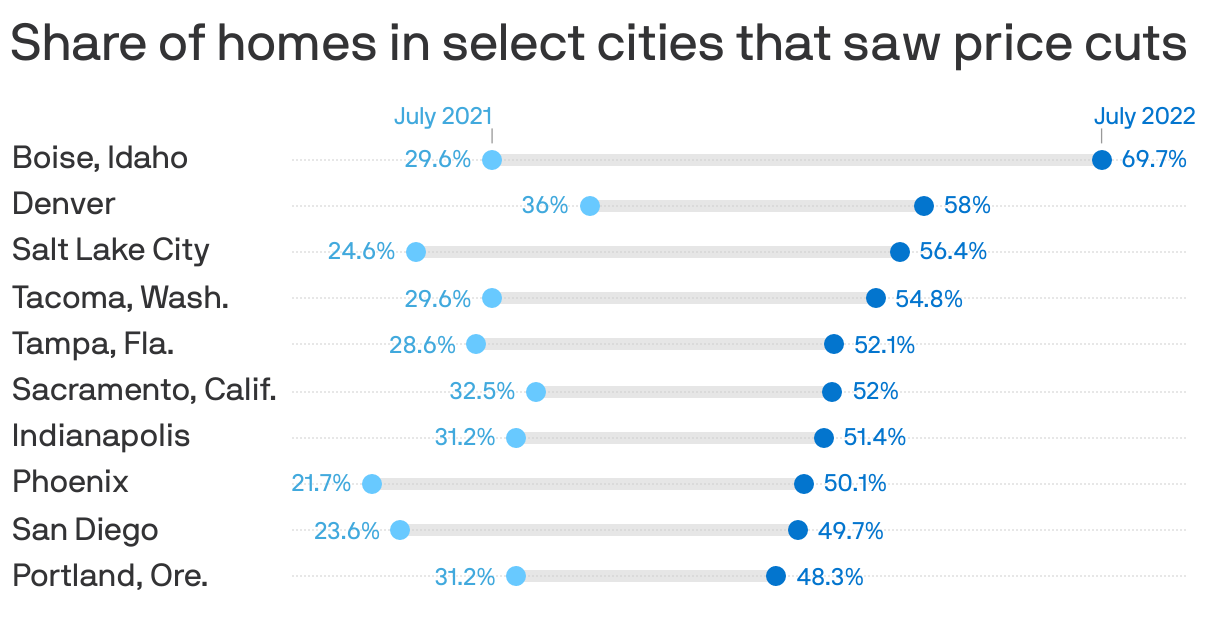
Nearly 70% of home sellers in Boise, Idaho, cut the asking price on their house in July, Emily writes, a remarkable turn for the once-hot real estate market.
- Nationwide, the number was 32% — up from 27% in July 2019.
Why it matters: This is just the latest indication that the pandemic housing boom is going bust, as higher mortgage rates chill demand for homes.
Keep in mind: While the percentage of sellers cutting prices is very high in Boise, the actual price cuts are quite modest — less than 5% off the original list price.
What's next: Home prices are likely to come down further.
Axios Markets

Stay on top of the latest market trends and economic insights