Axios Markets

July 16, 2024


🌅 Good morning. There's a political realignment underway, and it was on display at the RNC yesterday. We dig into that in today's edition — plus, we unpack China's savings problem. All in 1,023 words, a 4-minute read.
Situational awareness: Today President Biden will propose a measure to cap rent increases at 5%; it's already facing pushback.
1 big thing: China's consumption problem

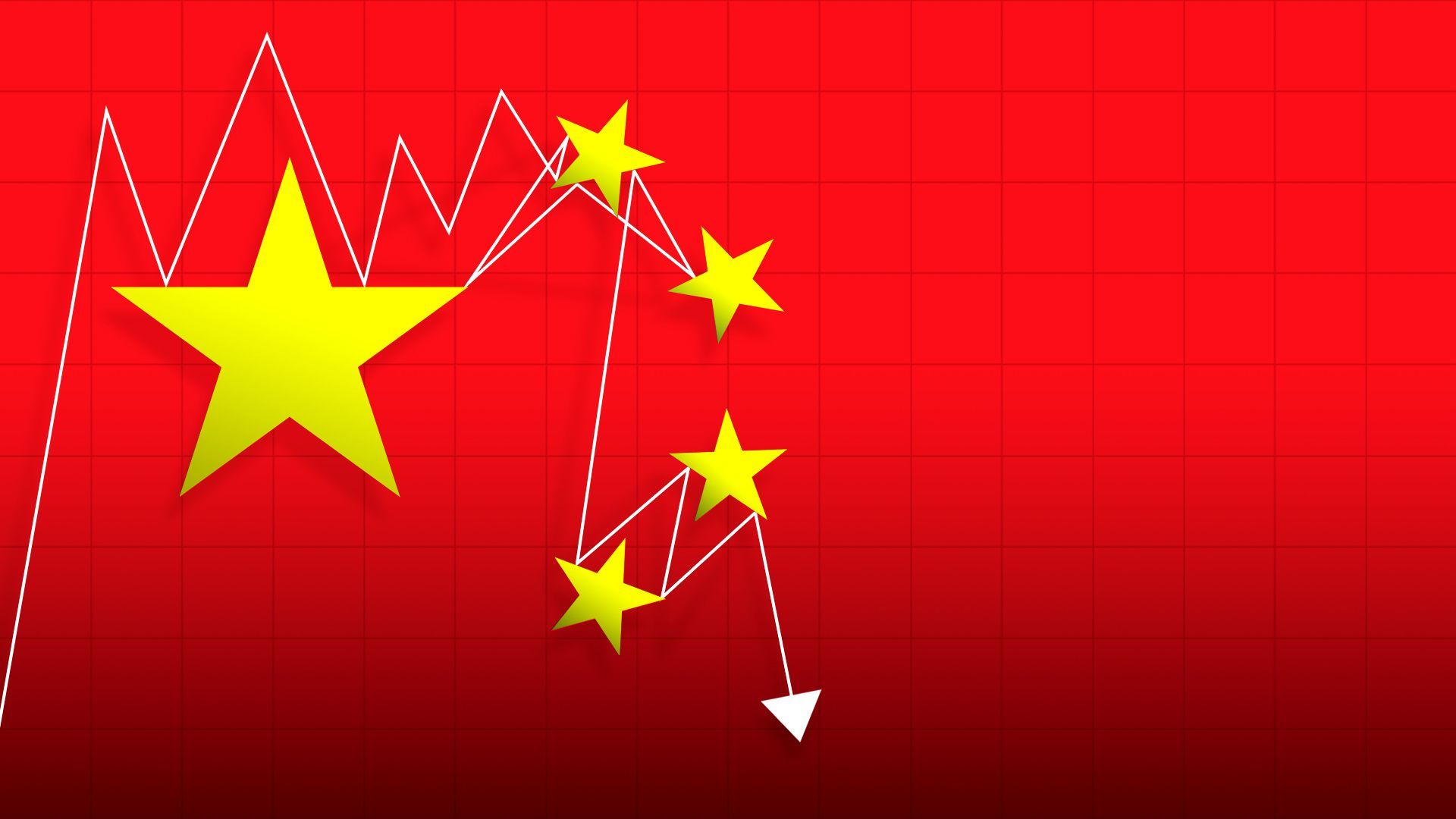
China's consumers have plenty of money. The problem is they're not spending enough of it.
Why it matters: In the U.S., higher savings rates are often viewed as a sign of healthy consumers. In China, they're a reminder of lackluster demand constraining growth.
China has long had one of the highest saving rates in the world — a reflection of the country's weak safety net.
- What's different now is depressed sentiment. For years, the property sector helped boost growth, and now it's cratering — bringing household wealth down with it.
Zoom out: China's strong household savings are helping fund the government's subsidies for the manufacturing sector that's drawing pushback from global competitors, including the U.S.
By the numbers: Production in China's factories is strong, but demand for the nation's production is weak. Even the government acknowledges that domestic demand remains "insufficient."
- In June, China retail sales rose just 2% from a year ago.
- Two other signs of weak demand: Prices are barely rising, and imports keep falling, even as exports soar.
Follow the money: Household income growth is outpacing that of spending. Disposable income per capita rose 5.4% in the first half of the year, compared to the same period a year ago.
The big picture: China's economy grew 4.7% last quarter from the same period a year ago.
- Manufacturing is the engine, much to the ire of a growing number of nations that assert China is producing more than its economy can absorb. Factory output rose more than 5% from a year ago, only slightly lower than that seen in May.
What's next: Chinese officials are meeting for the third plenum this week. The meetings, held once every five years, focus on long-term reforms.
- They have previously wrapped up with significant economic policy shifts — including the easing of the one-child policy in 2013.
What they're saying: "What China needs is more efforts to boost consumer spending and stop consumers saving so much," Shane Oliver, an economist at AMP, wrote in a note.
- The economic data, Oliver adds, "increases the pressure on the third plenum to announce more decisive stimulus measures."
2. Teamsters president savages big biz at RNC

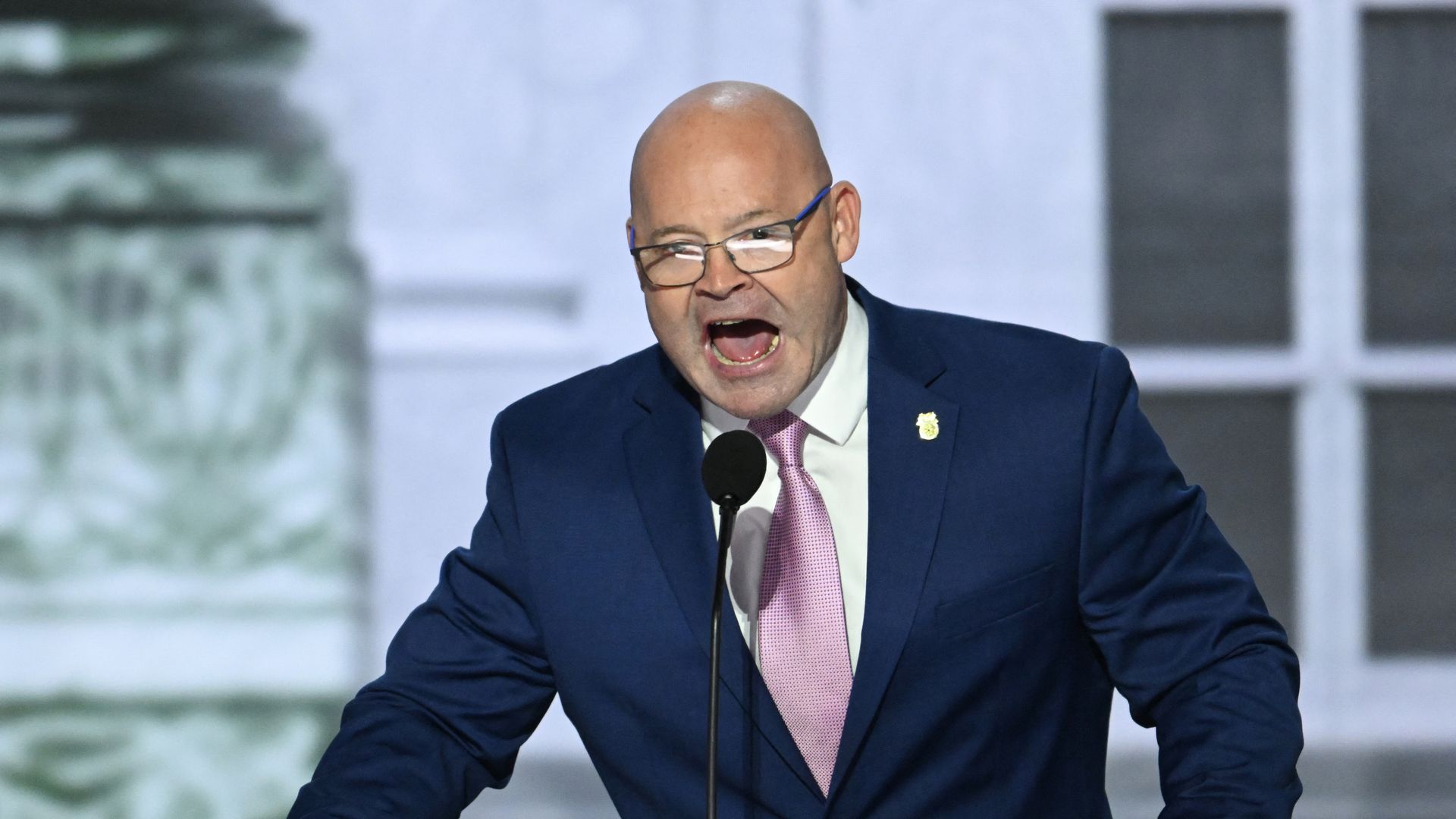
Teamsters president Sean O'Brien delivered a fiery address to close out the first night of the Republican National Convention, castigating big businesses and corporate lobby groups for "waging a war against American workers" — and calling for labor law reform.
- At the Republican. National. Convention. (!)
Why it matters: O'Brien's speech stood out among the partisan lineup because he did not endorse former President Trump, yet the Teamsters leader got the most speaking time of the evening.
The big picture: O'Brien's prominence at the RNC highlights just how important the labor vote is this November, particularly in pivotal swing states like Michigan, Pennsylvania and Wisconsin.
Zoom in: While the Teamsters have endorsed Republican presidential candidates previously, a union president had never spoken at an RNC before.
- O'Brien called for bipartisan action on labor reform. A stunning move at a partisan event — amid a party traditionally opposed to unions. He even called out the GOP for its opposition to labor.
You would be forgiven for mistaking O'Brien's speech as an address at a Democratic convention or in a union hall.
- "Labor law must be reformed. Americans vote for a union, but can never get a union contract," he said.
- "Companies fire workers who try to join unions and hide behind toothless laws that are meant to protect working people but are manipulated to benefit corporations. This is economic terrorism at its best, an individual cannot withstand such an assault."
Between the lines: Nearly all of the other big unions, including the AFL-CIO, have endorsed Biden, a big labor supporter.
- A Teamsters spokesperson said they traditionally decide who to endorse after the conventions and will do so this year with the input of their rank-and-file members.
Teamsters vice president at large John Palmer wrote a scorching condemnation of O'Brien's decision to speak at the RNC last week, outlining a raft of ways former president Trump and the GOP were anti-union.
- "It is unconscionable for any Labor leader to lend an air of legitimacy to a candidate and a political party, neither of which can be said to have done, or can be expected to do, anything to improve the lives of the workers we are pledged to represent."
The bottom line: The working class vote is so badly wanted that a fiery Teamsters leader was able to school the traditionally pro-business Republican party on workers' rights.
3. J.D. Vance, a Lina Khan fan


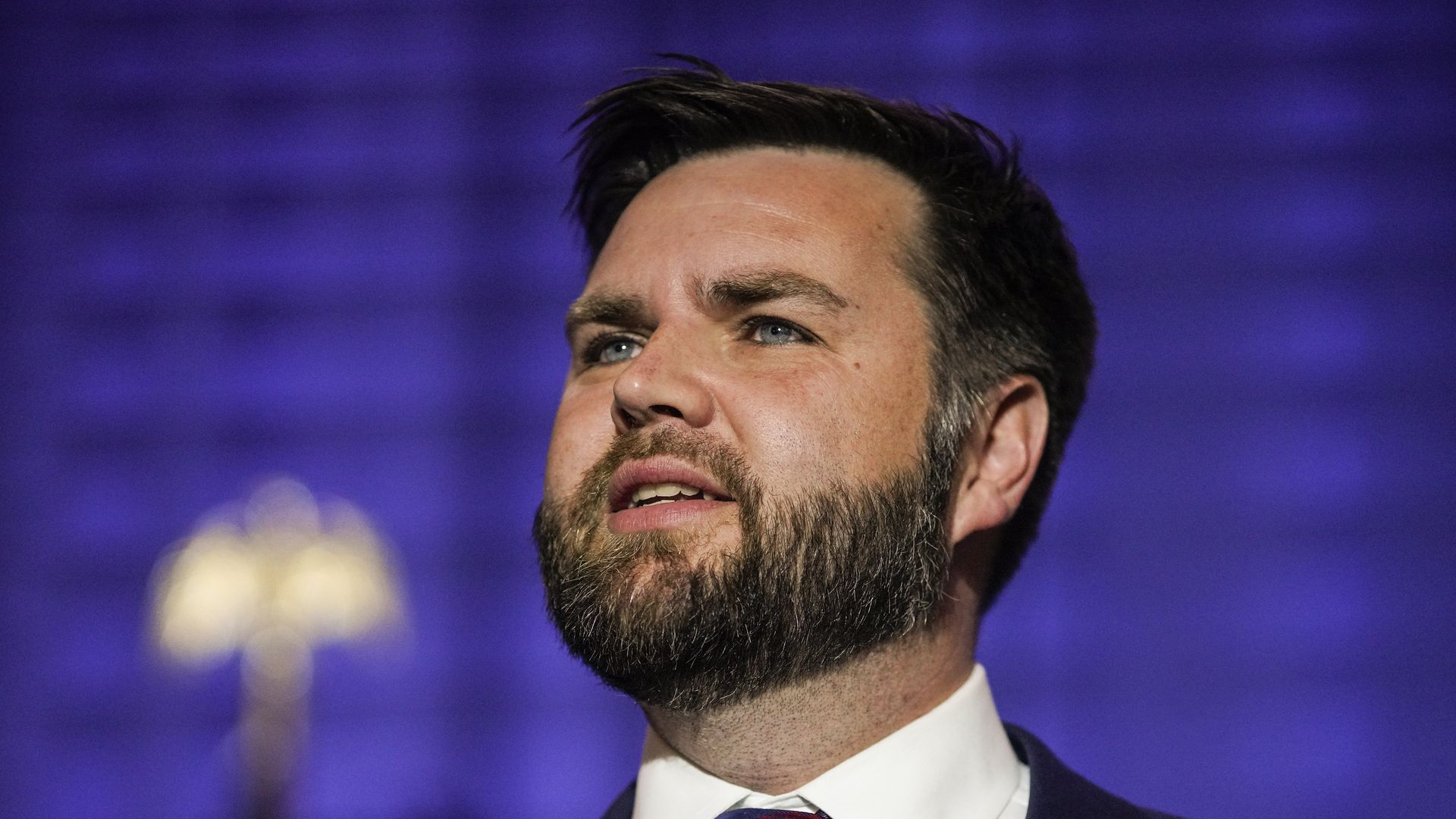
J.D. Vance's tech track record could leave big companies rattled, now that he's been selected to be the Republican candidate for vice president.
Why it matters: Vance belongs to the group of conservatives who are sympathetic to the idea that Big Tech companies should be broken up.
- If he has Trump's ear on this issue, antitrust enforcement could stay aggressive.
Flashback: Vance, once a venture capitalist, has long had support from the right wing of Silicon Valley.
- His Senate run was heavily bankrolled by Peter Thiel, a PayPal co-founder and early investor in Facebook, and he's also close to venture capitalist David Sacks.
- Vance has repeatedly referred to the "Big Tech oligarchy" and accused companies of having too much power over speech online and competition.
Just last week at a Senate Commerce hearing, Vance said he's skeptical of heavy AI regulation because it could entrench Big Tech incumbents.
Our thought bubble: Vance often goes his own way in tech policy debates.
- When debate over the divest-or-ban TikTok bill was raging in the Senate, Vance told Axios he was skeptical of the bill because it gave the government too much power to go after an individual company.
The bottom line: Vance has been supportive of the work of FTC Chair Lina Khan, who's aggressively gone after consolidation in the tech industry: He said at a February event that Khan was "one of the few people in the Biden administration actually doing a good job."
- Most of his Republican colleagues, by contrast, have railed against Khan and sided with business interests.
Go deeper: If you need smart, quick intel on federal tech policy for your job, get Axios Pro.
Thanks to Kate Marino for editing this newsletter and to Mickey Meece for copy editing it.
Sign up for Axios Markets