Axios Markets

May 01, 2026

🪷 Hello, May! Today, a look at the unpleasant fallout from high gas prices, President Trump's new retirement policy and the best month for the stock market since the pandemic era.
- Let's do this and then head out for the weekend, shall we?
All in 1,130 words, a 4.5-minute read.
1 big thing: Gas prices start to pinch
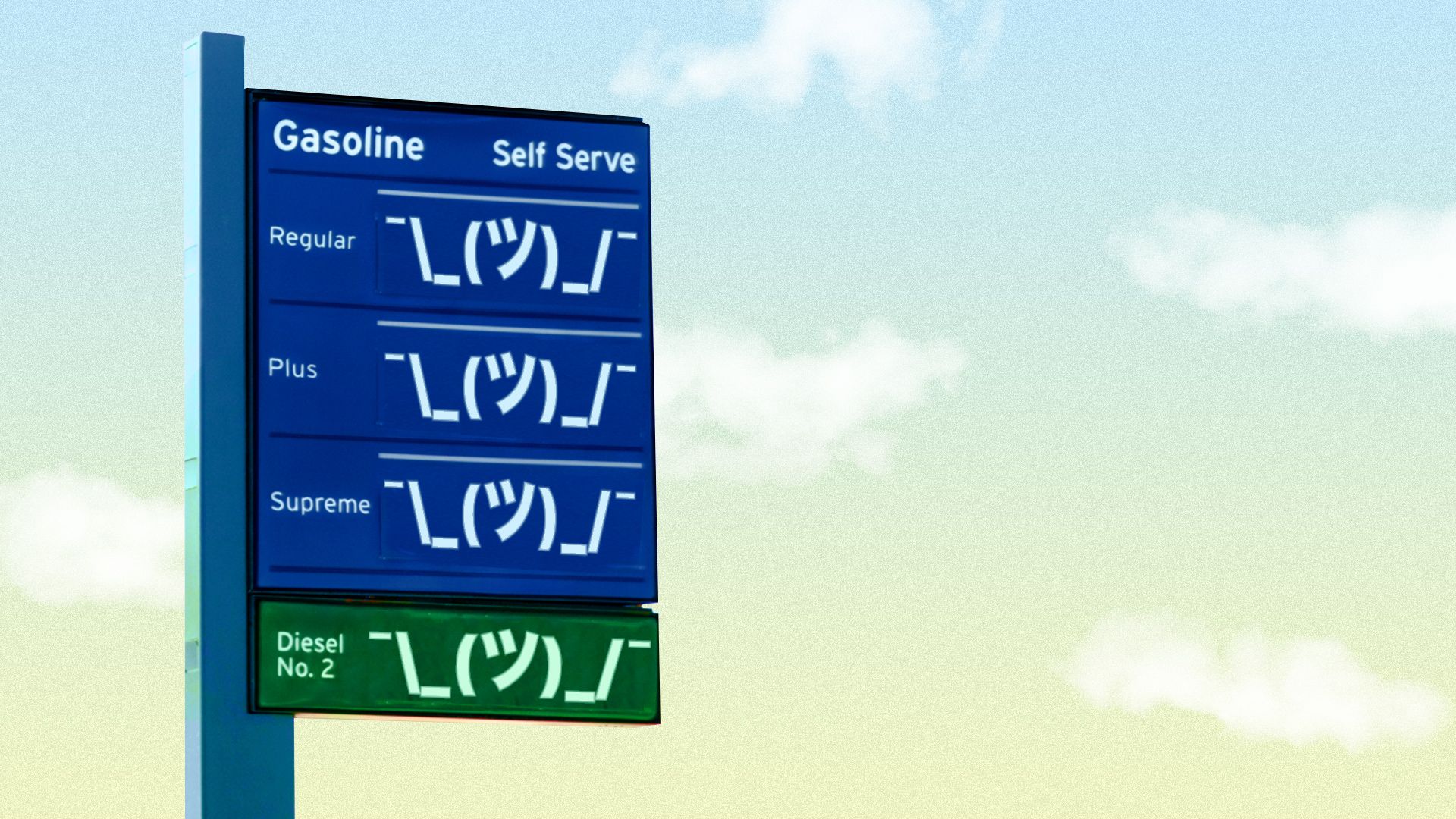
The energy crisis in the U.S. is starting to eat into American wallets, and though it's hardly an apocalyptic scenario, it sure feels awful.
Why it matters: Unlike in Asia and Europe, the U.S. is relatively insulated from the threat of actual gasoline or oil shortages, and price increases are so far manageable.
The intrigue: That's good for the economy and for stock prices, and cold comfort to basically everyone else who is forced to pay more to fill up the tank.
By the numbers: The increase in gas prices has been kind of Hobbesian: nasty, brutal and taking place over a very short period.
- Since Feb. 27, the day before the war, the average price of a gallon of unleaded gas has risen 47%, to $4.39. (It went up 9 cents just last night!)
- That's lower than what it was during the 2022 period, and if you adjust for inflation, it's even lower still.
- And gas makes up a small share of Americans' overall spending.
The big picture: Even if a lot of people can absorb the increase, the whiplash of the record-breaking rise in gas prices is making people feel bad — we're seeing low consumer sentiment.
- It's the latest chapter in the current vibecession, where the economy holds up, but no one feels particularly great about it.
How it works: Higher gas prices can force people to make choices that they don't want to make — trading down on spending for groceries or restaurants or clothing, says David Tinsley, senior economist at the Bank of America Institute.
- For the economy overall, those shifts may not be noticeable, as people keep spending levels the same.
- But for individuals, it stinks.
- Tinsley, who is British, puts it this way: "They don't necessarily want to make those choices. So they can be quite cheesed off."
Zoom in: Spiking gas prices are already eating into Americans' paychecks.
- In March, the median lower-income household spent 4.2% of their income on gasoline, up from 3.9% a year earlier and above 2019 levels, according to Bank of America internal customer deposit data.
Middle-income earners are doing better, but there are signs of stress.
- For a middle-wage earner, an hour of work would pay for about 7 gallons of gas in March, per calculations that economist Jared Bernstein did for Axios.
- Before the war, you would get 10 gallons for your efforts.
Yes, but: For now, some folks can cushion the blow by tapping their tax refunds or using credit cards.
- But there are signs of growing credit stress, as well.
Friction point: In 2022, consumers were able to absorb sky-high gas prices because their paychecks were going up. Now, things look worse.
- In March, wages and salaries grew at just 1% for low-income households, per BofA data. That's compared with 5.6% at the high end.
What to watch: Driving levels in March and April are trending slightly lower than last year, according to data tracked by JPMorgan Chase.
2. A retirement game changer
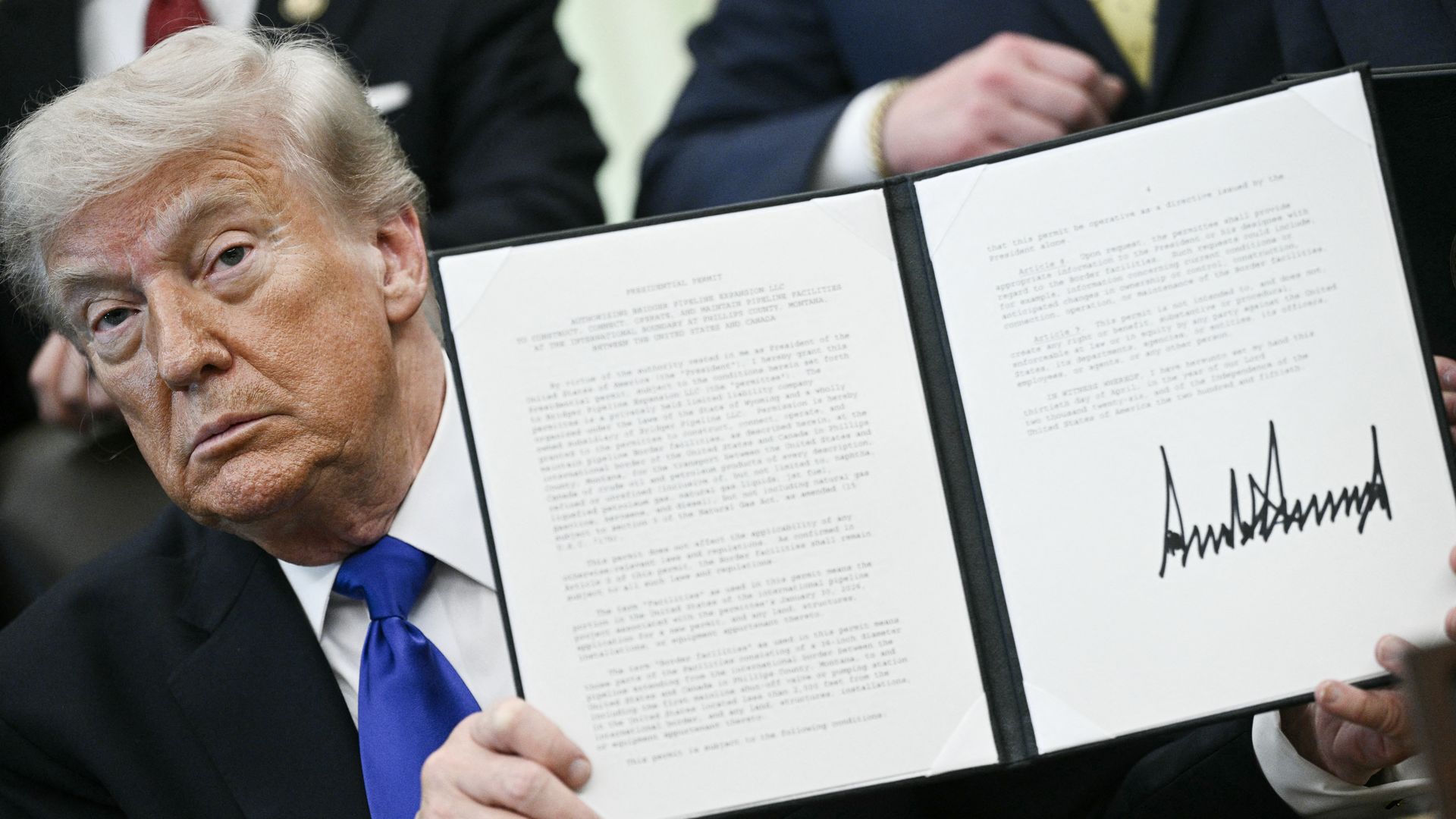
Trump issued an executive order yesterday that expands access to retirement accounts for workers who don't get 401(k)s.
Why it matters: The order could be a game changer for millions of lower-income Americans — it has a surprising amount of bipartisan support.
By the numbers: It's the kind of thing a lot of salaried types already get from their employers.
- But about 54 million Americans lack access to an employer-based retirement plan, according to data from the centrist Economic Innovation Group, which floated the idea in 2021 and had worked behind the scenes with the White House.
Catch up quick: A law passed under former President Biden set up a small amount of matching funds for low-earning workers who put money into a retirement plan.
- The "saver's match" was set to take effect next year and would give up to $1,000 in matching funds to certain workers who contribute $2,000 a year to an IRA.
How it works: The Trump administration is building off that to create a system where folks can more easily sign up for retirement accounts.
- The order directs the Treasury Department to set up a web portal, TrumpIRA.gov, where Americans can shop for plans starting next year.
- The plans on offer will be vetted by the Treasury Department and modeled on the well-regarded Thrift Savings Plan used by more than 6 million federal employees — typically low-fee index funds.
"It's a huge step forward," John Lettieri, co-founder of EIG, tells Axios.
Between the lines: This is great news for Wall Street — a number of investment firms put out statements applauding the order.
- The universe of low-income earners is a "huge uncaptured market," Lettieri says.
Yes, but: Advocates say the real game changer for these workers would be a more robust match and automatic enrollment — but that requires legislation.
The intrigue: The proposal is a public-private tie-up akin to what the administration is doing with its Trump accounts for children.
- One economics writer compared the framework to Obamacare — where private insurers created insurance plans to conform to specific federal guidelines, selling them through a government portal.
3. 📈 We'll remember April


April may well be the cruelest month, but for investors in the stock market, it was kind — the S&P 500 had its best performance since November 2020.
Why it matters: Then and now investors looked past current troubles to see only improving prospects.
Zoom out: In November 2020, even as the pandemic spread, stocks rallied on the news that Pfizer and its partner BioNTech, followed by rival Moderna, had successful clinical trials of their respective COVID vaccines.
- The results encouraged investors to look forward to a post-pandemic economy, even if that journey would take another year or so.
Where it stands: Likewise, investors today are looking ahead to an economy that emerges largely unscathed from the energy and supply shocks of the Iran war, with an AI revolution driving productivity and growth.
- Earnings from the likes of Google parent Alphabet and Caterpillar this week supported that optimistic view.
By the numbers: The S&P 500 rose 1% yesterday to another record, ending the month up 10.4%
- That's just a bit shy of November 2020's 10.8% gain.
- Tech stocks were the big driver in April, as reflected in the Nasdaq 100, up 15.6% for the month.
Send me tips, story ideas or just say hello: [email protected] or reply to this email.
Thanks to Jeffrey Cane for editing and Carlin Becker for copy editing this edition.
Tell your friends to sign up here. You can also hit me up on X.com or Bluesky at EmilyRPeck.
Sign up for Axios Markets