Axios Markets

April 06, 2026

👋 Welcome back. Stock futures are up slightly this morning, and oil prices down, after an Axios' report last night that the U.S., Iran and regional mediators are discussing terms for a ceasefire.
- But signals coming from the White House are mixed. President Trump told Axios, "I am blowing up everything" if a deal isn't reached by tomorrow.
- He's holding a news conference today at 1pm ET.
👀 Today, how the war is driving up food prices, why AI companies need to go public and a check-in on investor sentiment.
All in 1,185 words, a 4.5-minute read.
1 big thing: How higher oil prices drive up food costs
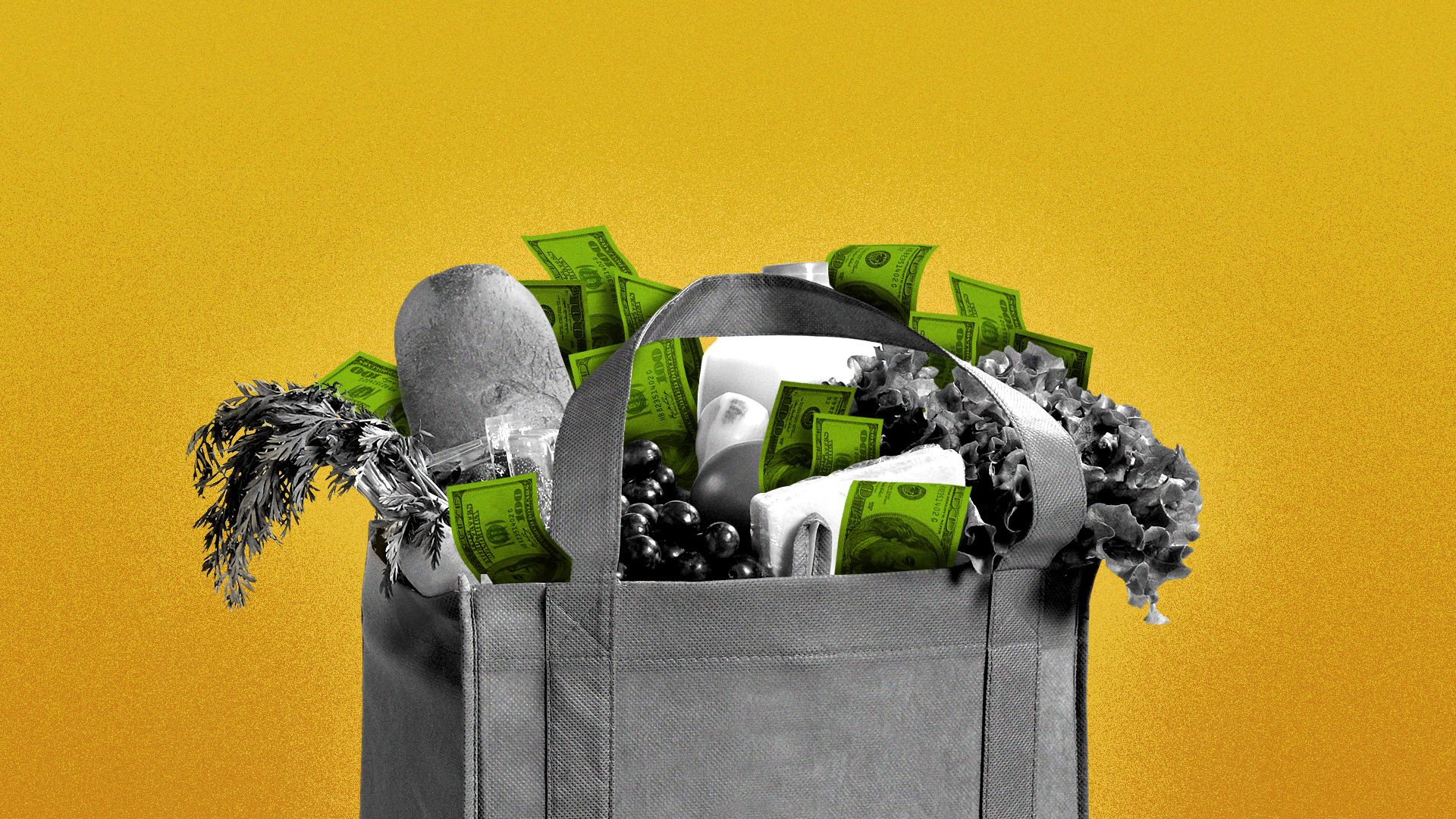
The sharp spike in gas and oil prices caused by the Iran war will likely lead to a further rise in food prices in the coming weeks, economists and agricultural experts tell Axios.
Why it matters: The war is just the latest stress driving up food inflation — on top of tariffs, rising electricity prices and an immigration crackdown that has driven up labor costs.
- "In the domain of food prices, the war is a problem because of what's preceded it in the U.S.," says Chris Barrett, an economist and professor of agriculture at Cornell University.
The big picture: When people, particularly lower earners, spend more on food, they cut back on other things.
- Those kind of shifts could be a drag on the economy and company earnings as well.
How it works: The immediate shock on the grocery shelf comes via higher costs of transportation — literally getting food from warehouses and farms to the store.
- Meanwhile, a lot of critical fertilizer is shipped through the Strait of Hormuz, and prices for that input are rising. Those costs will take more time to filter down to food prices, and whether or not that happens depends on the war's duration.
By the numbers: The price of food at home was already up 3% in February from the year before, per the Consumer Price Index.
- The share of Americans who said grocery prices at the store were higher than they expected in March jumped to 48%, from 46% in February, according to Morning Consult polling shared with Axios.
Zoom out: Grocery price increases will be more of a slow burn than the rise in gasoline prices, as there are more inputs involved. First, prices are impacted by transportation expenses, then the costs of producing and packaging food, and then, finally, the fertilizer and farmer impacts.
- "It won't happen as instantly, as with gas," says Sofia Baig, a senior economist at Morning Consult.
Between the lines: Food prices are arguably even more salient to Americans than the prices they see at the pump.
- Americans spend, on average, about 10% of their disposable income on food — twice what they spend on gas. And, obviously, not everyone drives — yet we all must eat.
Friction point: An acceleration of already high food inflation would be yet another hit to Trump's approval ratings.
What to watch: We'll get a fresh CPI report on Friday that will reflect the first month of the war.
2. Why Anthropic and OpenAI want to go public


There's been a lot written about how both Anthropic and OpenAI want to go public later this year, with each hoping to beat the other to market.
- What's been discussed less is the why.
The big picture: Tech is still in its "stay private longer" era, as best exemplified by teenaged companies like Stripe that routinely raise new funding to provide liquidity for employees and other shareholders.
- Need primary capital? It's available, particularly thanks to the influx of Middle Eastern sovereigns.
- Need secondary capital? That's available too, thus removing the other big reason companies go public.
- To date, both Anthropic and OpenAI have followed this playbook.
Zoom in: The biggest issue going forward are scale and supersonic growth.
- We're not talking about unicorns here. Or dragons or whatever you want to call $100 billion "startups."
- Anthropic and OpenAI both expect to be worth trillions — note both the "t" and the "s" — thanks to revenue run rates (and employee payrolls) that seem to double with the changing of the seasons.
- Private market liquidity is deep, but it's not bottomless.
State of play: To be clear, neither frontier lab needs to go public immediately.
- They have tons of cash to fund their GPU shopping sprees and, as we noted on Wednesday, can even tap retail investors without a ticker symbol.
- Moreover, both companies have enough currency to make chunky acquisitions. Just yesterday, Anthropic reportedly paid around $400 million for Coefficient Bio, which is developing AI models for biological research, while OpenAI paid "low hundreds of millions" for tech talk show TBPN.
The bottom line: Some things are too big to be kept in a private box.
3. ⚠️ Retail investors turn more cautious

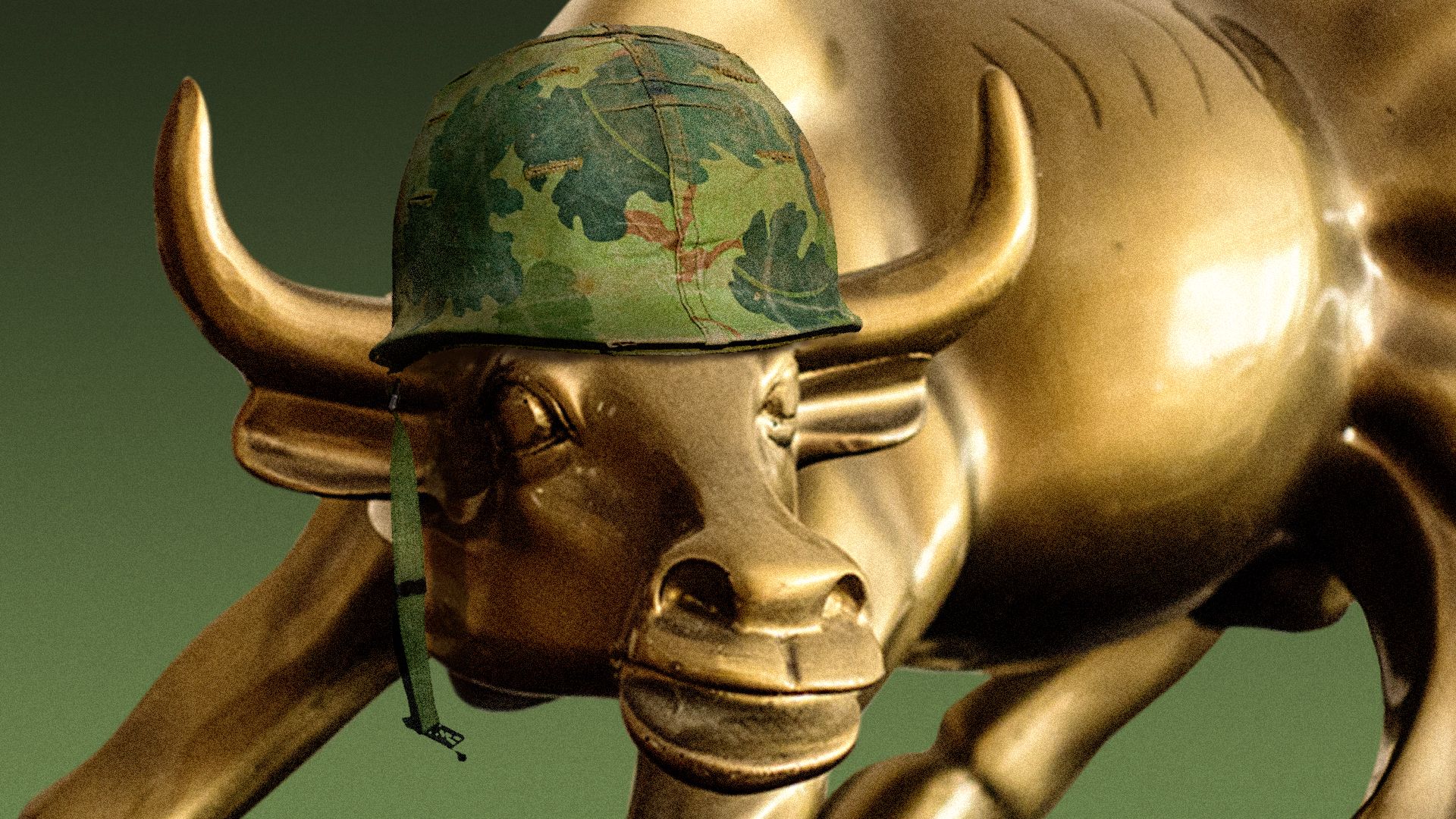
Retail investors took a defensive posture in March, turning slightly more bearish as the Iran war erupted, new Charles Schwab data indicates.
Why it matters: For an investing cohort that has been a driver of the market's three-year-plus rally, frequently stepping in to buy its dips, the war and its economic impacts are now giving them pause.
What they're saying: "Overall, investors came in with the idea that they wanted to continue to buy the dip," Joe Mazzola, head trading and derivatives strategist at Charles Schwab, tells Axios. "They got blindsided a bit with the war."
Zoom in: As a result, investors zoomed in on diversified exchange-traded funds, or ETFS, during the month.
- Indeed, five ETFs were among the top 10 biggest net purchases by Schwab clients, rather than individual stocks — an unusual result for the monthly survey, Mazzola says.
- Investors were trying to stay in the market broadly while diversifying their risk through the use of ETFs, he notes.
By the numbers: Schwab, one of the biggest brokerage firms in the U.S., looks at the stock positions and trading activity of the millions of its customer accounts. Its Schwab Trading Index, or STAX, shared exclusively with Axios, fell to 56.04 in March, from 57.32 in February.
- While the index remained at an elevated level, it was still the steepest monthly decline in the STAX since a 3.64% drop last May, which came in the tumultuous wake of Trump's "Liberation Day" tariffs.
- Among the biggest individual stocks bought by Schwab clients in March were Microsoft, Nvidia and Tesla.
- The biggest net sales included Broadcom, Netflix and Advanced Micro Devices.
What to watch: A separate attitudinal survey by Schwab showed investors turning more bearish in April, with the highest bearish reading since February 2025.
- Schwab clients picked energy as the top sector to watch, surpassing tech.
- The Consumer Price Index was identified as the critical economic release, well ahead of the employment report, suggesting that inflation concerns are now top of mind.
😊 1 last thing: A big shout out to those of you who sent in emails over the past few days! It's great to hear from you. You can write anytime to [email protected] or just reply to this email. Send ideas, tips for stories or any weird observations.
Thanks to Jeffrey Cane for editing and Carlin Becker for copy editing this edition. And thanks to you for sharing part of your week with us.
Tell your friends to sign up here.
Sign up for Axios Markets