Axios Markets

May 10, 2024

Happy Friday! For those who need the reminder, Sunday is Mother's Day.
Today's newsletter is 822 words, 3.5 minutes.
1 big thing: FDIC chair in the hot seat
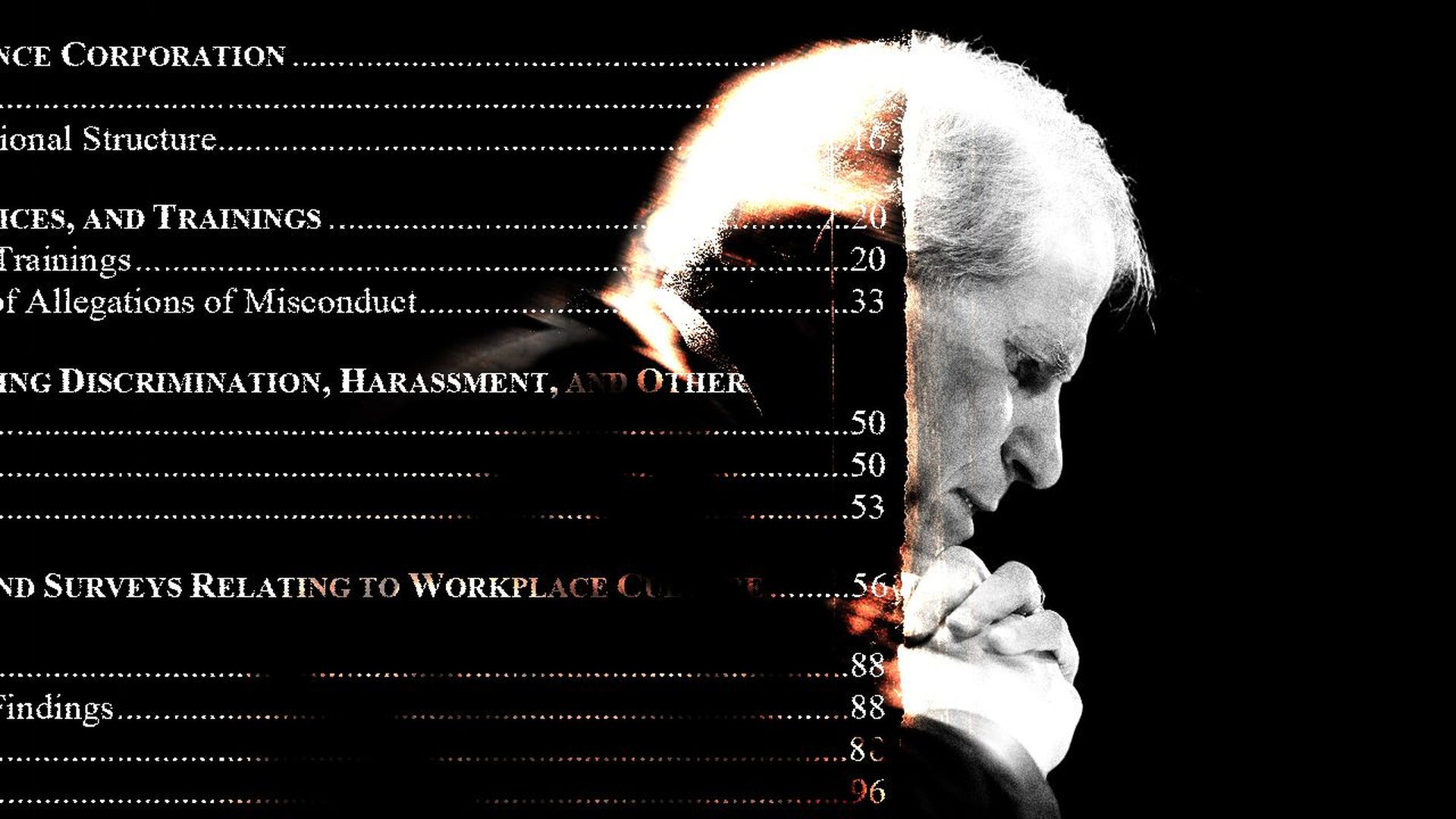
A harsh grilling awaits FDIC chair Martin Gruenberg on Capitol Hill next week when lawmakers are expected to question him over a bombshell investigation that found a longstanding toxic culture at the agency.
Why it matters: Gruenberg's fate hangs in the balance — along with the prospects for the Biden administration's financial regulatory agenda.
Catch up fast: Out this week, the report details an agency that's been rife with sexual harassment for years, and where employees fear retaliation for speaking up.
- The report notes that issues predate Gruenberg, who became chair in 2022 and served in the role from 2012 -2018. However, it devotes about nine pages to Gruenberg's reputation for losing his temper in the workplace.
- The situation raises uncomfortable questions for the White House and Democrats, typically folks who want leaders held responsible for workplace cultures that allow for sexual harassment and discrimination.
The big picture: If Gruenberg steps down, it would leave the FDIC board deadlocked — two Democrats and two Republicans. That would make it difficult for the agency to move forward on any controversial rulemaking.
- "A 2-2 vote would stall and probably doom politically sensitive banking policy," per a note from Renaissance Macro Research.
Zoom in: Atop the doom list is the administration's proposal to beef up capital requirements for banks, already facing pushback from the industry and even some Democrats (it's expected to be revised), and a recent interagency proposal to curb bank executives' pay.
- If Gruenberg leaves, the White House won't choose an acting chair. The role would automatically go to Travis Hill, the vice chairman of the FDIC board and a Republican.
- His departure would change the balance of power between the three banking regulators — the FDIC, the OCC and the Fed — and imperil interagency rulemaking.
- The White House would scramble to find a new leader who could be confirmed by the Senate before the election.
Between the lines: The report doesn't explicitly call for his ouster but the implicit message is there.
Where he stands: Republicans are calling for Gruenberg's head and a broader leadership change.
- Top Democrats on finance committees, including Sen. Sherrod Brown (Ohio), Sen. Elizabeth Warren (Mass.) and Rep. Maxine Waters (California) are all backing Gruenberg, Punchbowl News reported on Wednesday.
- Others including Rep. Bill Foster (D-Ill.), who sits on the House Financial Services Committee, are backing away.
Meanwhile: Advocates for financial reform question the independence of the investigation itself, asking why the FDIC's former chair, Republican Jelena McWilliams, who served from 2018 to 2021, didn't come up for more criticism.
- They point to a 2020 investigation from the FDIC's Office of the Inspector General that highlighted sexual harassment issues and appears to have been largely ignored inside the agency.
The bottom line: Ultimately, Gruenberg's fate is in President Biden's hands.
2. The U.S. lags in real time

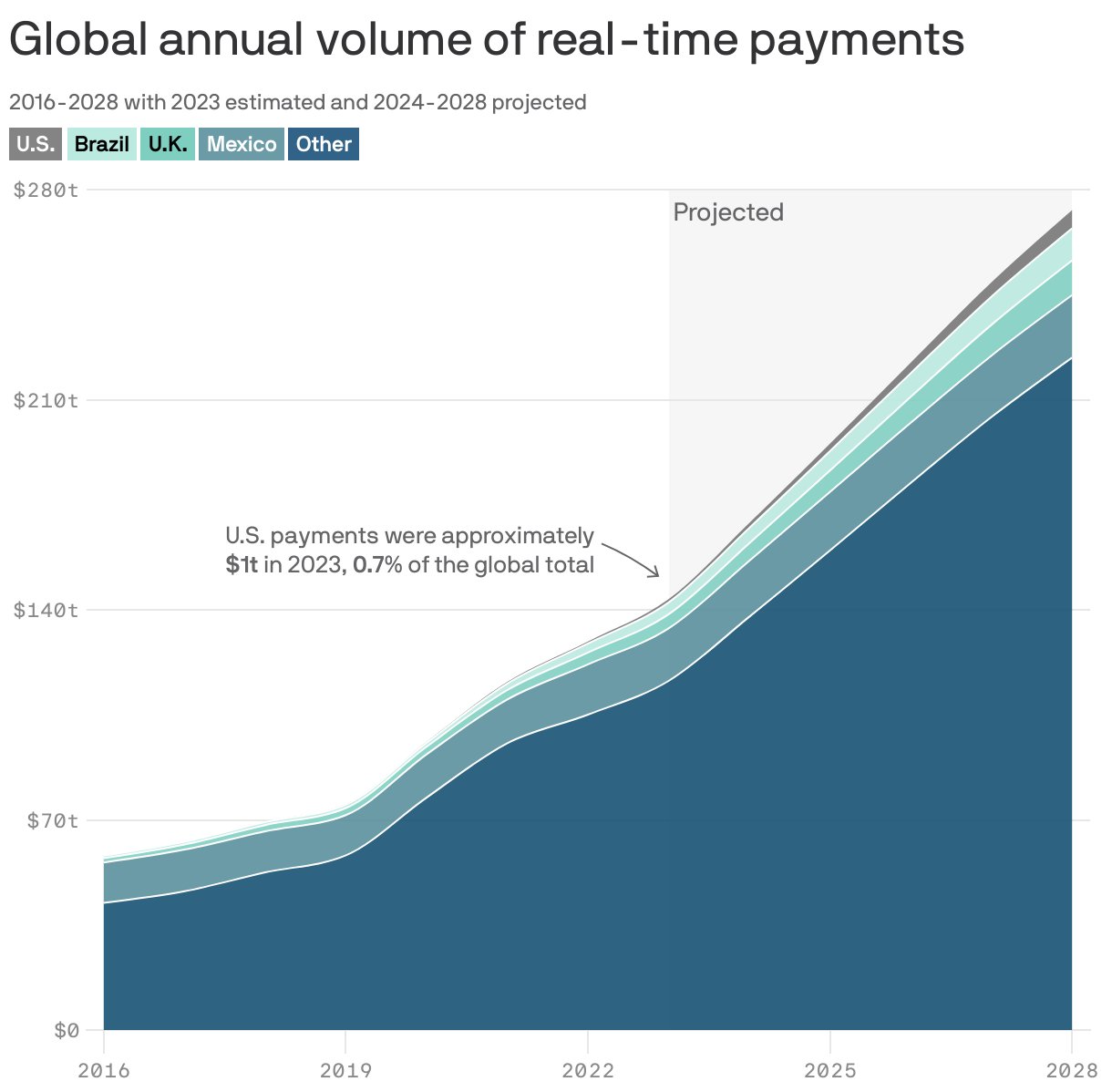
Real-time payments are one of the fastest-growing areas of the global financial architecture — and the U.S. remains far behind, per a new report from ACI Worldwide.
Why it matters: Real-time payments, where money can be sent straight into the recipient's account within seconds, "are faster, cheaper, and more accessible and convenient — they reduce costs and improve liquidity for businesses and help banks achieve greater efficiency," per the ACI report.
Where it stands: The U.S. has had private-sector real-time payments since 2017; it also has a newer central-bank-backed system, FedNow. It significantly lags, say, Brazil's central-bank-backed PIX, which launched in 2020.
By the numbers: Brazil saw 37 billion real-time payments in 2023 collectively worth $4 trillion. The U.S., by contrast, had only 3.5 billion payments worth $1 trillion.
- Even with the Fed solidly behind real-time payments, they still account for a "negligible" proportion of total payments volume — and are likely to continue to do so for the foreseeable future, per ACI.
The bottom line: The Fed and the Clearing House have both made real-time payments possible. Neither, however, seems to have built a product compelling enough to change entrenched habits.
3. The rise in value of FTX's bankruptcy claims


When FTX went bankrupt in November 2022, the world thought that more than $10 billion had disappeared forever. Now, it has reappeared.
Why it matters: About 40% of the recovered money will go to investors who were willing to take a bet on a solid recovery by buying their claims in the secondary market from the original creditors.
- This chart shows the price they paid for those bets over time.
By the numbers: Thomas Braziel, a distressed asset investor, said in a video that bigger investors are ultimately likely to receive between 120 to 140 cents on the dollar.
- That's slightly higher than the 118 cents that will go to small FTX customers owed less than $50,000.
Thanks for sharing your week with us. Did someone send this newsletter to you? Tell them thank you from us, and please subscribe here.
Axios Markets is edited by Kate Marino and Mickey Meece.
Sign up for Axios Markets