Axios Markets

January 17, 2023

1 big thing: They thought their money was safe
Photo Illustration: Natalie Peeples/Axios. Photo: Astrid Stawiarz/Getty Images
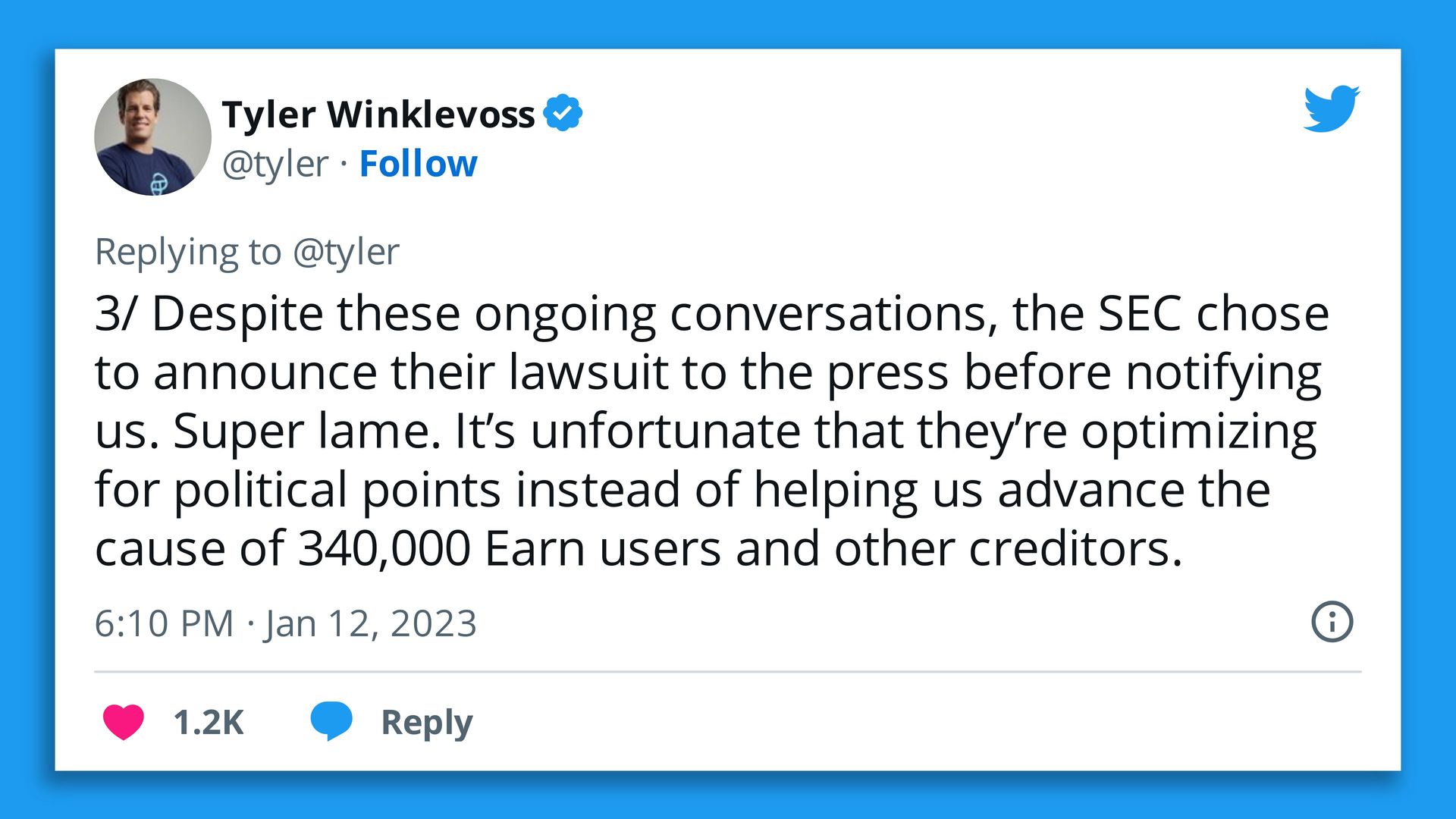
2. "Super lame"
3. Catch up quick
4. Ugh, the debt limit. Again.
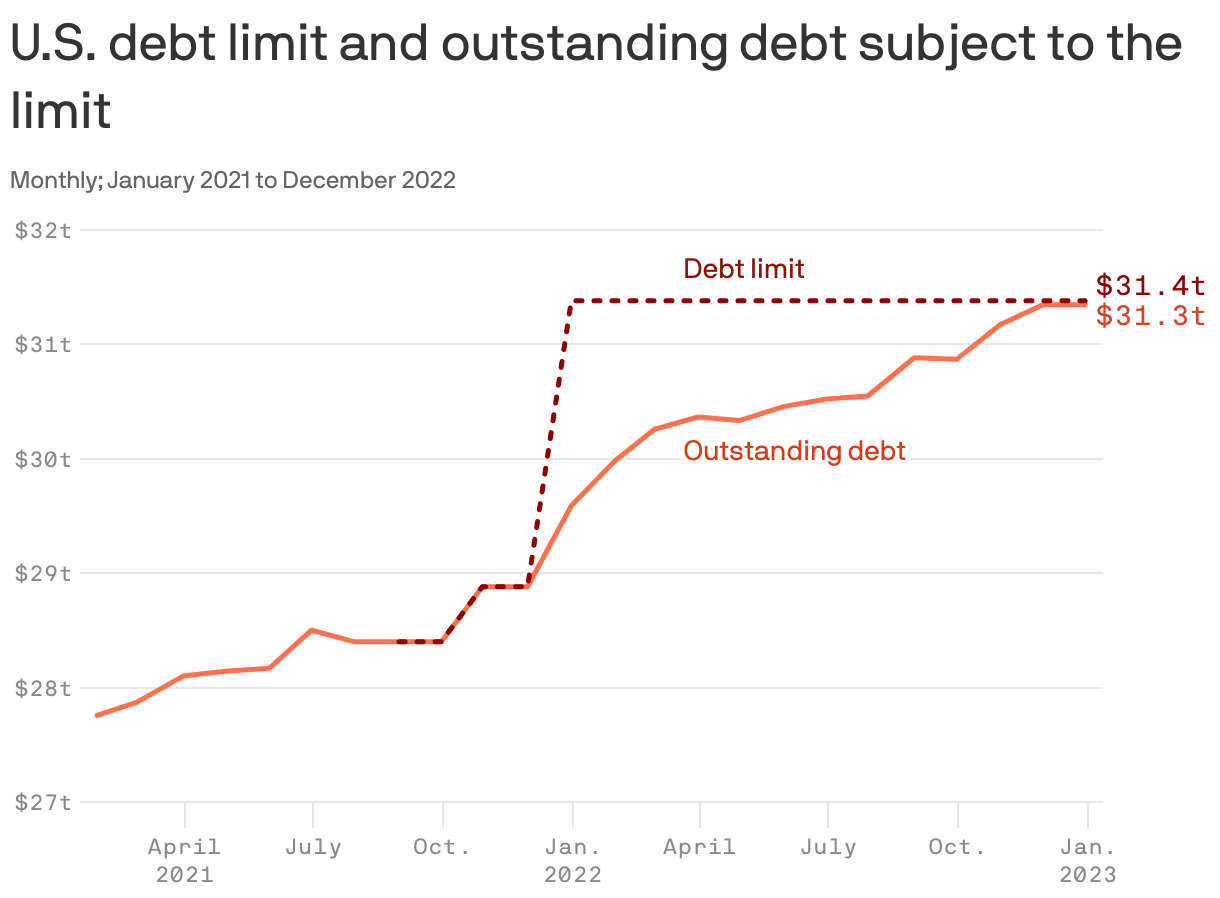
We're in the first inning of another seemingly inevitable debt limit fight, Matt writes.
Driving the news: Treasury Secretary Janet Yellen informed Congressional leaders Friday that the federal government would likely hit the debt limit on Thursday.
- As a result, Treasury will have to take "extraordinary measures" to keep paying creditors who own the U.S. government's bonds.
- These measures are things like running down Treasury's cash balances and delaying making payments to certain government pension funds, to make sure there's enough money to pay bondholders.
The big picture: Votes to raise the debt ceiling — once a bipartisan chip shot — have become increasingly fraught in recent years, typically when Republicans are in control of the House of Representatives and Democrats hold the White House, as is currently the case.
- In 2011, a chaotic fight over raising the debt limit pushed the federal government near default, caused a sharp stock market downturn, and ultimately prompted credit rating agencies to downgrade the national credit rating.
- Some analysts think hardline members on the extreme right of the Republican House conference could be willing to create a similar situation this time around.
State of play: While Yellen's statement may sound alarming, it doesn't mean that Uncle Sam is actually on the brink of running out of money and stiffing creditors.
- In her letter, she notes that the extraordinary measures should be enough to ensure the government can continue to meet obligations to bondholders until June.
Between the lines: Wall Street analysts think, if push comes to shove, the government can continue to pay bondholders until sometime in August or September.
- But after that, Uncle Sam might actually be forced to default on its debt, which could seriously shake the foundations of the global market and financial systems.
Worth noting: So far, there's little sign that the market is worrying too much about the threat of a serious crisis. (Though if you squint hard at Treasury futures you can see some indication traders see trouble brewing in the late summer and early fall.)
What they're saying: "Any resolution will go down to the wire," analysts with Bank of America wrote in a client note Friday.
Go deeper: The Bipartisan Policy Center has a great explainer on the debt limit and how we got here.
5. Don't pack up your home office just yet


Starbucks and Disney are the latest corporate giants to try to get employees back to the office a few days a week. Last week both behemoths issued new directives on in-office attendance, Emily writes.
Why it matters: Executives struggled all last year to get their workers back in the office, and they struggle still. Last week's order from Starbucks interim CEO Howard Schultz followed a similar directive in September 2022, CNBC reports.
- "Remote work is set to endure," writes Indeed's Nick Bunker in the job site's 2023 U.S. Labor Market Outlook.
Zoom out: Few CEOs plan to change course on remote work this year, according to a Conference Board survey out last week. Only 4% of chief executives in the U.S. and Europe said they plan to reduce remote work, and 5% said they want to expand it.
- Close to 40% of software development job listings advertise remote work, per Indeed data. And that number has stayed relatively flat in recent months.
- The same is happening in job listings for marketing and human resources. The share of job postings offering remote hasn't changed much — hovering around 27%, per Indeed.
The bottom line: It's probably safe to buy that nice desk chair you've been eyeing.
Axios Markets

Stay on top of the latest market trends and economic insights