Axios Markets

November 02, 2023

1 big thing: 😌 Bond market mellows
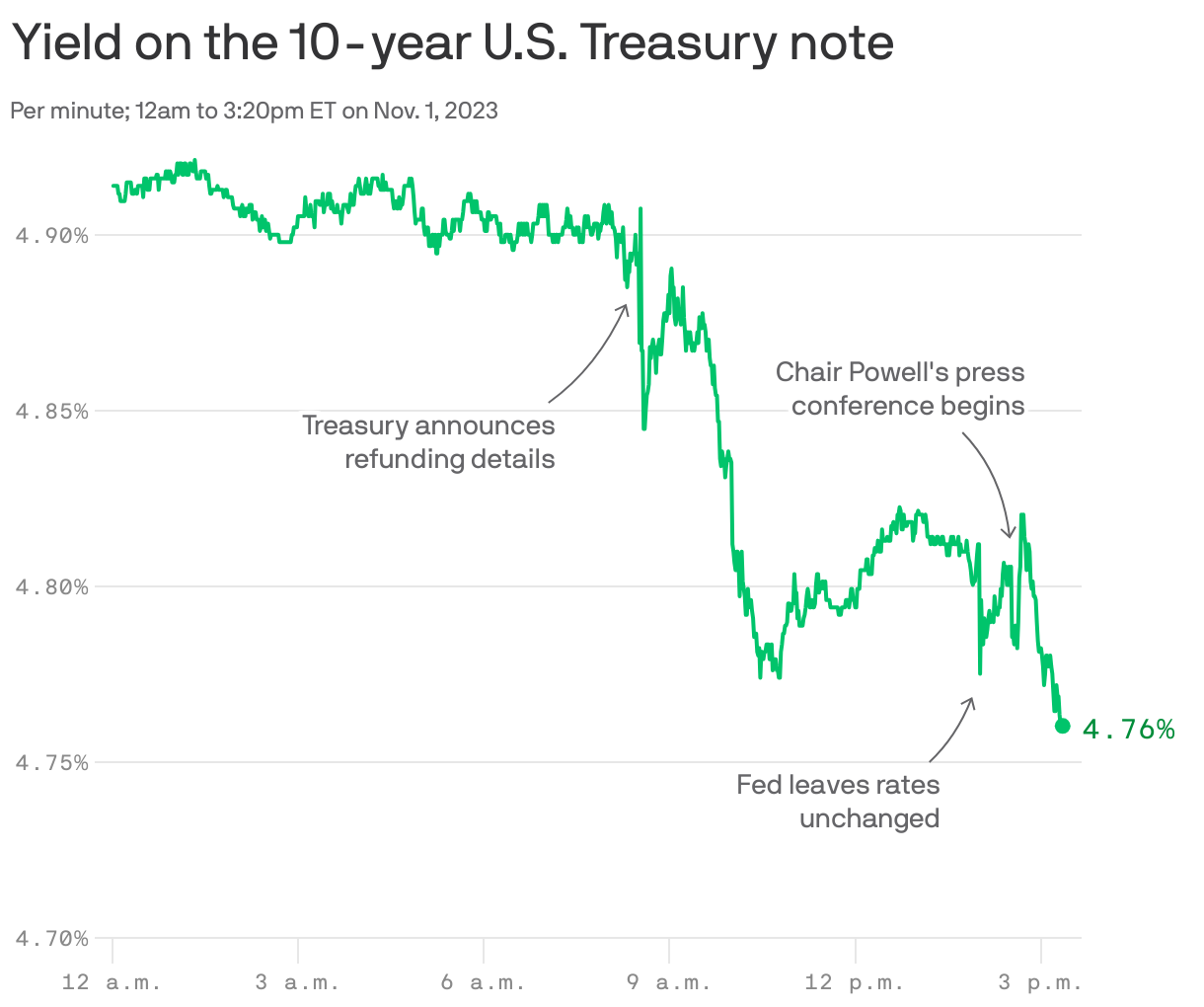
A big day in the Treasury market went smoothly, driving yields lower, Matt writes.
Why it matters: The recent rise in yields took the wind out of the stock market's sails over the last couple of months.
- The T-note yield had climbed to 16-year highs just shy of 5% by late October, from less than 4% at the end of June.
Driving the news: The Fed left monetary policy unchanged yesterday and the Treasury detailed smaller-than-expected sales of long-term securities, setting off a rally in Treasury prices, which pushed yields — which move inversely — lower.
- The lower yield helped push the S&P 500 up 1.1%, in its third straight gain.
Zoom in: Bond yields started to fall at around 8:30am when the Treasury Department issued the latest update on the details of its quarterly process of rolling over maturing debt and financing any new deficits, known as the "quarterly refunding."
- Essentially, the Treasury announced plans to sell a more modest amount of long-term debt than the market seemed to expect (instead, it boosted its plans for shorter-dated notes).
How it works: The basic logic of markets is, if a product is in lower supply, and demand stays more or less the same, prices should rise.
- That's what happened in the Treasury bond market, as the announcement of lower-than-expected supplies of long-term bonds pushed Treasury prices up, and yields lower.
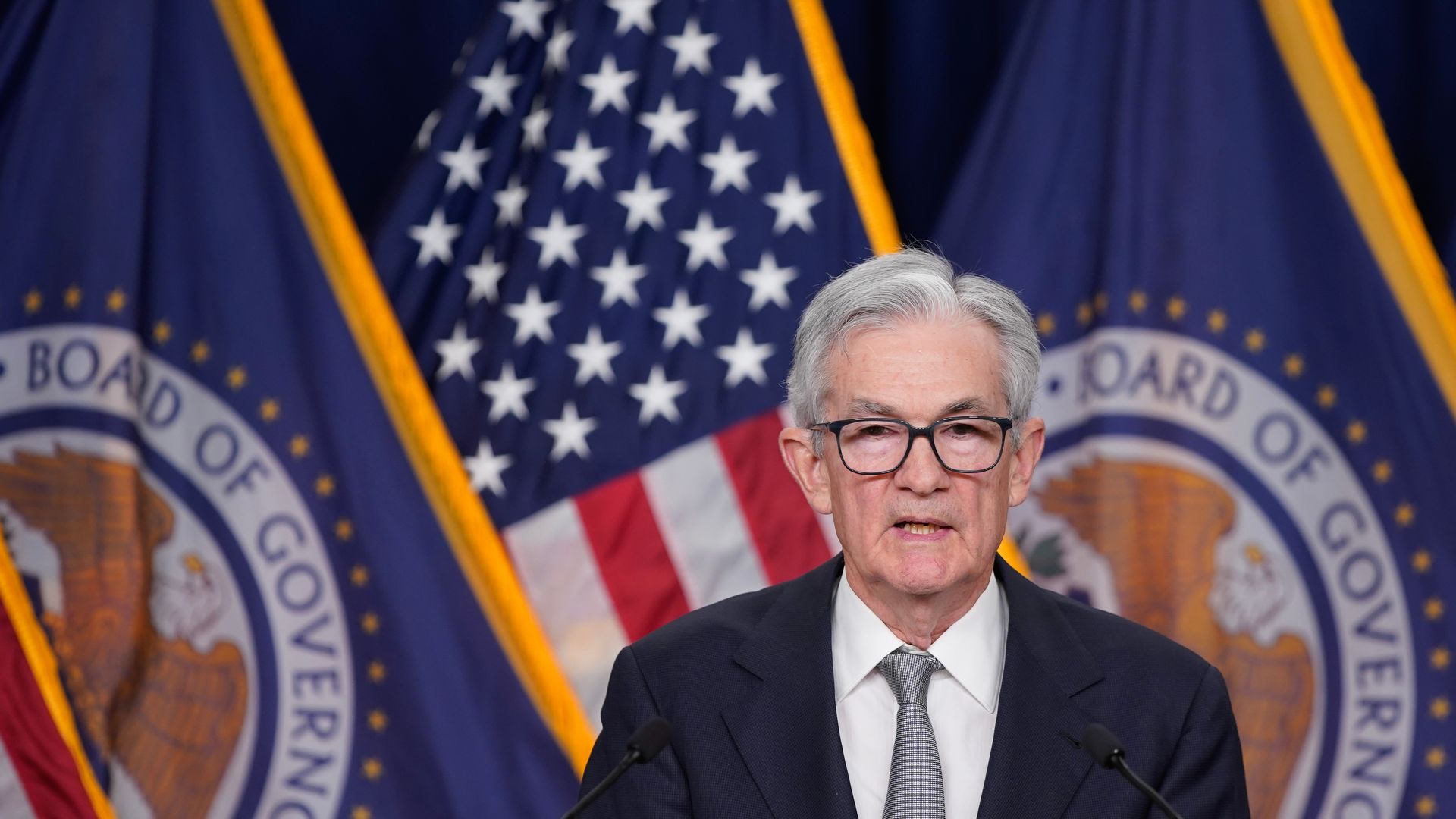
Separately, the Federal Reserve at 2pm announced that it would leave short-term rates alone, instead of hiking again. Half an hour later Fed chair Jerome Powell's news conference reinforced the idea that the already implemented rate hikes are still working their way through the economy, so the central bank is in no rush to hike further.
What they're saying: "Our read is that the Fed is in the process of transitioning into the next logical stage of the cycle – i.e. leaning on the higher-for-longer messaging to avoid being pressured to cut rates before the Committee deems it prudent," wrote analysts with BMO Capital Markets.
The bottom line: The bond market seems to like that kind of message, and so do stocks.
2. 🗣 Quoted: That's a no.
Federal Reserve chair Jerome Powell. Photo: Al Drago/Bloomberg via Getty Images
3. Catch up quick
4. Broker fees under attack

Illustration: Aïda Amer/Axios
5. Downer


The stocks of online real estate giants Redfin and Zillow dropped on the news of the jury verdict because, well, no one knows exactly what's going to happen.
Reality check: A real estate shake-up might not be so bad for these companies.
- Zillow, which isn't a party in the case, will "thrive" no matter how the litigation plays out, CEO Rich Barton told investors on an earnings call yesterday afternoon. "We're positioned really, really well for all weather."
Zoom in: Company execs expect the litigation will take years to play out, but in the near term will lead to more transparency on commissions, as well as new provisions that allow buyers and sellers to negotiate fees, Barton said.
- Those are the kinds of changes that were worked into settlements the plaintiffs negotiated with brokerages that settled before the trial.
Between the lines: In the longer term, if NAR becomes less powerful and loses control over the way real estate listings are posted, or if the use of buyer agents becomes less popular — or even goes away, as some insiders fear — platforms like Redfin and Zillow would likely benefit.
- They'd become a more vital source of information, home listings and advice; more akin to a classified service.
- That's still an unlikely scenario, though, Barton said.
Axios Markets

Stay on top of the latest market trends and economic insights