Axios Macro
April 24, 2026


There's the off-ramp! U.S. Attorney for the District of Columbia Jeanine Pirro said on X this morning that the Federal Reserve's inspector general will take over investigating cost overruns on the central bank's headquarters building.
- It should pave the way for Kevin Warsh's nomination to move through the Senate and for him to be in place when Jerome Powell's term as chair ends three weeks from today (or not long after).
- More below. But first, we go deeper on potential dollar swap lines for Persian Gulf allies.
Situational awareness: Consumer sentiment fell in April, though not as much as a preliminary number suggested, the University of Michigan said. Its long-running index fell to 49.8, from 53.3 in March, edging to a new all-time low beneath the 50 reported in June 2022.
Today's newsletter, edited by Jeffrey Cane and copy edited by Katie Lewis, is 1,096 words, a 4-minute read.
1 big thing: A new type of swap line
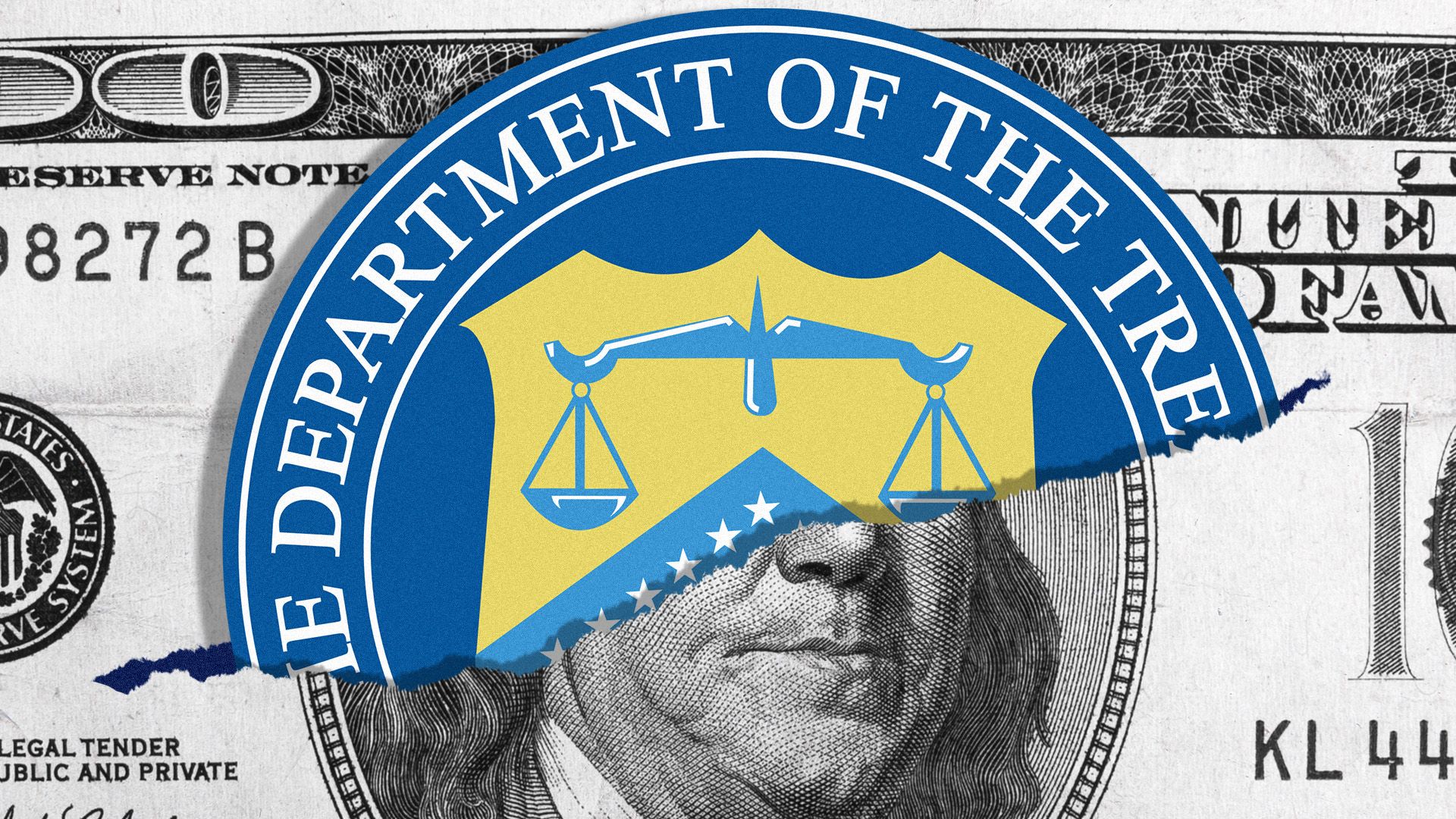
If the United States gets into the business of providing dollar liquidity to the United Arab Emirates and other Persian Gulf states battered by the Strait of Hormuz's closure, it will amount to a novel use of an old power.
The big picture: The Fed used swap lines with foreign central banks as a key tool to calm global financial disruptions in periods of stress, starting in the early days of the global financial crisis in 2007. They were driven by Fed leaders' belief that dollar funding shortages worldwide risked blowing back to the U.S. banking system and economy.
- The potential use to backstop Gulf states carries a more explicit geo-strategic role: seeking to reward and bolster key allies in the region.
- Warsh, in his confirmation hearing this week, explicitly noted "international finance" as an area where the Fed ought not be strictly independent, implying greater collaboration with the executive branch on use of swap lines.
Catch up quick: Treasury Secretary Scott Bessent confirmed Wednesday that "many of our Gulf allies have requested swap lines" and seemed receptive to their use.
- The Treasury itself has an Exchange Stabilization Fund of around $218 billion that it can deploy to intervene in foreign exchange markets.
- The Fed, by contrast, has a theoretically unlimited balance sheet it can use to make dollar liquidity available worldwide, via other, trusted central banks. At the peak in December 2008, swap line usage neared $600 billion.
Between the lines: If the Fed were to extend swap lines to Gulf states like the UAE, Qatar and Bahrain, it would entail a quite different logic from previous uses of the tool.
Flashback: The 2008-era swap lines were extended to other G7 central banks (European Central Bank, Bank of Japan, Bank of England and so on) and those of smaller rich countries with tight ties to the U.S. (Switzerland, Sweden, Denmark).
- They were eventually expanded to a small number of emerging markets (Mexico, Brazil, South Korea) which had both significant economic importance to the U.S. and, in the view of Fed officials, trustworthy central banks and other economic institutions.
- In transcripts of closed-door Fed policy meetings from 2007-2008, since released, geopolitical considerations are not an explicit part of the calculus. Rather, the emphasis was on the potential for dollar disruptions in those markets to redound to the U.S. economy.
The bottom line: In the past, swap lines have been an instrument of U.S. dollar dominance driven by systemic fears for U.S. financial stability and exposure of the U.S. banking system — not an effort to help allies in a gnarly global conflict.
Go deeper: Our colleague Emily Peck explored the logic behind potential swap lines in this morning's Markets newsletter.
2. What the end of the Powell probe could mean
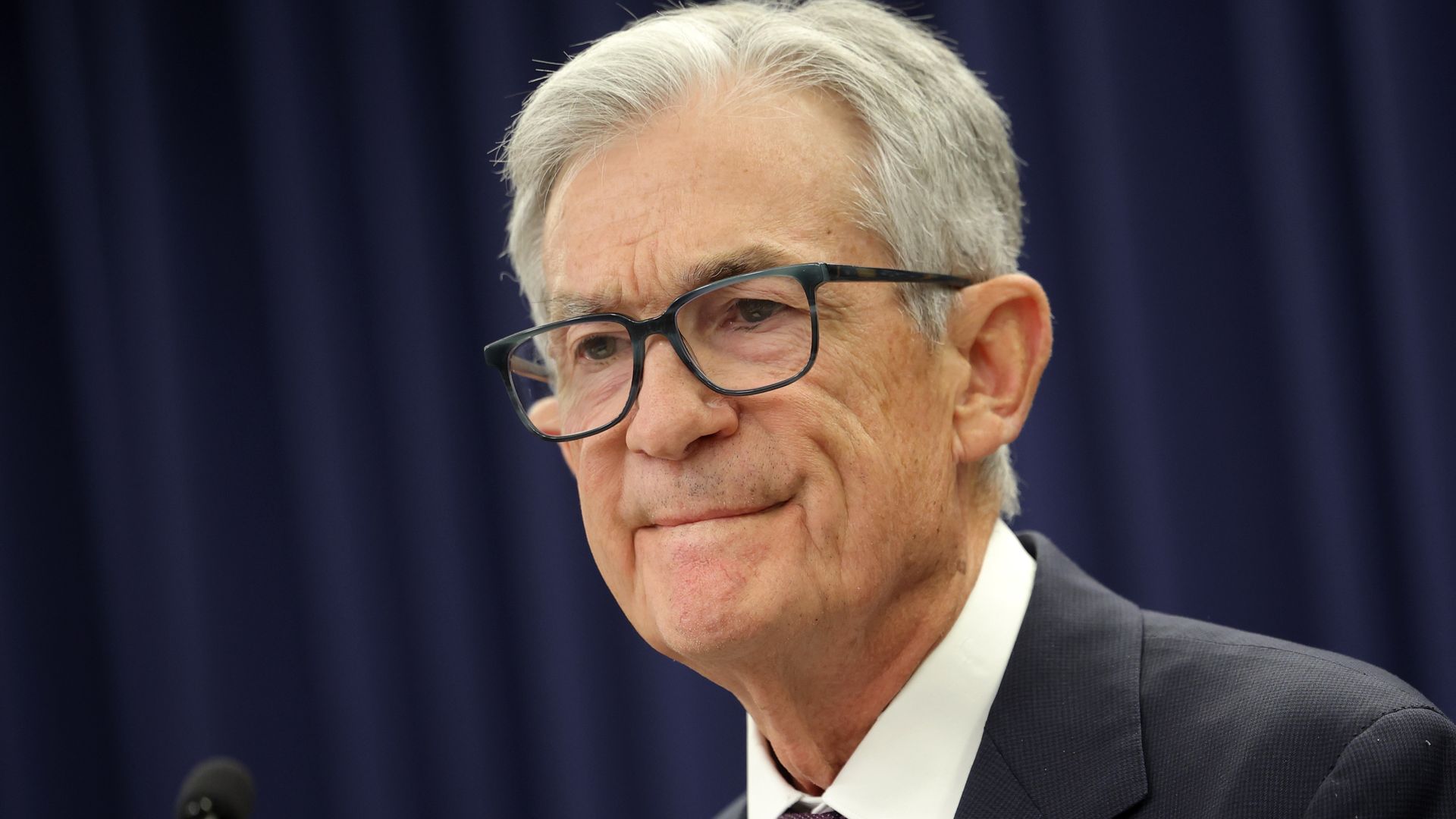
Just two days ago, Pirro vowed to press ahead on the Department of Justice's criminal probe into Powell.
- Today, she announced that she was dropping the investigation, after it became clear that such a move would block Warsh from confirmation.
Why it matters: The gambit by Sen. Thom Tillis (R-N.C.) — to withhold his support for the nomination until the investigation went away — appears to have worked.
- The end of the investigation opens the path for Warsh to secure enough votes from the Senate Banking Committee before going to the full Senate, where he is expected to secure the votes necessary for confirmation.
- In theory, it allows enough time for Warsh to be confirmed and sworn in as Powell's term as the chair comes to an end.
- As of this newsletter's deadline, Tillis had not indicated whether he is satisfied and ready to advance Warsh's nomination through the banking committee.
What they're saying: Pirro says that the Fed's internal watchdog — not the DOJ — will examine cost overruns on the central bank's building construction.
- "I expect a comprehensive report in short order and am confident the outcome will assist in resolving, once and for all, the questions that led this office to issue subpoenas," Pirro said in her post on X this morning.
- "Accordingly, I have directed my office to close our investigation as the IG undertakes this inquiry. Note well, however, that I will not hesitate to restart a criminal investigation should the facts warrant doing so," Pirro said.
The other side: Sen. Elizabeth Warren (D-Mass.) doubled down on her criticism of Warsh's nomination.
- "Let's be clear what the Justice Department announced today: they threatened to restart the bogus criminal investigation into Fed Chair Powell at any time while failing to drop their ridiculous criminal probe against Governor Lisa Cook," Warren said in a statement, referring to President Trump's attempt to fire the top Fed official.
- "The Senate should not proceed with the nomination of Kevin Warsh," Warren said.
The intrigue: It comes after a federal judge twice quashed DOJ subpoenas issued against Powell alongside stinging opinions, the latest noting that the probe was aimed at pressuring Powell to yield to Trump to cut rates or resign.
By the numbers: The odds that Warsh will be confirmed by May 15, when Powell's term is up, rose to 83% on PolyMarket this morning, from 27% yesterday.
What to watch: It's unclear whether the conclusion of the DOJ probe meets the test Powell laid out to leave the Fed board — a key question next week, when Powell will hold what appears to be his final press conference as the central bank's leader.
- His term as chair expires in three weeks, but he can stay on as a governor through 2028.
- "I have no intention of leaving the Board until the investigation is well and truly over, with transparency and finality," Powell said at a press conference.
- A Federal Reserve spokesperson did not respond to a request for comment by publication time.
Sign up for Axios Macro