Supreme Court sounds skeptical of Trump's Fed firing

Add Axios as your preferred source to
see more of our stories on Google.
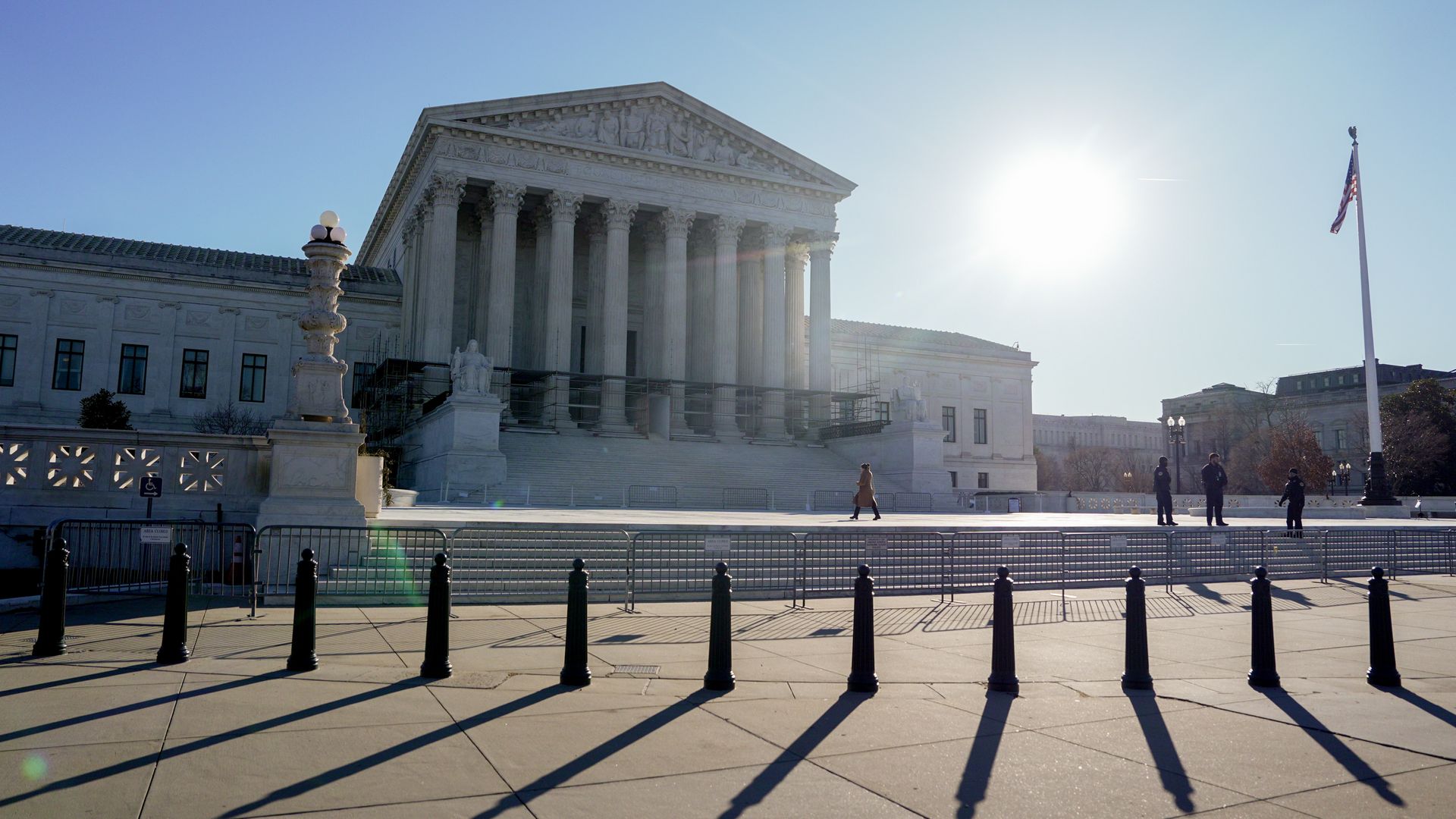
The Supreme Court. Photo: Al Drago/Bloomberg via Getty Images
Supreme Court justices expressed skepticism of President Trump's attempted firing of Federal Reserve governor Lisa Cook in sometimes-testy oral arguments on Wednesday.
Why it matters: The case is expected to set a precedent for how free a hand presidents have to install new leadership at America's central bank, in light of Congress' efforts to insulate the Fed from politics.
- The justices' questions suggest they are focused on the procedural and factual dimensions of the case — whether Cook needed a greater opportunity to defend herself against mortgage fraud accusations, for example — rather than the broad constitutional principles.
- Past court rulings have suggested that the justices see value in the Fed's vaunted independence and view it differently from other independent government agencies in light of the long, tortured history of U.S. central banking.
- The oral arguments were a dramatic scene, with Fed chair Jerome Powell — whom the Trump Justice Department has separately investigated over potential criminal charges that Powell says are rooted in policy disagreements — observing in person.
What they're saying: Justice Brett Kavanaugh raised the possibility that if the president can remove Cook for cause based only on his own judgment and without judicial review, it would "weaken if not shatter the independence of the Federal Reserve."
- "If there's no judicial review, the president can just define it on his or her own," Kavanaugh said. "If this were set as a precedent, it seems to me big-picture, what goes around comes around," and a future Democratic president could fire Trump-appointed Fed governors on their first day in office.
- "And then, we're really at at-will removal," he said. "So what are we doing here?"
Another conservative justice emphasized that the Trump administration seemed to have used a rushed process unnecessarily.
- "Is there any reason why this whole matter had to be handled by everybody ... in such a hurried manner?" Justice Samuel Alito asked the government's lawyer, Solicitor General D. John Sauer.
- "You begin by laying out what you claim to be the factual basis for the for-cause removal, but no court has ever explored those facts," Alito continued. "Are the mortgage applications even in the record in this case?
- Justice Neil Gorsuch asked what a hearing to establish legal cause for Cook's firing would even look like. Would it consist of the president "calling Ms. Cook into the Roosevelt Room, sitting across a conference table, listening for, I don't know how long, how much evidence ... and then making a decision. Could that suffice?"
Chief Justice John Roberts inquired as to whether, in the administration's view, it even makes a difference whether Cook made "an inadvertent mistake or whether it was [a] devious way to get a better interest rate."
- Roberts said to Sauer, "Doesn't matter for you, right?
Of note: Sauer interrupted justices' questions on a few occasions and, at one point, was asked to allow them to speak.
Yes, but: Conservative jurists also had skeptical questions for Cook's lawyer, Paul Clement.
- They questioned, among other things, lower-court holdings that Cook's behavior before taking office doesn't constitute cause and that she had a property right in her job as a Fed governor.
Catch up quick: Cook was appointed to a 14-year term as a Fed governor by President Biden in 2022.
- The Federal Reserve Act specifies that governors be appointed to such long terms to maintain the central bank's independence from day-to-day political influence — but allows a president to fire a governor for cause.
- In August, Trump said he was firing Cook for cause, citing mortgage applications from before she was a Fed governor. The president said the documents show fraud for claiming two separate homes as a primary residence.
- Those claims had not — and still have not — been adjudicated in any civil or criminal procedure. Cook's lawyers presented evidence in a lower court that she did not intend to mislead her lenders.
- The government argued that even if the conflicting mortgage filings were inadvertent, it would qualify as gross negligence and still justify Cook's firing.
State of play: The Supreme Court has taken a deferential stance toward executive authority, expressing skepticism of legal restrictions on the president's ability to fire heads of other independent agencies.
- But brief references to the Fed in other decisions have suggested that the conservative majority justices see the Fed as a special case within the government.
