Axios Macro
October 26, 2023

1 big thing: The sure-bet recession that wasn't


This time a year ago, the Federal Reserve was raising interest rates three-quarters of a point at a time, big-name companies were announcing layoffs, and a 2023 recession appeared, to many analysts (and, we confess, economics writers) to be baked into the cake.
- If you instead had predicted near-5% Q3 growth, people would have looked at you funny.
Driving the news: But that's what happened, with a 4.9% annual rate of GDP growth last quarter, the strongest since late 2021. That followed solid 2-ish% growth readings in Q1 and Q2.
Why it matters: There is more underlying strength in the U.S. economy, and especially consumer demand, than nearly anybody thought. That has helped boost growth and the job market, but makes future progress in bringing down inflation less certain.
- As Treasury Department officials Eric Van Nostrand and Tara Sinclair write in a new post, the United States is the closest among major advanced economies to returning to its pre-pandemic growth trend.
- "Even today, most advanced economies are below the trend growth path that they were on before the pandemic – except the United States, which is on track this year to return to reach the level that would have been predicted by the pre-pandemic trend," they write.
By the numbers: The sizzling GDP number was boosted by a surge in business inventories, which contributed 1.3 percentage points to overall growth but tends not to be a good signal about the underlying trend.
- But final sales to private domestic purchasers, which captures the underlying demand trend, were up at a 3.3% annual rate, comfortably above the long-term trend.
Yes, but: There are signs the job market is softening and that Americans' spending has been fueled by falling savings rates. That could bode poorly for a consumer-driven expansion in the quarters ahead.
- Meanwhile, high interest rates seem to be exerting a meaningful drag on business investment spending. Nonresidential fixed investment was actually down slightly, off an annualized 0.1%, in Q3.
What they're saying: EY-Parthenon chief economist Gregory Daco called it the "summer of 'LOL.'"
- "While these signs of economic strength will fuel speculations that the economy is reaccelerating, we do not expect such strong momentum will be sustained," he wrote in a note. "[W]e believe cooler days are on the horizon."
- "Cost fatigue, rising debt servicing costs and slowing job growth are about to be felt more widely by consumers and businesses. In that regard, the broad-based pullback in business equipment investment is a cautionary tale."
The bottom line: There is remarkable underlying strength in the economy that has prevented the much-predicted recession of 2023 from occurring — but no assurance that good fortune will continue in 2024.
2. The ECB keeps it steady
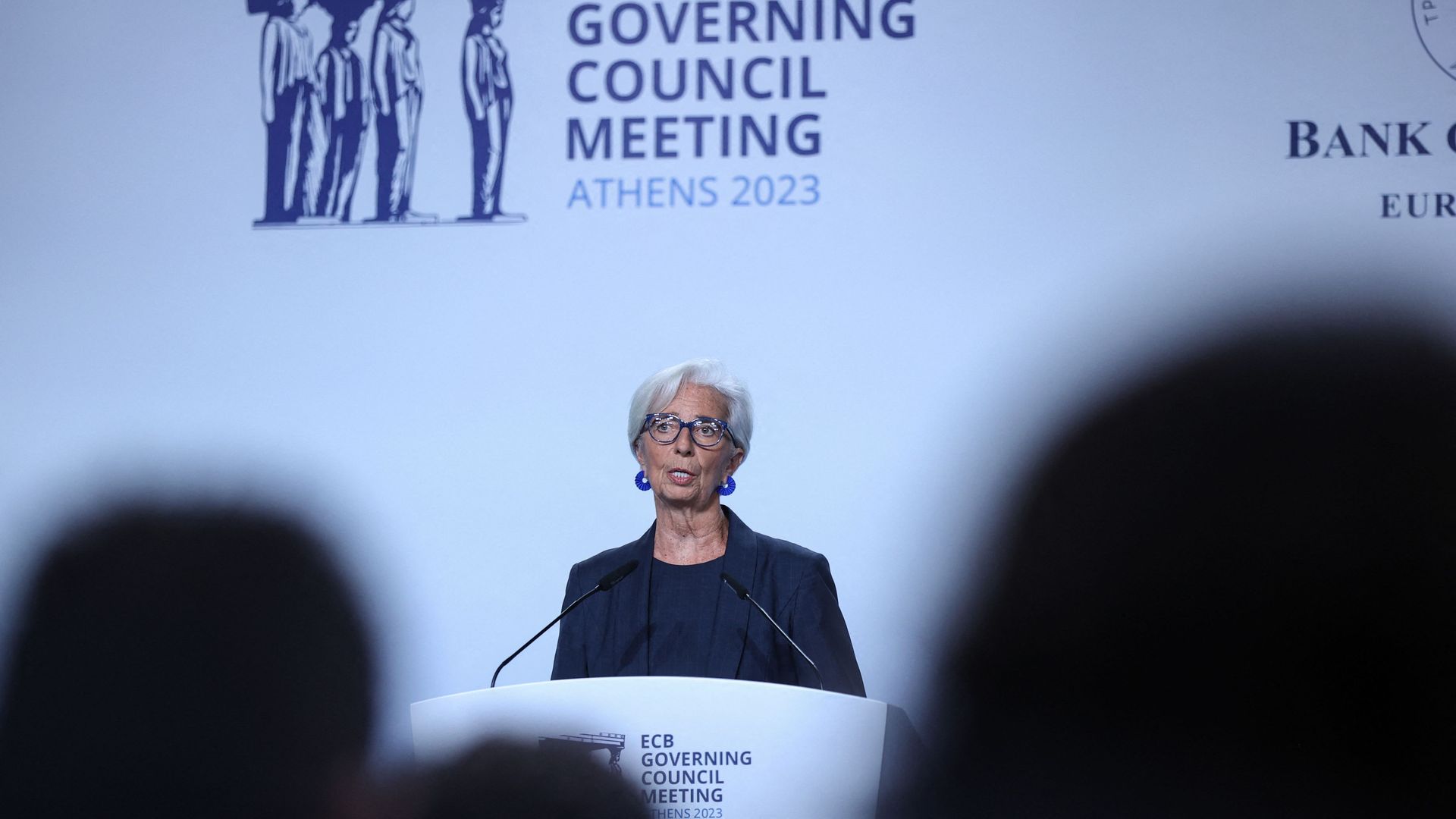
ECB president Christine Lagarde in today's news conference. Photo: Aris Oikonomou/AFP
Axios Macro
Stay ahead of the curve on the most important economic developments with reporting and analysis on how business, policy, and markets collide.