Axios Login

February 03, 2023

Happy Friday! Today's Login is 1,206 words, a 5-minute read.
1 big thing: Tech earnings show a powerful industry taking some licks

Illustration: Annelise Capossela/Axios
This week's earnings reports confirmed that Big Tech companies are taking a hit from a slowing economy — but also that they're still raking in tons of money.
The big picture: Tech companies have been on a decade-long growth jag, creating a generation of investors and workers who are now experiencing their first significant experience of a downturn, layoffs and retrenchment.
Apple on Thursday reported sales and earnings that fell below expectations.
- The iPhone maker was hit by the same macroeconomic pressures and strong dollar that crimped other tech companies' results.
- But COVID-19-related disruptions of manufacturing in China also limited supplies of the iPhone 14 Pro and iPhone 14 Pro Max during the quarter.
Google parent Alphabet also reported financial results Thursday that disappointed investors, with lower online ad spending on YouTube cited as among the culprits.
- YouTube advertising was down more than 7% last quarter compared to the same quarter the previous year, causing Alphabet's overall revenue growth for the quarter to drop to just 1% year over year.
Amazon managed to beat overall revenue expectations. But investors were still spooked by lower-than-expected revenue from its AWS cloud computing unit.
- The company warned that cloud growth will slow and companywide operating profits in the current quarter could be anywhere from $0 to $4 billion. Analysts had expected operating profits near the high end of that range.
Microsoft last week reported its slowest quarterly sales growth in years, as the PC market has rapidly cooled off following a pandemic-fueled boom.
Facebook parent Meta offered the brightest spot among the tech giants, reporting both strong results as well as a positive outlook, despite the tougher economy and online ad slowdown.
- It also said expenses for the full year will be lower than it had previously anticipated.
- Wall Street swooned, pushing Meta's stock up more than 23% Thursday. The stock has more than doubled since it hit a low three months ago.
Be smart: All of the companies said their results would have been better were it not for the effect of a strong dollar, which effectively makes it harder to sell products overseas.
Between the lines: All these companies, with the exception of Apple, have announced layoffs as a response to the downturn.
- But the cuts still leave all the companies with more workers than they had before they went on a hiring binge during the pandemic.
What to watch: Most of these firms offered limited guidance, saying they expect economic weakness through the first half of the year, but leaving open the possibility of improvement in the second half of 2023.
2. Exclusive: YouTube contractors plan strike
Illustration: Sarah Grillo/Axios
A group of YouTube contractors in Texas plans to strike later today in protest of rules requiring such workers — even those who have always worked remotely — to report to the office. The workers plan to walk out this morning, with a press conference set for noon, Axios has learned.
Why it matters: The move comes amid increased labor tensions at large tech companies, including Google, which owns YouTube. Some workers at Apple and Amazon have sought to unionize, as have some in the video game industry.
Details: All of the 43-person team of contractors for YouTube Music voted to strike, following an edict that they report to an office in Austin starting on Monday.
- The workers, who are technically employed by Cognizant, were notified of the in-office rule in November. That came after workers had filed the prior month for union recognition, leading some to conclude the move was being made in retaliation.
- The vast majority of the contractors were hired during the pandemic — and have always worked remotely. Nearly a quarter of them live somewhere other than Austin.
- Workers say their pay, which starts at around $19 per hour, isn't enough to cover the costs of relocating to — and living in — Austin.
Between the lines: Google workers and contractors have staged a series of actions this week to draw attention to pay and other conditions at the tech giant.
- In particular, workers have called attention to the so-called "shadow workforce" that includes temporary workers, vendors and contractors who receive lower pay and few of the benefits afforded full-time workers.
Separately, on Wednesday, a group of contractors who serve as "raters" evaluating search results held a protest at Google's Mountain View offices on Wednesday and delivered a petition demanding increased pay and other workplace changes.
- Another rally outside Google's retail store in New York on Thursday featured current and laid-off Alphabet workers and was timed to coincide with the company's earnings report.
The big picture: Employees and contractors at Google formed the Alphabet Workers Union in 2021 to give workers a stronger voice, albeit without the full powers of a traditional union approved by the majority of workers.
- As a minority union, the Alphabet Workers Union can't collectively bargain on behalf of workers or officially represent employees.
3. Twitter will charge developers for API access
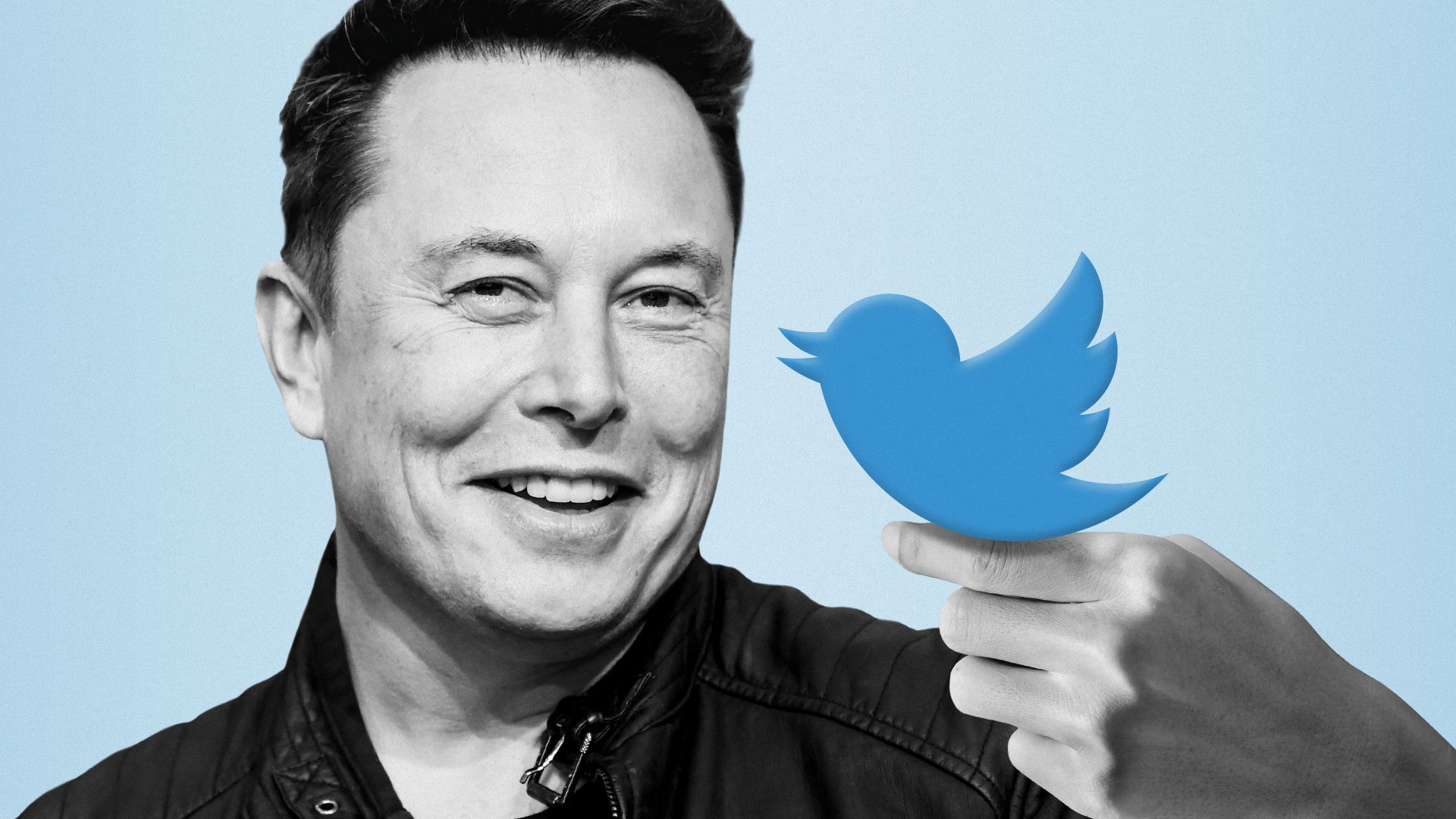
Photo illustration: Megan Robinson/Axios. Photo: Britta Pedersen-Pool/Getty Images
Already shaken by a host of changes, the Twitter community is grappling with the company's announcement late Monday that it will start charging developers whose apps and software use its API to access to its services.
Why it matters: Twitter got big in part by offering its code and data as infrastructure to others for user authentication, news aggregation and other kinds of third-party uses — but in the Elon Musk era the company's top priority is revenue.
Catch up quick: An API is a software program's service entrance, where programs written by others can ask for data and submit requests directly without going through the consumer-facing front door.
- Twitter had already changed the terms of its API to effectively shut down access for third-party Twitter apps.
What they're saying: The announcement kicked off a firestorm of criticism on Twitter itself, with protests from small software firms who'd built products on the assumption that Twitter's API would remain free.
- In a tweet on Tuesday, Musk said that developers of bad bots had "badly abused" the free API and that even charging $100 per month and verifying IDs of those with access will "will clean things up greatly."
Yes, but: As BuzzFeed News points out, there are a whole lot of good bots that make use of the API to point out who is following who, or when the New York Times uses a word for the first time — or all sorts of other arcane but useful or fun things that enrich Twitter but aren't businesses.
Be smart: Musk's Twitter has a record of announcing big changes and then modifying its plans on the fly, so don't be surprised if the API policies change again.
4. Take note
On Tap
- It's National Bubble Gum Day and National Carrot Cake Day. Celebrate both, by all means. Just, please, not at the same time. For your sake.
Trading Places
- Accenture has tapped former Magic Leap design chief James Temple as co-lead for its metaverse-related business unit.
- AI and data analytics provider Dataiku hired Google and SailPoint Technologies veteran Ren Lee as senior vice president of marketing for the Americas.
ICYMI
- Apple has decided not to hire a new design chief. Instead, the design team will report to COO Jeff Williams, sources say. (Bloomberg)
5. After you Login

Unfortunately, the groundhog saw his shadow, which I think means six more years of 2020.
Thanks to Scott Rosenberg and Peter Allen Clark for editing and Bryan McBournie for copy editing this newsletter.