Axios Login

January 26, 2022
We're writing a book! (Well, Axios, that is.)
- Check out this tweet from our CEO, Jim VandeHei, who says it'll be about "the secrets of Smart Brevity — the signature @axios style of efficient, effective communication."
- Title: "Smart Brevity: Write Less. Say More. Be Heard." To be pubbed by Workman — pre-orders start in March.
Today's newsletter is 1,189 words, a 4-minute read.
1 big thing: Microsoft's product chief sees PC revival as durable
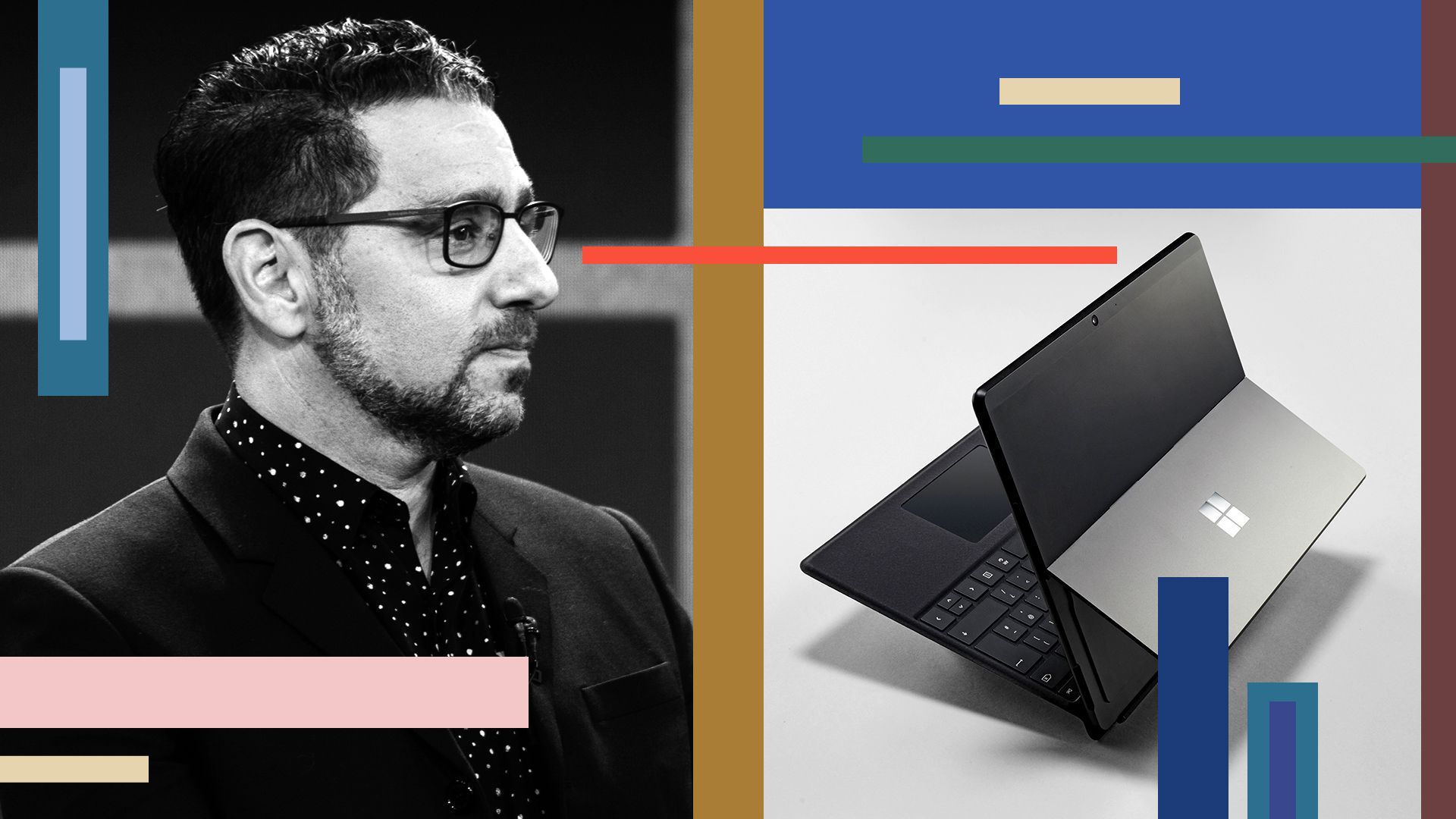
Photo illustration: Shoshana Gordon/Axios. Photos: Neil Godwin/Future Publishing, Mark Kauzlarich/Bloomberg via Getty Images
After years of stagnation, the PC industry has seen its best growth in a decade as people buy new laptops and desktops. While some pandemic-fueled changes may prove temporary, Microsoft product chief Panos Panay sees the industry's return to growth as durable.
- "This pandemic has been a forcing function," Panay said in an exclusive interview on Tuesday, following the release of Microsoft's quarterly earnings report.
Why it matters: The PC market got a boost as life moved online, but the question for the industry now is whether and how it can keep the momentum going.
The big picture: Before the pandemic, many households focused their tech spending on buying bigger TVs and upgrading their cell phones every couple of years, while trying to keep their PCs as long as possible.
- During COVID-19, the PC has taken on new life as a tool for remote work, distance learning and staying in touch with friends and family in a world where travel has been greatly curtailed.
- That drove the global shipments of laptops and desktops for the last quarter to surpass 90 million for the second year in a row, and sales for the year reached a level not seen since 2012.
- Microsoft reported 25% growth in the revenue it gets from having Windows installed on new PCs.
Yes, but: Panay said Windows' gains went beyond just riding the coattails of a rebounding PC market.
- People are using their PCs more as well, he says, especially those running the latest version, Windows 11, which came out in October. Microsoft says people are spending 40% more time on their Windows 11 PC compared to machines running Windows 10.
- Gaming is a big piece of that, and Panay said he is excited about Microsoft's plan to buy Activision Blizzard. "Gaming is so core to Windows," he said.
Between the lines: As for how to keep the growth going, Panay said a big focus this year will be getting businesses to upgrade to Windows 11 as well as pushing developers to take advantage of its new features, like revamped widgets.
- Longer term, Microsoft and Panay see the PC serving as "the gateway to the metaverse," adopting the industry's most popular buzzword.
2. Exclusive: Adobe's deepfake fight takes shape
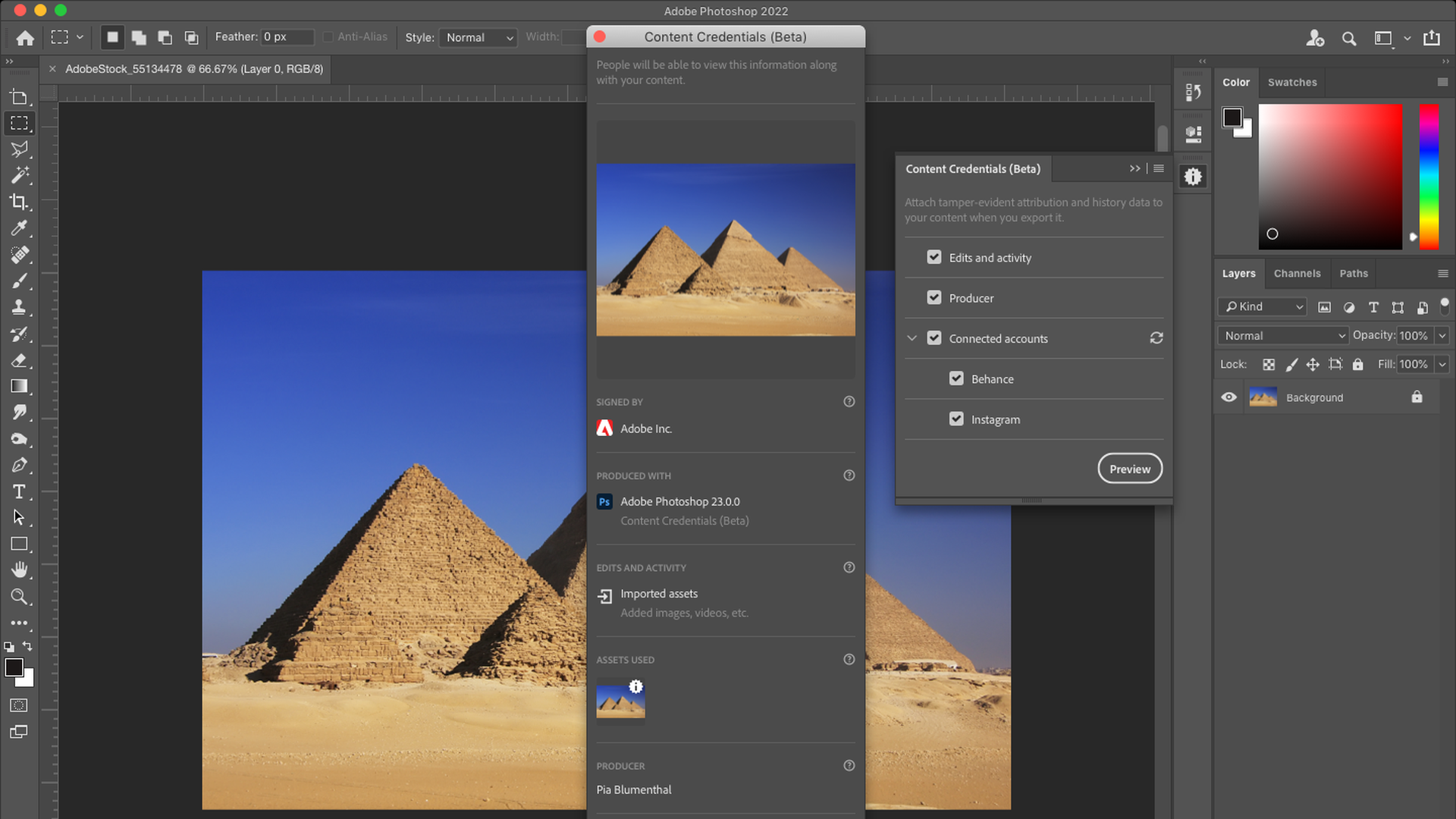
Image: Adobe
As part of its effort to fight deepfakes, a coalition of tech companies led by Adobe has finalized the details for a standard way to verify how a photo or video was captured and to document any subsequent edits.
Why it matters: It's increasingly easy to create a video or image that looks legitimate but has been altered to completely change its meaning.
The latest: Adobe and its partners — including Microsoft, Arm, Intel TruePic and the BBC — will announce today that they have finalized version 1.0 of their standard for digital content provenance. That means that companies can implement the approach without worrying that the specification will change and break their products.
How it works: The new standard, developed over the last year, identifies when and where an image or video was first created, as well as what changes have been made.
- "The speed with which this was developed and implemented was pretty much unprecedented," Adobe's Andy Parsons told Axios.
- Last year Adobe showed how the technology could work within Photoshop, using a not-yet-final version of the specification.
- Adobe plans to release the code it used via open source so that others can include authentication data in their own apps.
Between the lines: The next part of the work is educating the public on what it means to be authenticated, since an image or video can be put through this system and significantly altered.
- "It's not a blue check mark," Parsons said. "That's why there is so much work ahead of us."
What's next: Adobe wants to add an option to authenticate audio-only recordings as well.
3. $52B for chips in new competition bill
House leaders Tuesday introduced their version of a bill intended to "supercharge" the domestic semiconductor industry, unsnarl supply chains and stimulate R&D in U.S. firms to compete with China, Axios' Sophia Cai and Margaret Harding McGill report.
Why it matters: The fragility of the U.S. semiconductor supply chain has left companies with just a five-day supply, according to a Commerce Department survey of semiconductor suppliers and major businesses.
The big picture: The Senate passed a similar bill, The U.S. Innovation and Competition Act, last June, with considerable bipartisan support.
Between the lines: With the progress of the Biden administration's Build Back Better initiative stalled, Democrats are turning to the competition bill as an opportunity to notch a win and boost economic growth.
The details: The House bill, named the America Competes Act, includes $52 billion to encourage more semiconductor production in the U.S. and $45 billion for grants and loans to to improve supply chain resilience and manufacturing — among other programs.
- It also includes some funding to address social and economic inequality and climate change.
In addition, the House package includes a bill, known as the INFORM Act, meant to deter online sales of counterfeit and stolen goods.
- The bill would require online marketplaces with third party sellers, such as Amazon or Etsy, to verify the identity of high-volume sellers and provide a way for consumers to contact them.
- Amazon had initially opposed the legislation, but in October it backed the House bill — in part because it would override similar state laws.
4. Charted: Bitcoin's 2021 gains wiped out (again)


Bitcoin has lost nearly half its value since its November peak, wiping away hundreds of billions — and any remaining suspicion that the cryptocurrency isn't correlated to risk assets like equities, Axios' Kate Marino reports.
State of play: Bitcoin's latest selloff parallels the recent stock market declines stemming from the Federal Reserve's hawkish pivot (it even rode the same rollercoaster equities did Monday).
- Markets Insider charted the correlation between bitcoin and stocks throughout recent market corrections — and notes that "for now, bitcoin is less of a hedge against inflation, and is instead a volatile risk-on asset that does well when stocks do well, and vice versa."
Worth noting: Despite the staggering losses of the last two months, bitcoin is still five times higher than its price at the beginning of 2020.
5. Take note
On Tap
- Intel reports earnings after the markets close.
- VentureBeat's GamesBeat: Into the Metaverse conference takes place online, including my interview with Second Life founder Philip Rosedale and Linden Labs CEO Brad Oberwager.
Trading Places
- SoftBank Robotics America named Jordan Sun as the head of product, design and engineering. He was previously chief innovation officer for the city of San Jose, California.
- Ryan Wyatt is leaving his post as head of YouTube Gaming to become CEO of Polygon Studios.
ICYMI
- Activision Blizzard won't voluntarily recognize a union of QA testers at its Raven Software unit. (Washington Post)
- Facebook's cryptocurrency efforts are facing a setback as the Meta-based Diem (formerly Libra) cryptocurrency association is said to be in talks to sell its assets. (Bloomberg)
- The EU General Court struck down a $1.2 billion fine levied in 2009 against Intel for alleged anti-competitive practices. (Bloomberg)
6. After you Login
Enjoying the pixel art boom? Check out the work of a Taiwanese sculptor who creates works out of wood that look as if they are pixelated.
Sign up for Axios Login

Taking you inside the AI revolution, and delivering scoops and insights on the technologies reshaping our lives.

