Axios Login

October 12, 2022

Today's Login is 1,265 words, a 5-minute read. There's no headset required, but if you are reading this in VR, drop me a note and let me know.
1 big thing: For Meta, new headset but same old problems
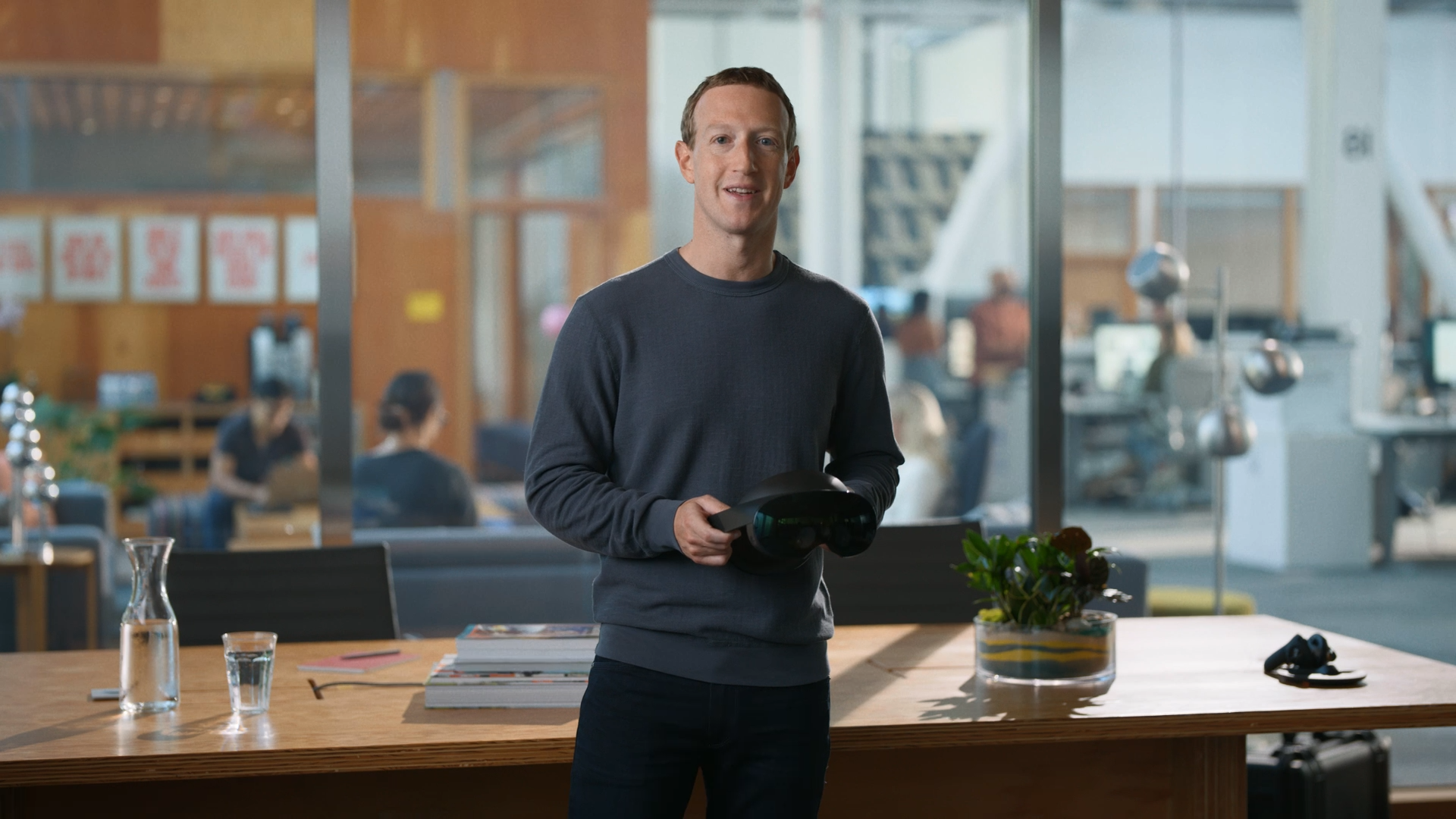
Meta CEO Mark Zuckerberg holding a Quest Pro VR headset. Photo: Courtesy of Meta
A year after rebranding itself as Meta, Facebook's parent company on Tuesday released a new VR headset that it hopes will show concrete results from its already-massive investments.
Why it matters: The company admits that its effort to build an immersive, 3D virtual network for work and play will take years to unfold. But it has to begin selling people on the value and the excitement of that long road today if it's ever going to reach its destination or persuade the rest of us to follow.
Driving the news: Meta's new product is the $1,500 Quest Pro headset, which offers a slimmer design along with better optics and new sensors that allow the device to capture facial gestures as well as mix virtual and real-world objects. (See below for more on the Quest Pro.)
- Ahead of the unveiling, Meta also invited Axios and several other publications to Redmond, Washington, for a peek inside its research labs, a talk with CEO Mark Zuckerberg, and demos pointing to next stages for the technology's development.
The big picture: The Quest Pro announcement comes as Meta faces significant financial and regulatory pressures.
- Indeed, the day after meeting with reporters in Redmond, Zuckerberg confirmed a hiring freeze to employees and suggested more cost cuts are likely.
- Meanwhile, Meta continues to face criticism for everything from misinformation and enabling authoritarian governments to pushing teenagers toward harmful content.
- The company's deal to acquire a small VR studio that focuses on fitness apps faces a legal challenge by the Federal Trade Commission. Tuesday's event featured plugs for that studio's top title.
Between the lines: During the briefing with reporters, Zuckerberg spent as much time talking about a prototype neural-input device on his wrist as he did talking up the new VR headset.
- Zuckerberg kept pushing the conversation toward the bulky device on his arm, which people might ultimately use to control a cursor or even type.
- Such inputs, he said, could be especially useful with augmented reality glasses, where normal typing is impractical and speaking to the device could be socially awkward. But they could also be useful on the smartphones and computers we already use.
- "It's not that far off," Zuckerberg said. "It's not this year, but it's not that far off."
I had to change the subject to even ask a question about a broader topic: What, I asked, are you doing to ensure that the problems of today's internet don't carry over into — or, worse, get amplified by — the metaverse?
- "I assume you are not talking about neural input," Zuckerberg said, before addressing some of the safety and privacy issues raised by the use of VR headsets that are capable of tracking people's every eye motion.
- "We have some time to try to work some of the stuff out up front," Zuckerberg said.
My thought bubble: The more time and money Meta spends working on its metaverse future, the less time it's likely to be able to devote to fixing the real-world problems of its existing social networks.
- Every successful tech company has to see around corners and lead customers onto new ground. But Facebook has a huge footprint on the ground we all occupy now.
- VR could well be the future of computing, but the human beings affected by the harms of today's social media are the future of humanity.
2. Quest Pro: A powerful VR headset, but for whom?
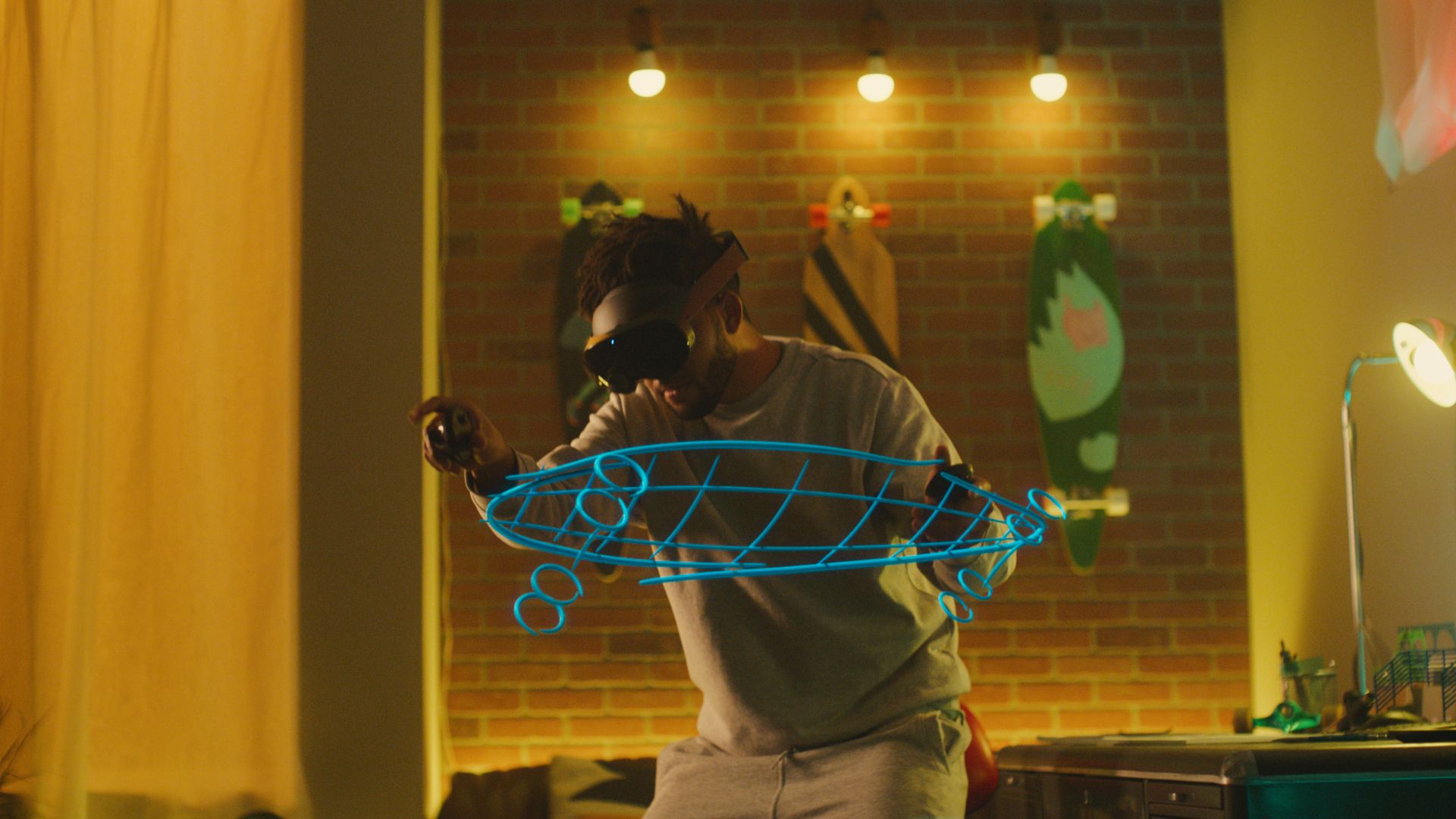
Photo: Courtesy of Meta
There's no question that the new Meta Quest Pro is a step forward for VR technology. But even Meta executives don't always agree on who the target market is for the pricey new headset.
What they're saying: If you listen to Mark Zuckerberg's or Meta's marketing pitches, the Quest Pro is designed as a device for "getting work done," whether collaborating in VR meeting rooms or running productivity devices.
- Meta also brought out Microsoft CEO Satya Nadella at Tuesday's event to announce plans to bring Office, Teams and Windows to Quest headsets.
But others, including Meta CTO Andrew Bosworth, acknowledge that the Quest Pro may well appeal to gamers and other tech enthusiasts who want its comfort and power for use in Quest 2 games, which can also run on the Pro.
- "The system is also the best place to play games, as much as we are focusing on this new audience," Bosworth said.
Zuckerberg acknowledged as much at the briefing earlier this month.
- "The ideal customer," he told reporters, will be "either people who want the highest-end VR device, so enthusiasts or prosumer-type folks, or people who are trying to get work done."
Of note: Meta plans to keep both an entry-level Quest and a Quest Pro model in its lineup for several generations. (A timeline shown to reporters included at least three generations of each product, though no dates were listed.)
- Maintaining two product lines allows Meta to bring some high-end technology into products that are shipping now, while using the entry-level device to broaden the VR market enough to make it attractive to developers.
- Meta announced today that so far $1.5 billion has been spent on games and apps from the Quest store.
Between the lines: The Quest Pro is something of a tweener device that offers better performance and comfort than most of today's VR devices, but less than some of the dedicated enterprise devices on the market.
- "Think of the Quest Pro as what might happen if the HoloLens 2 and Quest 2 got married, and this was their kid," CNET's Scott Stein wrote.
3. Labor Department gives gig workers a break

Illustration: Brendan Lynch/Axios
Gig workers have won the latest round in the yearslong back-and-forth over whether or not they count as employees under federal labor law and are entitled to earn federal minimum wage and overtime, Axios Markets author Emily Peck reports.
Driving the news: The Labor Department on Tuesday announced a new rule that makes it more likely that gig workers get classified as employees — the latest pro-labor turn from the Biden administration.
Background: App companies like Uber and Lyft generally classify their drivers as "independent contractors," arguing that workers have flexibility and control over when and where they work.
- A previous rule from the Trump-era Labor Department lined up with this reasoning.
State of play: In its new proposal, the Biden Labor Department says those Trump-era guidelines didn't take into account other ways companies can control workers in the workplace — for example, by specifying what they can charge customers or by closely monitoring their work.
The impact: "We're hoping this will change lots of business practices," Laura Padin, director of work structures at the National Employment Law Project, tells Axios.
- Yes, but: The rule still has to go through a comment period before it's finalized — and could be challenged in court.
4. Take note
On Tap
- Microsoft hosts a Surface event today, where it is expected to offer new models of its consumer hardware. Meanwhile, its Ignite conference continues in Seattle.
- Lesbians Who Tech moves from online-only to hybrid mode, with events taking place in-person in San Francisco today through Friday.
Trading Places
- Workplace platform Envoy has hired Ramki Venkatachalam as chief technology officer and former Box executive Jon Fan as chief product officer. Venkatachalam previously led engineering teams at Zenefits, Pinterest, Google and PayPal.
- Domo, which aims to help create low-code data apps, announced Microsoft alum Monica Pool Knox as its new chief people officer.
ICYMI
- Chip stocks took a beating on Tuesday, under pressure from new export restrictions and reports of worsening demand. (Axios)
- Meanwhile, sources tell Bloomberg that Intel is prepping layoffs that could impact thousands of workers. (Bloomberg)
5. After you Login
Just looking at this snow-covered bison at -35°F makes me want to grab a warm sweater.
Thanks to Scott Rosenberg and Peter Allen Clark for editing and Bryan McBournie for copy editing this newsletter.