Axios Login

April 06, 2023

Join Axios' Niala Boodhoo Wednesday, April 12, at 1pm GMT (9am ET) in Oxford, U.K., at the Skoll World Forum for an event laying out a global road map for solving some of the world’s biggest problems. Guests include Ceres CEO and president Mindy Lubber, Water.org CEO and co-founder Gary White, and mPharma co-founder and CEO Gregory Rockson. Register here to attend in person.
Today's Login is 1,236 words, a 5-minute read.
1 big thing: Why PepsiCo is sweet on artificial intelligence
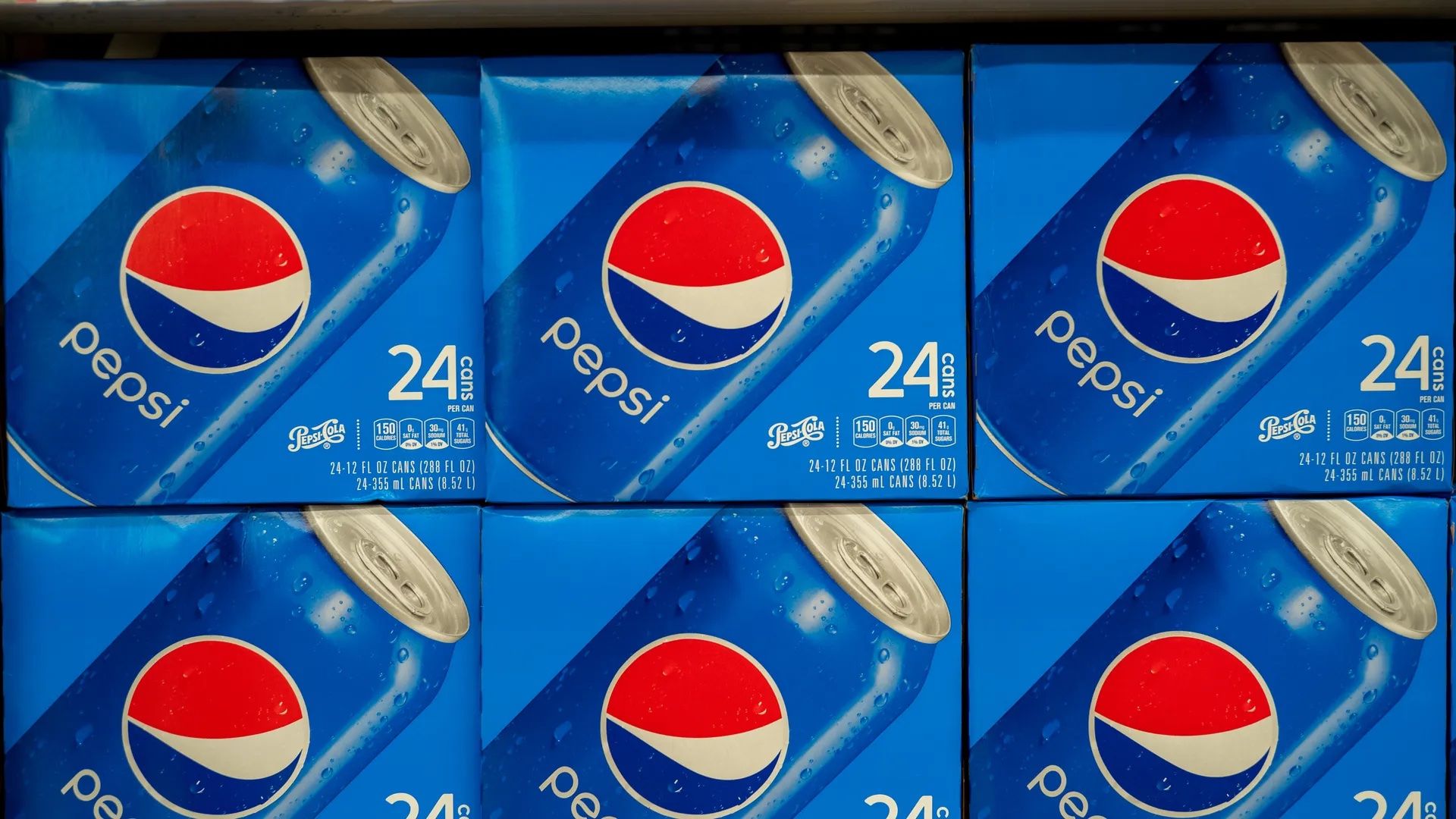
Pepsi sodas displayed on shelves at a Walmart Supercenter on Dec. 6, 2022 in Austin, Texas. Photo: Brandon Bell/Getty Images
If your local grocery or corner mart is keeping Diet Pepsi, Gatorade or Fritos in stock, you may be able to thank artificial intelligence, Axios' Ashley Gold reports.
Driving the news: PepsiCo, the multinational maker of name-brand soda, chips and sports drinks, may not be a technology company, but it has gone all-in on AI in the past few years, spending "hundreds of millions" of dollars to do so, Athina Kanioura, the company's chief strategy and transformation officer, told Axios.
Why it matters: PepsiCo is one example of a major corporation embracing AI fully in daily processes, as other companies in non-tech industries begin to grapple with advancements like generative AI.
The big picture: PepsiCo, one of the largest food and beverage companies in the world, believes AI can help with improved efficiency, lowered costs and better response to customer demand.
What they're saying: Kanioura, who came to PepsiCo in 2020 after a long tenure at Accenture, started implementing AI processes and standards right away, calling it her "biggest passion" for the job.
- "I want us to be an active player in development and not a passive player like many other industries," she said. "We are truly ahead of the game, I believe that."
Between the lines: Kanioura said she's been talking to lawmakers on Capitol Hill interested in AI policy who told her they are "extremely impressed by the level of maturity" of AI deployment at PepsiCo "which they haven't seen from any other company" beyond tech.
- Kanioura said PepsiCo has also engaged with the National Institute of Standards and Technology on its AI Risk Management Framework and has consulted with groups like the Aspen Institute.
How it works: Some of PepsiCo's uses of AI include helping create new product lines and flavors, determining which stores are selling the most of which products and getting new stock out, analyzing sales and optimizing product placement and visibility.
- It's also being used in research and development, for enhancing safety at warehouses, and for sustainability, Kanioura said.
Of note: Kanioura said PepsiCo has its own responsible AI framework which guides how it deploys AI in different parts of the company.
- PepsiCo won't use AI for employee recruitment or one-to-one targeting of consumers, she said. Other principles of the framework include different tactics to avoid bias and techniques to ensure that model predictions are equitable.
Kanioura said generative AI — which has sparked a craze since the advent of ChatGPT — is useful for knowledge management, but not the right tool for, say, organizing pallets in a warehouse.
- "I don't believe that generative is the panacea for everything," she said. "I think you can also do things with much simpler AI practices or process automation."
- Pepsi's rival giant, Coca-Cola, unveiled a marketing campaign last month, in partnership with OpenAI, that let customers use image-generating AI tools to produce images using its branded elements.
On regulation: Kanioura said the federal government needs to be doing more: "Regulation is important. How much regulation is another discussion."
2. HIPAA falls short in a digital world
Illustration: Gabriella Turrisi/Axios
Reports of a federal probe into hospital websites tracking and sharing personal data are putting the landmark HIPAA law in the spotlight — and exposing its limitations, Axios' Erin Brodwin and Tina Reed report.
Why it matters: The Health Insurance Portability and Accountability Act (HIPAA) is nearly three decades old. And the bewildering pace of technological change in the years since Congress passed it has left vast amounts of sensitive data being exchanged outside the scope of the law, threatening basic consumer privacy, experts tell Axios.
The big picture: HIPAA was designed at a different time and specifically for the data stored and shared by traditional health care organizations.
- But today, consumers may have their personal information stashed in a digital app, discussed in a social media group and monitored by a phone or wearable device. All are not covered by HIPAA.
- Most consumers, moreover, don't distinguish between a message sent to a hospital patient portal (protected by HIPAA) and one sent over a digital health app (not protected).
"It's like cars before seat belts," Venrock partner Bob Kocher told Axios. "There was no direct-to-consumer health care when HIPAA was written."
Zoom in: In one example from a study published Monday that prompted the civil rights investigation, the vast majority of public-facing websites of hospitals — which do fall under HIPAA — allowed third-party companies to track data.
- "My working theory is that nobody thought about it too hard. This just kind of became standard practice," said Ari Friedman, lead author of the study.
- It can create real harm for patients, though, as any online activity is increasingly scooped up by AI-powered algorithms and used, for instance, to calculate risk scores used by employers or landlords, Friedman said.
What's next: Private industry will likely need to develop mechanisms outside HIPAA to protect health data, says Lucia Savage, former chief privacy officer for the Office of the National Coordinator for Health IT.
What to watch: The Federal Trade Commission has signaled plans to enforce privacy for health companies that fall outside HIPAA's jurisdiction, as it did with Better Help and GoodRx.
3. Gigi Sohn on Dems securing an FCC majority
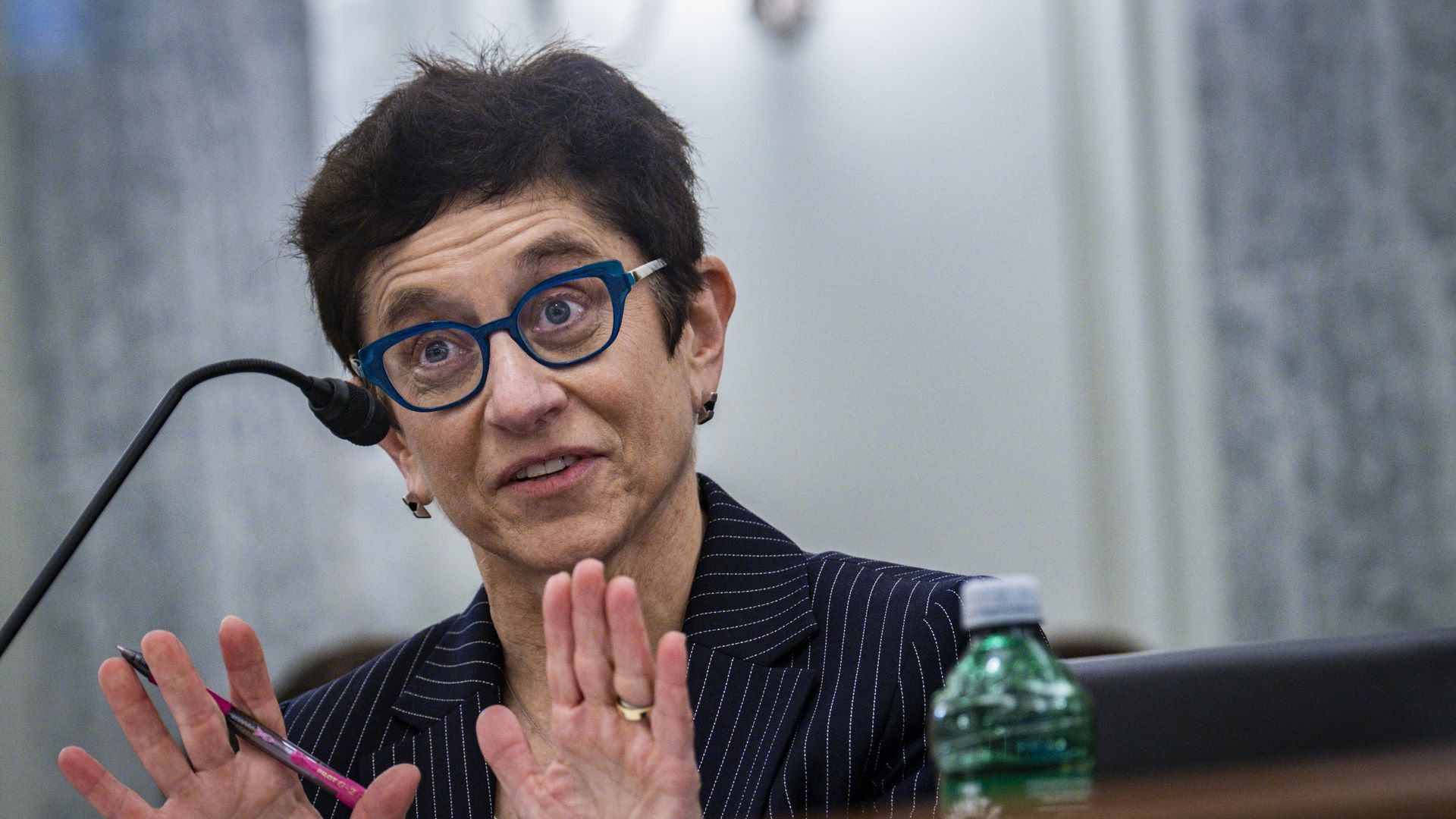
Gigi Sohn testifies at a Senate Commerce Committee hearing in February 2022. Photo: Pete Marovich-Pool/Getty Images
Consumers have been left unprotected as the FCC continues to operate without a Democratic majority, Biden's former nominee Gigi Sohn told Axios Pro Tech Policy's Maria Curi.
Driving the news: Sohn says she withdrew her nomination last month in part because Senate Commerce Democrats up for re-election in 2024 would not vote her out of committee without "assurance" she would be confirmed on the Senate floor.
- After more than a year of silence as she navigated the contentious nomination process, Sohn is now going on the record about why it's so important the commission gets a majority.
State of play: "It's inconceivable to me that the agency that is charged with protecting consumers and competition can't do so when it comes to the most important communications network of our lifetime," Sohn said, referring to the inability of the FCC to reinstate its authority over broadband.
- That affects the commission's enforcement power to levy fines on carriers if, for example, they mishandle user data or lie about their coverage, Sohn said.
- The commission's efforts to require broadband labeling and thwart exclusive deals between landlords and internet service providers also could have been stronger with a Democratic majority, Sohn said.
- "The FCC has had a lot of accomplishments, but most of them are ministerial, noncontroversial or accomplishments where the commission with a majority could have gone further."
How it works: Ultimately, it's on Congress and the administration — not chair Jessica Rosenworcel — to get a majority at the agency. In the meantime, commissioners have focused on implementing pandemic-era programs to expand internet access.
- Sohn said the most important thing the FCC has done is implement the Affordable Connectivity Program, which now has more than 17 million households enrolled.
4. Take note
On Tap
- Y Combinator's Winter Demo Day wraps up today.
Trading Places
- Former Google Stadia boss Phil Harrison quietly left the company in January, per Business Insider.
ICYMI
- Savvy Games, owned by Saudi Arabia's sovereign wealth fund, on Wednesday said that it is paying $4.9 billion to buy Scopely, the California-based maker of mobile hits like Marvel Strike Force and Scrabble GO. (Axios)
- Google CEO Sundar Pichai said that the company plans to incorporate chatbot capabilities into its search engine. (Wall Street Journal)
5. After you Login

Photo: Ina Fried/Axios
Happy Passover to those who are celebrating. Here's my attempt at a Lego seder plate.
Thanks to Scott Rosenberg and Peter Allen Clark for editing and Bryan McBournie for copy editing this newsletter.
Sign up for Axios Login

Taking you inside the AI revolution, and delivering scoops and insights on the technologies reshaping our lives.