Axios Latino

October 19, 2023

We're glad you're here again!
👀 Puede leer este boletín en español aquí.
🚨Situational awareness: An Atlanta-based bank will enter a $9 million agreement to settle allegations of redlining predominantly Black and Hispanic neighborhoods in Jacksonville, Florida, Russell writes.
This newsletter, edited by Astrid Galván, is 1,458 words, a 5.5-minute read.
1 big thing: 🇦🇷 Far-right firebrand leads in polls

Javier Milei (center) greets supporters during a campaign rally on Oct. 16 in Lomas de Zamora, Argentina. Photo: Luis Robayo/AFP via Getty Images
Argentines on Sunday will vote in one of the most uncertain presidential elections in recent history, as a firebrand candidate who aims to tackle a massive economic crisis in part by adopting the American dollar maintains a slight lead in the polls.
Why it matters: Argentina is "at a political and economic breaking point," Benjamin Gedan, director of the Latin American program at the Wilson Center, tells Marina.
- This election has been on "another level of chaos and uncertainty," Gedan says, adding that it could really shift politics in Argentina.
- Around 40% of the population lives in poverty; inflation is in the triple digits; the GDP is shrinking; and there's a looming risk the country will default on its debt.
- With the economy as a driving force, voters have sidestepped the two main political parties and propelled Javier Milei, a far-right member of Congress and a libertarian economist, to the top of the presidential ticket.
What to know: Milei, a self-described "anarcho-capitalist," has proposed ditching the Argentine peso in favor of the U.S. dollar, a popular proposal among voters that he says will undercut inflation.
- Milei also wants to privatize state companies and eliminate the nation's Central Bank — an idea he likes to promote by posing for pictures with a chainsaw to signify trimming what he deems as unnecessary government institutions.
- Milei has proposed abolishing sex education, deregulating gun sales and legalizing human organ trading. He says climate change is a "socialist lie."
The other candidates are Patricia Bullrich, former security minister from the center-right Juntos por el Cambio coalition, and Sergio Massa, the minister of economy from the center-left coalition Unión por la Patria.
- Bullrich, who was once considered the frontrunner, has honed in on promises to fight crime, unify exchange rates and institute austerity measures to fight inflation.
- Massa is promoting infrastructure projects for exporting gas or lithium to net more revenue and has plans to ease taxes for small companies and strengthen public education with STEM programs.
What to watch: A large part of the uncertainty around this election is whether there will be a runoff and, if so, who would compete in it — although it's likely Milei will be the contender to beat.
- The top candidate would need to secure at least 45% of the vote outright or 40% with a 10-point advantage to avoid a runoff. If none does, the runoff will be held Nov. 19.
2. 🇨🇱 Karamanos on Chile's draft constitution
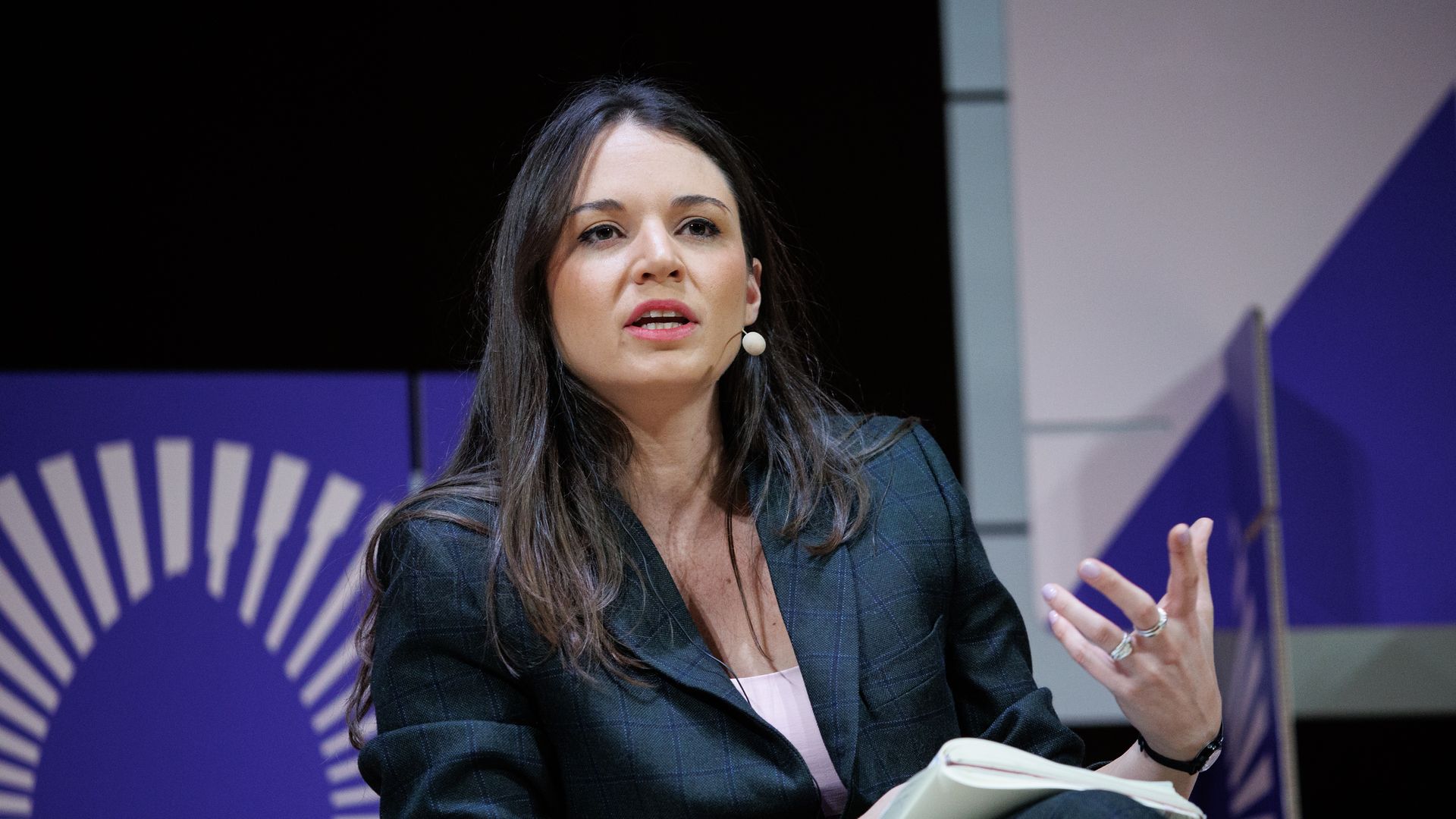
Irina Karamanos speaks at an international feminist meeting in Spain on Feb. 26. Photo: Alejandro Martínez Vélez/Europa Press via Getty Images
Irina Karamanos Adrián, a Chilean activist and the partner of President Gabriel Boric, tells Marina she's worried the latest draft of her country's new constitution could jeopardize existing and future civil rights.
The big picture: The draft is being finalized this month ahead of a likely December referendum on whether to adopt it, but critics say it veers to the right and threatens reproductive rights.
- It's the second recent attempt to change Chile's constitution — drawn up during the dictatorship of Augusto Pinochet — after voters last year soundly rejected a draft over concerns it was too progressive and broad.
What she's saying: "It seems concerning that parts of a new constitutional draft would narrow down opportunities or close even more doors than the (current) Pinochet Constitution does," says Karamanos, who's been in the U.S. touting her experience overhauling the first lady's office — a post she left last December.
- She says the most important thing with the new constitution is that it opens up a discussion about human, civil and reproductive rights.
- Karamanos remains hopeful that public debate will steer the draft or subsequent legislation in another direction
- She adds that constitutions should be the backbone for civil society and government powers to build and expand on rights — and that the latest draft could make that harder.
Context: The convention working on the latest draft is made up mostly of conservative politicians who oppose abortion rights and have included a provision that the law will protect "those who are about to be born."
- Abortion rights advocates say that could threaten the limited such rights Chileans currently have.
Polls have shown Chileans are dissatisfied with the convention's draft so far, and Karamanos says there's still enough time for public debate to create more avenues for changes.
- "I hope we'll move forward to keep conquering more rights for people and, yes, acting against regressions if those come to happen," Karamanos says.
3. Homicide rates fall in border cities
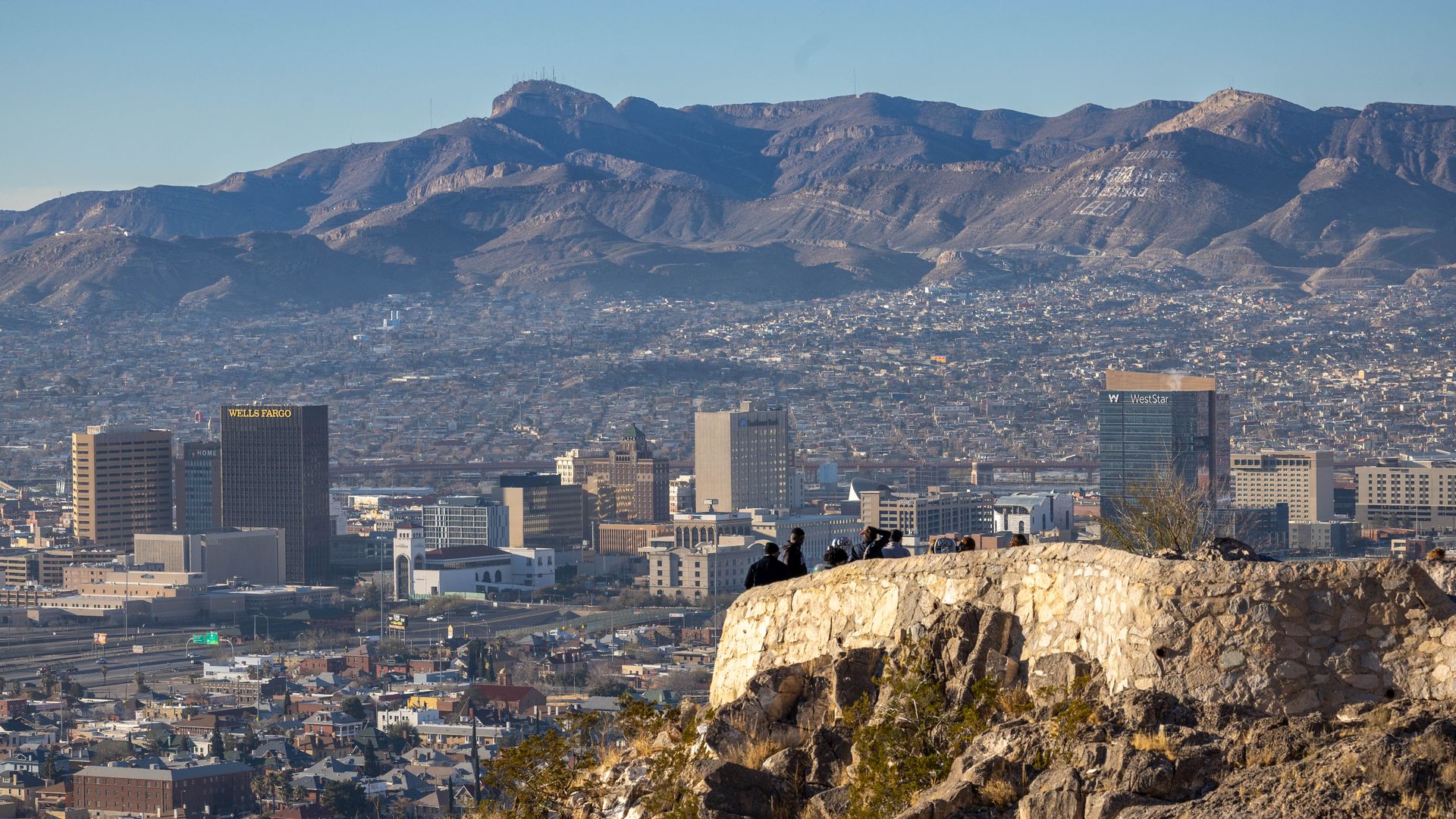
El Paso, Texas. Photo: John Moore/Getty Images
The latest FBI crime data shows that in some communities along the U.S.-Mexico border homicide rates fell and are well below the national average, although they experienced a rise in overall violent crime, Russell writes.
State of play: An Axios analysis of eight U.S. border communities that reported crimes to the FBI in 2022 found they have lower homicide rates than the national average.
- The FBI released its annual crime data on Monday.
By the numbers: On average, the eight cities — Brownsville, McAllen, Laredo, Eagle Pass and El Paso in Texas; Sunland Park, New Mexico; Yuma, Arizona; and San Diego — had a homicide rate of 4.2 per 100,000 residents, compared to 6.3 nationwide.
- That was a drop for border cities from 2021, when they had a homicide rate of 4.7 per 100,000 residents.
- Eagle Pass recorded no homicides in 2022.
- Yuma, a community of 99,000 people, had the highest homicide rate (19.3 per 100,000 people) and continued to have the highest rates of violent crime (559.2) of all border cities.
Yes, but: The same cities also had jumps in violent crime in 2022 after years of declines.
- The eight communities had a violent crime rate of 382 per 100,000 residents in 2022 — a 10% increase from the year before, when it was 348.9.
4. New data hub focuses on Latinos

Illustration: Annelise Capossela/Axios
A first-of-its-kind hub for data on Latino communities launched this week with the goal of providing a more nuanced picture of how Hispanics in the U.S. live, Astrid writes.
Details: The UCLA Latino Policy and Politics Institute spent a year raising money and two years developing the data hub, says Rodrigo Dominguez-Villegas, the organization's director of research.
- Relying largely on U.S. Census Bureau data, the hub includes downloadable tables, interactive visualizations and other resources.
- It includes data on housing, education, health care access, poverty and more issues that affect Latinos.
What they're saying: Latinos are often treated as a monolith, which "obscures not only our incredible diversity and contributions, but also the wide disparities that exist between Latinos and other groups and within Latino communities," Dominguez-Villegas tells Axios Latino.
- He says one of the goals of the hub is to help policymakers "design targeted and equitable policies that address the needs of the most underrepresented members from our communities, who up until now frequently invisible in the data."
5. Stories we're watching:

Illustration: Natalie Peeples/Axios
1. The Guatemalan government this week named a new interior minister after the resignation of Napoleón Barrientos, who faced criticism for not removing the protesters blocking roads for three weeks while demonstrating against the country's attorney general.
- Military officer Byron René Bor Illescas will replace Barrientos, who resigned shortly after one person was fatally shot near a demonstration.
- Protesters are demanding the resignation of Attorney General Consuelo Porras, whom they accuse of running sham investigations to interfere with the transition of power to President-elect Bernardo Arévalo. Porras says she's following protocol.
2. Former Brazilian President Jair Bolsonaro has been accused in a congressional report of masterminding the Jan. 8 attack against government buildings carried out by his supporters.
- The congressional report is not binding, but could lead the attorney general's office to press additional criminal charges against Bolsonaro, who already faces investigations into alleged corruption and his unproven claims of electoral fraud.
- Bolsonaro has denied all accusations and said he cannot be held liable for the Jan. 8 attack, which he noted he denounced afterward.
6. 🪅 Pachanga: Marco Antonio González

Photo illustration: Axios Visuals. Photos: Courtesy of MaGo PR
Today's pachanga goes out to Marco Antonio González, the founder of public relations agency MaGO! PR, which recently won the "new entrepreneurs on the block" award by PRNews.
- Marco Antonio, who has been in the PR industry for more than 20 years, founded MaGO! in late 2021. The agency is based in LA.
Felicidades, Marco Antonio!
Have you recently accomplished something you're proud of? Let us know by replying to this email!
We hope you have yourself an excellent weekend. Thanks to Carlos Cunha, Laurin-Whitney Gottbrath and Axios Visuals for their contributions.
Sign up for Axios Latino

Keep tabs on the stories that most affect the U.S. Latino community on both sides of the border, a collaboration with Noticias Telemundo.