Axios Latino

December 10, 2024

Welcome, friends!
Thanks for joining us.
👀 En español 👀
This newsletter, edited by Astrid Galván, is 1,404 words, a 5-minute read.
1 big thing: Mexico clamps down on migration
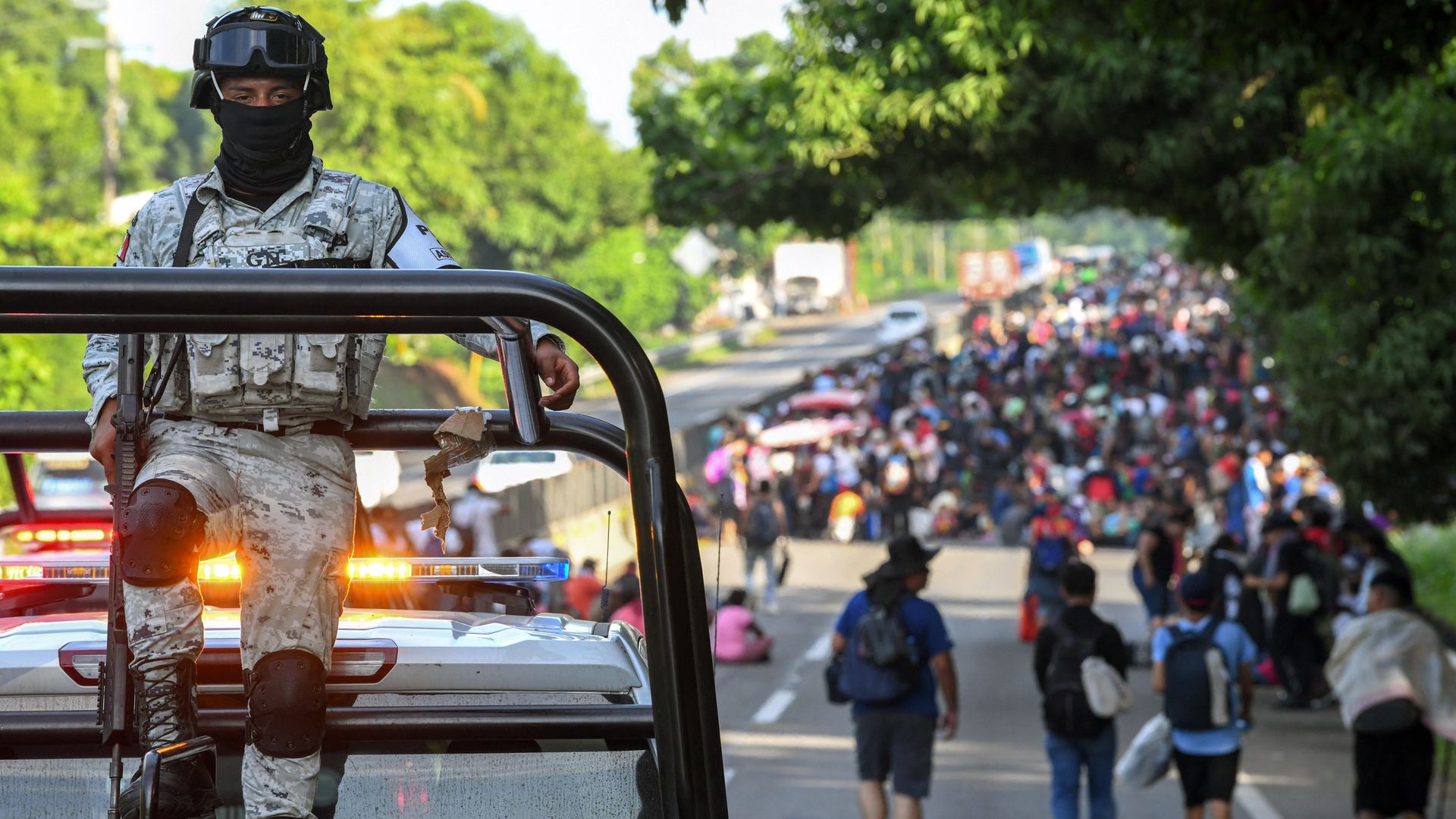
Mexico has intercepted nearly 1 million migrants this year — a record high as it has ramped up policies that reduce migration to the U.S.
Why it matters: President-elect Trump has threatened to impose tariffs that he says would force the country to "act" to stop the flow of migrants.
- But Mexico has been increasingly doing just that — though some experts say it's not a viable long-term fix for the problem of unauthorized immigration to the U.S.
Case in point: While interceptions in Mexico have doubled in a year, in the U.S. they have gone down by a quarter.
What they're saying: "Mexico has been very active and served as a buffer between the United States and at least Central America — but, really, almost between the United States and the rest of the world," says Carin Zissis, a visiting fellow at the Wilson Center and editor-in-chief of the Americas Society/Council of the Americas Online.
- Data from Mexico's Interior Ministry shows encounters with thousands of people from as far away as Senegal, India and other parts of Africa and Asia.
- "A series of agreements with the U.S. and policies have made Mexico become essentially the waiting room" for migrants originally headed to the U.S., says Luciana Gandini, who coordinates a seminar on displacement, migration and repatriation at Mexico's National Autonomous University (UNAM).
By the numbers: The number of encounters in Mexico of people without visas or migration permits reached about 925,000 cases from January through August of this year, per the most recent update to the Interior Ministry's migration data hub. Some of the migrants were removed from Mexico, while others were placed in shelters, though it's unclear how many.
- This year's number of encounters is more than double the number for all of 2023, which had already set a record. Mexican authorities had an average of 115,000 migrant encounters per month through August.
- During Trump's first term, Mexico recorded an average of about 10,000 migrant encounters per month. There were about 33,000 a month during Biden's first two years in office.
- Meanwhile, the U.S. Border Patrol registered about 1.5 million encounters in fiscal year 2024, which ended in September, per CBP data — 25% fewer than in the previous fiscal year.
2. Mexico has become an immigration buffer
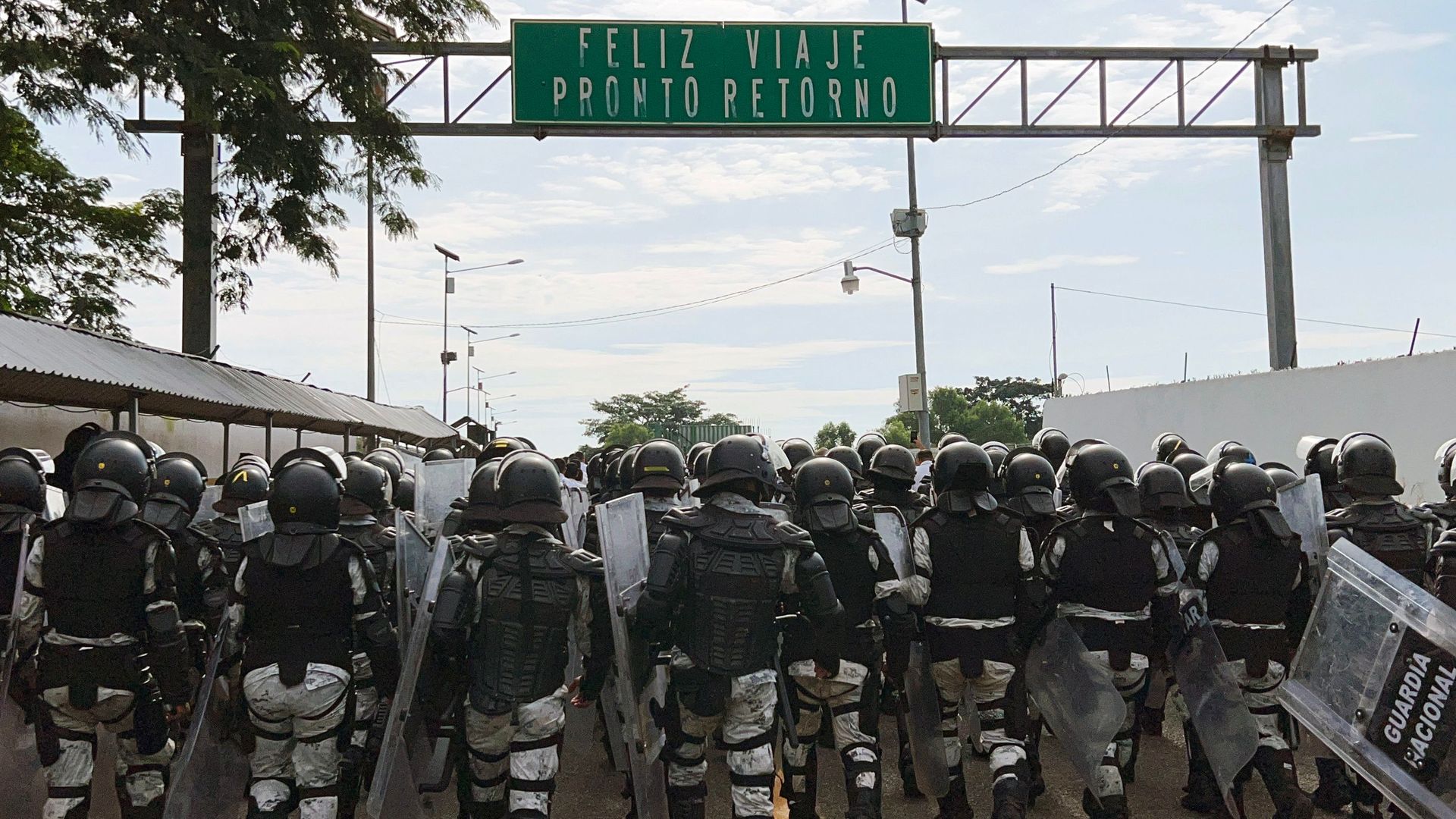
The "buffer" Mexico offers the U.S. derives from the deployment of the National Guard — which was created in 2019 and is under military control — to heavily police the border with Guatemala.
- The National Guard turns back some people at Mexico's southern border, and in collaboration with the National Migration Institute detains or transfers others to shelters and processing stations in southern Mexico.
Mexican authorities have also increasingly broken up migrant caravans headed to the U.S.
- Much of that is accomplished with what Gandini calls a "chutes and ladders" approach — people heading to the north in caravans or trains are intercepted by authorities and talked into getting bused to southern states for processing.
- "That scatters people about, making it harder for them in terms of time, money and safety to get back on the road towards the U.S.," Gandini says.
3. How deportations may cripple Mexico's crackdown
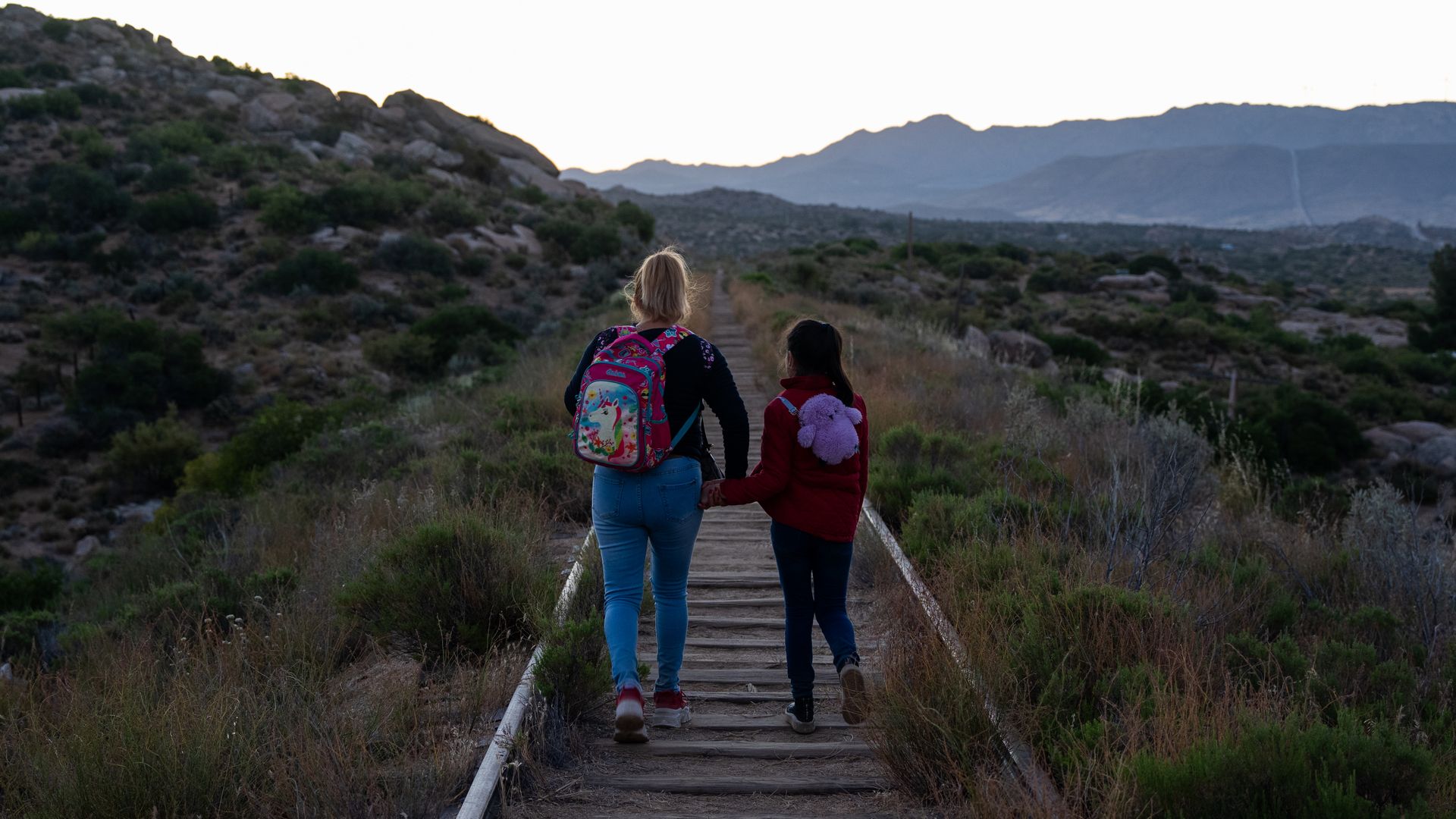
Mexico tamping down on migration is not a long-term solution to stemming migration to the U.S., experts say.
Why it matters: The country's crackdown could be stymied if Trump's planned mass deportations result in large numbers of Mexicans and others being sent south of the border, overwhelming Mexico's resources.
The big picture: Mexico has increasingly become a destination country for migrants.
- It has been among the countries receiving the most asylum applications worldwide since 2021, according to the UN Refugee Agency.
- The Mexican Commission for Refugee Assistance (COMAR), the agency that oversees these asylum applications, is considerably under strain already.
What they're saying: "Mexico is already in a delicate situation as the last country of transit for people from all across the Americas and sometimes beyond," Gandini says.
- "That'll only get harder if there are thousands, let alone millions of people, that start moving north-to-south" with deportations, she adds, likening it to a pressure cooker.
- "So a policy based only on containment doesn't work in the long term," Gandini says.
Between the lines: Criminal groups have been increasingly involved in migrant smuggling.
- The groups advertise on social media, offering passage routes.
- They charge migrants thousands of dollars, identify who's paid by giving them bracelets, and regularly kidnap, extort or sexually abuse migrants to make them pay more along the way.
- "It is an intensely lucrative business for them," Gandini says.
Not developing or strengthening policies that tackle this problem, especially bilaterally, fosters human rights risks, Zissin says.
The bottom line: Trying to stop people at the border does not address the reasons that drive people to emigrate.
- Safety issues have become more acute in the past few years in countries like Ecuador, while in Venezuela people continue to flee as a political crisis and hyperinflation rage on.
- Nicaragua's become even more autocratic this year, and recent blackouts in Cuba illustrate how difficult living there is for many.
- "People have clearly heard about the dangers that they face and still make the journey — they remain willing to take that risk," Zissis says.
4. Funds for Underground Railroad to Mexico project
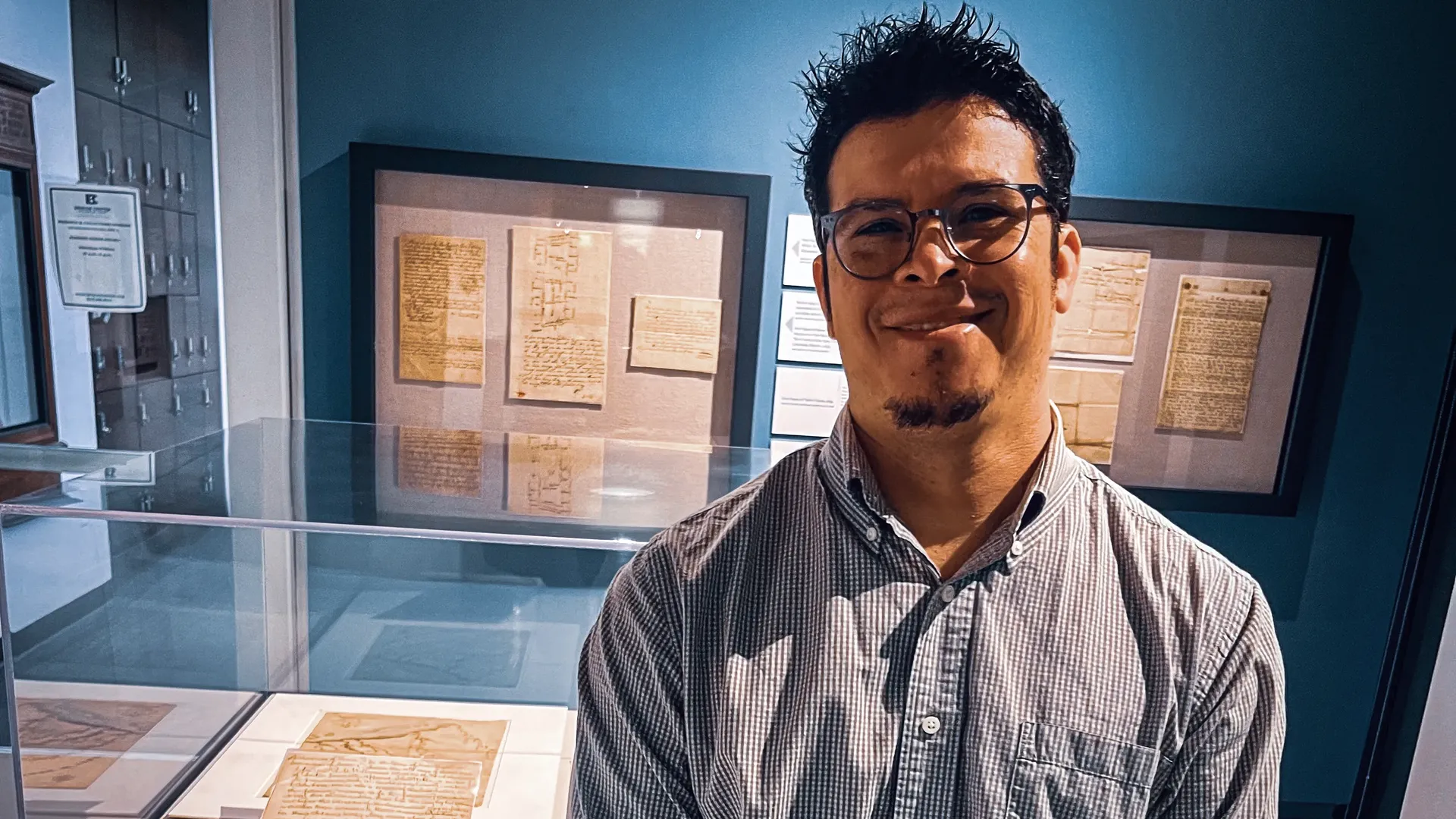
A project honoring Silvia Hector Webber, known as the "Harriet Tubman of the Underground Railroad to Mexico" in Texas, is using a $150,000 grant to create an interactive mapping project and infrastructure improvements at a cemetery in Texas.
The big picture: The Mellon Foundation grant to the Webber Family Preservation Project will help support research and archive development.
- The grant, announced in October, will also help create an interactive mapping project and infrastructure improvements at the Webber Ranch cemetery in Texas.
Flashback: The Underground Railroad to Mexico was a loosely organized path allowing enslaved Black people in Texas, Louisiana, Oklahoma and Alabama to escape bondage by fleeing south.
- Oral histories, archives of slave escape ads, and narratives of formerly enslaved people show that fleeing to Mexico was a possibility in the years leading up to the U.S. Civil War.
- Mexico abolished slavery in the 1830s, and escapees changed their names and started new lives there.
Zoom in: The Webber Family Preservation Project is made up of descendants of Silvia Webber.
- Their project recently created a nonprofit to preserve the history of a woman known in the region as "Aunt Puss."
- The group is also raising money to maintain a Webber cemetery in South Texas and learn more about the woman who risked her life to help others seek freedom.
- "We're not going to stay quiet, and we're going to ensure that the story, and this history and others like this, get out there," Omar "O.J." Treviño, a descendant of Webber, tells Axios.
5. Stories we're watching
1. The UN partly restarted operations at its human rights office in Venezuela yesterday after it had been forced to shut in February by the government of President Nicolás Maduro.
- Volker Turk, the UN's human rights commissioner, did not give details of the agreement that permitted the office to reopen, simply telling reporters it hopes to recommence prison visits and other activities soon.
2. Bolivia is holding elections this Sunday for the Supreme Court and Constitutional Court.
- The South American nation was the first to implement elections for these top-level federal justices with two previous votes, in 2011 and 2017.
- Observers say the elections undermine judicial independence.
6. Smile to go: The guardians of the seeds
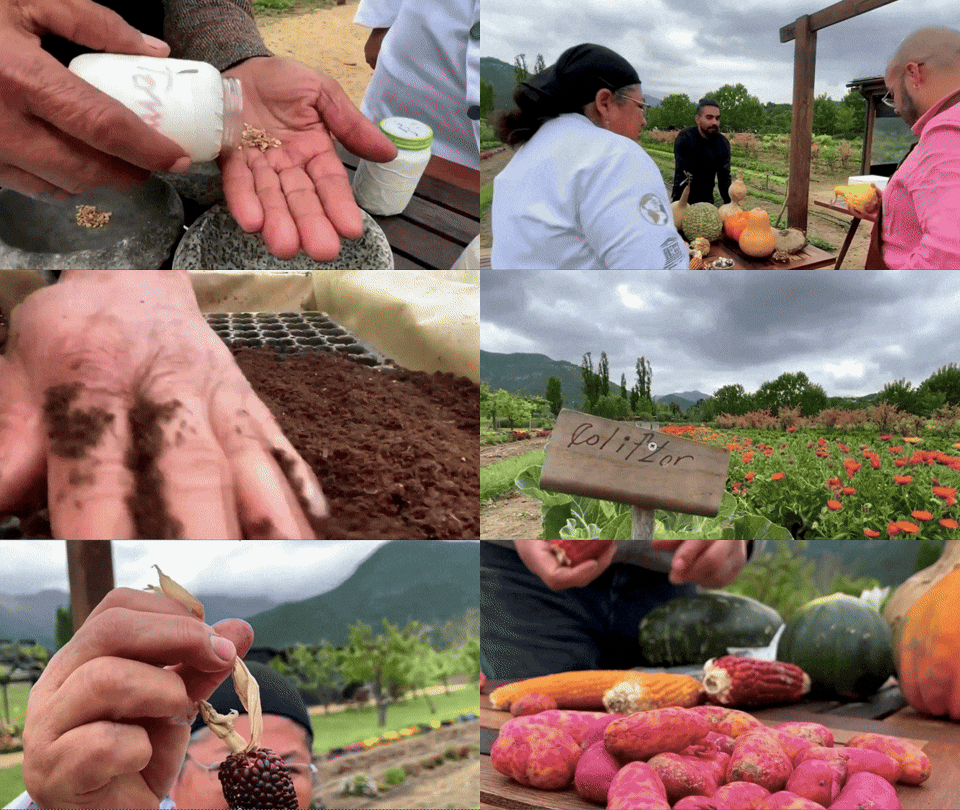
A project in Chile aims to safeguard seeds for some varieties of tomato, cacao, coffee and other plants that are scarcely planted anymore and under threat from climate change.
State of play: Cultivating these seeds requires specific temperatures, watering and soil conditions that can be affected by heat waves, droughts or heavy rains.
- A group of farmers and agriculturists in Chile have taken some of these increasingly scarce seeds to conserve them.
- They sow them sometimes using old methods from Mapuche Indigenous groups, and also sell them in markets.
What they're saying: "I especially enjoy being a seed guardian because it means rescuing not only cultivars but knowledge from our ancestors," Delfín Toro, a member of the group, tells Noticias Telemundo.
🎁 Marina hasn't even gotten started on Christmas present shopping. Oops!
🎹 Russell is working with his daughters on their upcoming Christmas piano recitals.
📺 Astrid got sick and rewatched her favorite "Breaking Bad" episodes this weekend.
Sign up for Axios Latino